
Craft Notes
Art v. Politics (2): A Case Study
 Yesterday, I wrote about my unwavering belief in the power of a serious engagement with the aesthetic to bring us closer to, as Sontag says, “a fuller humanity.” The comments on the post, especially regarding my claim that this is not a privileged position because all humans need beauty (in its most expansive, heart-changing sense), led me to think that I needed to back up the claim a little more.
Four years ago, brilliant anthropologist Laura Jones and I decided that we wanted to do something to contribute to the recovery of New Orleans, a city dear to both of us.
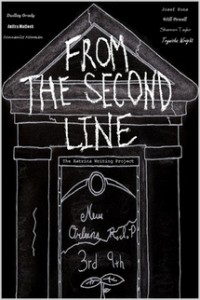
We secured funding from Rice University to launch the Katrina Writing Project. Then we partnered with a charter school whose students were doing summer internships related to Katrina relief. During the summer, we taught the students to write personal essays about their Katrina experiences, which we then collected, published, and distributed to educators worldwide. You can download the collection here for free.
From this experience originate my beliefs about the vitalness of art in a broken world.
Our students had endured unthinkable tragedy and cruelty.
Dudley Grady’s family was turned away from a hotel only to see a white family check in moments later.
Josef Pons and his family were put on a plane. He writes, “The thing was, we didn’t know we were going to Arizona until we were in the air.”
Donnanice Newman writes, “When I finally got up, I noticed that my family was praying that the rest of our family was safe. I saw a policeman, and I asked him about New Orleans East. The policeman was talking about something that I kinda didn’t understand. But he finally said, “Baby, there ain’t no East.”
The alienation and separation of evacuation caused Anitra Matlock and her girlfriend to break up. Meanwhile, as she writes, “After the storm, random people felt that they needed to tell me why Katrina happened. The most memorable of reasons was that God sent the storm to cleanse the city of its homosexuals and sinners. If ever I needed to cry, it would be when I heard this, and when I saw my home.”
The common thread in their stories was that the worst part was the way their peers in other parts of the country treated them. How nobody understood them or their city.
Our students would’ve come to our class as much as we held it, because they were bored of sitting in a cramped FEMA trailer for hours at a time. But they were still teenagers, and occasionally they goofed off, and at one point it seemed as if they might not finish their essays by the end of the summer.
They got going again when it really hit home that their peers in other parts of the country were going to read their stories. The same sort of people who had treated them badly in school hallways around the country. Ultimately, then, the real motivation for them to write was knowing that strangers would encounter their words. They didn’t have any particular agenda in that; as the refrain of Will Powell’s non-narrative rap-essay says, “I don’t want no tears or no confetti for me.”
Our students chose the title From the Second Line for their book. Laura and I had never heard of the term “Second Line.” It refers to a tradition in New Orleans jazz funerals. The first line is slow and mournful. The second is celebratory, where mourners and bystanders alike join in and dance and sing to the sound of the joyful trumpet. Our students felt that this represented the spirit of their city and the power of their writing project. Their response to pain was to make something beautiful and truthful for others to see.
Never again would I have the audacity to think that was inconsequential.
Tags: art and politics, Katrina Writing Project
I think this shows that the split between “aethetics” and “politics” is like the mind/body split. That is, an illusion.
Interesting that the students identified what they were doing with a burial ritual. In pre-industrial societies there was no distenction between dance, music, art, craft and ritual. That they were enthused about the project when they saw the ritual potential in it is encouraging, I think, as they were enthused the moment it stopped being just about them and instead became about connecting with others.
I like this way of looking at it. I’m all for melting boundaries in what is hopefully beginning to be a post-Kantian world, where the true and the good and the beautiful are not separate entities. For what it’s worth, I almost titled my post yesterday, “Art v. Politics: A False Dichotomy.” Seriously.
I’ve really appreciated your comments. Thanks for joining the discussion.
Hey Amy. I don’t know if this was clearly enough conveyed in what I said yesterday but I do agree that an aesthetic act or desire or need is not a thing of privilege – although, if we’re talking art, then access to the means of aesthetic expression may well be a privilege of a quite decisive sort. Which is why this project was such a great idea. I still feel that this definition of aesthetics actually entails ethics at its core – that it isn’t pure aesthetics, in that regard – because, equally and in turn, we might take the extreme religious right’s representation of the disaster as divine punishment as an apocalyptic aesthetic of the same event – assigned to their agenda absolutely, but an aesthetic of the same thing nonetheless. Evidently, it would be nauseating to accept an equal legitimate claim to aesthetic truth in both those representations and, indeed, we don’t need to do because we have social context and facts to argue the case for the greater power of one aesthetic project – that of the students – over the other. Again, though, it shows that aesthetics may be primary but that primacy isn’t enough in itself. To keep aesthetics from becoming an empty equal entitlement that everyone supposedly has but only certain people are able to effectively exercise, you need ethics, politics and the social. But I don’t think we disagree on this, if not in principle, then in practice, so. Thanks so much, again, for a truly excellent post.
Thanks for making this distinction, David. I agree that my definition of aesthetics is impure. I don’t understand anything as pure. I think I prefer mixing concepts of the ethical into aesthetics to mixing in politics, but I think you are right–that is a difference in principle, in ways of conceptualizing this, rather than a difference in practice.
Sometimes I feel that it is many discussions of politics that really seem borne of privilege. I am always seeing very educated people becoming frustrated by the political conceptualizations of much-less uneducated–but still quite ethical–people, just because the latter don’t have a lot of vocabulary for talking about things like race and gender and power structures in ways that we’ve been educated to. And yet they would be the first to say that those kind of educational inequalities are what they are combatting. That doesn’t mean it’s wrong to talk about, but I think that’s why I’m more comfortable talking about ethics, which seem somehow less tied into specialized vocabularies. Certainly, there are ways of talking about aesthetics that are specialized, but I don’t see the same hypocrisy in that realm.
much less educated, is what I meant obviously
Yes. We were in agreement after all, I think.
Yes, I’m with you on that. I think I (predictably) prefer that title.
Thanks and you’re welcome.
Unsurprisingly.
It is telling that when you, whose comments I always love, disagreed with me at first, my immediate thought was that I must not have been clear.
Wow, thank you! Not to have a little lovefest here or anything, but I always feel the same way about your posts. Including this one.
“I think this shows that the split between “aethetics” and “politics” is like the mind/body split. That is, an illusion.”
Yeah, from where I sit, it’s hard for me not to see these folks voicing their experiences as not in and of itself political, maybe even esp. political or political in a particular way BECAUSE of the project’s focus on storytelling and disinterest in proposing resolutions or comforting solutions, in everything you defined as politics yesterday. But maybe we are operating out of a different framework for what “political” means. I didn’t jump into the conversation yesterday… but if I had, I probably would have said I have trouble understanding “human” as an undifferentiated category or one that can transcend social/historical/cultural context. What does it mean to achieve a “fuller humanity?” How is humanity defined? I guess the word always raises red flags for me b/c I feel like the category of humanity and who gets included in that has often been really fucked up historically. But I get that Sontag is talking abt an engagement w/ the aesthetic, I just feel like in the example you’ve given, that engagement isn’t really separable from some life experiences that are super politicized.
Amy,
I think most people agree with your central position on the power of beauty. Honestly, it seems like you’re sort of protesting too much in these posts. Most of us here are writers, and I doubt most of us sit down to write and say, “okay, I’m going to write a story about the political aspects x, y, and z, and this story will challenge the oppression of marginalized group 1a.”
However, it’s certainly possible to separate oneself from the art making process once outside of the work when we enter a discussion about the political nature of art. It’s important that we don’t confuse the actual processes of art making with abstract conversations about those processes. These are two different voices, and I feel as if both are being conflated in these discussions.
So why the “versus”? What’s the point? Maybe it’s just me, but I don’t see anyone telling writers that they can’t focus on what’s beautiful, or having an aesthetic that begins with “beauty.” I doubt you have much difficulty navigating the writing world with the same basic aesthetic that most writers approach the canvas with (that is, most writers do in fact begin with the sensuous).
So….what’s the point of all of this?
I’m not trying to call you out, but I’m honestly having a difficult time understanding the point in all of this.
i may have misunderstood what you were talking about yesterday. this seems like you’re boiling it down to ‘the response to sadness is happiness’, which no one can really argue with. this kind of gets away from aesthetic and how it moves relative to politics though, but maybe that’s an animal better left caged.
They maybe don’t have the vocabulary, but they certainly have the lived experience of injustice — which is why popular education seeks to dismantle the dichotomy between educator and educated so that the knowledge and experience all participants bring to the table is valued, and that experience is used as the basis for building a broader analysis (maybe eventually drawing upon some of that privileged vocabulary, maybe not) and strategizing for collective action.
On the one hand, I think I agree with you quite a bit that aesthetic production should not seek to be involved in the collective action part — and I think the notion of artist-activists who seek to push a specific social change or argue a particular “cause” through their work is maybe wrong-headed. (One exception might be collective actions that seek to shift discourse or representations, which may be more about troubling the waters than seeking particular systemic or institutional changes, in which case aesthetic production could maybe play a role, no?).
I do think though that aesthetic production can play a role in the first part of that process, the knowledge and experience-sharing part, both as tools for expression and communication or whatever but also because social movements should have their politics and their rhetoric and their assumptions and their solutions seriously challenged and overturned from within via stories, texts, images, whatever, that are troubling and not reconcilable. I feel like this is a vital (if not always valued) role artists have played within (or just outside? at the margins of?) social movements and should continue to play.
I think this shows that the split between “aethetics” and “politics” is like the mind/body split. That is, an illusion.
Interesting that the students identified what they were doing with a burial ritual. In pre-industrial societies there was no distenction between dance, music, art, craft and ritual. That they were enthused about the project when they saw the ritual potential in it is encouraging, I think, as they were enthused the moment it stopped being just about them and instead became about connecting with others.
Michael Fischer,
People are always saying that a focus on aesthetics above all in art is a privileged position. Someone named Pizza told me that I should teach for america or go to medical school so I could understand better. The main thrust in literary criticism right now is to show the supposed political messages in literature. So yes. It’s just you. Honestly.
Here, I wanted to share the experience that helped me develop these beliefs. To take it out of the theoretical. Not that you seem interested in the example that makes up the main of this post.
Why do you feel the need to tell me I’m protesting too much? What are you trying to prove, exactly, in saying “what’s the point?” Why are you commenting multiply on these two points if you think it’s just obvious?
on these two posts, rather
I like this way of looking at it. I’m all for melting boundaries in what is hopefully beginning to be a post-Kantian world, where the true and the good and the beautiful are not separate entities. For what it’s worth, I almost titled my post yesterday, “Art v. Politics: A False Dichotomy.” Seriously.
I’ve really appreciated your comments. Thanks for joining the discussion.
Hey Amy. I don’t know if this was clearly enough conveyed in what I said yesterday but I do agree that an aesthetic act or desire or need is not a thing of privilege – although, if we’re talking art, then access to the means of aesthetic expression may well be a privilege of a quite decisive sort. Which is why this project was such a great idea. I still feel that this definition of aesthetics actually entails ethics at its core – that it isn’t pure aesthetics, in that regard – because, equally and in turn, we might take the extreme religious right’s representation of the disaster as divine punishment as an apocalyptic aesthetic of the same event – assigned to their agenda absolutely, but an aesthetic of the same thing nonetheless. Evidently, it would be nauseating to accept an equal legitimate claim to aesthetic truth in both those representations and, indeed, we don’t need to do because we have social context and facts to argue the case for the greater power of one aesthetic project – that of the students – over the other. Again, though, it shows that aesthetics may be primary but that primacy isn’t enough in itself. To keep aesthetics from becoming an empty equal entitlement that everyone supposedly has but only certain people are able to effectively exercise, you need ethics, politics and the social. But I don’t think we disagree on this, if not in principle, then in practice, so. Thanks so much, again, for a truly excellent post.
Thanks for making this distinction, David. I agree that my definition of aesthetics is impure. I don’t understand anything as pure. I think I prefer mixing concepts of the ethical into aesthetics to mixing in politics, but I think you are right–that is a difference in principle, in ways of conceptualizing this, rather than a difference in practice.
Sometimes I feel that it is many discussions of politics that really seem borne of privilege. I am always seeing very educated people becoming frustrated by the political conceptualizations of much-less uneducated–but still quite ethical–people, just because the latter don’t have a lot of vocabulary for talking about things like race and gender and power structures in ways that we’ve been educated to. And yet they would be the first to say that those kind of educational inequalities are what they are combatting. That doesn’t mean it’s wrong to talk about, but I think that’s why I’m more comfortable talking about ethics, which seem somehow less tied into specialized vocabularies. Certainly, there are ways of talking about aesthetics that are specialized, but I don’t see the same hypocrisy in that realm.
much less educated, is what I meant obviously
Yes. We were in agreement after all, I think.
People are always saying that a focus on aesthetics above all in art is a privileged position.
_____________
No, that’s not what “people are always saying.”
People are always saying that it’s disingenuous to state the obvious whenever a discussion about politics and literature arises—that’s privilege rearing its ugly head.
Of course artists focus on “aesthetics” when creating art. So what?
You don’t get to just skirt political and historical questions about art by retreating to “aesthetics.” I mean, you can, but don’t expect all of us to buy what you’re selling.
Yes, I’m with you on that. I think I (predictably) prefer that title.
Thanks and you’re welcome.
The main thrust in literary criticism right now is to show the supposed political messages in literature. So yes. It’s just you. Honestly.
______________
Well, then you don’t know much about current literary criticism if you believe this.
One should be more well read and versed in these sorts of topics if he or she is going to publish posts/essays on such complex topics.
Unsurprisingly.
It is telling that when you, whose comments I always love, disagreed with me at first, my immediate thought was that I must not have been clear.
Wow, thank you! Not to have a little lovefest here or anything, but I always feel the same way about your posts. Including this one.
Focusing on the aesthetic is not a retreat.
“I think this shows that the split between “aethetics” and “politics” is like the mind/body split. That is, an illusion.”
Yeah, from where I sit, it’s hard for me not to see these folks voicing their experiences as not in and of itself political, maybe even esp. political or political in a particular way BECAUSE of the project’s focus on storytelling and disinterest in proposing resolutions or comforting solutions, in everything you defined as politics yesterday. But maybe we are operating out of a different framework for what “political” means. I didn’t jump into the conversation yesterday… but if I had, I probably would have said I have trouble understanding “human” as an undifferentiated category or one that can transcend social/historical/cultural context. What does it mean to achieve a “fuller humanity?” How is humanity defined? I guess the word always raises red flags for me b/c I feel like the category of humanity and who gets included in that has often been really fucked up historically. But I get that Sontag is talking abt an engagement w/ the aesthetic, I just feel like in the example you’ve given, that engagement isn’t really separable from some life experiences that are super politicized.
How is the mind/body split an illusion?
Amy,
I think most people agree with your central position on the power of beauty. Honestly, it seems like you’re sort of protesting too much in these posts. Most of us here are writers, and I doubt most of us sit down to write and say, “okay, I’m going to write a story about the political aspects x, y, and z, and this story will challenge the oppression of marginalized group 1a.”
However, it’s certainly possible to separate oneself from the art making process once outside of the work when we enter a discussion about the political nature of art. It’s important that we don’t confuse the actual processes of art making with abstract conversations about those processes. These are two different voices, and I feel as if both are being conflated in these discussions.
So why the “versus”? What’s the point? Maybe it’s just me, but I don’t see anyone telling writers that they can’t focus on what’s beautiful, or having an aesthetic that begins with “beauty.” I doubt you have much difficulty navigating the writing world with the same basic aesthetic that most writers approach the canvas with (that is, most writers do in fact begin with the sensuous).
So….what’s the point of all of this?
I’m not trying to call you out, but I’m honestly having a difficult time understanding the point in all of this.
Thanks for taking my quote out-of-context.
Micheal,
I would argue that you aren’t actually even trying to -answer- political or historical questions about art if you do not first deeply engage the aesthetic. I think your phrase there—”retreat to the ‘aesthetic'”—is telling, as it doesn’t seem you think very highly of the aesthetic response.
No problem. Could you explain what you meant by “disingenuous to state the obvious” above? I’m confused about what you were saying, possibly parsing something wrong.
i may have misunderstood what you were talking about yesterday. this seems like you’re boiling it down to ‘the response to sadness is happiness’, which no one can really argue with. this kind of gets away from aesthetic and how it moves relative to politics though, but maybe that’s an animal better left caged.
They maybe don’t have the vocabulary, but they certainly have the lived experience of injustice — which is why popular education seeks to dismantle the dichotomy between educator and educated so that the knowledge and experience all participants bring to the table is valued, and that experience is used as the basis for building a broader analysis (maybe eventually drawing upon some of that privileged vocabulary, maybe not) and strategizing for collective action.
On the one hand, I think I agree with you quite a bit that aesthetic production should not seek to be involved in the collective action part — and I think the notion of artist-activists who seek to push a specific social change or argue a particular “cause” through their work is maybe wrong-headed. (One exception might be collective actions that seek to shift discourse or representations, which may be more about troubling the waters than seeking particular systemic or institutional changes, in which case aesthetic production could maybe play a role, no?).
I do think though that aesthetic production can play a role in the first part of that process, the knowledge and experience-sharing part, both as tools for expression and communication or whatever but also because social movements should have their politics and their rhetoric and their assumptions and their solutions seriously challenged and overturned from within via stories, texts, images, whatever, that are troubling and not reconcilable. I feel like this is a vital (if not always valued) role artists have played within (or just outside? at the margins of?) social movements and should continue to play.
Well, consider the timing of this post (and the first one) in light of the other discussions here lately on gender and literature. I assumed it was understood that Amy wasn’t writing about this topic in some sort of vacuum.
btw, this is “Michael Fischer.” I’ve changed my “name” to a “handle.”
I like it. But I’m still confused. What was the obvious that she was stating? I’m probably being stupid, my brain is puttering out on me.
The “aesthetic” is the primary thing for the artist.
This is obvious. We can certainly discuss what goes into the “aesthetic,” but do you really think the author broached this topic without considering the other threads on “gender politics”? I don’t. Sorry.
So why did it need to be said in this particular context, and written as “aesthetics vs. politics.”
No one denied the reality that poets and novelists write poems and novels that are marked as poems and novels instead of political opeds in the NY Times.
A poem or novel marks itself as art, and we all know that with art, comes some sort of attention to the sensuous.
Therefore, it’s silly to bring this topic up as some sort of response to the topic of gender, writing, and publishing.
Hmm, while I want to resist calling Amy’s post “silly,” the truth is that I’m confounded by pretty much her entire post here, and only half of the previous made any sense to me. So, maybe I’ve just become lost in the haze here. Honestly I have no idea what’s going on in this discussion anymore.
For me an interest in aesthetic analysis implies an interest in the nature of figurative language, more than anything. Fresh tropes—successful tropes—have an inherently social/historical aspect. I mean, the very definition of a cliche is a trope that the accrued usage of many people over time has sucked the life out of. I keep thinking of when Emerson said that every word was once a poem: the way a tradition of usage determines what is cliche or fresh and inventive fascinates me. [Though of course, these same aesthetic principles applies to tropes larger than mere turns of figurative language: characterization, etc. I think. Now I’m probably rambling.]
I realize I’m not making any argument here. I think I’m just trying to come to terms with how my own aestheticism seems to different fairly widely from Amy’s.
But that’s the thing: I don’t think her “aesthetic” is that different, or mind blowing. I also love language and never sit down to write a story with a point to prove. I can’t even proceed unless the first sentence “sounds right” (sound is every important to me).
Again, though, what is so earth-shattering about pointing out that poets and fiction writers like things like figurative language? This is like writing a post about how musicians like melody in response to another post that raises questions about the politics in music.
*This is like writing a post about how musicians favor melody above everything else in response to another post that raises questions about politics in music.
Whenever I wrestle with the set of concerns raised by Amy’s pair of (excellent, poignant) posts, I usually wind up thinking about this essay by Chris Bachelder-
http://www.believermag.com/issues/200410/?read=article_bachelder
Micheal,
I would argue that you aren’t actually even trying to -answer- political or historical questions about art if you do not first deeply engage the aesthetic. I think your phrase there—”retreat to the ‘aesthetic’”—is tellin
g, as it doesn’t seem you think very highly of the aesthetic response.
—————–
Not at all. I absolutely love what language can do on the page, and how the shaping of language can create beauty that speaks to the human condition. One of the fun things about writing is that, unlike other art forms, all we have are WORDS. It’s really the only art I know of where the artist has one tool–words–and where the tool doesn’t have any inherent sensuous qualities. A painter has color, the texture of the paint, the brush, the canvas–all we have as writers are words.
I love the challenge, then, of creating art out of such abstract materials.
Again, though, please understand my point that I don’t see why it’s necessary to write an “aesthetics v. politics” post in light of other discussions on the board about gender “politics” and literature. No one in that discussion ever questioned the differences between art making and political ideas that emanate from the process of art making.
If I recall, the discussion was more about a lack of diversity in magazines, from the gender of the writers to the kinds of gender experiences that are privileged in the publishing world, a discussion that can easily be had without some “aesthetics vs. politics” strawman, as if it’s just some random coincidence that certain stories and poems by certain people tend to see more page time than others–as if only certain people have appealing “aesthetics.”
Wow, now I just think you’re just being grouchy. So long, dude.
Later….this isn’t going anywhere anyway. I’m done w/ it.
Michael Fischer,
People are always saying that a focus on aesthetics above all in art is a privileged position. Someone named Pizza told me that I should teach for america or go to medical school so I could understand better. The main thrust in literary criticism right now is to show the supposed political messages in literature. So yes. It’s just you. Honestly.
Here, I wanted to share the experience that helped me develop these beliefs. To take it out of the theoretical. Not that you seem interested in the example that makes up the main of this post.
Why do you feel the need to tell me I’m protesting too much? What are you trying to prove, exactly, in saying “what’s the point?” Why are you commenting multiply on these two points if you think it’s just obvious?
on these two posts, rather
“I doubt most of us sit down to write and say, “okay, I’m going to write a story about the political aspects x, y, and z, and this story will challenge the oppression of marginalized group 1a.”
Really? I wish that were true.
People are always saying that a focus on aesthetics above all in art is a privileged position.
_____________
No, that’s not what “people are always saying.”
People are always saying that it’s disingenuous to state the obvious whenever a discussion about politics and literature arises—that’s privilege rearing its ugly head.
Of course artists focus on “aesthetics” when creating art. So what?
You don’t get to just skirt political and historical questions about art by retreating to “aesthetics.” I mean, you can, but don’t expect all of us to buy what you’re selling.
The main thrust in literary criticism right now is to show the supposed political messages in literature. So yes. It’s just you. Honestly.
______________
Well, then you don’t know much about current literary criticism if you believe this.
One should be more well read and versed in these sorts of topics if he or she is going to publish posts/essays on such complex topics.
Focusing on the aesthetic is not a retreat.
Loved this bachelder the first time I read it.
Loved it again just now.
Helped me wrap my head around an otherwise head around unwrappable thread.
I especially love his h.
Now I am tired.
How is the mind/body split an illusion?
Thanks for taking my quote out-of-context.
Micheal,
I would argue that you aren’t actually even trying to -answer- political or historical questions about art if you do not first deeply engage the aesthetic. I think your phrase there—”retreat to the ‘aesthetic'”—is telling, as it doesn’t seem you think very highly of the aesthetic response.
No problem. Could you explain what you meant by “disingenuous to state the obvious” above? I’m confused about what you were saying, possibly parsing something wrong.
Well, consider the timing of this post (and the first one) in light of the other discussions here lately on gender and literature. I assumed it was understood that Amy wasn’t writing about this topic in some sort of vacuum.
btw, this is “Michael Fischer.” I’ve changed my “name” to a “handle.”
I like it. But I’m still confused. What was the obvious that she was stating? I’m probably being stupid, my brain is puttering out on me.
The “aesthetic” is the primary thing for the artist.
This is obvious. We can certainly discuss what goes into the “aesthetic,” but do you really think the author broached this topic without considering the other threads on “gender politics”? I don’t. Sorry.
So why did it need to be said in this particular context, and written as “aesthetics vs. politics.”
No one denied the reality that poets and novelists write poems and novels that are marked as poems and novels instead of political opeds in the NY Times.
A poem or novel marks itself as art, and we all know that with art, comes some sort of attention to the sensuous.
Therefore, it’s silly to bring this topic up as some sort of response to the topic of gender, writing, and publishing.
Hmm, while I want to resist calling Amy’s post “silly,” the truth is that I’m confounded by pretty much her entire post here, and only half of the previous made any sense to me. So, maybe I’ve just become lost in the haze here. Honestly I have no idea what’s going on in this discussion anymore.
For me an interest in aesthetic analysis implies an interest in the nature of figurative language, more than anything. Fresh tropes—successful tropes—have an inherently social/historical aspect. I mean, the very definition of a cliche is a trope that the accrued usage of many people over time has sucked the life out of. I keep thinking of when Emerson said that every word was once a poem: the way a tradition of usage determines what is cliche or fresh and inventive fascinates me. [Though of course, these same aesthetic principles applies to tropes larger than mere turns of figurative language: characterization, etc. I think. Now I’m probably rambling.]
I realize I’m not making any argument here. I think I’m just trying to come to terms with how my own aestheticism seems to different fairly widely from Amy’s.
But that’s the thing: I don’t think her “aesthetic” is that different, or mind blowing. I also love language and never sit down to write a story with a point to prove. I can’t even proceed unless the first sentence “sounds right” (sound is every important to me).
Again, though, what is so earth-shattering about pointing out that poets and fiction writers like things like figurative language? This is like writing a post about how musicians like melody in response to another post that raises questions about the politics in music.
*This is like writing a post about how musicians favor melody above everything else in response to another post that raises questions about politics in music.
Whenever I wrestle with the set of concerns raised by Amy’s pair of (excellent, poignant) posts, I usually wind up thinking about this essay by Chris Bachelder-
http://www.believermag.com/issues/200410/?read=article_bachelder
Micheal,
I would argue that you aren’t actually even trying to -answer- political or historical questions about art if you do not first deeply engage the aesthetic. I think your phrase there—”retreat to the ‘aesthetic’”—is tellin
g, as it doesn’t seem you think very highly of the aesthetic response.
—————–
Not at all. I absolutely love what language can do on the page, and how the shaping of language can create beauty that speaks to the human condition. One of the fun things about writing is that, unlike other art forms, all we have are WORDS. It’s really the only art I know of where the artist has one tool–words–and where the tool doesn’t have any inherent sensuous qualities. A painter has color, the texture of the paint, the brush, the canvas–all we have as writers are words.
I love the challenge, then, of creating art out of such abstract materials.
Again, though, please understand my point that I don’t see why it’s necessary to write an “aesthetics v. politics” post in light of other discussions on the board about gender “politics” and literature. No one in that discussion ever questioned the differences between art making and political ideas that emanate from the process of art making.
If I recall, the discussion was more about a lack of diversity in magazines, from the gender of the writers to the kinds of gender experiences that are privileged in the publishing world, a discussion that can easily be had without some “aesthetics vs. politics” strawman, as if it’s just some random coincidence that certain stories and poems by certain people tend to see more page time than others–as if only certain people have appealing “aesthetics.”
Wow, now I just think you’re just being grouchy. So long, dude.
Later….this isn’t going anywhere anyway. I’m done w/ it.
“I doubt most of us sit down to write and say, “okay, I’m going to write a story about the political aspects x, y, and z, and this story will challenge the oppression of marginalized group 1a.”
Really? I wish that were true.
Loved this bachelder the first time I read it.
Loved it again just now.
Helped me wrap my head around an otherwise head around unwrappable thread.
I especially love his h.
Now I am tired.
http://en.wikipedia.org/wiki/Mind-body_dichotomy
Er, sorry, that’s not exactly persuasive. I’ve read a a lot of philo of mind, and to flatly declare the mind/body problem an illusion is at best simplistic, as far as I can see.
Fine, it’s simplistic. There is no body without the mind nor vice versa. There is no observable border between the body and mind. The illusion of the self that is a by-product conciousness, the illusion of the “I” inside, is the same illusion that causes the idea of a separation between the body and the mind. The mind, as a separate, non-material whatever from the body, is unverifiable by science and is, in my opinion, both a by-product of the user illusion of conciousness and a hangover from religion.
http://en.wikipedia.org/wiki/Mind-body_dichotomy
I think this is a lovely post.
Er, sorry, that’s not exactly persuasive. I’ve read a a lot of philo of mind, and to flatly declare the mind/body problem an illusion is at best simplistic, as far as I can see.
Fine, it’s simplistic. There is no body without the mind nor vice versa. There is no observable border between the body and mind. The illusion of the self that is a by-product conciousness, the illusion of the “I” inside, is the same illusion that causes the idea of a separation between the body and the mind. The mind, as a separate, non-material whatever from the body, is unverifiable by science and is, in my opinion, both a by-product of the user illusion of conciousness and a hangover from religion.
There will always be a guy named pizza trying to split hairs.
I think this is a lovely post.
There will always be a guy named pizza trying to split hairs.
So the fact that it’s not empirically verifiable means it’s an illusion? That seems pretty limiting. Most mathematicians accept a platonic understanding of the way mathematical entities exist. Are they deluded?
THis post was long enough, so im not gonna read the comments. I think the only thing that will change anything will be an instistance on art. implicitly art as a necesity. when i read this i think of people that have spent vcations in katrina helping. is it at all wrong to think it’s wierd to spend a lot of money to fly out to be physically present to help people in a relevant crisis.
So the fact that it’s not empirically verifiable means it’s an illusion? That seems pretty limiting. Most mathematicians accept a platonic understanding of the way mathematical entities exist. Are they deluded?
THis post was long enough, so im not gonna read the comments. I think the only thing that will change anything will be an instistance on art. implicitly art as a necesity. when i read this i think of people that have spent vcations in katrina helping. is it at all wrong to think it’s wierd to spend a lot of money to fly out to be physically present to help people in a relevant crisis.