
Music
Five Albums For Saturday
It’s Saturday. I’m working on a paper I’ll be presenting in two weeks at the A.S.A.P. conference in Pittsburgh, entitled: “Gen-Web: The Emergent Literary Coterie.” My goal will be, in part, to bring the current online literary scene to the dinner table of academia. If you should find yourself in PA between October 27-30, you should come by the Wyndham Hotel and catch a panel or two. It’s gonna be a kick-ass conference, because it’s geared toward bleeding-edge research and innovative approaches to literature. The president of the association is a mentor of mine, Brian McHale, who has written extensively about innovative literature, including the seminal volume Postmodernist Fiction. The advisory committee for the organization includes Charles Bernstein, N. Katherine Hayles, Linda Hutcheon, Michael Berube and many other internationally recognized and groundbreaking scholars and distinguished practitioners in the contemporary arts. So the atmosphere should be pretty cool. If you’re around Friday night, for instance, Paul D. Miller (aka DJ Spooky That Subliminal Kid) will be giving a plenary session at the Warhol Museum. Not to mention, Friday afternoon htmlgiant friends Johannes Göransson & Joyelle McSweeney will team up with Josh Corey and Monica Mody to present a panel on “The Pastoral and the Necropastoral.”
This post isn’t going to be about that, though. Instead it’s going to be about some music I’ve been listening to lately…
Aside from working on this conference paper, I’m in the midst of studying for my comprehensive preliminary doctoral exams, a massive three-day twelve-hour written test covering a couple hundred books and articles, followed by a two hour oral defense. To help alleviate my anxiety, I’ve been listening to lot of music. Here are five albums I’ve recently been spinning, which I thought you might find interesting (hint: if you click on the artist and title it will take you to the magic place):

Tim Hecker – Dropped Pianos (Kranky, 2011)
From the Montreal sound sculptor, these nine early sound sketches created on a pipe organ in a church in Iceland served as source material for his album Ravedeath, 1972. As a press release puts it, “This is not a new Tim Hecker album, but rather a peek behind the curtains into the working process. That these pieces stand on their own as compelling soundworks is a testament to the fact that Tim Hecker is at the absolute top of his game at the moment, and has been for years.”

Francis Dhomont – Frankenstein Symphony (Asphodel, 1997)
A hybrid thing in four movements, made of cut-up pieces, pasted, assembled, sowed parts that are alike and contrasted, and that I have named, for obvious reasons, the Frankenstein Symphony: an unusual electroacoustic adventure.
Armed with a scalpel and a splicing (operational) block, I sampled several morphological organs from the the works of 22 composers and friends (many of whom were students of mine), and with their imprudent blessings (on a stormy night?), brought to life this little acoustic monster which I hold particularly close to my heart.
— Francis Dhomont, Montreal, February 1997

Brian Eno – Small Craft On A Milk Sea (Warp, 2010)
Outtakes from Eno’s soundtrack for Peter Jackson’s The Lovely Bones combined with original improvisational studio sessions with electronic music composer Jon Hopkins and guitarist Leo Abrahams. At times dreamy, at other times frenetic.
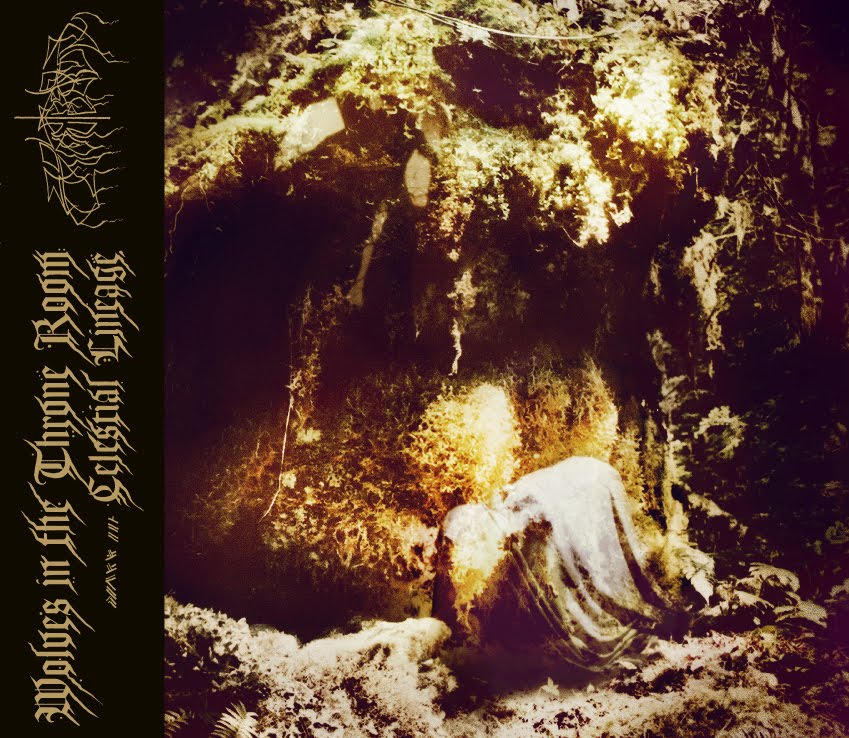
Wolves in the Throne Room – Celestial Lineage (Southern Lord, 2011)
Although it is obviously inspired by European Black Metal, Wolves in the Throne Room create music that is intensely local in its orientation. Certainly, Celestial Lineage is a manifestation of the northwestern landscape, but it also arises out of an underground West Coast tradition formed by successive generations of psychic crusaders: Theosophists, beatniks, the Grateful Dead, Neurosis, the back-to-the-land movement, satanic hippies, tree-spiking anarchist punks. Aaron and Nathan Weaver, the duo behind Wolves in the Throne Room, refract the transcendent and mythic aspects of Emperor and Burzum through this idiosyncratic Cascadian prism. The resulting music invokes a misty dream world. Rain drenched specters looming at the edge of the wood. Echoes from the Astral Plane. Ancient cedar deities robed in moss. A glimpse of a bronze-domed temple among the firs.
Celestial Lineage was written and recorded over the course of the first six months of 2011. The Weaver brothers worked with Producer/mystic Randall Dunn (Earth, Boris, SUNN 0))), Cave Singers, Bjork/Omar Souleyman), with whom the band has developed a close relationship since their first collaboration on 2007’s Two Hunters. 3 songs are bejeweled by Jessika Kenney’s liturgical choir and solo voice. Aaron Turner (ISIS) also contributes orations to the maelstrom.
The band has said that It is the final record in a trilogy that began with Two Hunters. Syncronistically, It is also the last record that will be recorded at Randall Dunn’s storied Aleph studio, which has been the birthplace of scores of groundbreaking records over the past 10 years.

The Golden Palominos – The Golden Palominos (Celluloid, 1983)
The Golden Palominos’s The Golden Palominos = Anton Fier (percussion, drums), Arto Lindsay (guitar), Fred Frith (guitar), Bill Lawell (bass), John Zorn (saxophone), and others. Funk, art rock, no wave, free jazz, hip hop, turntablism, techno, ambient soundscapes; it’s all in here. Fier’s abiding interest in all forms of music is on display on his first album with ‘the Palominos’. It’s a banquet of experimental music and exquisite listening.
Tim Hecker is really in a class of his own these days. My favorites are still Haunt Me and Radio Amor, but his new stuff has been consistently incredible.
Hey Chris,
Good luck preparing your paper and preparing for those excruciating-sounding doctoral exams. In case you’re in want for music, here are some (5) similarly minded albums that are personal favourites:
The Fun Years – God Was Like, NoZs – New Slaves
Sean McCann – Open Resolve
Colin Stetson – New History Warfare, Vol. 2
Subtle Lip Can – S/T
*Zs – New Slaves, why you want be loving God Was Like, No like that?
Thanks, Nick! I am unfamiliar with all of these except the Zs. Will seek out immediately. Cheers.
Agreed. But I don’t have Haunt Me…must get it now! Thanks.
skrillex
I hope “bleeding edge research” was said a little tongue-in-cheek, or else the lit PhD’ers really need to come to terms with the reality of what they’re doing (ie not science).
Oh shoot, I meant to write “bleeding wedge” research. Thanks for catching that, ael. And good point about that reality thing…everybody knows that literature is totally inferior to science. No question about that. It was thoughtful of you to remind “lit PhD’ers” of their place. A little weird to be referring to people like Charles Bernstein and Katherine Hayles as “lit PhD’ers,” but I’m sure you know what you’re doing.
Amazon tells me I’ll like Skrillex if I like Bassnector. I do like Bassnector. Ergo, I will take your advice. Thanks!
A potentially interesting post gets twisted by an advert then wholly swallowed by personal music diary — hey i’ve been listening to the doors recently (I picked up some old LPs from a moving sale), dude did you know soft parade has the entirety of the Lizard King written in the liner notes? Many you’ve read American Psycho too often or actually believe blogs are about the Williamsburg lunch you had today at DuMont’s (i.e., the back-side out-door bar is where it’s at!).
Steven Pine, hey girlfriend! Glad to hear that someone else is keeping the Doors alive. Myself, I’ve never been to Williamsburg — the Colonial one or the Hipster one. I like your snarky enthusiasm, though. For my money, Glamorama is a better Ellis than American Psycho, and Maldoror is a better book for brutality. Sorry you didn’t like my form. Maybe next time.
Keep it up Higgs, maybe you’ll actually write something you feel a little afraid to share!
Pine, you brute. Let’s wait and see. Either way, I know I can count on you to spend time reading everything I write and then critiquing it ever so astutely.
I admire your enthusiasm, and I’m sure this conference will be informative and energizing in many ways, but “bleeding edge” does sound a little like something somebody would say on Gizmodo or something. Do you think McHale describes what he does as “bleeding edge”? Will there be synergy at this conference? (I’m kidding! I’m serious when I say the conference sounds awesome.)
Thanks for links to steal these albums. I hope as a result at least some of you buy a record or go to a show. This Wolves tour is supposedly their last.
Also, on a more serious note, is it important that literature be defended (for example, as on par with ‘science’)? Does literature need to be ‘important’ to justify studying it? Is Hemingway more ‘important’ than Jonas Salk? Why does it matter?
Hey Mittens,
I can assure you that McHale does not refer to what he does as bleeding edge or bleeding wedge. But I am super intrigued by the way this particular phrase has caused such a minor ruckus. It’s as though I’ve appropriated a super special signifier that I shouldn’t have…as though I’ve snuck over to the holy temple of science and stolen something from their discursive field that is inappropriate for the discursive field of literature. (This brings to mind Christian Bok’s book on ‘Pataphysics.)
I missed Wolves when they came through Tallahassee because nobody in this town ever advertises anything. I’m sad I missed them. From their website it looks like they’ll be back in the US sometime in the spring but mostly on the West Coast.
Does literature need to be defended? I’m not sure. What I am sure of is that Hemingway is about the least important American literary figure I can imagine. A few months ago I read The Sun Also Rises and I loathed it. Same for his short stories. I simply can’t understand why people fawned over his work back then or now. If I was at the Barnes & Noble in 1926 looking at the new releases and I saw Sun Also Rises next to Agatha Christie’s The Murder of Roger Ackroyd or Kafka’s The Castle (all three came out that year), I would pick up those latter two in a heartbeat and leave Hemingway for someone else.
That Fun Years album is terrific. Nice recommendation.
I was just teasing a little bit because “bleeding edge” is such business speak (like “synergy”) — I suspect it’s more of a marketing term than something actual scientists say, but who knows. More playful ribbing than minor ruckus (though I can’t speak for the other dude.)
They were awesome.
I’m not a big fan of Hemingway, either, but for my example I wanted to pick two contemporary figures, one from science, one from lit, one canonical and one who made a major discovery. Your paragraph sort of makes my point–while most people would probably agree that a polio vaccination has been personally beneficial to them, a figure like Hemingway–you can dismiss him simply because you loathe his writing. Like we can’t even agree on a representative major figure much less expect anybody to say “yeah, my life is better because of Hemingway.” Surely some people believe their life is better because of literature in general, and so yes, that makes it ‘important’, maybe even life-saving, but I wonder if it’s important to you that literature be important, like does it need to matter to be worth studying? As somebody who studies literature, I’m not sure I would ever argue that medicine, for example, hasn’t had a greater impact on the people of the world, but that doesn’t really matter to me. I was curious about your defense of literature v science is all. Also, I think Hemingway is an important writer, even if you don’t like him.
[…] did this sort of post last month. Thought I’d do it […]
[…] just a teaser trailer. For now, below the jump, in lieu of music (as I’ve done the past few months) I’ll share with you the current cluster of tabs I have open on my computer. Food […]