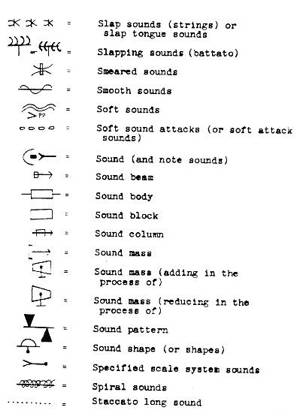
Examples of Sound Classifications / Graphic Notation listed in Anthony Braxton’s Composition Notes
I’m on a huge Anthony Braxton kick right now. Like, inside a free jazz free fall vortex of kaleidoscopic music from Ornette Coleman to Cecil Taylor to Marion Brown to Albert Ayler to Don Cherry to Art Ensemble of Chicago to more and more and more, but right now Braxton’s speaking to me the loudest.
LISTEN TO THIS:
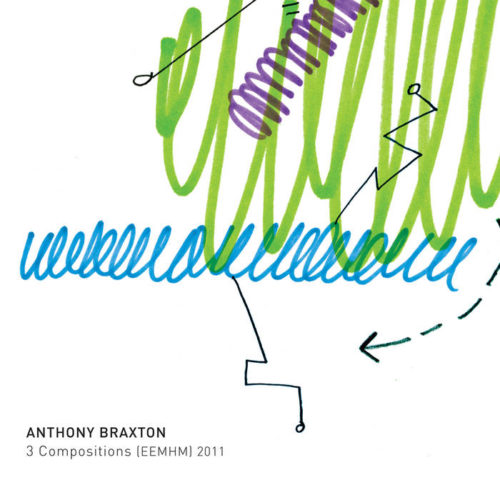
3 Compositions (EEMHM) 2011 by Anthony Braxton
Braxton’s material moves in ways I find massively appealing: bold, dynamic, unpredictable, defiant, aggressive, persuasive, provocative, spooky, scary, creepy, cacophonous, rambunctious, chaotic, discursive, flagrant, abstract, unintelligible, bewildering, soothing, calming, inviting, indulgent, relentless, combative, mutinous, as if it were an act of resistance.
READ MORE >
Random / 1 Comment
March 17th, 2017 / 12:40 pm
I.
I’ll let you fuck me
if you make it quick.
Like mechanized.
Like we both come
and that’s it.
No funny business
in between.
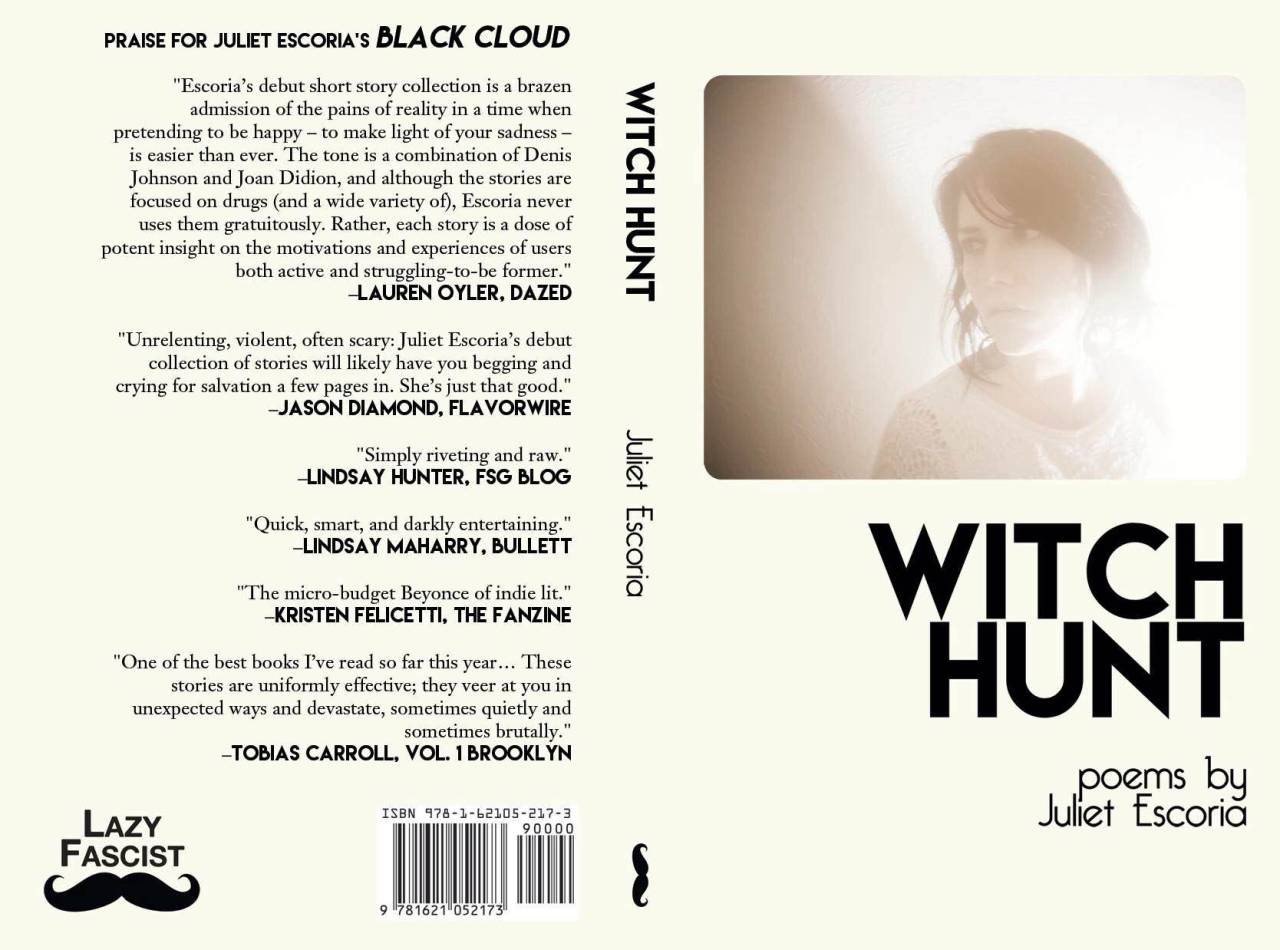
Those four sentences uttered by the narrator of Juliet Escoria’s new book, Witch Hunt, published recently by the critically acclaimed indie press Lazy Fascist, demonstrate the precise composition, emotional wreckage, and elegance of language on display in this powerful text.
The passive first line compared to the assertive lines directly following illustrate the text’s general ethos: deadpan checked-out ghosts of people bumping into one another’s atmosphere where desire forms and floats without anchor. Still, these ghost people transform drug addiction, mental illness, suicide, domestic abuse, political correctness, formal experimentation, epistolary, haiku, conceptual, confessional, visual expectations.
So many ghost people exist inside her sentences. So many performances. From the opening section of the ten-part long poem titled “True Romance,” where the above quote originates, the speaking subject comes into focus so quickly and so resonantly, readers sometimes mistakenly presume to understand Escoria’s speaker way too prematurely. It’s true we come to know a person in the pages of Witch Hunt, but through the course of the book the speaker remains unflinchingly unpredictable. What she does one moment doesn’t forecast what she’ll do in another. To assume to know the narrator, to expect to know what she will say or do or think at any moment proves preposterous. Since this passage appears late in the book, readers who start at the beginning and move forward in the standard reading fashion (as opposed to skipping around) already know they don’t know what’s coming next; what distinguishes this particular moment in the book is the role it plays in the overall structure of Escoria’s fragmented twenty-first century confessional romance narrative. It begins the descent to terminus.
Hopefully the following notes convincingly attest to the raw elegance of Witch Hunt, while nevertheless ultimately revealing my strong admiration for it. As we enter the darkness of 2017 — don’t forget, those Game of Thrones people kept warning us the winter was coming! — let us not forgot this powerful 2016 release. Escoria taps into something vital about our current cultural condition and engages with it in provocative ways. So here’re my thoughts on why I highly recommend it:
READ MORE >
Comments Off on Strixologist as Examining Magistrate of Nature: Notes on Juliet Escoria’s Witch Hunt
January 6th, 2017 / 3:26 pm
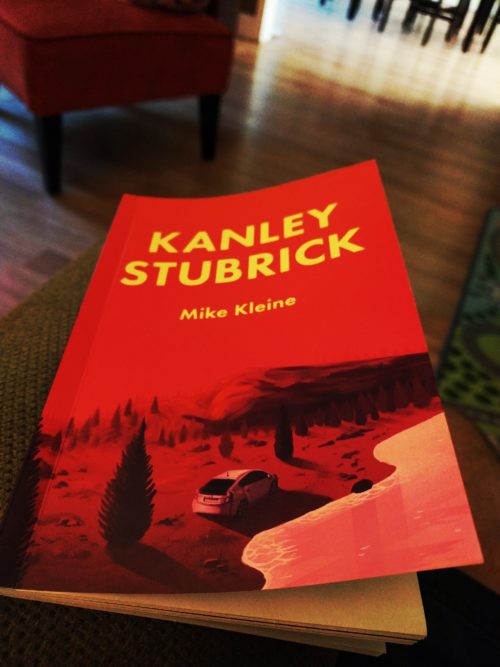

Kanley Stubrick moves. It makes no sense and all the sense simultaneously, in the way it feels when something bad happens to you but you secretly feel like you deserved it. Or that feeling when all you wanted for breakfast was the giant banana pancake at Surrey’s Café in New Orleans on Magazine Street, but when you arrive they tell you they’re all out of the giant banana pancake batter so you get crushed and flippantly order the French toast and then it turns out the French toast is even better than the giant banana pancake but the catch is: it’s a seasonal thing and they won’t have it again for another year starting tomorrow. You know, so much of life simultaneously makes absolute sense and absolutely no sense at all. READ MORE >
1 Comment
October 25th, 2016 / 12:37 pm

This new thing is a style that we have come to call the Bossa Nova, an elaboration of the new tradition. Needless to say the Bossa Nova has no plot, no story, no character, no chronological sequence, no verisimilitude, no imitation, no allegory, no symbolism, no subject matter, no “meaning.” It resists interpretation because it doesn’t want to be interpreted, but is very easy to understand once you forget about analyzing it. The Bossa Nova is nonrepresentational — it represents itself. Its main qualities are abstraction, improvisation, and opacity. (pg. 211)
— Ronald Sukenick, In Form: Digressions on the Act of Fiction (Southern Illinois University Press, 1985)
***
I’ve had this power quote in draft mode for a long time. Since the end is nigh, I thought I’d go ahead and post it.
Also, I wanted to say thank you to Blake for bringing me on board — I began writing for HTMLGIANT on July 16th, 2009 — and to the other contributors for their consistently engaging work. This site has meant a lot to me. It opened many doors, introduced me to many new writers and new ways of thinking about writing and publishing. I greatly appreciate the opportunity to have been a part of this community.
Thinking about how literary historians of the future will write about this place and its people, I smile. While it did get ugly around here from time to time, I think Giant succeeded more often than it failed.
If you haven’t read it yet, Peter Tieryas Liu wrote a thoughtful piece about us at ENTROPY where he says, “There were many orbits and star systems within HTMLGiant. When people made comments like, HTMLGiant this and HTMLGiant that, I wondered, which HTMLGiant?”
For me, that nails it. We were never one thing. We were a spot where a bunch of different book-passionate voices came together to clash and splash and share ideas.
This place will be missed.
Massive People & Random / 2 Comments
October 21st, 2014 / 5:23 pm
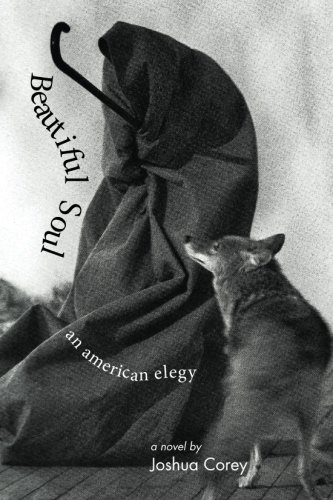
Available now from Spuyten Duyvil
Because my home office has stacks on stacks of books, because new books are added to the stacks almost daily, because I have not finished half of half of the books I’ve started, I cannot grant attention to more than the opening pages of a book before I decide whether or not to stick with it. In truth, if a book has not convinced me within five or six pages that it deserves my complete attention I put it in the box labeled “To Be Traded At The Bookstore in Jacksonville.” Sadly, many many books end up in that box. Given the limited number of books that escape such a fate, I thought I might spotlight a few of them this summer in a series I’m calling “The Opening Pages.” Could have also called it “Books that didn’t end up in the trade box,” but that sounded less catchy.
Joshua Corey’s Beautiful Soul: An American Elegy did not end up in the trade box. Quite the contrary. I think it’s one of the most interesting and impressive books I’ve read lately. And since it has just been released, I thought it would be a great place to start this series.
READ MORE >
Random / 1 Comment
June 13th, 2014 / 12:00 pm
For only $40
you can have
your dreams
delivered to you
every day in June,
via that brillig slithy tove
Mathias Svalina,
his vorpal sword in hand.
WHILE SUPPLIES LAST, YOU BETTER GET IT!!!
Author News & Events & Massive People / Comments Off on Subscribe to Mathias Svalina’s Dream Delivery Service
February 8th, 2014 / 12:02 am
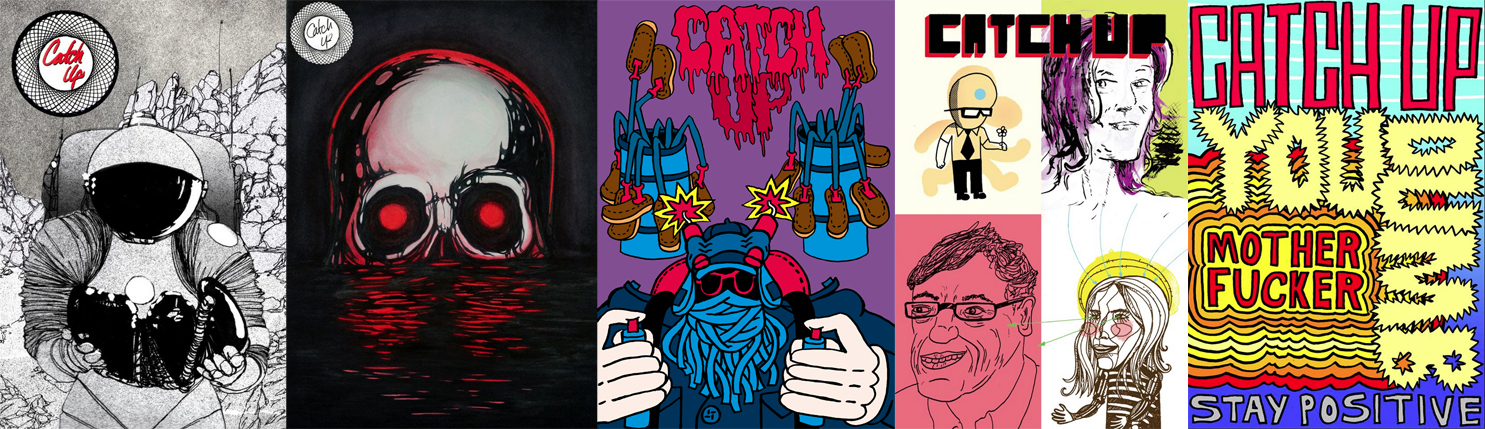
The editors of Catch Up were kind enough to answer a few of my questions about their badass journal.
How did Catch Up emerge?
Jeff: In the early 2000’s, William Cardini and I founded the artist collective The Gold County Paper Mill. Together with our pal Chuch, we produced comics, zines, and weirdo DVDs. But in 2008, I moved with my wife from Austin to Louisville, which meant the performance art we were making together would become fairly impossible. Catch Up started as a way to continue the collaborative projects that WIlliam, Chuch and I had grown to love.
Catch Up was intended to be an object-based series of collaborations put out by the GCPM. The “first issue” was a t-shirt. That idea fizzled out quickly. Having enjoyed producing our own books, we decided to try our hand at publishing others. Will is a cartoonist and I’m a poet, so we just mushed those two things together.
Once in Louisville I met poet Adam Day and designer Rob Bozwell, who both quickly joined the team. Will enlisted the help of another frequent collaborator of his, Josh Burggraf. The five of us turned Catch Up into the fucking dope journal it is today.
After a few more shake ups, moves, marriages and babies, Catch Up is now run by myself, Hannah Gamble, Gary Jackson, Peter Jurmu, Pete Toms and PB Kain.
What is your VIDA count?
READ MORE >
Random / 2 Comments
January 17th, 2014 / 5:11 pm
In case you missed it, the NBCC announced their newest awards finalists. According to their selections, the only publishers publishing award-worthy material are FSG and Knopf, plus a meager handful of others that are not FSG or Knopf. Obviously the NBCC committee has never seen this list. The number of presses that aren’t FSG or Knopf would blow their minds!
AUTOBIOGRAPHY
(Knopf)
(Farrar, Straus & Giroux)
(Viking)
(Bloomsbury)
(Simon & Schuster)
BIOGRAPHY
(Doubleday)
(Yale University Press)
(Knopf)
(Farrar, Straus & Giroux)
(Cornell University Press)
CRITICISM
(McSweeney’s)
(Liveright)
(Farrar, Straus & Giroux)
(Farrar, Straus & Giroux)
(Verso)
FICTION
(Knopf)
(Farrar, Straus & Giroux)
(Knopf)
(Viking)
(Little, Brown)
NONFICTION
(Norton)
(Crown)
(Sarah Crichton Books/Farrar, Straus & Giroux)
(Farrar, Straus & Giroux)
(Knopf)
POETRY
(Farrar, Straus & Giroux)
(Knopf)
(University of Pittsburgh Press)
(Copper Canyon)
(University of Arizona Press)
Random / 11 Comments
January 13th, 2014 / 9:44 pm

Last week I did a Fiction Shopping Guide and a Nonfiction Shopping Guide. Now I’ve got this list of poetry titles published this year, for all you last minute shoppers.
When compiling the nonfiction list I limited myself to twenty titles, even though I could’ve easily made it thirty or fifty with the amount of good material published this year. For the fiction list I bumped the number to thirty, but could’ve easily exceeded it. For the poetry I decided on thirty-five. I’ll present them in no particular order. (N.B. I’ve omitted works published by fellow giants, which was hard considering the awesomeness of Klassnik’s The Moon’s Jaw or Lorig’s NODS. to name but two.)
These obviously represent my own interests and therefore omit plenty of titles I’m sure were great. Also, in the interest of transparency, my click-throughs use my Amazon Affiliate number, which means that I receive pennies when you click on the titles and end up purchasing something, pennies I save up and use to buy baby supplies.
READ MORE >
Random / 7 Comments
December 18th, 2013 / 11:27 am

Last week I did a Nonfiction Shopping Guide. Now I’ve got this list of fiction titles published this year, for all you last minute shoppers.
When compiling the nonfiction list I limited myself to twenty titles, even though I could’ve easily made it thirty or fifty with the amount of good material published this year. For this list I bumped the number to thirty, but could’ve easily exceeded it. I’ll present them in no particular order. (N.B. I’ve omitted works published by fellow giants, which was hard considering the awesomeness of Baumann’s Solip and Simmons’s Happy Rock
 to name but two.)
These obviously represent my own interests and therefore omit plenty of titles I’m sure were great. Also, in the interest of transparency, my click-throughs use my Amazon Affiliate number, which means that I receive pennies when you click on the titles and end up purchasing something, pennies I save up and use to buy baby supplies.
READ MORE >
Random / 8 Comments
December 10th, 2013 / 12:04 pm

