Roxane Gay

http://www.roxanegay.com

Roxane Gay's writing appears or is forthcoming in Mid-American Review, Blip Magazine, DIAGRAM, Cream City Review, Annalemma, McSweeney's (online), and others. She is the co-editor of PANK, an assistant professor of English at Eastern Illinois University, and can be found at http://www.roxanegay.com. Her first collection, Ayiti, will be released in 2011.

{LMC}: Beecher’s One

The first thing you will notice about Beecher’s is the design and production–clean and elegant. The spine is bound with black thread. The pages are thick, linen, creamy, the grain of it holding the ink to the page.

Introducing a video about the debut issue, the editors said, “Beecher’s One was designed to give the text inside primacy, and as well record the reader’s tactile interaction with the physical magazine. The layout is straight-forward, and the text is presented simply in a black serif font on white paper. The physical object, with a naked spine and rigid, toothy, absorbent paper is meant to show evidence of the reader by literally absorbing and recording the reading experience: the hands holding the book, the fingers on the page, the bending of turned pages, the weakening of the unprotected spine.”

Reading Beecher’s is, indeed, a physical experience that openly acknowledges and engages the reader. This is a magazine that wants to develop a relationship with readers and writers. In this, and other regards, Beecher’s succeeds beautifully. The writing showcased within the magazine’s pages is as engaging as the design and production. Contributors include Rebecca Wadlinger, Alec Niedenthal, Joshua Cohen, Rhoads Stevens, John Dermot Woods, Phil Estes, Creed J. Shepard, Lincoln Michel, John Coletti, Yelena Akthiorskaya, Colin Winnette, Dana Ward & Stephanie Young, James Yeh, Alexis Orgera, Rozalia Jovanovic, Ricky Garni, and Justin Runge as well as interviews with Stephen Elliott and Adam Robinson.

READ MORE >

Literary Magazine Club / 12 Comments
November 1st, 2011 / 12:22 pm

Class Is in Session With Professor Edith Wharton


Edith Wharton is one of my favorite writers. Her stories are timeless and elegant and if I had to be trapped somewhere with only one writer’s books for the rest of my life, I’d probably choose the complete works of Edith Wharton.

I’ve been thinking about Edith a great deal lately because I’ve been having a lot of self-doubt about my writing for a number of reasons, few of them rational, all of them frustrating. The Internet is great but it’s also terrible because you know, all the time, what everyone else is doing and it’s easy to lose sight of writing itself as what matters most. It’s not hard to fall into the trap of losing confidence in what you do as a writer and/or trying to keep up with the literary Joneses by writing outside of your comfort zone to respond to the literary zeitgeiest. The older I get, the more I realize that while you can and should grow and challenge yourself as a writer, you can only be who you are. Sometimes, like many writers, I lose sight of that. I recently consoled myself with Age of Innocence and Wharton’s amazing short story, “Copy: A Dialogue.” Then I read Wharton’s The Writing of Fiction, a slim but rich volume of writing on writing. Wharton’s insights are sharp, timeless, and truly invaluable.

READ MORE >

Craft Notes / 43 Comments
October 27th, 2011 / 2:00 am

Literary Magazine Club: Beecher’s Edition (11/1/11)

The next installment of Literary Magazine Club begins on November 1 when we will be reading and discussing the debut issue of Beecher’s, the graduate student run literary magazine from the University of Kansas.

Beecher’s is selling the issue at a 40% discount for HTMLGIANT readers. Take them up on that bargain–$6.50 for a great literary magazine which is beautifully designed and produced–you can’t pass that up. To take advantage of this discount, go to http://www.beechersmag.com/2011/10/htmlgiant-book-club/. Enter the password HTMLGIANT.  This will take them to a secure Paypal portal on the Beecher’s website for you to complete your order.

Future club selections:
January 2012: Versal
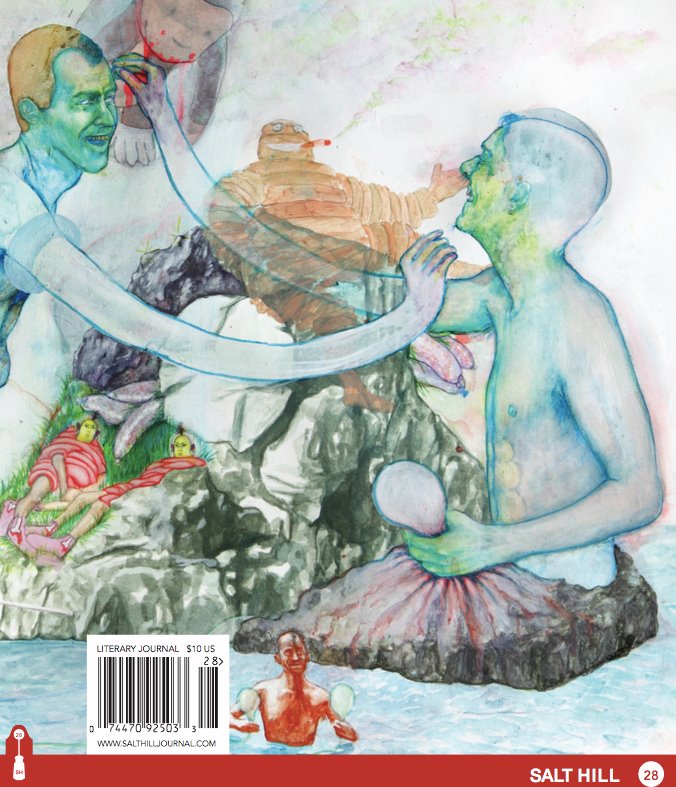
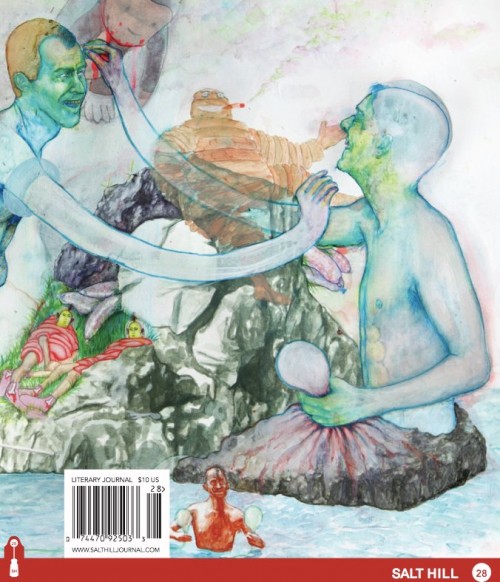
March 2012: Salt Hill
May 2012: Trnsfr
July 2012: Uncanny Valley
September 2012: J Journal: New Writing on Justice

Stay tuned for special offers and giveaways for these magazines.

If you’re interested in writing a guest post or some other feature related to Beecher’s, get in touch by e-mailing me at roxane at htmlgiant.com. Topics you might consider discussing include the design, content, overall aesthetic, whether the magazine met your expectations, if the debut is promising, what the magazine contributes to the literary scene, etc. You might also do an in-depth analysis of one writer’s work, etc. There are no limits.

There’s also a Google Group with light posting about literary magazines and club announcements. If you want to join the group or want more information about the LMC, if you’re an editor who wants your magazine featured, etc, send me an e-mail. To summarize: however you want to participate please get in touch or watch this space in November when hopefully, we’ll have a great discussion about an interesting new literary magazine.

Literary Magazine Club / 1 Comment
October 26th, 2011 / 2:00 pm

Reading Material

Today, Nouvella Books is launching Matthew Salesses’s novella The Last Repatriate. About the book: In 1953, after the end of the Korean War, 23 POWs refused to repatriate to America. The Last Repatriate tells the story of Theodore Dickerson, a prisoner who eventually returns to his home in Virginia in the midst of the McCarthy Era. He is welcomed back as a hero, though he has not returned unscathed. The lasting effects of the POW camp and troubles with his ex-fiancée complicate his new marriage as he struggles to readjust to the Virginia he holds dear. Nouvella is helmed by Deena Drewis and their business model looks interesting–limited print runs, 400 of which are sold during a week long launch, 100 sent to bookstores and events, as well as e-book distribution.

I was thoroughly entertained by this exploration of the minibar by Dubravka Ugresic—one of the best essays I’ve read in a long time.

If you’ve ever wondered what script writers think of bad movie scripts, wait no longer.

At the Los Angeles Review of Books, a thoughtful essay about the Occupy movement.

David Carr asks, “Why not occupy the newsrooms?”

Kyle Winkler thinks books are an existential crisis.

A lot of writers bristle when their work is vetted by students at literary magazines. Mike Meginnis has a lot to say about the matter. As a follow up, he has questions.

You can see the history of science fiction in one image. It is amazing.


Random / 34 Comments
October 25th, 2011 / 2:29 pm

Modern Submission Convenience

We just finished our first workshop in my fiction class and now my students and I are talking about revision and what students should consider, if and when they choose to submit writing to literary magazines. I want to make clear to my students that publication isn’t what they should be thinking about right now but I still want them to start to understand what it means to submit work, receive editorial feedback and face rejection or acceptance. Most of the students are, understandably, intimidated by the submission process and what it means to put their work out into the world. Hell, I’m still intimidated by the submission process. For newer writers, it is hard to grasp what editors really want. It’s hard to break yourself of the mindset that you need to worry about what editors want. I went over some of the basic etiquette of submitting–address the proper editors, spell their names correctly, don’t explain your story, don’t ramble, proofread your work, read it aloud, proofread it again, research the magazines where you’re sending your work, read the magazines where you’re sending your work, and more than anything, make sure you’re submitting writing that matters.

When I first started submitting work, there was a ritual to it. I’d print a story out on my dot matrix printer and tear off the perforated edges dotted with tiny holes. I’d consult my Writer’s Market, write a cover letter, address a return envelope affixed with enough postage for a response and send off a story I now know had no shot in hell of ever being published by the likes of those glittery magazines I foolishly hoped would love my work. I am not nostalgic for that time. It was pretty terrible. I did learn, though, that becoming a published writer required patience and effort and sometimes that effort was secretarial.

READ MORE >

Random / 77 Comments
October 21st, 2011 / 5:38 pm

When you’re asked to withdraw something or to resign from a position, there’s often some kind of pressure involved and that pressure is generally wielded to make someone else save face. Last week, the National Book Foundation announced this year’s nominees for the National Book Award. They made a mistake (?!) and today, the writer whose work was “mistakenly” included,  withdrew her work from consideration, at the Foundation’s “request.” The word clusterfuck comes to mind. Real talk: I’d cry if this happened to me.

Q&A #8

If you have questions about writing or publishing or whatever, leave them in the comments or e-mail them to roxane at htmlgiant dot com and we will find you some answers.

Question:
i have a website and published stories. i sell booklets of my stories on the streets. sometimes i feel like no one reads anything i’ve written. how do i put myself out in the public more? how do i get a broader readership?

READ MORE >

Behind the Scenes / 24 Comments
October 14th, 2011 / 4:46 pm

The Savage Specifics of Such a Finale: A Conversation With Joshua Mohr

Joshua Mohr’s Damascus (Two Dollar Radio) is a tightly packed novel about the lost, losing, and broken people who frequent Damascus, a dive bar in San Francisco. The story is moving, bitterly charming, sometimes depressing, but always engaging. I talked to Joshua about his book, character driven writing, writing as a form of protest and much more.

I read Damascus as very character driven. It’s really the people and what you show us about their lives that create the narrative. Would you consider Damascus character driven?

Absolutely. Books don’t work if the people on the pages aren’t alive. It’s why writing a novel takes so long. You have to dig around in other psyches, other hearts and souls. The book isn’t going to be any good until your characters are the ones telling the story, and you’re just the poorly paid secretary scribbling it all down.

I teach in the MFA program at the University of San Francisco and when I talk characterization with my students, I emphasize the idea that actually the characters have to characterize themselves: the reader just sits back and watches the players stalk their sordid habitats. This kind of active characterization involves your reader in the story, too, making them put the pieces together for what each new scene means, how it contributes and complicates the action they’ve already observed. They become a kind of detective trying to compile an interpretation.

READ MORE >

Author Spotlight / 8 Comments
October 11th, 2011 / 1:00 pm

This/That

The Dzanc Sessions, coordinated by Anna Leigh Clark, look pretty interesting. Session One classes begin the week of October 16. Each class spans eight or ten weeks. The content of the class is the same regardless of the time span; it is merely accelerated in the eight-week version. Eight-week Session One classes run through the week of December 4. Ten-week classes run through the week of December 18. Session Two will begin the first week of January 2012 with another eclectic line-up of workshop opportunities. The price for workshops is $325 Cost includes a three-month membership to the Dzanc Books eBook Club. (Or, if you do not have an e-reader, you can select a free copy of any print title from Dzanc Books.) The bulk of your registration fee supports the non-profit work of Dzanc Books. A portion of it supports the work of your instructor and the administration of the Dzanc Sessions.

Anna also has a great roundup of literary things here.

Don’t forget that the new Literary Magazine Club discussion begins on November 1. You can find details on ordering the magazine we’ll be reading, Beecher’s here.

Emily Books. What do you guys think of the concept? I’ve talked about how we’re inundated by books these days and it’s hard to know what to read. I’ve also talked about Vouched Books, where Chris Newgent personally vouches for the books he sells and is both able and willing to talk about any title he caries (from a limited, curated selection). That intimacy makes it easy to get on board with taking a chance on writers we’re not familiar with and I’ve enjoyed learning about books I wouldn’t ordinarily come across at his table. Emily Books seems to do something similar. They feature one title a month, selling only e-books. There’s also a book club… if you live in NYC. A bookstore that only sells one book at any given time is intriguing. This has kind of been done before but I’m interested in future selections and seeing if other people adopt similar approaches to bookselling.

Does Timothy McSweeney have a white savior complex? I found this essay really thought provoking and it introduces interesting questions about cultural representation and the consequences of getting “it” wrong or right (via Jackson Nieuwland).

The Occupy Wall Street library has a blog worth checking out (via Bookslut).

Writer’s Relief is having a contest to support literary magazines.

The new TV season is kind of disappointing, right? I haven’t seen anything yet that I must watch.

The last two books I enjoyed: Blueprints for Building Better Girls by Elissa Schappell (not perfect but very immersive and more complex than I initially realized) and Reality Bites Back by Jennifer Pozner (very incisive). Don’t read that latter book unless you want your enjoyment of reality television to be ruined forever (I kid, mostly).

There is an encyclopedia of science fiction. I wonder what an encyclopedia of literary fiction would look like. Divorce: In literary parlance, the dissolution of a marriage as a narrative catalyst to explain character motivations such as drinking, promiscuity, bitterness, and tear-stained arguments. See also: the children.


Roundup / 10 Comments
October 10th, 2011 / 4:55 pm

I Felt Like I Was Part of Something

Last spring I graduated from my MFA program with a degree in fiction and was expelled into the wilds of a Pittsburgh recession with very few—if any!—marketable skills. I drank a lot and watched TV and cooked up elaborate theories about LOST involving a super intelligent ape named Joop mentioned only briefly during a second season viral campaign. Halfway through the summer I lucked into a few teaching gigs and ended up with a section of Intermediate Fiction Workshop. I always had vague notions of one day teaching college, but those were always hazy fantasies set deep in a future where I’d be a distinguished silver fox smoking cigars in some type of hover mansion. I wasn’t a TA during my MFA campaign and had no earthly idea if I was cut out to actually walk into a classroom and explain anything to students, let alone fiction, the thing in the world I care most about. As the summer wound down and I made stab after stab at a syllabus, I’d lie awake at night listening to the trains howl through Pittsburgh while trying not to vomit from crippling anxiety.

Classes began. Fall came and went. I was again unbelievably lucky and landed a section of Advanced Fiction in the spring which many of my Intermediate students signed up for. The process was endlessly humbling, mostly because of the students. I was shocked at how genuinely good so many of them were. I was ready for anything on that first day of class: from manic scribbles on a napkin to thousand page genre opuses. But these students were wonderful. They loved fiction as much as I did, and their enthusiasm hyped me up and I hope vice versa. By the time the academic year drew to a close, many of them were beginning to publish their work in journals I respected, and all of them had shown some pretty big improvements from the first day. And all of this from a workshop. The workshop!

READ MORE >

Craft Notes / 17 Comments
October 4th, 2011 / 1:00 pm

Literary Magazine Club Never Dies

I’m reviving LMC and the first magazine we’ll be discussing is Beecher’s, the graduate student run literary magazine from the University of Kansas. We’ll feature a new magazine every two months and hopefully that lighter schedule will allow more readers to participate.

The debut issue of Beecher’s we’ll be reading features Alec Niedenthal, Rebecca Wadlinger, Joshua Cohen, Rhoads Stevens, John Dermot Woods, Phil Estes, Creed J. Shepard, Lincoln Michel, Yelena Akhtiorskaya, John Coletti, Colin Winnette, Dana Ward & Stephanie Young, James Yeh, Alexis Orgera, Rozalia Jovanovich, Ricky Garni, and Justin Runge.

READ MORE >

Literary Magazine Club / 12 Comments
October 3rd, 2011 / 12:15 pm

Juggalos on Writing

“It’s a lifestyle, it ain’t only a music choice.”

“Do what you gotta do, don’t gotta hate on people because they’re different.”

“I do whatever the fuck I want and don’t give two fucking shits.”

“I am fucked up on E and vodka.”

“I got fucked up.”

“It was a fucking spectacle and shit and I don’t give a fuck because it was righteous.”

“I can cook like a motherfucker.”

“I’m a happy motherfucker living life day to day.”

“Most people think I’m on drugs because I’m always happy.”

“It’s a puzzle and each and everyone of us is an integral piece.”

“It actually really burns, I’m not going to lie.”

“Keep it trippy. Legalize everything.”

“The gathering don’t stop. You do.”

“It’s the greatest.”

“I’m still fucking here.”

“Life is something special that you can only have one time. Enjoy the shit out of it.”

“We have alcohol and we’ve got explosives.”

“We just drank a little bit. Probably get all stoned, smoke some hash and fucking chill, do it all again the next day.”

“All of us have jobs.”

“Being a juggalo does not mean you’re not fit for society,”

“I’m insane. I like to stab people, know what I mean?”

“I’m showing my titties to everyone.”

“Why am I a juggalo? Because that’s who I am. That’s how I was born.”

‘There is no bigatory in juggaloism.”

“True life is inside your soul.”

“WOO WOO!”

Craft Notes / 21 Comments
September 30th, 2011 / 7:04 pm

Black harbor is featuring a lovely short film about Luca DiPierro’s work. There’s also a great interview with Luca on the Black Harbor website.

Random / 10 Comments
September 28th, 2011 / 12:00 pm

Chicks Dig Pink, Frilly Things and (Domestic) Porn

When you write a book with the title It’s A Man’s World, with the tagline “but it takes a woman to run it,”  you have to have some sense that your book is going to be marketed in a certain way. I haven’t read the book in question, but the title certainly gives an impression. Maybe it’s just me but when I see that title, I think “chick lit.” I also enjoy “chick lit,” so that label is not a bad thing. That book’s author, Polly Courtney, recently had a very public reaction to how her book was being marketed as “chick-lit,” announcing she was leaving her publisher, Harper Collins, so her writing wouldn’t be pigeonholed. As writers, we often have to worry about whether or not our work will be pigeonholed based on some aspect of our identity. No one wants their creativity limited or misrepresented; pushing back against rigid, often unfair categories is a natural response for a creative person.

In her explanation for why she was leaving her publisher, Courtney distinguishes between women’s fiction, which she writes, and “chick lit,” which she very much does not. I gather that women’s fiction is serious while “chick lit” is not. She writes, “Don’t get me wrong; chick-lit is a worthy sub-genre and there is absolutely a place for it on the shelves.  Some publishers, mine included, are very successful at marketing this genre to women. The problem comes when non-chick lit content is shoe-horned into a frilly “chick-lit” package. Everyone is then disappointed: the author, for seeing his or her work portrayed as such; the readers, for finding there is too much substance in the plot; and the passers-by, who might actually have enjoyed the contents but dismissed the book on the grounds of its frivolous cover.”

Depending on the content of the book in question, Courtney is correct in noting that disappointment is possible for everyone involved in the consumption of a book. At the same time, isn’t a cover is just a cover?  Eventually, the writing speaks for itself and either readers will like the work or they won’t. Readers are fairly sophisticated these days, aren’t they? I would like to believe readers will, more often than not, have a good sense of what a book is or isn’t about no matter what is emblazoned across the cover. Unfortunately, such does not seem to be the case and certain books are burdened by covers that alienate certain audiences.

READ MORE >

Behind the Scenes / 53 Comments
September 27th, 2011 / 7:11 pm

(via Galleycat)

Random / 70 Comments
September 20th, 2011 / 5:47 pm

Two New Books From Chin Music Press

Since I first discovered Chin Music Press, and their philosophical and elegant title Oh, I’ve been interested in the books they publish because each title is produced not only as a book but as a well-designed art object. Their books use high quality papers, sharp page design, and full color printing for images. This attention to detail makes reading their titles a truly sensual experience.

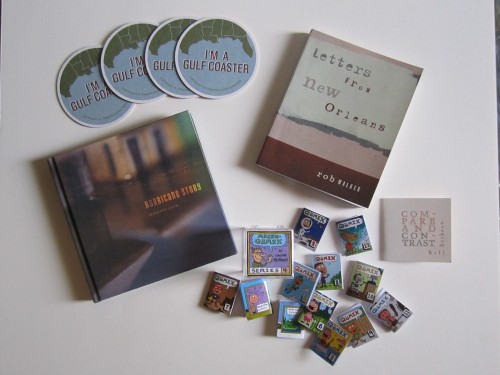
Broken Levee Books, a Chin Music imprint, has in recent months released two compelling books about New Orleans post-Katrina–Hurricane Story by Jennifer Shaw and Where We Know New Orleans as Home edited by David Rutledge.

READ MORE >

Presses / 4 Comments
September 20th, 2011 / 2:00 pm

The One MFA Program to Rule Them All

Scott Kenemore is very angry that his beloved Columbia University has fallen to #47 in the Poets & Writers MFA rankings and he’s going to tell you exactly why Columbia has the awesomest MFA program in all the world.

1. Columbia is expensive and that makes it awesome.

2. Fancy writers teach at Columbia and that makes it awesome.

3. Writers who go to cheaper schools end up selling chapbooks in quantities of 500 (?) and teaching at those terrible regional universities in fly-over states so Columbia is awesome.

4. He has written six novels! All his Columbia friends are equally successful. Even though you may not be able to name one of his six books, Columbia is awesome.

5. Only writers who attend Columbia (or the one school he considers superior, Iowa) have genitals. The rest of you have the smooth plastic of  Barbie and Ken so Columbia is awesome.

6. Unlike the thousands of writers at other MFA programs, or heaven forbid those writers who dare to write without the degree, students at Columbia want to be successful so Columbia is awesome.

7. The MFA rankings should include a category for manuscript placement and FOUR FIGURE advances so Columbia is awesome. (That last idea, minus the suggested prestige of a four figure advance is a good one.)

To summarize, Columbia is the awesomest and only MFA program worth attending if you are a serious, important writer. Other than Iowa.

Here is a rational, smart response to all this MFA ranking business (via Hobart’s Tumblr). 

Mean / 133 Comments
September 15th, 2011 / 4:18 pm

The Creative Writing Job Market 2011-12


When I was on the job market, my friends and I who were looking for faculty positions obsessively watched the academic jobs wiki, a comprehensive site with everything you could possibly need to know about going on the job market in nearly ever field. The site is rigorously updated by job searchers with dates of contact from universities, when interviews are scheduled, when offers are made and accepted or declined and even salary information for some fields. If there are tidbits of “inside information” those are shared. On the creative writing jobs page each year, industrious people track down who was hired in each position and make note of how many books they have. The site is very useful, very intimidating, and very revealing about the state of the academic job market. If you want to really see some frustration, the Venting Page, is well worth the look.

READ MORE >

Behind the Scenes / 39 Comments
September 8th, 2011 / 5:16 pm

Six Late Afternoon Items

1.


2. Huffington Post is getting into the e-book business.

3. Chris Newgent asks poets to rise up.

4. You should read Vanessa Veselka’s Zazen. It’s a fierce book. I didn’t realize this when I bought it but you can read the entire book online, for free. You should also buy it though.

5. The Awl has a really interesting essay on cookbooks as literature.

6. Kenyon Review is offering fellowships that pay $32,500 to writers with an MFA or PhD looking for some time to write and grow as a teacher.

Roundup / 40 Comments
September 7th, 2011 / 5:11 pm

The 2011 Rona Jaffe winners were recently announced. They include Melanie Drane, Apricot Irving, Fowzia Karimi, Namwali Serpell, and JoAnn Wypijewski and one of my favorite newer writers, Merritt Tierce.