
Random
My Expectations, Fulfilled or Un
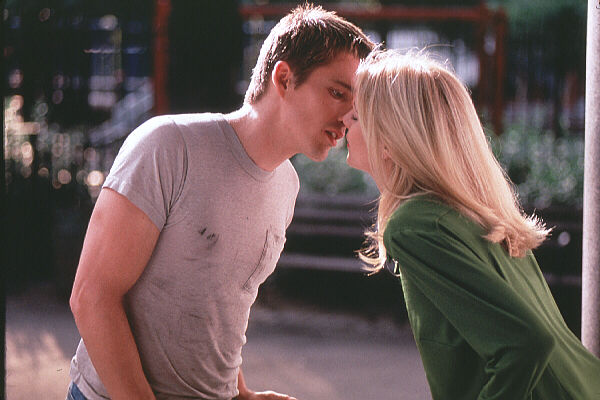
This may be obvious, sure, but my expectations for fiction have changed, and I’m not so sure I like it. I remember being a student, encountering new modes of fiction for the first time – new to me, old to others – and every time, I’d say to myself: Wow, I didn’t know I could do that. I didn’t know fiction could do that.
Opening the cover of Finnegans Wake and pages and pages of onomatopoeia.
Opening Raymond Federman’s Double or Nothing, metafiction and movement on the page! Poetry does that, sure, but fiction? Amazing.
Opening Dubravka Urgesic’s Museum of Unconditional Surrender, my first modular novel.
Opening Anne Carson’s Autobiography of Red or Michael Ondaatje’s Billy the Kid.
Opening Mark Danielewski’s House of Leaves.
Opening Tender Buttons.
Opening Susan Steinberg’s The End of Free Love, second person, Jesus, it was glorious to me. (I’d read “Girl” before, of course, but Steinberg was doing something completely different.)
Opening Age of Wire and String.
Opening Jenny Boully’s The Body.
Opening Swann’s Way.
But now, I have read all these books. And more. I am familiar, conversational. And now, I’m disappointed with nearly everything I read, the freshness is gone. Tired, as opposed to invigorating. I am contaminated.
And yet, I can acknowledge that it’s my fault. Maybe fault is the wrong word here. My expectations have shifted. I am reading for different reasons, maybe.
Back when it first came out, I read Salvador Plascencia’s People of Paper. As I was reading it, I was so excited I texted a friend about it. Then, about a third of the way through, it turned metafictional, and it was still a good book, but my excitement was gone. A few years ago, I taught People of Paper. My students universally hated the first third, said it was too hard to follow, Plascencia didn’t give enough cues to teach them how to read it, but then, the moment it turned meta, they loved it. All of them. They’d never heard of metafiction before. The author is writing himself into the text: Wow.
Ok, fine. I remember the first time I read metafiction. It did the same thing to me. It’s just that now that I’m conversant, it’s not so bright and shiny anymore.
This past month, I chaired some MFA thesis defenses. One of my students wrote this stunning second person modular novella. She was using second person – maybe not in a new way but it was clearly a voice and point of view that was new for her, and in that way, the novella was neoteric. It was effulgent in its attempt to brazenly toss out the old. Ok, so using second person isn’t new. The modular form isn’t new. But it was the student’s encountering of these styles and forms for the first time that made the novella unique, memorable.
A few days ago, I read Junot Diaz’s story in the New Yorker. Despite my praises for my student, Diaz’s second person story didn’t feel new or bright or any of those words. It felt like a trick, something he was doing to make this story more special than it actually is. It’s a typical Diaz story: insecure narrator, awkward sexuality, some cuss words thrown in to show coolness, some Spanish thrown in for flavor.
But then I thought about my students. If I were to give them this story, especially my undergrads, maybe some of my grads, wouldn’t their minds be blown? Probably, yes. Am I too jaded of a reader to appreciate things? I imagine some portion of the New Yorker’s readership really loved the story because it was written in second. Oh, I felt so close to the narrator, like when he wrote “you” he meant “me.” Or something like that. I imagine readers being enticed, excited, enthralled in his story.
I miss feeling that way. I still do, though that feeling is increasingly an endangered species, and most often, when I do feel that way, it’s reading something that was originally published or written fifty, a hundred, two hundred years ago.
What’s making your heart pitter-pat these days? What sweeps in and halts everything?
Lily: I’ve been thinking about this too, and am having a similar experience only I can kind of keep it at bay. I don’t have an answer but I try to think about it in terms of how I approach work. I think I am not comfortable coming at a book with my intellect and experience leading the way. Instead I try to read with a sort of dumbness in front. A noob-like wonder. Not sure how I do it, but it has something to do with attempting not to get too engrossed in critical analysis. Not that I don’t enjoy good analysis, but that I always kind of keep it at arms length.
Of course, it doesn’t always work. When I feel like I can see through a piece of writing (in a bad way) I want to stop reading. If I want to look at the work in terms of craft or intellectualize why I might like or dislike it, I can do it afterwards, when the reading experience is through. That’s if I even have to (I usually try not to at all). I think you’re right to point out that it is a matter of expectations. I’ve tried to subvert my changing expectations with something that is more universal to the reading experience, something that would be in spite a reader’s bibliography or understanding of craft. Obviously, teaching books is different. What I’m talking about here has to do with how I read books personally, not as an instructor, though I still bring it to class in my own way.
for all the old things there’s a million new things.
but i often feel the same way…metafiction is like mushrooms. the first time it’s awesome and eye-opening, and the second time it may still be cool but you start thinking about it more and you realize it may not be the answer and the eye-opening things are often gone once the experience is over and looking back it seems kind of childish or silly, and then it happens again and your stuck staring, afraid to move lest the wallpaper or somesuch monsters in the seams and rhythms of it attack your inner goodness and removes what’s left of your soul and the feeling of breaking out has been stolen and it’s hard to remember why you loved calvino so much…
but then, lily, i opened up your book yesterday at my school’s library and the pages were broken down into tiny sections like newspaper columns or classifieds and the newness scared me and i got something else.
Man this list (especially that carson/ondaatje pairing) is such a perfect reciting of my reading life, and I’ve had the same experience, so what do you do next? Maybe, I’m finding, after all that crafty, fun, formal stuff, is you go looking for the straight stuff again, the straight story, the one where we just need something that reaches in and grabs the heart. Not on a linguistic level, but just because the story takes us away. I find it even harder to love the straight stuff, after something like Autobiography of Red manages to do everything and more, but maybe, just maybe if we did deep enough (and into the past is probably a good place to start) we can start being startled by what we thought was so familiar we ran away from it long ago.
Hi Brian – Here’s the thing: I don’t think I should adjust my expectation. I would like that same sense of wonder and awe. Again and again. Clearly, I am simply reading the wrong things.
Mushroom, heroin, whatevs. And thanks for opening up my book yesterday, Sam, you probably made the right choice picking something else!
Go to the Russians, right? Go to South America. Go east, go west, life is peaceful there, go west, in the open air. (I can’t believe I just typed that. I can’t believe I’m going to hit the button that says “Post as lily hoang”.)
Makeup.
(what sweeps in and halts everything)
Yeah, that’s surely a possibility. For me too, maybe (re: reading the wrong things). But it stands to reason that the more you have in your brain about a subject (e.g. the more you know/think you know about literature) will affect the way you interact with that subject. This would naturally force a change in expectations, right? Or no?
But, I’m not really saying that you should adjust your expectations. For me, it’s more about putting myself in a position so that those expectations are possible. Like, the more I think that I know about literature, the more I approach literature with that in mind, the more I find books that may have wowed me before don’t wow me as much the first time I read them. Of course, there is something to be said for experience and spotting things you might not have noticed as a more inexperienced reader, but I want to say this goes deeper than that. I want to say that. Don’t know if it’s true. That’s why I’ve started thinking about it in terms of approach rather than expectations, because of course you want to keep the expectation that a book is going to zing your brain with wow who is how i can’t what is this awesome! Who would want to give that up?
That’s just because you’re fabulous, TJY!
i’ll be brave enough soon enough.
are they gonna kiss or what?
I think we’ve all felt this way at some point or another.
Anyway, most (if not all) of the books you listed would be considered “innovative” if not “experimental.” I would suggest you return to the pre-20th C classics–esp. the Victorians, like Dickens and Eliot–or read books that are not as commonly labeled experimental or innovative, books people too easily assume are doing nothing “new” (re: realism). I think you’ll find that many of them are, in fact, fresher and more innovative than people give them credit for. Read older essays and non-fiction books, too, like Darwin’s Origin of Species, which can easily be read as a book about writing.
And I agree with the poster above about metafiction–I’ve yet to read any piece of metafiction that moved me in the last ten or so years; most of it by now feels gimmicky and soulless. I really couldn’t care less how smart a writer is, or how many French philosophers he can name drop into a story.
Oh, I don’t know. I have some sympathy, Lily, but isn’t this the attitude that’s turned “experimental” into an epithet? Once the experiment’s done and the result obtained, there’s no reason to repeat it, nothing else to be won? (Straw man: “A novel without an ‘e’ in it? How quaint! Don’t you know I’ve already read A Void?” As though other lipograms were rendered de trop merely by the existence of some imagined (or actual) originator.) Practice makes perfect, right? Don’t we need artists (and thus audiences) who don’t care about originality?
It seems to me that there is no novelty IN anything. Every book is the same as any other book — they’ve all got words. Want novelty? Open the book of smells. Open the book of sound. The novelty is in encountering it (whatever it is) for the first time. And in that encounter, it doesn’t matter to the audience if it’s the “first” iteration of some trope or aesthetic or whatever or the thousandth– the novelty’s the same, Cervantes or Plascencia. In other words, novelty’s in the eye of the beholder. The maker, the work bears none of that responsibility. So there’s really nothing I can recommend, nothing that exists that would be guaranteed new to you or anyone else, but not because there’s nothing new. (I sound cranky, huh? I’m not cranky, Lily, I promise. I just hate the idea of artistic enclosure, the colonizing of whole directions in art through chronological accident, through being “the first.” It’s such an ugly, wrong-headed idea to me.)
Recently felt excited about Plato’s Euthydemus and Ashbery’s translation of Rimbaud and the Ramones.
Last Sunday I went to the Francesca Woodman exhibition at the Guggenheim, then saw Refused play. Both hit me right in the gut in a way I haven’t been hit in a long time. Neither were new for me at all, but goddamn.
Still endlessly excited and fascinated by the Hebrew Bible and the world of commentary surrounding it.
Today I read a poem by Lars Gustafsson and CRIED. It was really unexpected. It might have been because I hadn’t yet had any coffee.
vgbjjbjbnbny ggghggygyyyffhjoefddfbvbhhffhhhvvhvhgnhghvhbjgubhhghghbhhbbbyygyhybb hbnhjbnbnbbnbnbnnbnbjbjbnjjjj j nbjgjjgjbbn jbjjgjvnghfhbff gghhghggghgghhhvhvhghbhbhbhbhbbjhhbhnjhjhngnghghghfhghghvhhbhhbhbhhhhgygygyghbhbhbhbhgjbubjhghbhhbbhgvhhghgvhfhghghbhbhbhbhbhbhbhbhhhhhbhhb mb hghghgghfhfhhghghbvhhhvhgvhbvbbgnnnbngvb joe gffbvvgvbvvvvbvb v bb b b bgvgvgvgvv v bgvgvgb b b g g gvgg bvvgvg b b gvvvgv vv v vhgvvvvgvhvb c bgcgftty toybbbbbnbnnbnbbbnvbnnbbnnbnbvnnvnbnvnvnbnbnbnbnbnbnnbnbnbbbbnbbbvnv joe toy
so jelly that french speakers get to write in polite and/or informal second person :(
I enjoyed reading this, Lily. What do you think of Beckett’s fiction? And how does the freshness stand w/r/t rereading?
simplicity. i like big, long, complex books; or slim, short, complexly written, hard books; but i’m awed, over and over, by a phrase or sentence or paragraph or novella, which takes something totally complex and expresses it in a simple and precise way. as if nothing were missing and the entire world were right there. then: a bell resounding in and through me. the story doesn’t have to be traditional or experimental or meta or whatever. for some reason, if clarity and simplicity ring through the thing, that’s it.
Huh? I can’t imagine that you first took up reading to discover new modes of
fiction. And now, after discovering that fiction holds even more
potential for expression than you originally assumed, your response is
disappointment that there isn’t more new stuff for you to find?
It’s kind of perverse – dwelling on the process instead of the actual reading experience is an easy
thing to fall into if you are a reader and a writer, but, man, that
seems like such a bummer. You should be excited that there were any new
modes of expressing yourself in the first place, not bummed that there aren’t more.
And then?
You come across a new form and you say “I didn’t know I could do that. I didn’t know fiction could do that.” And that’s it?
Did you see, say, an abstract expressionist painting or whatever gets you going painting-wise for the first time and then say “Alright, done with that stuff now.”? Or on the producer side, what if Rothko saw an abstract painting and then said, “Alright, guess it’s all been said now.” No way jose, if you find a new mode of fiction you appreciate, read more of it, understand what you like about it, write with it, whatever just do something. Don’t ever just say “Alright, that’s enough for me.” If you find yourself saying that, then maybe the thing you just discovered doesn’t really interest you, in which case you shouldn’t be disappointed to not find more things that don’t interest you.
If this took on an accusatory tone, it’s because, come on! That’s what art is all about!
How can the maker and the work bear no responsibility to the beholder?
I agree with 95% of what you have to say, G, I don’t at all think that something done once negates any conversation to follow. But I think there are new things. Sure, everything written is in response – conversation, whatever word you want to use – with other stuff, older stuff, contemporary stuff too, but I do believe in newness, if not in form then content, if not in content then narrative, if not in narrative then sentences, etc. Newness doesn’t necessarily have to be a radical departure from everything, right?
For the record, I never said anything about artistic enclosure, etc. Besides, just because I cited those books above doesn’t mean shit as to where they fall on any chronology, other than my personal experience with them, which doesn’t mean anything to anyone but me. I mean: everyone has an antecedent. What – in the end – is ever first?
Love Beckett. Surprises me every time.
Hi lraff – I’m not nearly as stupid or one-dimensional of a thinker as your comment makes me out to be. I do want to clarify – lest anyone else out there assumes this – that I did not read just one example of metafiction, or novel in verse, or whatever, and henceforth say that the form is tired. I actually do know how to read, and I read a lot.
Yes!
In fairness, the OP is just worded vaguely. Is it really a stretch to suggest that young, aspiring writers who haven’t read much–this is the key–go through an initial phase of discovery that’s unique and never again replicated? This usually occurs around the time one decides to become a writer, before the sobering rejection slips, career disappointments, failures, and realization that, outside your Grandmother, pet lizard, and a few friends, no one gives a fuck about your work. But in your early and mid 20s, the world is at your fingertips: you’re inspired, delusional, and a blank slate.
Yeah, we get it: writers shouldn’t become like Anders in “Bullet in The Brain,” and maybe posts like yours can reenergize the weary writer, but there is some truth to the idea that those first few years are magical in ways that are hard to top. For those who lift weights, I liken it to the bodybuilding phenomenon known as “newbie gains.” You know, back when you were scrawny as hell and the only thing you’d ever lifted was a Campbell soup can, but then you started pushing iron and the muscle gains within a few months were dramatic, and you stood in front of the mirror and said, “Holy shit, where did those come from”? Yeah, that’ll never happen again. I actually tell my students that I’m jealous of where they are, that I miss those days when I felt like I had nothing to lose, no pressure to publish or prove myself because I knew I wasn’t ready, and every reading experience was akin to discovering a new planet or continent (and yes, I realize it should always be that way, but life gets in the way and weariness shouldn’t be easily dismissed).
My solution to this was to try to work in more than one creative field, so I have less time and am constantly catching up and being surprised in both art and writing, which has been good for my artwork and a problem for my “this is probably already a really overused boring fiction device” writing. So become an artist, or musician, I guess. Bad advice but that’s how my childlike wonder re: innovative writing remains intact. (It’s easier to catch up with contemporary art and with poetry so I’m at where you’re at with that, mostly.) (And thanks for the reminder to track down the Boully book.)
I’m not sure why everyone automatically assumes oulipo and experimental fiction are the same thing- they’re not even close- the oulipo movement was about progressing fiction, breaking boundaries, it is in a way experimental, but it’s not experimental fiction and all experimental fiction isn’t the same as oulipo fiction. Not every experimental writer sets out with a list of constraints, not all of them are going forward with experiments in the scientific sense- maybe that’s it though, maybe the word experiment is wrong because we assume these days the scientific method is the only reason to experiment…
but fiction isn’t grass and bones and gravity and asphalt and clouds, it’s something that is made of mindmuck skimming under the surface of thoughts. Why should we hold fiction to the same definitions of reality? Why should the two become onethought onething onepiece? And saying meta-fiction and experimental fiction is the same is another misnomer- post-modernism (with tends to push things from time to time, but again, isn’t the same as experimental fiction- it was a reaction against modernism…) has metafiction as it’s bread and butter….
I think it’s also strange to say “bored of everything and want something new and fresh? here! read something super old! what’s old is new! what’s new is old!”
Have you read How to Keep Your Volkswagon Alive yet? Near the halfway point it stops being as fresh, but for awhile, when you’re struggling with the idea of not-metaphor, it’s really interesting.
When I started reading experimental stuff, probably starting with The Sound and the Fury in high school, my experience was weirdly “front-loaded,” or something. I think I probably poked around the internet to find a lot of info on what “stream-of-consciousness” was, made certain connections in my head between Faulkner and Joyce/Woolf (neither of whom I’d read, but now had vague opinions about) and then when I actually got around to reading TSATF, I had all that on my mind, and I was comparing those expectations with what I was actually experiencing while reading the book. I remember the book was refreshingly less “analytic” than the bullshit I had discovered online, though I probably understood only about 1/3 of its contents.
I think I still tend to often load up on all this info before digging into a difficult work, kind of scoping out the consensus, usually annoyed (for some reason) by what I find. (The reason being that I don’t really “enjoy” reading that analytic apparatus very much, but just feel compelled to read it for some reason.) Anyway, as a result (maybe), I don’t feel like I’ve very often had that feeling of “holy shit — you can do that?” in regards to an entire work or an overarching aesthetic decision. I associate that feeling more with weird parts within a longer work. Like I recently read Denis Johnson’s “Tree of Smoke,” and the style of the book itself is nothing you can really point at and label, but there are some bizarre-ass sections that creep up out of nowhere, and with those, I was consistently like, “Damn!” So maybe that IS what you’re talking about.
(Now that I think about it, I read some weird cool stuff before TSATF, but the point remains. And anyway, that was definitely the hardest book of that period. Maybe Palahniuk was the only one I got to at a young enough age where I didn’t really have any preconceived expectations and was just sort of like, “Whoa, you can write a whole book like this?” And Vonnegut might have just barely escaped the apparatus.)
You’ve got it right, HonoredGuest, I too am jealous that my students get to have these wild moments of encountering these things for the first time, and having already encountered them, I don’t get to experience the wonder and excitement again. I still appreciate these books and ideas and forms – I teach them, after all – but I wish for epiphany and enlightenment – or at least something real, not real as in realism, you know what I mean – in every book I read. That’s naive of me, I suppose, and all too quixotic.
I don’t think anyone thinks those words are synonymous.
I actually know quite a few people who do…who act like that’s all experimental fiction is, it’s taking an experiment, applying it to fiction, seeing what the results are, lather, rinse, repeat….which is like saying the scientific method is the only thing experimental fiction can arise to
Though I think I originally mis-read Gabriel Blackwell’s above post and that’s what caused me little rant of confusion in response to him…
Yeah I suppose I was being pretty terribly uncharitable – I definitely understand the nostalgia for when things were fresher, I guess I just mean to say (and I’m partially just trying to remind myself) “it’s only nostalgia, no use in trying to focus your reading energy on trying to replenish that feeling when there is so much more you can be doing.”
On a more positive note, I recently had that sense when reading Dictionary of the Khazars for the first time. Man, that book is great.
refused, yes.
read the ‘humument’ next
then grapple with sukenick
guess those aren’t as ‘meta’–more hyperwhatever
The works haven’t changed, but you and your understanding of the texts certainly have, and much for the better. It’s part of growing as a writer, I think.
Put down the books and fall in love with a different genre for a time before returning to them. Music, art, comics, etc. often help me refill the well, so to speak, that reading literature so often drains.
I’m teaching Philips in a Book Arts class next fall. I have read Sukenick. Good suggestions, sure.
Thanks, Usedtocould. I’m versed in other genres. I was a musician for years before coming to writing. It was my failure as a musician that dropped me at writing and literature. And not that long ago, I was getting a PhD in Geography. But your advise is good advice for anyone. Next year, when I teach a grad seminar on Form & Tech in fiction, we are not reading any fiction. We are going to read architecture and history and neuroscience and philosophy and theory, things to take us away from the comfort of fiction, and hopefully – inspire. (Truth be told, two best classes I took in MFA school: ceramics and History & Philosophy of Science. Those classes formed the basis for my writing – my headspace – than any workshop or lit class. I write best when I’m reading a balance of fiction and other stuff.)
Nope, haven’t read it. I’ll look it up.
Dictionary of the Khazars was key for me, yes. I’d forgotten about it. Thanks for the reminder.
I know you never said anything about artistic enclosure, etc., Lily. I know that you’re a much more sophisticated reader and thinker than that. And, as I say, I have some sympathy with what you’re saying in the post. But I worry about this line of thinking, where it leads. Maybe more than I ought to. I can have chips on my shoulder, right? Again, I’m sorry if my response came across as more strident than it was intended to be.
I think that I think that newness is a given, though I also think that we’re talking about two newnesses. I don’t know if it’s possible to re-create something already created. I don’t think it’s possible not to be new, Pierre Menard and all. I pretend that this makes me an aesthetic conservationist, but fear that it just makes me an aesthetic conservative. I love the different, but I also hate to see things abandoned just when they’re getting interesting.
You want to read the new one, by Melville House, not the one from the 60’s it’s stealing structure from…
http://mhpbooks.com/books/how-to-keep-your-volkswagen-alive/
Ignore the description making it sound…well, more mundane than it actually is.
The “People of Paper.” Ah, yes. I remember having the exact same reaction. I still find it inventive.
I like straight stories. I like something that doesn’t rely on cheap narrative tricks to shy away from the fact that it’s self-indulgent, emotionally-neutered, hyper-intelligent shit.
And for Christ’s sake, stop whining in your work, writers of a world I wish I was God enough to write off as a loss.
The stuff that makes my heart pitter-patter, as you say, though, in my case, it’s more like a strangled amphetamine-driven near-arrest…”Satantango” by Laszlo Krasznahorkai, an honest epic recently translated from Hungarian. “The Loom of Ruin” by Sam McPheeters, which is an evocative, funny, absurd novel about gas stations and Henry Rollins and conspiracy. “Seeing Crows” by Matthew Miles has impressed me as of late.
Straight stories. The undeniable experience of life unbound by superficial needs for playing up its own inherent purpose as a literary work to wow an emotionally shallow, inept audience.
Writers need to attack. Not politely say “excuse me.”
Being able to tell the difference between admiring the effects of novelty and the deeply rooted artistic maneuver is part of what brings us closer to what literature has to offer, really. It certainly narrows the field, makes you harder to please, wounds your sense of what and where quality is in the world, but I don’t tend to think this is what’s most important about the phenomenon, because that closeness is its own reward, and that reward does not suffer diminishment so idly as what you lost to come by it.
Moto Hagio – A Drunken Dream, Blaise Larmee, Ariana Reines, Heidegger, Spinoza, Zachary Shomburg, 50s comic books
Gee, our old LaSalle ran great.
That’s so sad. I hope I never get to that point.
The Dune series.