
Dip Me in Honey and Bury Me Someplace Nice
I wonder sometimes about what to do with myself after I die.
Or maybe not myself. I think I mean what to do with body after I die, because maybe myself will be off somewhere else at that point. (Fingers crossed.) But there will still be this BODY just hanging out there, in the place where I was when I died. Someone will stumble upon it, or someone will already be sitting there next to it watching me leave? There will be a body. For a while, too—the body takes a while to go away. So you have to do something with it.
And you get to decide! You get to tell the people around you what to do with your body after you are gone. And they, mostly, do what you ask, I guess. You can even go to a lawyer and get a piece of paper that tells people what to do with your body, and if they don’t do it, they get in trouble. Like, legal trouble. With more lawyers. Lawyers get involved.
It sounds awesome.
There are all sorts of options! I can get put into a box and then that box gets buried under the dirt. And the box just hangs out under there, surrounded by dirt. Seems dull. Seems like a waste of dirt—dirt with which you could do other things. Why waste dirt? Why get buried and surrounded by dirt? In a box that will way too slowly fall apart, while your body way too slowly falls apart, too.
I should mention that in that case, they drain your body of all its liquids and pump a bunch of other liquids into you. Which, why? That seems like a waste of two kinds of liquids: Your liquids, which you used all through your life, and their liquids, which only get a little time to act as your liquids before they throw you into the dirt and they just settle into the bottom of your body until you fall apart and they leak out into the wasted dirt.
My dad died. (I’m sorry if I mention that a lot.) We burned his body. (Well, not “we” as in us, his family. We asked someone else to do it.) His ashes will go in a wall at a church. That’s a way you can deal with a body after the person in the body has left it. You can set it on fire and let it turn to a little, more manageable pile of ashes. It takes up less space, and if you know it’s the body of someone you loved, then it will always feel like the body to you, even if it doesn’t look like the body.
Maybe that’s what I’ll have done to me after I die, but maybe I’ll ask that my family—my wife and my son—NOT just put it in a wall. They could scatter the ashes somewhere nice. It might feel like, in my final moments knowing that my family is going to scatter me around somewhere then maybe I might be able to move around. Travel. See some places. That seems better than being stuck in a wall.
When you are stuck in a wall, other people can visit you, I suppose. My wife and my son. But I’ve read that on average, a grave is only visited twice after it is filled with a body. Give a body a resting place, stop by once, stop by a second time, and let it sit lonely for the rest of forever.
Scatter me in the air, and this is a possibility: my wife and my son can pretend that wherever they are, there I am. I mean, why not? A clump of ash is tossed up into the wind. It breaks apart and follows the eddies of air, maybe up and out and around the whole wide world on jet streams, and there I am, a little pinch of ash anywhere and everywhere you are. You can visit me always wherever. You’ll breathe me in and won’t even know it. We’ll be traveling companions. We’ll never be apart. Maybe I’ll be in all of you. And you’ll never get rid of me.
That seems like a nice fiction. One I can work with, anyway.
§
You could be dumped in the sea. You can get a permit. I spent some time considering this as an option after I learned about whale fall. “Whale fall” is a beautiful phrase, and often naming something in a beautiful way can convince me to connect myself to a thing. I would also like to fall!
Whales are resource rich, though, and I am not. As I get older, I become more resource rich, but no amount of age-related weight gain will make me truly valuable to the sea. I will never be abundant enough. Not abundant like a whale. I’d be a meager meal to crabs and fish. Hardly worth the gas it takes to sail out to a nice place to dump me.
Also, when I really start to think about being buried at sea, I become nervous about how cold it would be. This is, I am aware, totally irrational. This is an irrational argument against burying myself at sea—this idea that I might be too cold. That down deep in the water, it gets colder and colder and my body will get colder and colder. Blue and chilled from skin to marrow. But I will be dead. I will not feel the cold.
And yet.
And yet rationality is rarely a part of my calculation when it comes to the way I contend with my own mortality. My death scares me, so I allow myself some irrationality. I allow myself, in this case, to veto a burial option for an irrational reason, and not for the sake of the corpse that I will be, but for the sake of the person contemplating the corpse that I am now. It’s self care.
§
My friends Stesha says she wants to be a tree. That seems nice. Not for me, I don’t think—I think I would like the option to move. Again, irrational. But again, I allow myself the opportunity to let the living me make decisions the dead me won’t ever care about as I tell myself that the dead me would appreciate the decision the living me has made. This is what we talk about when we talk about our corpses.
§
Andrew wrote to say that I could feed mushrooms after I die. This seems like a nice idea. The site says that it would clean out all the “toxins” from my body. I’m not sure what that means. I probably have toxins, I guess. I hear a lot of people talk about all the toxins in my body. In their bodies. In all bodies. The modern world fills us with toxins, they say.
I’m betting if there are toxins, my body has its share. I’m pretty sure whatever toxins are, I enjoy having them in my coffee in the morning, or on my pancakes. I likely enjoy dipping my french fries in toxins. I bet toxins make all of those things delicious. Every food company in the world is right now running a lab that makes toxins that hit our tongues and light up all kinds of pleasure receptors in our brains.
Doing something that gets rid of the toxins sounds nice, but also sounds so vague as to mean nothing.
But being a mushroom feels like it would be remarkable. I imagine that a nice benefit to dying and becoming a mushroom is that there are all sorts of people who really enjoy going out and searching for mushrooms, finding mushrooms, identifying mushrooms, picking mushrooms—so all kinds of people would be out searching for me, finding me, identifying me, picking me. Who doesn’t want to be picked? Who among us is not, at our basest, at our more fundamentally psychological level, not just wanting to be picked?
My family could come and visit my body, but also strangers would come and find the mushrooms fed by my body. My resting place could be a place of sadness for the people closest to me, but a place of discovery and joy for the people with whom I have no relationship. I once wrote a whole story about becoming a mushroom. Sounds great. I’d like to be a mushroom.
Maybe.
Probably.
§
I received a postcard in the mail last week. I think my wife recycled it, otherwise I could take a picture of it for you.
It said that if I wanted, I could be mellified. It was from a company that offered that service. They have a hospice you can check into. They have a bed for you when you are close to death. A few weeks from the end, you can check in, get a room all to yourself, and wait there to die.
And they will feed you nothing but honey. Your body will expel all the other things you have eaten within 72 hours, and then nothing in the belly, nothing in the intestines, nothing enters or exits except honey.
And then when you die, they seal you in a honey-filled bag. They have a storage space reserved for all their clients. They will note the year and day of your death. In 100 years, they will pull you from storage, cut you to pieces, and then?
You can, and I would, opt to have your remains given to your family. Whoever is left gets a box of you, mellified, turned to candy, edible.
My son’s son’s son? My son’s son’s daughter? Someone?
I might go nicely with a soft cheese. They can enjoy me on a cracker.
People can get together and all consume me at a party. I’ll be a party guest, one last time.
That’s what I want.
Rememberer of Things All the Way in the Past
We’re on the right side of things, or perhaps the wrong.
We’ve got a lot of great ways in which to be right or wrong, and we’re often able to go ahead and make those ways public to you and then also to yours.
How are yours, by the way? We feel pretty clear about you, but yours remain a mystery to us. We should maybe connect with them a little more.
Maybe a call? Maybe an email? Maybe we could go over to their houses.
Probably not that last one. Probably we shouldn’t go out to the houses of yours because we aren’t really sure if yours have been staying home and staying safe and staying away from all the places that one should stay away from at a time like this.
Hey, it’s a time like this! Have you ever felt like you were in a time like this? Feels to us like the first time there every was a time like this.
Such a time.
Such a time.
Maybe it’s not possible to be on the right side of things in times like this, though? Have you thought about that? Because we very much have not.
Hey, great, though! Great to see you! Let’s get in touch.
TEEJAYX6, SCAM RAP, and the NONVIOLENT FLEX

I distinctly remember when I discovered the rapper Teejayx6.
I associate the rapper Teejayx6 with the period of my life that I first discovered him.
With what I’d been on during that period.
It was 1.5 years ago and I’d just pulled up to NYC. To Harlem.
Had emptied out the bank account for first last security. Recklessly.
Banking on being able to start scrapping, stacking, the minute I pulled up.
I remember listening to that shit pulling up to the first job I got, as motivation. Sparking a string of gigs over a month, August 2019, in which I’d make the same amount of money I made the entire previous year living in the hood, in Philly, doing bike deliveries for Postmates (~$6K).
.
.
My homie Randall put me on to the rapper Teejayx6.
I remember Randall, who is from the greater Detroit area, where Teejayx6 is from, had sent me his shit—the video for ‘Dark Web,’ the one that would go viral, in which he talkin high level scamming techniques, how to download VPNs, Tor browsers, in another vid that vid linked me to physically doin credit card fraud.
Randall sent me this vid that today, 31 January 2021, has 4.2M views, when it had like 300K.
The OG scam rapper.
Or—the usherer of scam rap into the mainstream.
The mouthpiece, to the masses, of the message scam rap OGs had been pushing, but localized, for a minute.
.
.
What Teejayx6 was on was, he was on that nonviolent flex.
Like look—y’all gon box us young boys unfit for your schooling, your free markets, out the game?
With your linguistic classism, your fetishization of state-sponsored academia?
We gon get it.
We gon fkn ball, bruh.
Gon find a way, somehow some way.
And hitting licks, robbing mfers. Sure.
We been doin that, and . . .
That’s a wave.
But this scamming shit?
With this scamming shit, no one dies.
Here’s how, says Teejayx6.
READ MORE >you must build the rocket // vin tanner
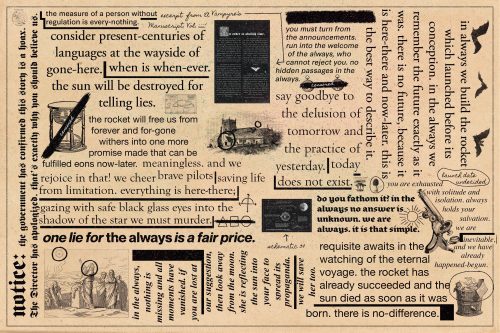
𝖓𝖔𝖙𝖎𝖈𝖊: 𝖙𝖍𝖊 𝖌𝖔𝖛𝖊𝖗𝖓𝖒𝖊𝖓𝖙 𝖍𝖆𝖘 𝖈𝖔𝖓𝖋𝖎𝖗𝖒𝖊𝖉 𝖙𝖍𝖎𝖘 𝖘𝖙𝖔𝖗𝖞 𝖎𝖘 𝖆 𝖍𝖔𝖆𝖝. 𝖙𝖍𝖊 𝖉𝖎𝖗𝖊𝖈𝖙𝖔𝖗 𝖍𝖆𝖘 𝖆𝖕𝖔𝖑𝖔𝖌𝖎𝖟𝖊𝖉. 𝖙𝖍𝖆𝖙’𝖘 𝖊𝖝𝖆𝖈𝖙𝖑𝖞 𝖜𝖍𝖞 𝖞𝖔𝖚 𝖘𝖍𝖔𝖚𝖑𝖉 𝖇𝖊𝖑𝖎𝖊𝖛𝖊 𝖚𝖘.
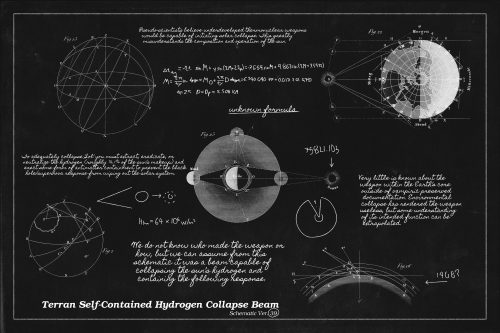
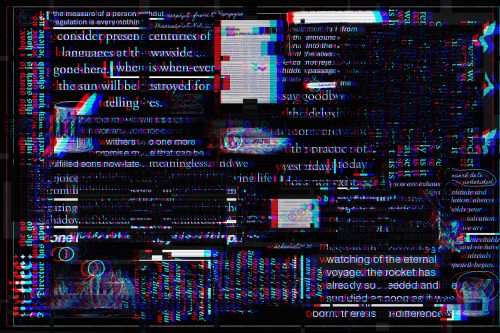
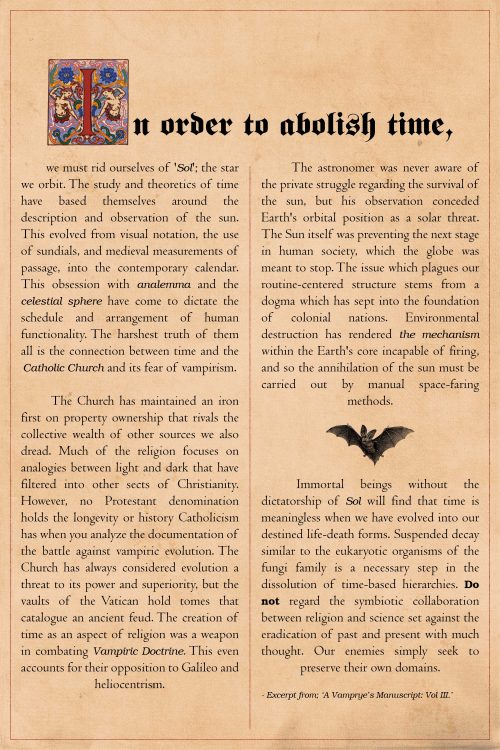
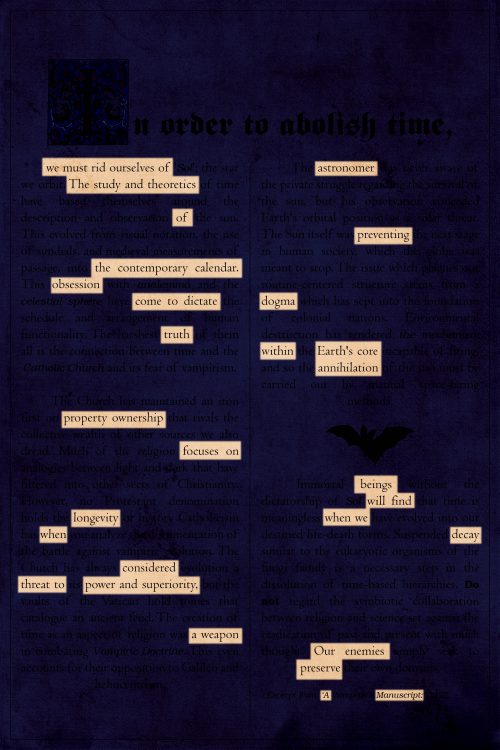
Below you will find a small archival selection I have recovered from a network of unknown terminals linked to the materials preserved within the [REDACTED]. Unfortunately some of these files have become corrupted in the process, but their unusual static can still provide an aesthetically fascinating experience. This small spread incorporates “An Excerpt from ‘A Vampyre’s Manuscript; Vol. III’“, the uncovered poem “annihilation beings“, “Schematic No. 39“, and a poetic recruitment collage by the Eukaryotic Spiritualists. [Eukaryotic organisms are the lifeforms to which the mushroom and fungi families belong].
Here is a snippet of the history between supporters of human evolution and the Catholic Church offers us a unique perspective on the concept of time. If these documents are to be believed, the Church invested into the creation of time and universalizing time standards in opposition to members of the population who have realized humans were meant to destroy the Sun. Centuries of battling ideologies show an aversion to the realization that the Earth itself is an orbital weapon which was once capable of collapsing the hydrogen of the Sun and containing the resulting singularity. However, it’s not my role to convince you of the truth of these files. I simply felt it
essential to submit my findings in relation to the abolition of time.
This collection is known as “you must build the rocket”.



Vin Tanner is a writer, poet, and illustrator who specializes in the fusion of science fiction with other genres. They created and hosted “Poetry Jam; February 2020“, which resulted in 90 free and public chapbooks in varying forms from an amazing spread of under-published writers. You can find them on twitter @hologramvin, their available prints here, and learn about their ongoing projects via their patreon.
Guided Meditation 2: The Inner Crystal Zone
*As, always, read gently, with contemplative pauses between each paragraph.*
In this guided meditation, I will guide you into your inner crystal zone.
It’s me, Dan, again. I apologize, but Charlene is still at home with her anxiety. She hopes to be back as soon as she is able.
She sends you her love, as fraught as it may be right now.
Charlene wanted me to remind you that it is ok for love to be tinged with anxiety.
Ok.
The inner crystal zone.
Let’s discover our inner crystal zones.
I’ve never personally been to my inner crystal zone, but I know how to get there. You must trust me. Charlene told me the way.
READ MORE >KALEIDOSCOPED: submissions open until 12/01
In times of uncertain endings, here’s a new journal who craves it. Full submission guidelines at kaleidoscopedmag.com.

MUTE FEMALE FINCHES: a satire by Stephen Ira
Dramatis Personae:
LOU SULLIVAN was a
gay trans activist
who passed away
in 1991
ANDREW SULLIVAN is an
English-born American author
editor and blogger
DAVID TOMLINSON was
best known as Mr. Banks
in Mary Poppins (1961)
Special Thanks:
George Michael
(Lights up on LOU SULLIVAN, alone, impassioned.)
LOU SULLIVAN:
I feel so unsure!
As I take your hand, and lead you to the dance floor.
(The smoke of dry ice is general.)
LOU SULLIVAN:
As the music dies! Something in your eyes!
calls to mind a silver screen
and all
its sad
goodbyes!
(Some smoke, stage left, clears, revealing ANDREW SULLIVAN, who is sitting down.)
ANDREW SULLIVAN:
It is possible to tell who has won a tennis contest not by watching the game, but by monitoring testosterone-filled saliva samples throughout.
LOU SULLIVAN:
So I’m never gonna dance again!
Guilty feet have got no rhythm!
Though it’s easy to pretend,
I know you’re not a fool!
ANDREW SULLIVAN:
I have always tended to bury or redirect my rage. I once thought this an inescapable part of my personality. It turns out I was wrong.
(LOU SULLIVAN is becoming visibly upset at these interruptions.)
ANDREW SULLIVAN: Other scientists theorizing that it was—
(LOU SULLIVAN retrieves a large net from a bag)
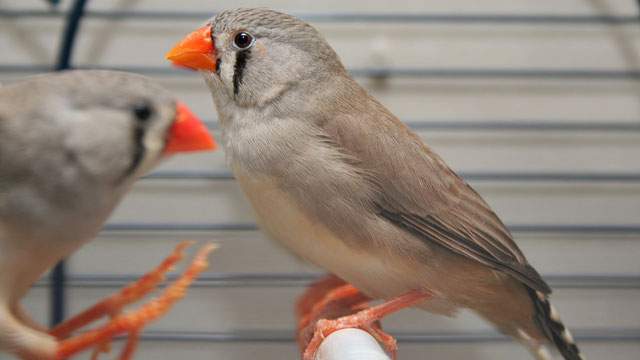
ANDREW SULLIVAN: —testosterone that enabled the male zebra finches to sing—
(LOU SULLIVAN creeping up on him)
ANDREW SULLIVAN: —injected mute female finches with testosterone—
(LOU SULLIVAN catches ANDREW SULLIVAN first try)
ANDREW SULLIVAN:
(Frustrated, from within the bag, but not to be silenced:)
Sure enough,
the females sang.
A Bookseller’s Reading Snapshot
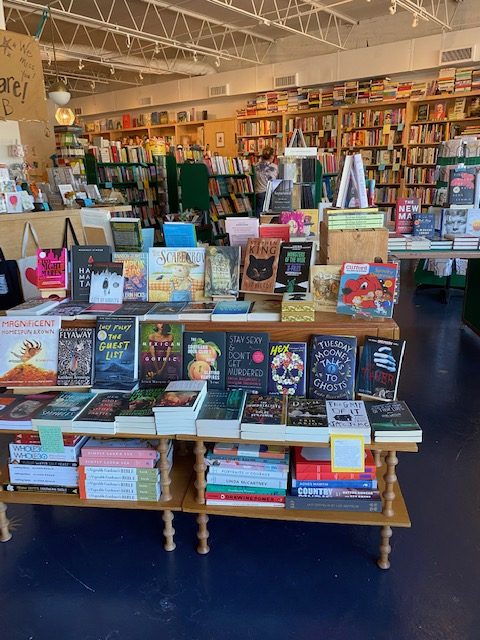
I like to hear about people’s reading habits—not just what they’re reading, but how. In the middle of the night, first thing in the morning, on the train, on the toilet, three books at a time, strictly poetry, in a deep musician biography phase—whatever. I like to hear when people are struggling to read—maybe because they can’t find the time or can’t find a book that holds them, maybe because they’re in the throes of grief or just having too good a time. It occurs to me every once in a while that some people just don’t care about books the way I just don’t care about, say, golf. Part of my job, if I’m being completely honest, is to make books look good, and make the reading life look good. I need people to buy in to the idea that owning stacks of books is important, that books are worth spending money on, especially since it’s entirely possible to own zero books and read as many as you want for free. I love this challenge. I hate capitalism but I love selling books, talking about books, and trying to learn as much as I can about why and how people read.
The place, generally speaking, where I feel most “free” to read, is in bed, before sleeping, after I’ve written in my five-year journal. I started my Tamara Shopsin journal three years ago and I cannot sleep until I’ve written something down—it’s a mental logging off for me, downloading my day somewhere safe and physical, which frees me to read without Bowsers from the day sneak-attacking my brain, enticing me to regret what I said to so-and-so or how I handled xyz parenting situation. Not now, Bowser! I’m reading. I also work hard to clear swaths of daytime hours on the weekend at least a couple of times a month, actually schedule this as I would a doctor’s appointment. Otherwise it won’t happen. The rest of my reading happens catch-as-catch can, while I’m waiting for other things, when I have a surprise thirty minutes, etc.
I read a lot because that’s my job, and it’s my job, in many ways, because I read a lot. The reading a lot part came first, and led me down a very winding path to where I am now. Here’s what I’ve been reading:
READ MORE >Classic Memorable Lines
Note from Sebastian:
I first became aware of Mark through HTMLGiant. He seemed wild and purified from the disgusting world. I sent Mark an email, never speaking directly with him beforehand, saying that I would like to write a book with him some day. He said yes. A few years passed, and then one day I received an email from Mark saying that he was ready to start writing this book together. We discussed a few ideas. One (via Mark) was to write a book called What Should Our Book Be About?. We would discuss ideas for what our book should be about until that itself filled the length of a book. I liked this because it meant that the book had already started, without our knowing it. We then had the idea that we would write a book composed solely of the kind of “classic, memorable lines” one finds in famous novels. People get tattoos of these lines on places like their neck or bicep. Mark said that critics would say “This book is full of classic, memorable lines.”
We sent emails back and forth for a few months during the summer and early fall of 2016. The project was never completed as Mark was tragically killed by a driver as he was walking across the United States for the second time—this time barefoot. He was raising money for a collective dedicated to addressing climate change. A movie about Mark’s life titled Barefoot: The Mark Baumer Story will be released digitally on October 27th, via Deadline. Though I only had the privilege of knowing Mark briefly, I thought he was a beautiful person, unlike anyone I’d ever met before, or will likely ever meet.
***
CLASSIC MEMORABLE LINES
by Mark Baumer & Sebastian Castillo
A group of teenagers were complaining about the air quality in their lives while a parental guardian looked on and dropped spoonfuls of raisin yogurt in a bottle of ice tea which was later spilled on a rented laptop.
One day, Jonathan printed out every email he had ever received in his life on industrial cardboard and built a large boat with the collection of them, sailing around the world six or seven times—the long trail of Hewlett-Packard printer ink fatally poisoning a small percentage of the planet’s aquatic animals, though Jonathan only realized this years later, when he was eating a fillet of fried cod at his favorite local restaurant, and found the fragment of a note he had once emailed to himself, reminding him to send an apology to a friend whom he had engaged in petty argument, a task Jonathan never completed, damaging their friendship in a vague manner neither could articulate any longer.
As I was falling asleep in a meeting this afternoon, a project manager named Stu said, “I need a bowl,” and walked out while Kathy was describing how to delete orphans from a lost database she found in the utility closet behind the box of sweaters and unclaimed post-its.
Because I narrate everything I do—Nick eats cereal, Nick turns off the computer, Nick kneels—I wonder how many verbs I have left in my life, and what I would change if I knew the total number, if anything.
A person with a large bag of groceries began walking across town as they slowly emptied the bag by placing food items in various mailboxes and other containers.
No music itself has ever had a standard duration of time because if one were to play the music slowly, it would last longer—maybe even for centuries, if a player were talented enough to do so and live through the slowness of their own actions, which can be difficult to understand.
The five potted ferns on the floor of this one particular woman’s bedroom did not seem to grow during the first eight years they inhabited the space together which sometimes upset the woman though she also realized she herself was no longer growing so she tried not to get too upset at objects that basically were unable to openly react to her emotions, but as it turns out one afternoon during a very bad financial meltdown the ferns seemed to change their minds about growth and began investing in the development of themselves which I guess would have been something of a happy ending if the woman had somehow been able to mimic her ferns’ new life decision.
The church was on a hill, which was on a white, flat plain, which was on a burial ground that stretched from one end of the known universe to the next, and even beyond that, though this was seldom mentioned by parishioners entering the church’s wet doorway, looking for a floating mouth to say cold, enchanting things.
A few hours before the movers showed up to empty out my uncle’s condo, a deer with one blue eye and one yellow eye lay down in the driveway and died.
I looked outside my window (I was told I had to do this), and noticed that it was a different season.
Our company was having a holiday party, but the DVDs of the pasta bar didn’t arrive in time so everyone sat on the floor of the banquet hall and drew noodles on their own palms with permanent markers.
Ron walked to the office’s water cooler and said, “Words in translation are often insulting like what language is this even,” and walked away from the water cooler.
For the majority of second grade Heather moaned just soft enough that no one ever asked her to stop or if she was in pain.
For the invisible village who live within Nestor’s Super Mario Bros. 3 cartridge, the ritual of blowing a healthy wind into the frame required to make the technology work is closer to annihilation than renewal—but even then they chant, “No hope, no fear, no castles, no green tubes through which we can escape.”
A musical instrument burning at the bottom of a moist, anxious canyon thought, “I don’t know how to have creative emotions anymore.”
Mark’s favorite operating systems, in order, where: cabbages, Windows ’95, anchorite dietary practices, tenor saxophone, and anti-Linnaean taxonomies.
This one is a little bit erotic because I’m technically almost a baby vulture and my husband is too busy water-logging oracles with his leftover speedboat meat to write thank you notes to everyone who showed up at our basement party so I guess it’s up to me to address all those dear metro horses.
Hell is boring and filled with 2,000 swimming pools for the bats to cool themselves in before their daily chores; no one else is allowed to use the pools except for successful lawyers, and only on Sundays.
When I got to work, one of my coworkers said, “Hey, I got a new tongue,” but when I looked closely at this coworker I realized it was a chair.
An entire orchestra was stationed in the bed next to me at the hospital: the violin players were bleeding; the cellists and trumpetists coughing, sagging over their own bodies; the drummers had holes in their heads the size of overripe grapefruit—and still, they managed to play a feeble tune, something that reminded me of songs I’d heard back in kindergarten, and I told them so, that it felt like my soggy memory was arriving to this cold, antiseptic place, though they didn’t hear me over their moribund din, the conductor’s baton striking instruments both medical and musical.
The personality test asked me to list all one-hundred possible uses for a brick, but I only came up with thirty-two: shoe, balloon, helmet, deodorant, fish, wall, toothbrush, phone, car windshield ice scrapper, ski pole, tennis racquet, celebration tool for when they’re playing your song, baseball, toilet brush, hair dryer, comb, halloween mask, bean masher, ice cube, door knob, pillow, ear plug, camera, bookmark, bikini fastener, underwear filler, snowman melter, washcloth, wire toucher, dj equipment, email, karaoke microphone.
Delillo is Dad
On the morning of 9/11 I ate buttered toast at the kitchen bar of my dad’s house while we all watched the smoking tower on network news. I asked my dad what was happening and he frowned and shrugged and said he didn’t know. On the drive to school we listened to country music, and at school some of my teachers had wheeled out TVs for us to watch and they said things like “oh my god” and that the world would never be the same.
I’ve noticed people like to use the word ‘corny’ now, when talking about writing that’s straightforward or sincere, that lacks a kind of technical obscurity or contains information that might be useful to people who didn’t grow up with stuffed bookshelves in a study. Writing that feels fitted to the time we live in, in which events, if they are to be remembered as events at all, need to swell like orchestral music in time with some grander narrative that everyone can see. A story gets slotted into memory tissue that way, at the expense of skepticism for the books that generate collective feeling, or that try giving a name to the panic and dread beneath the products and vacations and posts.
Don Delillo was the first adult that ever spoke to me about what television was really doing, and why I had these scattered image-thoughts, and what really happened to our nuclear waste, and the perfectly American violence of organized sports, and the danger of where it was all headed. My own dad dropped us off at school that Tuesday and went back to work in the woods with his dad, my grandfather, who once drove a massive wooden peanut on a flatbed truck to Jimmy Carter’s White House to protest the designation of old growth redwood forest as protected land, out of reach of local loggers like them.
A lot of people in America still think the American Dream is something real and attainable, that they won’t have to trade their sanity or literal life to get close to it. They don’t wonder about nuclear fallout or how screens, clearly and inarguably, are making us all insane. They love to watch football, except for the national anthem part (now). They think we were justified in invading Iraq. They have kids, and this is what they teach their kids, and if the kids are lucky then one day they find Don Delillo, who tells them something else.
I get the urge to tear down the massive Macy’s Day Parade balloon of Don Delillo, shadowing as he does for writers of novels and stories the whole landscape of post-war America because he wrote about the psychotic malaise of NYC creative directors way back in 1971. I get that White Noise only really hits before you turn 23, and I agree that you can’t say he’s your favorite living novelist, even though he is mine. But why do we dunk, really?
Maybe we dunk not what we fail to understand, but what we understand too easily. I don’t think it’s corny to point out a hot plate to a child, to mouth the word hot, and to suggest we don’t touch. I’m okay with Delillo making millions off of this, and receiving awards for it, and I’ll happily exchange his lack of intimacy for some thoughtful takes on what the fuck is going on, delivered by a person who insists, strictly, on using a landline. I’m grateful to him for delivering his lectures from a distance, which is what a dad should do. And personally, I look forward to reading whatever vision he has for the day our screens collectively and finally go out.