
Random
Interview Roundup Part Three: Straub, Lopez, DeLillo, Morrison, Doctorow
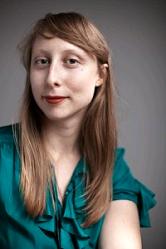 “Even when I was in college, that’s always what my professors would say: ‘your voice is so detached.’ What does that mean? I don’t know! I don’t think you really get to choose the way your voice is on a page. A lot of these stories are extremely internal and that just felt natural to me. What’s supposed to happen in a short story? Is a comet supposed to hit? No! For me, the short stories I really love — not the only stories I love, but the stories I love best — are really, really quiet. They’re about someone just thinking and trying to figure something out. Like Margaret Atwood’s story, ‘Death by Landscape’ — she’s just thinking about her friend going missing at summer camp fifty years ago, but it’s really just an old woman sitting in her apartment. Perfect. I don’t need explosions.” – Emma Straub, in Full-Stop
“Somehow the same concerns keep coming up. Most of the characters seem to be confused, unsure of how it is they are supposed to live. This reminds me of the wonderful epigraph to Grace Paley’s Collected Stories, which itself is one of my favorite pieces of writing. Ms. Paley relays a story about her friend and colleague in the ‘writing and mother trade.’ She asks Grace a few days before she dies, ‘The real question is, how are we to live our lives?’ The narrators and characters always seem to be entirely baffled by their circumstances. They find themselves put upon and disconnected. They usually cannot account for what has happened to them, let alone how to address the problem(s). Another concern is language and how inadequate it can be. I never consciously set out to write about these issues, but these issues keep coming up.” – Robert Lopez, in Bookslut
 “A novel determines its own size and shape and I’ve never tried to stretch an idea beyond the frame and structure it seemed to require. (Underworld wanted to be big and I didn’t attempt to stand in the way.) The theme that seems to have evolved in my work during the past decade concerns time—time and loss. This was not a plan; the novels have simply tended to edge in that direction. Some years ago I had the briefest of exchanges with a professor of philosophy. I raised the subject of time. He said simply, “Time is too difficult.” Yes, time is a mystery and perhaps best examined (or experienced by my characters) in a concise and somewhat enigmatic manner. Next book may be a monster. (Or just a collection of short stories.)” – Don DeLillo at PEN
 “In order to be as free as I possibly can, in my own imagination, I can’t take positions that are closed. Everything I’ve ever done, in the writing world, has been to expand articulation, rather than to close it, to open doors, sometimes, not even closing the book — leaving the endings open for reinterpretation, revisitation, a little ambiguity. I detest and loathe [those categories]. I think it’s off-putting to some readers, who may feel that I’m involved in writing some kind of feminist tract. I don’t subscribe to patriarchy, and I don’t think it should be substituted with matriarchy. I think it’s a question of equitable access, and opening doors to all sorts of things.” – Toni Morrison, in Salon
 “I grew up as a New Critic at Kenyon College. It was an historical response, you know, to a real lack of precision in critical thought. It was valuable in drawing attention to the text-in its presumption that the text itself could teach you everything you needed to know about it. I think what you describe as lethargy has more to do with the fact that with the Cold War the entire country, including a large part of the intellectual community, turned right. Domestically, the Cold War at its worst was a kind of civil religion with distinctly Puritan cruelties. People were cowed. It’s true that a generation rose up against the ideology in the 1960s, but by the seventies they were pretty well mopped up. The ranks of the public critics began to thin-the generations behind Edmund Wilson, Irving Howe and Alfred Kazin disappeared into the academy. Fled, one might say. There seemed to be a depoliticization of cultural life, generally. It was clear the USSR was a terrible mistake. But the correlate to that was … that anyone in America who wrote a political novel was writing a foolishly adversarial novel. It was possible according to Cold War orthodoxy to appreciate political novelists like Kundera from Czechoslovakia, or Coetzee or Gordimer from South Africa, but the American political novel was an egregious aesthetic error. A novel about an heroic CIA operative could be a good story… but a novel about a conscientious objector was a political tract.” – E.L. Doctorow, in Weber Journal
The Doctorow interview is fine – a sensible person! what? – , but, from the excerpted response, I think that, while his sketch of the fiscal con/social con/neo-con rise from Cold War disappointment with and fear of the USSR makes good sense,
is simply too extreme.
From their youth(s) in the ’50s/’60s ’til (if mortally possible) now, Roth, Sontag, Pynchon, and Didion (for four examples; there’s lots) all wrote/write political novels (in the everyday sense of politics). — and this aspect of their writing – protest against society-wide and society-defining injustice – is both exoteric and one thing that their fans love about reading their fiction.
Questions DeLillo axed:
Why not? I mean, why doubt that people of the “same depth and richness”, communicating ‘on screen’, won’t make strings of words as powerful as those put down onto and read off of paper pages? Maybe the question is asking: ‘will communicating on electronic screens diminish people, or call upon a diminished aspect or facet of them (in comparison to print media)?’ I like paper and am healthily technophobic (or at least technoskeptical), and I don’t mean to be strategically obtuse, but someone’ll have to show me this electro diminution.
I think: of course! – not that ‘the medium is the message’ (too pat), but that the entwinement of vehicle and freight is undisentanglable. So, for example, writing on clay tablets, stone, and papyrus are each meaningful (historically, and, I think, absolutely) differently from the others. (And that’s not yet considering different languages as different ‘media’.) But different “beaut[ies] and variabilit[ies]” doesn’t require one being inferior to another – evaluation of degrees of quality surely depends on valences of the literatures that don’t just result from their mechanical production methods.
It never has yet. If this is not an uninformed question, then I don’t understand it.
@Kyle- thanks for this series. You’re providing a huge resource.
@Deadgod- DeLillo’s concerns, I think, cannot be understood outside of his point about “customization.” Literature requires a reader who can immerse herself fully in the world of a novel/story/poem/play, and engage with the work on its terms. Not to suggest that the reader brings nothing (of course she brings her intellect, her emotions, her active role as reader, etc.–a whole world) but the idea is that here you have a whole text and a whole self, and that these things will interact, to the benefit of both. The book gets read, the reader gets bettered in some way.
Customization cripples this relationship. I’m not saying that art can’t be interactive, or that there isn’t enormous potential for digital media and new artistic forms in general (cf. the video game–a favorite of mine) but an over-reliance on a user-generated, “you-first” approach to reading, and supplication before the fake democracy of pre-selected “choice” in media is going to erode our ability to think with sophistication and to sustain attention–both necessary skills for reading, say, a poem, to say nothing of upholding the values of a democratic society–which isn’t the stated goal of literature, but it sure is a nice side-effect when we can swing it.
A case in point- Have you seen the thing CNN is doing right now, where they show you teasers for three news stories and then you call in to vote on which one they should cover? I’m sorry, but this is the stuff of dystopias, and the inevitable evolution of the technology, and the worst part is that you can’t call it the terminal extreme, because it’s just the beginning. I’m with Don.
Really enjoyed the Lopez interview.
Yes, that’s an excellent point; I was just looking at the “stray question[s] (or [] metaphysical leap[s])” as questions about new media generally, and not in the obvious immediate context of customization.
Of course, the problem (of limiting one’s inputs to what one anticipates comfortably reckoning) is deeper than his one paragraph can address: if there’s mass literacy, and mass middle-class leisure time (that is, a large middle class at all), and even working-poor access to choosing their, say, “poetry” entertainment/information/formal challenges, then people with a supermarket full of choices are going to be (mostly) guided by their identities, their ‘comfort zones’, their smaller communities cemented in a feedback loop by constant confirmation bias.
This self-circummurring is the inspiration for mass public education, no? – all the kids – rich and poor, every race, girls and boys, every ‘foreign’ heritage, every sexual orientation – drilled in a common stock of basics: their (mostly) shared language and its literary history, modern world history, basic math, the several basic sciences, even sports, participation in art/music/drama, and so on. That’s the principle of shared mass public education in every country where it exists: whatever niches you’ve and I’ve come to occupy, you and I have a basis to talk to each other on.
Is the internet (say), with its confirmation-bias fortressing of niches and its ‘free’ porosity between niches, going in the direction of greater cocooning or of irresistible interaction between disparate points of view?
But Justin, after looking again at those “questions”, they do seem strongly to evince a screenophobia. I mean, he’s asking directly and uncomplicatedly about “electronic” versus “paper”. The problem of e pluribus unum – hell, that was a problem for the centuries before screenature challenged “paper”. ??
–
I have not seen that, what, texting (?) choosing of ‘news’ stories on CNN. Pretty disturbing. But the various Foxgoebbels national networks – and the many Foxgoebbels local ‘news’ departments – are no “news” alternative.
http://frsh.in/5c
“Even when I was in college, that’s always what my professors would say: ‘your voice is so detached.’ What does that mean? I don’t know! I don’t think you really get to choose the way your voice is on a page. A lot of these stories are extremely internal and that just felt natural to me. What’s supposed to happen in a short story? Is a comet supposed to hit? No! For me, the short stories I really love — not the only stories I love, but the stories I love best — are really, really quiet. They’re about someone just thinking and trying to figure something out. Like Margaret Atwood’s story, ‘Death by Landscape’ — she’s just thinking about her friend going missing at summer camp fifty years ago, but it’s really just an old woman sitting in her apartment. Perfect. I don’t need explosions.”
_____________
Thanks for posting this; it explains why Avery always rejects my stories.
I enjoyed the Straub interview. These have been great, Kyle.
i love this series, Kyle. any chance in futures that you would put the date (year) of the interviews? i know i can click on all of them but it would be nice when first reading the excerpt to put the words in the context of the interviewee’s career etc