Janice Lee

http://janicel.com

Janice Lee is the author of KEROTAKIS (Dog Horn Press, 2010) & Daughter (Jaded Ibis, May 2011). She currently lives in Los Angeles where she is co-editor of [out of nothing], co-founder of Strophe, and Founder/CEO of POTG Design.

Reviews

A Collaborative Review of Good Offices

Good Offices
by Evelio Rosero
Trans. by Anne McLean & Anna Milsom
New Directions, 2011
144 pages / $13.95  Buy from New Directions or Amazon


In September of 2011, my colleague Laura Vena and I decided that we were both sufficiently interested in Evelio Rosero’s Good Offices to attempt a “collaborative review” of the novel. (As something of a student of the novel-as-form, I was intrigued by Good Offices‘ superficial resemblance to Lewis’ atypical Gothic The Monk. Laura, though she will probably raise a protest, is an expert in Latin American literature.) Laura and I ultimately agreed that our collaboration would take the form of a conversation about the book, which we each read yet refrained from discussing prior to our officially meeting. Presented here is as full, complete and accurate a record of our conversation as Google’s transcription of our live chat will allow. What it lacks in context and gracefulness I trust it makes up for in spiritedness and candor. In fact, reading over these exchanges again, I appreciate how they allow me to eavesdrop on those selves taking turns speaking up—can I really say that they speak through me?—when I talk about books. Or: when I am retelling yet again those fictions by virtue of which we can even discuss the notion of fiction. (JM)

A word about tone: due to the candid nature of IM conversations, much of the following text is raw in character. My initial impulse was to edit out all my informal language, which reflects not my intellectual self, but the manner in which I engage in impassioned conversation with friends… Not necessarily for mass consumption. But in discussions with Joe, we ultimately felt we should maintain the tone of the original conversation to keep true to the experiment of long-distance collaboration that resulted in this review. For better or worse. (LV)

READ MORE >

1 Comment
March 26th, 2012 / 1:00 pm

Reviews

The Faster I Walk, The Smaller I Am

The Faster I Walk, The Smaller I Am
By Kjersti A. Skomsvold
Translated by Kerri A. Pierce
Dalkey Archive Press, 2011
147 pages / $17.95  Buy from Dalkey
Originally published in Norwegian as Jo Fortere Jeg GÂr, Jo Mindre Er Jeg by Forlaget Oktober A/S, 2009


Although I know I shouldn’t, sometimes I judge a book by its title.

At first glance, The Faster I Walk, The Smaller I Am might suggest some kind of self-help manual advocating weight loss by means of low-intensity cardiovascular exercise. But putting the title aside and judging instead from the book’s front cover, (something else I know I shouldn’t do,) it’s clear this could never turn out to be the case. The copy I have, the hardback Dalkey Archive Press 2011 translation, sports artwork reminiscent of a Marcel Dzama painting. In a forest of leafless trees against pink-purple sky there is a woman standing with her back to a trunk, iniscernible save for her white dress and white shoes. The woman turns out to be Mathea Martinsen, and the title turns out to be a reference to Einstein’s theory of relativity, and the book’s content turns out to be a candid portrayal of losses far greater than that of a few inches around the waistline.

Skomsvold writes from the point of view of the front cover’s indiscernible woman. Mathea is childless, widowed and “almost a hundred, just a stone’s throw away.” All of her life, she’s been overlooked. “The spun bottle never pointed at me, the neighborhood kids never found me when we played hide-and-seek, and I never found the almond in the pudding at Christmas…” Now she lives alone in the same apartment block in Haugerud, a suburb of Oslo, where she has spent all her married life. Mathea likes to knit ear-warmers, read the obituaries and start new rolls of toilet paper. She is surprisingly proud, yet appallingly lonely – so lonely she listens to the distant sound of sirens and wishes they were coming for her, so lonely her only sense of fellowship is achieved by buying the same groceries as strangers she passes in the aisles of the local store.

READ MORE >

2 Comments
March 23rd, 2012 / 1:00 pm

Reviews

Big Questions

Big Questions
by Anders Nilsen
Drawn and Quarterly, 2011
658 pages / $44.95  Buy from D&Q or Amazon


Ends beget origins in Anders Nilsen’s Big Questions, so it’s proper that we learn about the book’s genesis in its afterword. The author-illustrator tells us the 600-page graphic novel began 15 years ago as a workshop exercise meant to incite new illustration tactics. The assignment required that the artist draw an object 60 times on 60 separate sheets of paper in one hour. In Nilsen’s case, a narrative hatched while he moved through his 60 iterations (of what he doesn’t say). He reveals that the emergent events were about “a lost soldier in a barren landscape, a group of birds, and a plane crash.” And though the characters, landscape, and frames all become more complex and more thoughtfully wrought as the book assembles itself around you, much of the narrative stays as it was when it sprang from Nilsen’s workshop piece. Big Questions in completed form houses a fable-like tale, told in discreet scenes, about finches who eat seeds and ask questions; a flat-to-rolling landscape that’s unpeopled except for a grandmother and her probably slow grandson, the idiot, both of them ostensibly mute; things that go missing; a bomb that explodes and occasions more questions; a plane that crashes (yes, more questions); and a mysterious, somnolent pilot who emerges from that plane.

READ MORE >

3 Comments
March 19th, 2012 / 1:00 pm

Reviews

Code For Failure

Code For Failure
by Ryan W. Bradley
Black Coffee Press, March 27, 2012
255 pages / $12.95  Preorder from Black Coffee Press


When most of us make a pit stop at the local service station for a few gallons of gas, some cigarettes, or an oil change, if we’re feeling a little curious, we might stop to consider the often grizzled-seeming souls toiling behind the counter or at the pumps. What choices, either wildly spontaneous or premeditated, led them to their current career? Can we imagine their lives outside of work as distinct and complex entities and not just the bored bodies in unflattering corporate-logo jumpsuits with which we’re so familiar? Are they happy? Ryan W. Bradley can provide these answers, and then some. His autobiographical debut novel, Code for Failure, presents a searing portrait of life at the bottom rung of the fuel industry that performs the rare feat of being psychologically intricate, hilariously scatological, and emotionally memorable, often in the same paragraph. It’s a study of the rarest of dichotomies – darkly macho fiction with a heart that builds to unbearable, and maybe more.

READ MORE >

7 Comments
March 16th, 2012 / 1:00 pm

Reviews

The Flasher

The Flasher
by Adam Peterson
SpringGun Pess, 2012
60 pages / $14  Buy from SpringGun or SPD


I read 80% of Adam Peterson’s The Flasher in the bathtub, which seems entirely fitting. I’m not at all afraid to say that baths stimulate me in the same way flashing stimulates flashers. Baths compel me, they invigorate me, in some strange way they solidify my relationship to the greater world. The only difference between soaking in the tub and flashing is where one is solitary, contemplative, the other asks for a wider public, a larger stage. But both are—mysteriously no doubt—borne out of reverence for one’s place in the always-spryly grinning universe.

At its core The Flasher is a love story. A man—the flasher—falls in love with a woman—a muffin store employee—who “takes [muffin] batter off [her body] with her tongue” (31) and is possessing of what can only be described as a nuanced personality. The flasher attempts to woo said woman/muffin store employee. He fails. The end. Throughout the course of the book other things, of course, happen: the flasher visits his ailing mother in the hospital, the flasher makes french toast, the flasher uses a public restroom, the flasher swallows the Earth and diagnoses the sky. But the flasher’s relationship with his would be lover is the driving storyline, the one element of the book that—albeit obliquely—ties everything together. Without it there would be no, as it were, narrative thrust, nothing to continue to propel the reader forward.

READ MORE >

3 Comments
March 12th, 2012 / 1:00 pm

Reviews

NOON Annual 2012: Blunt Reality as Source

NOON Annual 2012
Ed. Diane Williams
$12  /  Purchase directly from NOON


After reading NOON Annual 2012, I again dwelled on the nature and the value of the short-short story. I despair that short-short works are sometimes disparaged as underdeveloped and unworthy, and this issue of NOON proves the perfect response to such cynicism and dismissals.

First, the design and aesthetics of this literary magazine are first-rate. The book is smooth to the touch, bears weight, and courts the eye. There’s a smell from these pages that, while not pleasant per se, is definite. Definite is not to be underrated. This book is elegant and glamorous. Even the spine is a standout. I pored so long over Bill Hayward’s black and white photograph on page 107, the work bears my countless greasy prints. I love how the subjects here seem afloat, as if there is no ground, as if the whole point is to throw out our assumptions and re-see. Animal portrait photographer Valerie Schaff’s cover is memorable and her self-portrait on the inside cover is stunning and affecting. She writes, “When I am present, I am beyond the notion of predictability.” This quote proved my guide for the reading and the appreciation of the entire issue.

READ MORE >

6 Comments
March 9th, 2012 / 1:00 pm

Reviews

I Like Oral

Londoners: The Days and Nights of London Now – As Told by Those Who Love It, Hate It, Live It, Left It, and Long for It
by Craig Taylor
Ecco, 2012
448 pages / $29.99  Buy from Amazon  /  Powells


Looking at a map of London, you see neighborhoods with familiar names such as Chelsea and Greenwich, and you see neighborhoods that sound like cheeses (Rotherhithe), erectile dysfunction pills (Vauxhall), Tolkien inventions (Isle of Dogs) and enormous breakfasts (West Ham). Maybe you’ve visited London, but for those of us who haven’t and who still harbor a deep curiosity, despite the dreary weather, bad food, soot, lootings, and long shadow of Bill Buford’s soccer hooligan book Among the Thugs, Craig Taylor’s Londoners both confirms and broadens London’s reputation as an enchanting, holy polluted kickass clusterfuck. And it does so in a way that proves as interesting as its subject.

READ MORE >

4 Comments
March 5th, 2012 / 1:00 pm

Reviews

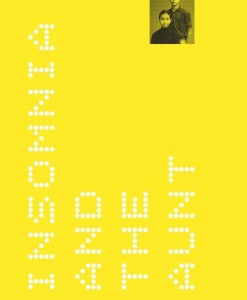
Insomnia and the Aunt

Insomnia and the Aunt
by Tan Lin
Kenning Editions, 2011
44 pages / $10  Buy from SPD / Amazon


It would be a mistake to state outright any kind of thumbs up or down regarding Insomnia and the Aunt because that would mean there’s something there to judge, and while I’m not suggesting that the book is empty, I’m arguing that the book lives up to its promise billing itself as an “ambient novel.” Both words in that phrase are tricky when dealing with a fifty page novella studded with postcard and TV photos and posed as a very hazy memoir mainly about the unnamed narrator’s relationship to his aunt, though.  This titular aunt used to run a motel with her husband in rural Washington for an uncertain span of time across the final third of the 20th century and the first decade of the present one, information delivered to you sometimes in sometimes matter of fact announcement but sometimes in what could be called “ambient” fashion through slowly accruing tossed-off-seeming information. And “ambient” and “novel” normally sit askew from each other, which makes both terms problematic and the reading experience an uncertain one but in the case of the book ambient and novel work together in tandem, both forms present throughout.

READ MORE >

8 Comments
February 27th, 2012 / 1:00 pm

Reviews

A Man Reads Men by the Lips of Women

I Want to Make You Safe
by Amy King
Litmus Press, 2011
87 pages / $15  Buy from SPD Books


Amy King is doing God’s work. Of course, I don’t mean God in a traditional Christian way; I mean God in the way that King speaks of God in her recent book, I Want to Make You Safe:

God is the excess
of our collective minds
of our collective wing wax
of our flights past time zones.

King’s poetry—its meandering syntaxis, its resistance to singular meanings, its mysterious connections and lack of connections—opens up the mind to unexplored avenues of thought. I also find King doing this work through her editing, specifically on the journal, Esque, which she co-edits with Ana Božičević, in which they bring together a wide array of contemporary poets and prose experimentalists, people like Jennifer Karmin, Cara Benson, Cynthia Arrieu King, Ching-In Chen and more. The new edition alone should get her a seat in heaven. If you haven’t seen the third issue, called Revolutionesque, you should definitely check it out.

READ MORE >

4 Comments
February 24th, 2012 / 1:00 pm

Reviews

Snowflake and Different Streets

Snowflake / different streets
by Eileen Myles
Wave Books, Forthcoming April 2012
232 pages / $20  Pre-order from Wave Books


Eileen Myles’ poetry actively, consciously pursues the tangential thought. In her new dual collection of poems, Snowflake and Different Streets, the text glides into the tangent like she has no sense of return, like she’s just floating.

There is confidence behind the lack of linearity and I follow it happily because the text seems to already know that the tangential thought might just be the more exciting thought or as Eileen Myles might say, “the peach of it.”

READ MORE >

4 Comments
February 20th, 2012 / 1:00 pm

Reviews

Robert Ashley — Perfect Lives

Perfect Lives
by Robert Ashley
Dalkey Archive Press, 2011 (Reprint)
240 pages / $13.95  Buy from Amazon, Dalkey Archive


Premiering on television in 1984 and first published in book form in 1991, Perfect Lives is several texts at once: a comic opera libretto, a novel about a temporary bank heist, a blurb-billed epic poem ranging through small town Midwestern vernacular and Eastern metaphysics, and a kind of textual final resting place for the titular performance in the form of notes, a preface, a synopsis, some notation from the score, and an edited conversation with writer, composer and director Ashley during which he explains the genesis and outcome of the project. (Ashley: “I had this practice: I’d go into a room, close the door, and start singing.”) It’s a good thing that the book is several texts, because while it’s a success as an engaging epic (experimental) poem, it would be a stretch to call it a novel and as a libretto it leaves you having missed out on the three-hour television program that it became with no idea of what it sounded like unless you’re familiar with Ashley’s work and no idea what it looked like except for a still of the production on the cover of the book and a frontispiece featuring Ashley himself playing narrator. Ultimately the loss of context doesn’t make the text suffer because as a set of eight experimental poems obliquely describing a bank heist and an elopement among more metaphysical things it wins at being an engrossing read and at capturing small town Midwestern vernacular and widescreen philosophy in very crisp but entertainingly malformed ways.

READ MORE >

6 Comments
February 17th, 2012 / 1:00 am

Reviews

Will You Still Like Me, If I Tell You The Truth?

Heavy Feather Review
Volume One, Issue One
January 2012
Buy Kindle for $3.75


Whenever Janice Lee emails me with a chance to review something for HTMLGIANT, I always respond too late. Which means I never get what I want to read to review. I was late responding to Janice’s email about reviewing Eileen Myles’ new book. I was late responding to Janice’s email about reviewing Brian Evenson’s new book, too.

Of course, I was quick enough to get Heavy Feather Review to review. At first, I resisted reading the stuff in it. I thought maybe I could write a review without reading the stuff in Heavy Feather Review. I’m glad I didn’t do that.

If you don’t already know, Heavy Feather Review (Volume 1, Issue 1—hereafter, HFR) is produced by four people: Nathan Floom, Jason Teal, Jason Carnahan, and Kyle Bialko. After reading HFR I’m not sure what the general aesthetic of the journal is. It seems like everything goes. There is a tendency towards the absurd. And moments of really wonderful writing. There are a lot of writers in HFR. Some with whom you may be familiar, some not. I wish I could say more about HFR in general but I can’t think of anything. I hear it’s available on Amazon or something. If you can’t find it there, or don’t want to pay for it, email me. I have an electronic review copy so I can give it to you for free.

There are thirty-seven writers in the first issue of Heavy Feather Review. I like that. I wish there were more.

READ MORE >

34 Comments
February 13th, 2012 / 12:00 pm

Reviews

Ireland’s Bird Life: A World of Beauty

Ireland’s Bird Life: A World of Beauty
Edited by Matt Murphy and Susan Murphy
Text by Richard Lansdown
Images by Richard Mills
Sherkin Island Marine Station Publications, 1994
160 pages  /  Abe Books


There is a twitcher out on the seafront.

The seafront must be a few miles long altogether – stretching from the oil refinery past the power-station all the way to the saltwater lake, and then the woods. Some days the twitcher will be outside our house where the waders dabble in the mud for lugworm and shellfish. Other days he’ll be down by the saltwater lake where the wigeons and shovelers compete for stale breadcrumbs.

My boyfriend thinks there are a couple of different twitchers, but I know there’s just the one.

He is a little kingfisher of a man with long beak and speckled brow, and when he perches on the folding-stool with his face fastened into a pair of binoculars, his elbows jut out at each side like a stubby wingspan. Although it’s hard to tell through all his cold weather clothes-wear, I guess he is about seventy.

I am certainly interested in nature but it’s other people that interest me the most.

READ MORE >

1 Comment
February 6th, 2012 / 12:00 pm

Reviews

Cynical Monsters

In Defense of Monsters
by BJ Hollars
Origami Zoo Press
52 pages / $8  Buy from Origami Zoo Press


Most people have little room for magic or legend in their lives. Folks spend most of their formative years cultivating a certain amount of cynicism towards legend and work incessantly towards creating a sense of control over themselves and the world at large. To be human is to conquer – whether physically or mentally.

We keep doing our work, spend inordinate amounts of time “surfing” the web (surfing itself invoking an image of an uncontrollable wave, that of information, tamed by man) and we watch television where we have 24-hour news coverage and programs that reflect our tastes. (Although it can be argued the practice of watching television is, in its own way, an acceptance of a mythology in itself. The very idea of personal choice in the current media system is false. A great infographic from designers Frugal Dad suggests, at the very least, we should reconsider what we’re watching as personal choice.)

READ MORE >

1 Comment
February 3rd, 2012 / 12:00 pm

Reviews

Everything Beyond Thought: Tantra Bensko and the Annihilation of Illusion

Lucid Membrane
by Tantra Bensko
Night Publishing, 2011
180 pages / $24.99  Buy from Amazon


The Cabinet of What You Don’t See
by Tantra Bensko
ISMs Press, 2011
40 pages  / $5.00  Buy from ISMs Press


“Awake from dream, the truth is known: —awake from waking, the Truth is—The Unknown.” – Aleister Crowley, The Book of Lies


In the delicate balance of dream and reality lies the annihilation of illusion. Tantra Bensko’s sensual unveiling relates to the intelligence of crystals. She is adept at the unknown: dreams, twilight language where thought relates to the imaginal, emblematic of the seer’s paranoid awareness and lucid view. The lucid aesthetic is kaleidoscopic and freewheeling in its engagement with metaphysical realities that extend far beyond the realm of fiction and delve into the heart of energy, and the imagination itself. Cosmic and personal, the molecular weight of the hermetic text manifests itself through capricious and fanciful dreams through Bensko’s steady and remarkable vision. These stories are inextricably tied to alternate dimensions and mental travel, skirting at the edges of the astral plane, and Bensko desires the astral form here—in life, so that great fruits may come. Bensko writes, “I wish the people I’m living with, on my own invisible frequency, could understand that I am weaving myself through their cells, through their dreams, their breath, their love.” It is with sweetness and an alien lucidity that these stories exist. Like the labyrinthine explorations of Borges—echoes from the invisible drift into the unaware oceans with mysterious interpretations of shape and tone, stained with colored language. In Bensko’s stories ethereal waves skim over the astral surface between the world’s heart and all that bleeds. Emanations of some imperceptible astral dust covers all things, in the shimmering shadows of formless force – giving it shape, with lucidity and spirit. Like shadows – like a mirror – space, sound and color interact and create a dynamic that denies any nostalgia for conventional structures through a manifestation of the unseen.

READ MORE >

3 Comments
January 30th, 2012 / 12:00 pm

Reviews

Mike Young

If I Falter at the Gallows

If I Falter at the Gallows
by Edward Mullany
Publishing Genius Press, October 2011
84 pages / $10  Buy from Publishing Genius


Once on Facebook a friend shared the shortest horror story in the world. Just like Facebook, this story involves the awkwardness of when too many people exist in your situation. Maybe let’s say “involves” in the same way somebody says “Hey, Ed, get over here, what do you think?” And Ed tries to say “No, no, I don’t want to get involved.” In any event, the shortest horror story in the world, supposedly, was written by Frederic Brown: “The last man on Earth sat alone in a room. There was a knock on the door.” Note there’s no “then” before “there.” The world is basically the intrusion of the world. This presents the endless and (sure) terrifying awkwardness of simultaneity, which causes me to say I actually think Ed should get involved, if we’re talking terror, and by Ed we’re talking Edward Mullany, author of If I Falter at the Gallows, a book of barely unchoked poems, arrangements of scene and confession that scalpel the world like a goth kid who grew up to be a jeweler.

READ MORE >

10 Comments
January 27th, 2012 / 12:00 pm

Antennae 12

The most recent issue of Antennae 12 is out, and will be the journal’s last issue. Antennae has consistently been one of my favorite literary journals out there, thanks to Jesse Seldess for his fabulous editorial work. I’ve been introduced to the work of many new writers in its pages over the years and am really glad for its existence.

antennae 12 (the last issue)
January 2012
$10

Lee Gough
Andrew Zawacki
Cupola Bobber
Ray DiPalma
Kristen Gleason
Thomas Hummel & Brett Fletcher Lauer
Joshua Ware
Andrew Durbin
Matha Oatis
Janice Lee & Laura Vena

Cover by
Thomas Hummel & Brett Fletcher Lauer


Events & Presses / 1 Comment
January 25th, 2012 / 1:19 pm

HAVE YOU SEEN THIS MODERNIST?: JOÃO GUIMARÃES ROSA

Don’t let the cats fool you, João Guimarães Rosa is the man. The man like Mann or Proust or Melville or Faulkner or Borges or Calvino or Joyce…Only, you may have never been made aware of the fact. Don’t feel bad, you’re not alone. As a matter of fact: you’re right at home in the United States of America if you’ve never heard of João Guimarães Rosa.

READ MORE >

Author Spotlight / 1 Comment
January 23rd, 2012 / 12:00 pm

Author Spotlight & Reviews

Street-Side, Bedside, Broadside: An Interview With Shannon Cain

The Necessity of Certain Behaviors
by Shannon Cain
University of Pittsburgh Press, 2011
160 pages / $24.95  Buy from Amazon


Stories in Shannon Cain’s The Necessity of Certain Behaviors pair exhibitionist events and their three-ring tableaus with characters who typify “marginal,” yet who nonetheless surprisingly assert not only their outsider status, often in correlation with their sexualities, but also their complexities—a young lesbian ventures to the set of The Price is Right to meet her father, Bob Barker, only to find not parental but sexual identities challenged; a mayor’s wife endures the scandalizing of her sexuality after she is caught masturbating in the YMCA’s shower room, only to find that her new relegation to sexual deviant has allowed her singular insight into victims of the myriad sexual minefields in her community—the cumulative effect of these stories also achieves a reversal: common notions of taboo or freakishness gain warmth and humanity, while the normative culture unveils its crippling deformities. Cultural critique couldn’t have a more compelling and sophisticated face. In an era often favoring equivocation as a substitute for vision, this collection is clear: take a stand, make it compassionate. Others agree, of interest to note: American Literary Review, American Short Fiction, Colorado Review, Massachusetts Review, Southwards, Tin House, The O. Henry and Pushcart Prizes, the National Endowment for the Arts, and The Drue Heinz Literature Prize.

READ MORE >

1 Comment
January 20th, 2012 / 12:00 pm

Reviews

Invitation to a Voyage

Invitation to a Voyage
by François Emmanuel
Translated by Justin Vicari
Dalkey Archive Press, 2012
112 pages  /  $12.95    Buy from Dalkey Archive, Amazon


Sometimes, writing is so baldly pretentious and pointedly wackadoo that readers assume, without really feeling much of anything, that it must be ‘experimental’ or ‘poetic.’ This implies that the author—that brave, eccentric fellow!—is ‘more alive’ than the rest of us, more attuned to some numinous kernel of ecstasy and desire. The rest of us, meanwhile, are consigned to wallow in the general generic muck.

Such is the wager of François Emmanuel’s Invitation to a Voyage, a short collection just out from the wonderful folks at Dalkey Archive: that the reader, confronted with the interior monologs, the surrealist quirks and all the other one-time experiments of modern lit, will fault themselves for not quite ‘getting it.’

READ MORE >

No Comments
January 16th, 2012 / 12:00 pm