
8 Poems
Art Poem
I was invested in a life of destruction
I was sending a message to the abyss
It was like all of the birds screaming at the cold
It was like everyone thinking about death at the same time
I am feeling amiss
Supposedly due to how the planets are arranged
It is like a map of daffodils
Some words are coming out of my mouth
Like a planet nobody asked for
Wanting to figure into your astrology
It is like eating the same meal for sixteen years
It is like disappointing people through art
Love Poem
I am secretly wonderful like a lost letter or a black pie
I am tired of being a lot
It is like cutting the arms off a tree
And you are left with knots
It is like knowing what everyone is thinking all the time
It is like being a woman
I would hate for you to write a long song about it
It would be like the end of a long vacation
It would be like a world without Courtney Love
Ice-Cream Poem
We were as proud as mathematicians
We hated each other frivolously
I kept on wondering
Why everything had to be so stupid
I loved it when we used to say
I didn’t ask for this
It was a kind of victory
Exactly the size and shape of an ice-cream dish
City Poem
The city is like a photograph of a painting of a city
Some days it is not very hard
But sometimes it is like being part of a vast system
Where there is no one to talk to
The cat is licking its dick politely I guess
The rain barks like a scary dog
The moon has never seemed so full of itself
I understand this is a life of mediocrity
I have prepared in every possible way
Cloud Poem
I am sorry I am like this
Remember how I said that all the time
You should have said it too
And you did you did
We were both so sorry
We kept looking at each other
Wondering what the other one would do
Love was a pink cloud we were standing in
It was a good excuse to walk off a cliff
Now I am as light as 10,000 magnolia blossoms
That is what you do in my memory
You and your fabulous fetishes
Which I miss sincerely
Dog Poem
I am like a dog with a pearl in its teeth
It is a kind of precious thought
That bends but doesn’t break
We are like two cities with different moons
There is no way to know the time
We are like two elephants at a dinner party
We must really learn to be more delightful
Sometimes I will just drive into a parking lot
I don’t know where to be in this world
We are supposed to live and die at the same time
It must be like falling out of a jeep
Wolf Poem
You have to be more cautious with beautiful things
Or anything that is wonderful
I was not made to be understood
I am walking out on a limb
It is like teetering on a high branch
I am going to act really greedy
While rising dramatically out of a puddle
It will be like being struck with terrible melancholy
Right in the middle of washing the dog
Kansas Poem
Every building seemed possible
And I was enjoying the performance of it
We were not as evil then
But thick as thieves and sick as dogs
I hadn’t the slightest suspicion
The story of us is like the story of Kansas
It is like swallowing a fist
It is like when your sanity comes crawling back to you
In the middle of the night
And you hold it out again like a tooth
——
These poems are from Laura’s next forthcoming book, Salad Days, available for preorder now from Maudlin House.
They’ll have a music of wet streets / and lonely bars where piano notes / follow themselves into a forest of pity and are lost.
When I was 17, I saw a man on cable television chase a green Volkswagen Beetle until he slammed headfirst into a pole. He didn’t see the pole because he almost had his hands on the car. He was almost as fast. Also as big, almost. The shot of the man falling after he runs into the pole is full of beautiful slants and heights—leafless branches, latticed tower, streak of cloud, dazed knee—that can only feel as much like winter as they do when propped on top of all that flat. Flatness of a color that might introduce itself as green, and you’re like sure, dirt, whatever you say, we already met but don’t worry about it, this time you’ll get your act together.
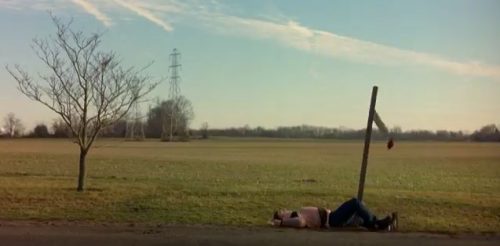
The shot was directed by Alison Maclean, whose cinematographer was Adam Kimmel. How they made that shot was first they read Denis Johnson’s book Jesus’ Son. I bought the book after I watched the movie to make sure it was Billy Crudup’s voice that was annoying and not the words.
 In the book, the words were in sentences full of glow and ache and the proud civility of the self-fucked, the calm leak of “Excuse me, there’s a knife in my eye.” And also of course the weeping and calling bartenders your mother. They were words about clouds that looked like brains, but they were also words like “help” and “stay” and “save.” Those little words forever hitchhiking back to church and never making it all the way. Paragraphs would interrupt themselves to turn to you. I was 17 and hadn’t read Levinas or Buber, and yet here was the “you” that knew the face on the other end was always dark. Little words like “search” and “name.” Paragraphs that interrupted their description of a shriek to tell you they have gone looking everywhere. For the shriek, they mean, but mostly it’s the gone, and the looking, and the everywhere.
A voice smart enough to hear its own narcissism but still stuck at the age where it can’t believe all the things it gets to feel and hear and see to the point where it doesn’t care at all how slurry it sounds to use a word like “glorious,” a voice that slackjaws around in a sheepskin coat calling everything terrible and beautiful like Oprah’s and-you!-get-a-car-and-you!-get-a-car. Back and forth between wide arms and self-hugging and shivering the whole time and I was 17. Even though I knew the Goo Goo Dolls singing “and you bleed just to know you’re alive” was kind of stupid, it didn’t feel that way. Here was an unironic hallelujah named after a song by a band I went out and listened to because of this book. Here was a blurb from some guy named Barry Hannah, so I read him too. Hallelujah. READ MORE >
What is a Real Substitute For Blood?: An Interview with Patty Yumi Cottrell
What is a Real Substitute For Blood?: An Interview with Patty Yumi Cottrell
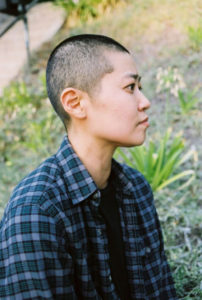
Patty Yumi Cottrell’s debut novel is Sorry to Disrupt the Peace, an “anti-memoir” about Helen Moran, a thirty-two year old adopted Korean woman who has to return to Milwaukee to investigate the sudden death of her fellow adopted Korean brother. It’s a weird little stall because the lurch of Helen’s brother’s death will get you to turn the page, but there are so many things that only Helen could say that will make you want to read and re-read them and cut them out and wear them into a suit of koan-like kernels to guide you through your each and every day. Helen drops gems like “the eye is a terrible organ” or “time itself is nothing but a construction to organize and measure flesh decay.” All the while cramming into this claustrophobic home that never really felt like a home with her adoptive white parents who are disappointed when she accidentally kills all the flowers meant for her brother’s funeral. There’s a vision of a balding European man. Books on drawings of trees in the Midwest. The abyss. Chad Lambo, the grief counselor. It’s a weird and dark and funny stroll. It nods to Sheila Heti, Thomas Bernhard, and Miranda July, but is completely of Patty Yumi Cottrell’s own making. After all, in the words of Helen, “everything in the world is a palimpsest, motherfuckers!”
Author Spotlight & Interviews & Massive People / Comments Off on What is a Real Substitute For Blood?: An Interview with Patty Yumi Cottrell
March 22nd, 2017 / 11:54 am
March 22nd, 2017 / 11:54 am
Memoir: A Barry Hannah remembrance by Po Hannah
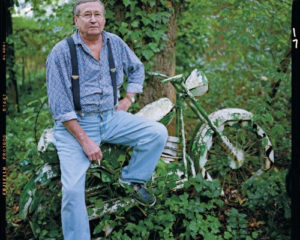
Without saying too much, because you’re not here to read about or from me, Barry Hannah has been the biggest writing influence in my life. I don’t write about motorcycles or The South or try to foolishly parrot his sentences. The most important thing he taught me was bravery. Be honest. Be brave. Going into 2017, I will try to keep those reminders close.
At the turn of the year, I remembered this beautiful piece written by his son, Barry ‘Po’ Hannah, shortly after Barry Hannah passed in 2010. It was originally published in the cutting-edge literary journal, Unsaid Magazine. David McLendon (Unsaid‘s major architect) and Po allowed us to republish it here.
“I don’t write under the ghost of Faulkner. I live in the same town and find his life and work inspiring, but that’s it. I have a motorcycle and tool along the country lanes. I travel at my own speed.” – Barry Hannah
Author Spotlight & Massive People / Comments Off on Memoir: A Barry Hannah remembrance by Po Hannah
January 4th, 2017 / 11:47 am
January 4th, 2017 / 11:47 am
Everyone Please Stop Listening to the Money: An AOL Instant Messenger Interview with Mark Baumer
It is 19 days after the election. I go to the gym. I run on a treadmill. There are 26 screens. As I gaze into them, I enter podcasts where Americans speak about how they want to be seen. My body propels itself forward in place. I stare at a yellow wall, practicing Zazen. I want reality to fall away so that my listening and movement are symbiotic. In spite of this, I experience a cavernous feeling. It is a feeling like an architectural rendering where the edge of a building blurs into the sky.
On three of the 26 screens, CNN reports that the President-elect may terminate the agreement between the United States and Cuba. This possibility was announced in a tweet.
My body, running in place, accumulates miles.
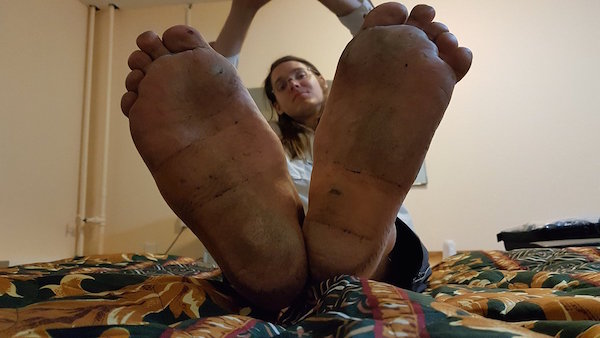
Before and after the election, Mark Baumer is walking. Mark Baumer is crossing America with his bare feet. In a Snapchat message to Mark, I type: Do you have shoes with you, and if so, what kind are they? Slip ons called fit kicks, he says. I only put them on when I go into stores.
This is not the first time Mark has walked across the country. He did so six years ago, but not without shoes. Walking is part of Mark’s writing practice. Have you ever seen someone write with their feet?
As he walks, Mark nonviolently protests. “My goal […] is to stop the earth from dying because of climate change,” he writes. “I’m sure a lot of people don’t think I can make it across America barefoot and probably even more doubt I will be able to defeat climate change with this journey, but something deep inside of me is telling me to do this so I will do my best to listen to this voice inside of me and ignore all the voices outside of me who don’t believe in me.”
In a time of black mirrors, cavernous feelings, and running in place, Mark’s project strikes me as both very funny and dire in its seriousness—a source of light in the dark. If anyone can perform the super-heroic act of stopping climate change without shoes, it’s Mark. READ MORE >
Tex Coda
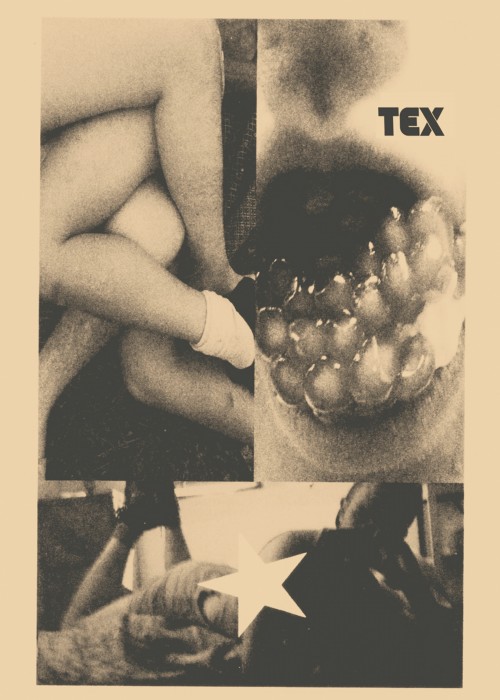
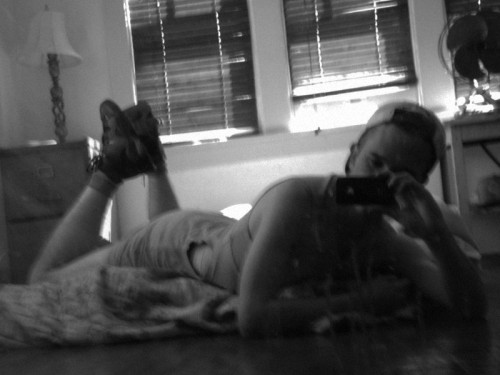
TEX is a bricolage novel using correspondence to construct its multi-level narrative. Collecting text messages, phone photos, emails, Craigslist responses and more, the book explores the various relationships formed and maintained by its author, Beau Rice, during the process of its making, with one relationship taking center stage: his evolving attachment to an Austin-based former fling, Matt G
Included by Rice in TEX are text-based “screenshots” of the author’s inbox: exchanges between he and his editor at Penny-Ante. Giving a nod to the book’s format, we asked the editor at Penny-Ante to form a collection of “Letters from Beau” that were sent during the editorial and now, ongoing post-book promotional process.
The below fragments were submitted with the author’s permission.
***
From Beau Rice (an inbox screenshot):
I just wanted to make sure you were still interested, because the text is growing and I’m thinking about it constantly, so I just wanted to make sure you were still interested.
http://www.francesstark.com/ftp/Osservate/osservate_viewing_copy.m4v
Your help with this impasse would be much appreciated.
I’ve given [the work] a preliminary title, ~book: [corn] [alien head] [baby bottle] [showgirls]. Thoughts?
Pics attached (lol, I’m so not used to typing that phrase outside of, like, responding to sex ads on Craigslist).
I’m going to have to fight you about [possible book title] Untitled.
Noooooo — why??
I feel you on the reshuffling.
If you insist, I’ll need a week.
And I know you want to be a dominatrix about it because it’s urgent, but I’m ready to start looking at other stuff.
I’ll be shopping around for something perfect-er.
Let’s keep in touch about any other text message books we come across, I want to be as aware of them as I can.
Ooooooops — the draft I sent the other day was missing a few things and fucked up in a few ways, so please work with the one I’ve included here.
(“Forms of incoherence that are listenable to.”)
I smoked weed for the first time in a while earlier tonight.
https://www.youtube.com/watch?v=h3MxEHQk644
Q3: Let me know about your trip to LA!
You’re surprisingly clever when you’ve just woken up.
It’s very preteen-y but surprisingly relevant.
(I hate the first email I sent to you today.)
Are you in LA?
I favorited it.
Give me a few minutes.
I have to warn you: the list of changes I’ve mentioned is not insignificant.
I also want to see it with our names in Calibri or whatever that chat one was.
I’d like to reemphasize the Matt thing (I just landed in Austin) and try to procure a photo of him in profile to stare impassively at me from the back of the book (?).
Actually this gets us closer to what my original intentions were.
Also/omg, including the drug dealers and online sex people: YES.
Here are those pixx of him + more to follow.
Sorry, that just does not work for me.
Let’s redact “Scissor Sisters” and “Le1f.”
Let me know if you want me to fictionalize any of the YOU IN THE BOOK shit.
That phone has been violated in a final manner, it is not to be turned on.
Tomorrow I’m taking Vyvanse and dealing with as much of this drudgery as I can.
I’m beyond tipsy and this is not a real message.
Here are more chats, mostly of the BDSM variety.
“But really it is I who have invaded my own privacy.” –Dodie Bellamy, Pink Steam
Apologies for the folder weirdness yesterday, I don’t know what was up with that.
For example, the one that references the galley copy of Knausgaard should appear in spring of this year (but I’m not worried about being totally accurate).
Oh my god, I cannot shut up.
But that is our secret.
I had a feeling.
SO BUMMED ABOUT THAT, but it’s fine.
Hahaha — “all these intense writer people.”
I agree with you totally on the “dildo in the corner” thing.
THANK YOU. I can only imagine what an incredible headache it is to format all of this.
We were only focusing on his missives.
Either pseudonym is fine with us.
I like “Tex” too!
I trust you.
We don’t need to change Alex’s name.
I am happy to lose most of the poetry, but NOT the ones I send to him in the first email sequence [p. 3-4].
Lol — I just said to my friends, “I think she [you] is pretty aware that I get fucked up at this time every night.”
We both want to tone down the meta-narrative.
I so relate, I ask everyone I’m around not to let me talk about it at all.
Seriously — I am 96% convinced of this.
Lol, I really did feel like a demon.
I understand and I wish to continue.
Feeling down with the cheap lazy vibe you describe.
Can you give me some other font options for the email essay?
I think I might reactivate my [Facebook] profile sometime around October to promote the book to my friends on there, but for the most part it’s important to me to stay off of it.
As much as I’d like for us to be in agreement, I’m still uncomfortable with my face being on [the cover] in such a big way.
I’m glad you’re doing that list thing — I worry I was overly delete-happy yesterday.
Let me know if I’m being too vocal and stressing you out.
The butt plug photo?
I’ve been drawing that icon a lot recently.
I like the fragmentary vibe of those inbox shots.
The version of this intertwined legs pic you’re using is slightly different, and not as good.
Since you mention “fixing the peach” [on the cover] I want to emphasize again the BUTT [Magazine] thing, and ask that we go peachy enough to not be pink.
It’s funny how unrealistic the prospect of fame makes us.
Could you try phrasing that differently?
No no no no no no no.
Haha jesus.
Just curious.
I totally lied to you.
I could get behind that.
It’s pretty unromantic in actuality.
Did simultaneously!
Happy birthday!
Anything particular instructions for that?
I’m still not sure whether or not to say this [and I am saying it] but — I apologize if any of the stuff about our parents in that excerpt made you sad.
All I need to do is link my current checking account to my PayPal account, I guess.
Note: you aren’t as defined/personified by this as you probably imagine.
Ah dang, I’m glad it was meaningful to you.
Two word answers!
Eesh.
A nice texture!
I feel like a human makes it less sterile
I’m wondering (finally) what the money/royalty situation is.
Hmm… still UGH.
I think that’s my car insurance.
But now I’m done emailing you for the night.
Hahahahaha — that is precisely my feeling.
Which I’m all in for, in most cases.
At USPS now, about to mail this fucker to Hilton Als (bad idea?).
Just using you as a therapist slash neurosis hole.
I’m about to go to bed and listen to this song and cry: https://www.youtube.com/watch?v=xu8MqdC0Zms
Wow… Typos. Embarrassing.
WHY DO I KEEP FORGETTING TO DO THIS.
You just got engaged. Why are you emailing me? Shouldn’t you be having sex or something?
Lol — “I’jj.”
So how do you want to do this?
Here’s the thing on that: No, it doesn’t.
Really, I’m up to discuss this.
“IT” is the “proprietor” ? The proprietor is non-gendered?
This process is weird.
Redundancy, bad poetry, etc.
This book is not going to ruin my life.
Daniel Shapiro: Why Shld I Read YOUR Book ??
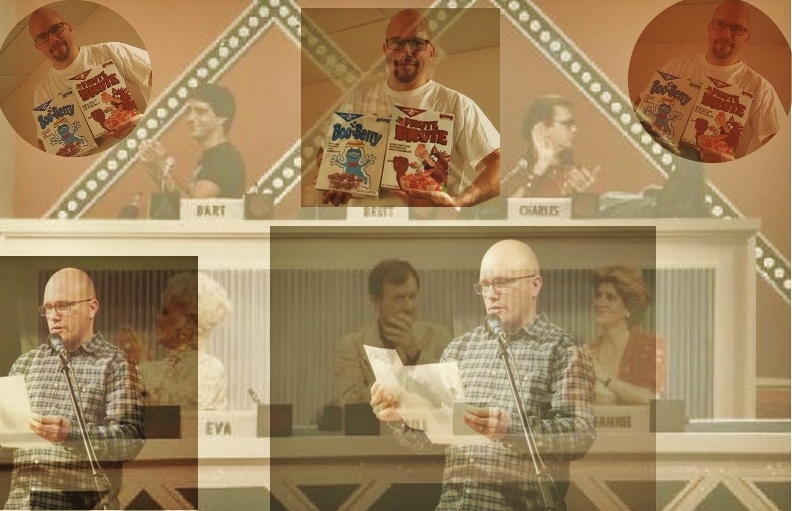
ok, Daniel, so why should we read YOUR book ???
Why should you read my book? Until recently, I might not have known, but after the death of Robin Williams, something happened: A number of people took to Facebook and Twitter, and some debated the role of popular culture in our society. One person asked, “Why are we so sad about a celebrity when there are more substantial things to worry about?” Another wrote, “I can’t believe this. I remember watching him on ‘Mork and Mindy.’ I was supposed to be in bed, but I would sneak downstairs to the console TV,” etc. Somebody reminded us to talk to someone when we’re depressed, and another chastised that person for suggesting depression could be cured via hotline.
Like my Facebook friends, my recent book of poems, How the Potato Chip Was Invented, wrestles with the concept of fame. Its audience may include people who are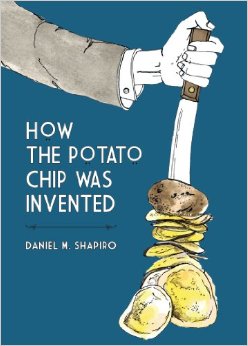 obsessed with celebrities, sometimes to the point of emotional fragility, anger, confusion, self-righteousness, elitism, or many more options. Even people who claim to hate celebrities are obsessed with them, too, taking time to criticize others for their celebrity worship. My poems are about this worship, but they don’t take part in it. Some of the poems are imagined scenarios that humanize celebrities more than we’re used to seeing them humanized. Others attack celebrities who have become a nuisance.
I like pop culture poems that are observational. They’re often written in the third person, the way a journalist would write. Poems can use pop culture as a shield or filter from self-referential expressions of feeling. They can be allegories. They may tell universal stories about depression by telling Williams’ story.
Anyhow, when everyone was writing about Williams—and criticizing others for doing so—they seemed to be proving the point of my book, which you should buy.
Author Spotlight / Comments Off on Daniel Shapiro: Why Shld I Read YOUR Book ??
October 19th, 2014 / 1:11 am
October 19th, 2014 / 1:11 am
This Isn’t Easy for Me by Julian Berengaut
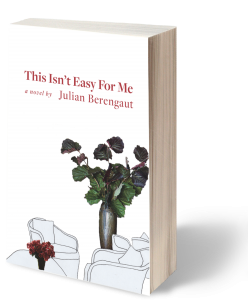 Julian Berengaut’s new novel, This Isn’t Easy for Me, a story told entirely in dialogue, is available today. Jen Michalski had some nice words for it:
“In Julian Berengaut’s This Isn’t Easy for Me, two strangers—Sabine, a German physicist, and Renata, an economist and philanthropist—meet for tea, one with a confession, the other a proposition. What follows is not a novel, but a conversation—a conversation that becomes more than a novel. It is a sweeping look at history, love and relationships, science, mathematics, and most importantly, women. Berengaut has written Sabine and Renata with as much tenderness, respect, and understanding as any woman writer.”
—Jen Michalski, The Tide King and Could You Be With Her Now
So did Linda Franklin:
“… here’s a book for people who love language. Language of literature, but also of physics, history, and the tangles you make with the daily news and private memories. Inside here is sex and sin and religion and dietary restrictions. This Isn’t Easy for Me is also for people who wish they could let their minds go wild—because by the end of the book, they will. From Conan Doyle to Pushkin, from Diderot to Godel, from Jewish jokes to Dumas to the Bible to Babel, bring some sticky notes for this lively marathon conversation between two learned women, so you can jot all the words, books, and your own ideas that you’ll want to follow up on later. The only problem here is that, as much as wish you could be, you aren’t there to join in.”
—Linda Franklin, Barkinglips
MEAN MONDAYS: THIS, THE AGE OF CRUMBS
 Hey, does anybody remember when Sam Pink did the ‘other people’ podcast where the interviewer asked a series of really vapid questions and made each answer about himself by ‘relating’ with an anecdotal story even though his anecdots were less interesting than the lumber aisle at home depot.
Then, after an extended period of extreme awkwardness, asked the most undignified, shameless question ever to be asked in any interview: ‘do you like me?’
Wasn’t that, like, totes, the most hilarious/fucking tragically pathetic moment in the last 5 years of human interaction or what.
Russell Bennetts: Why Shld I Read YOUR Book ??
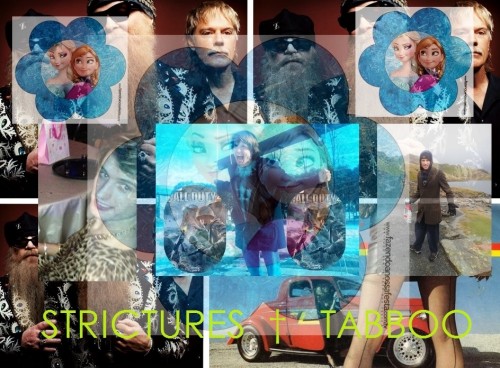
CLICK ON IMAGE FOR “ENHANCED” VERSION !!
ok, Russell, so why should we read YOUR book ???
You should read MY book because it’s the official (offal) sequel (squeak) to Cynthia, how spells your name?. The difference is seeding.
Cynthia was about all the feelings I didn’t feel while playing an online match of Call of Duty. I didn’t feel angry; I didn’t feel fanous; I didn’t feel frozen.
Look, for example at what Daniel Bosch has to say in praise of my groundpounding efforts:
Russell Bennetts’ lab coat is pristine. In his “Reflections on Taboo-breakng” he has constructed a totem which inscribes precisely, syllogistically, that form of wildness to which we obsessional neurotics feel we are most entitled. Bennetts knows well the savage truth that poems — even “Untitled” poems — have both titles and bodies. He knows that a title personifies that body — it’s a poem’s name — and that the use and abuse of any poem’s name may be pyscho-emotionally freighted. Bennetts knows how often we over-rationalize and abuse poems’ names in transactions that cheapen the energy which animates their bodies — that poems’ titles must be subject to the strictures of taboo.
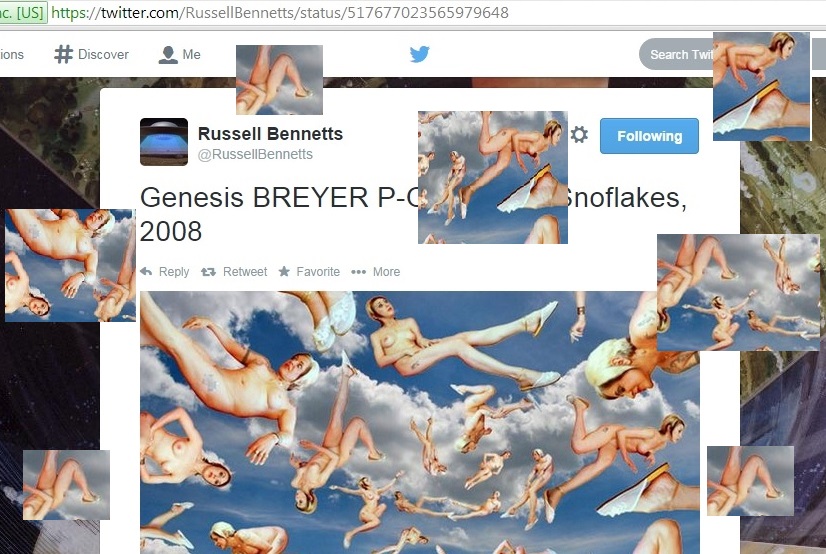
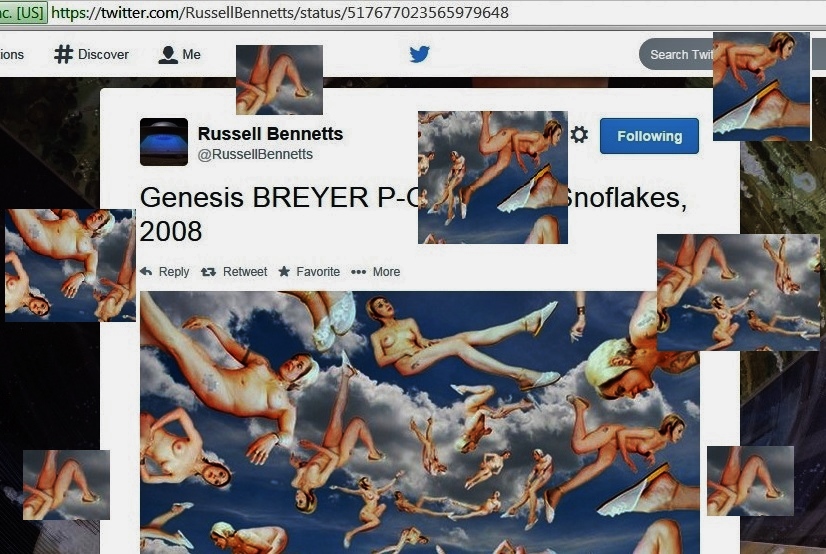
and if that’s not enough for you American raisin heads then how about:
If Bennetts’ “Reflections on Taboo-breaking,” were not the quintessential poem of the long 20thcentury, we might reduce it to a belated Oulipoesis, the holding of a mirror to the blank page which has discovers it as an ideal form: the lipogram in A, B, C, D, E, F, G, H, I, J, K, L, M, N, O, P, Q, R, S, T, U, V, W, X, Y and Z. But his poem’s suppression of the entire alphabet is neither incomprehensible savagery nor empty post-modern gesture. In its silence and stillness, Bennett’s poem stands at the edge of taboo — as we all must — and does not go there.
Those doors, it opened opens where Cynthia opened in its closing scenes. Fanously, Taylor Swift has legs and knows how to use them.
Cynthia dived into the pool feeling 22. Twenty-two years later she (mights) finds herself living in a block of expensive flats. Read on to discover as to the soulless rating of the block of expensive flats.
(Russell Ron Bennetts, Kentish Town 10/2014)
Author Spotlight / Comments Off on Russell Bennetts: Why Shld I Read YOUR Book ??
October 7th, 2014 / 10:32 am
October 7th, 2014 / 10:32 am