Jimmy Chen
http://www.formspring.me/jimmychenchen
Jimmy Chen is an Asian-Canadian expatriate living in San Francisco. He works at an office.
http://www.formspring.me/jimmychenchen
Jimmy Chen is an Asian-Canadian expatriate living in San Francisco. He works at an office.

Pepé Le Pew was a French skunk (Looney Tunes, Warner Bros., 1945) who falls in love with a black cat whose backside and tail are accidentally painted white from a spilled bucket of paint. Thinking the cat is a skunk, “la belle femme skunk fatale,” Pepé courts her with obtuse conviction, the unwitting cat too docile to even meow. I’ve always found this cartoon bleaker than the rest, its lonely protagonist even more deluded than shotgun brandishing Elmer Fudd. Many earlier cartoons operate as grim allegories about futile pursuit (i.e. Woody Woodpecker, Tom and Jerry, etc.), as if already apologizing for adulthood. The false white stripe, then, may represent steadfast projection, however ingrown. This has little to do with Susan Sontag, other than, inversely, her admitting to dying her hair black once it went grey, save the streak of white for which she was known. Caused by Waardenburg syndrome — a rare genetic disorder characterized by pigmentation anomalies in minor cases, and deafness in more acute ones — the white streak became a signature of premature maturity, wisps that hinted, or rather could not contain, great wisdom. I use “admitted” in parallel to “disclosing,” which were Carl Edmund Rollyson and Lisa Olson Paddock’s word in Susan Sontag: The Making of an Icon (2000), as the implication is that the dyeing of one’s hair falls into the camp of cosmetic vanity, that she should have just “greyed out” the old fashioned way, to let the formidable stripe become unnoticeable with age. She is to die of cancer in 2004, which cynically brings to mind a statement of hers in the Paris Review (1967) that “the white race is the cancer of human history,” whose subsequently brilliant sarcastic recantation was that “it slandered cancer patients.” A great writer always wins on paper; as for real life, the loss is immeasurable. It’s endearing how bad white people feel, how you’ve turned your neutral description into a pejorative. I’ve decided to love her, regardless of her hair, on my behalf. It’s easier this way. If life is a game of leaving quotes behind, the dead always win. Now all of us have something to look forward to.

It is odd how someone so sly online can be so shy in real life. That the former must compensate for the latter is something many of us may relate to. As Amanda Bynes slowly goes insane, we have a new disaster to follow, eyeing the eye of the hurricane from the safe distance of a meteorologist in front of a green screen. I hadn’t even heard of her until some of her witty, curious, but ultimately desperate tweets (wanting Drake to “murder [her] vagina”; calling other female celebrities “ugly”; posting increasingly explicit selfies). I imagine a small stake through her cheek piercings, like shish-kebab, disrupting the flow of her tongue. As standard news outlets address this as “bizarre behavior” and “cries for help,” we enjoy the heightened narrative of non-fiction, though Bynes is as much a masterful creation as Madame Bovary herself. In what has now become #bynesing, Amanda shields her face in modesty, or horror, an eerie nod to the Islamic Burqa (or Niqāb, with a slit) featuring a little window through which women, in public and/or in front of adult males, can navigate their world with truncated periphery. This requirement, called “Hijab,” unsurprisingly stems from the Qur’an, a place of deep sexual paranoia, or subverted fantasies, regarding incest. It’s a mess, but basically, the hood somehow keeps slutty daughters from fucking their fathers or brothers. As one-fourth of the world’s population prays at five appointed times a day towards Mecca, it’s hard not to see such circadian devotion as a kind of ultimate militia come the apocalypse, whose semi-finals will likely be between Allah, Jesus, China, and Walmart.

As we await Lars Von Trier’s Nymphomaniac, which seems like a sexual extension of Charlotte Gainsbourg’s character in Antichrist (2009), we are given — in the teaser poster — suggestive syntactical vulva by way of parentheses, which may bring to mind Seymour’s “bouquet of very early-blooming parentheses” in J.D. Salinger’s Seymour: An Introduction (1959). The impulse to render images using syntax turns <3 into a ♥, distilling language back into the Lascaux cave drawings, cuneiform, hieroglyphics, and early Chinese characters. Perhaps we want to move backwards, scratching images into dirt. A more meta interpretation of () might be the excised (implied) parenthetical note, though that is unlikely. This contributor, whose brief up-close encounters with female genitalia have been mostly with eyes closed, offers a more explicit rendering — the “i” perhaps hopeful first person, as in the first person to third base. If there is a douche in this enterprise, please apply your gaze at Lars himself, who seems obsessed with destroying the women in his films. Martyr is just a fancy way of saying mommy. His films are slow and gorgeous, into whose pretentiousness one simply caves. A common still shows Gainsbourg sandwiched between two black men as Oreo coitus. Shia LaBeouf’s in it, and you get to see his dong. The spectacle just wants eyes, not approval. I’ll see you in line.

One wonders if the staff of Dunder Mifflin ever saw the late Monet waterlilies painting, a print at least, framed in the conference room as a kind of covert bourgeois window through which one might mentally escape to softer times, whose chubby mascot was a man slowly taken by cataracts, whose artistic vision was no doubt clearer than his literal one. French impressionist (and, to a degree, Pop Art and Abstract Expressionist) prints are mainly used in corporate settings to placate the employee, condescendingly, as if all they needed to be happy was something pretty to stare at, when in fact it only implicates the dissonance between surrendered office life and the more vigorous ideals of artistic inquiry. I’ve always found the late Monet print an odd, yet provocative, choice. Perhaps the set designers wanted something deep behind the shallowness of Michael Scott. As The Office plays out its final season, we may be left with some more inadvertent metaphors: the casting politics of who would play the boss, and the legacy of an unstable company, who in a realist market would have been eaten alive by more faceless competitors Office Depot and Office Max; the sweet courtship and eventual nuptials of Jim and Pam, whose subsequent boredom of each other seemed to ooze from the actors without acting; the rogue zen of Stanley Hudson, who solved 10,000 crossword puzzles in what were likely out-of-body experiences; the increasingly comical scenarios less probable, obsolete after the novelty of the ironic “fourth wall nod” wore thin. Most compelling were the accurate personnel departments (e.g. Accounting, Office Relations, Sales, Human Resources, Executive, Warehouse, Production) ascribed to each character, whose demeanor and actions held consistent with them. Such vocational intricacy had, in the past with other shows, been simply consolidated as an abstract “job” to which someone went when they weren’t on the main stage, that is, home. The Office took the family away from home, into their own personal world of laughter and resent. Monet, the more successful of the French impressionists, built Giverny garden for the sole purpose of having a final chronic subject to paint until his death; he painted around two-hundred-and-fifty waterlilies, whose muddled canvases, thick and opaque, wore the transparent mask of a lake’s surface barely there. At its best, art is the profound realization of the invisible. Imagine a half-blind man — who famously declined ophthalmological help in aid of his abstractions — squeezing out more and more purple like an inside bruise finally surfacing, each work darker and darker, as if to trace the slow yet unwavering arc of an hourhand as it approaches night.
While it may seem relevant that Chechnya is auspiciously sandwiched between Russia and the Middle East — exhuming the dormant winds of the Cold War, and the current conflict with Islamic extremism — the Tsarnaev brothers, regardless of how perceived their exile was, acted as Americans; that is, with a kind of free volition this country violently preserves. To simply call them assholes is somehow to dishonor their victims, many of them now amputees whose incomplete image in the mirror every morning will remind them forever of the blast, whose unexplained birth out of nowhere does well to implicate the universe itself. Time will tell how politically motivated this act was — though one doesn’t imagine our young Dzhokhar being the most cooperative, or coherent — hence categorized into either the ideological camp of Ted Kaczynski/Tim McVeigh, or the, sadly, more senseless camp of Columbine/Sandyhook, whose executors are getting younger and younger, and better armed.
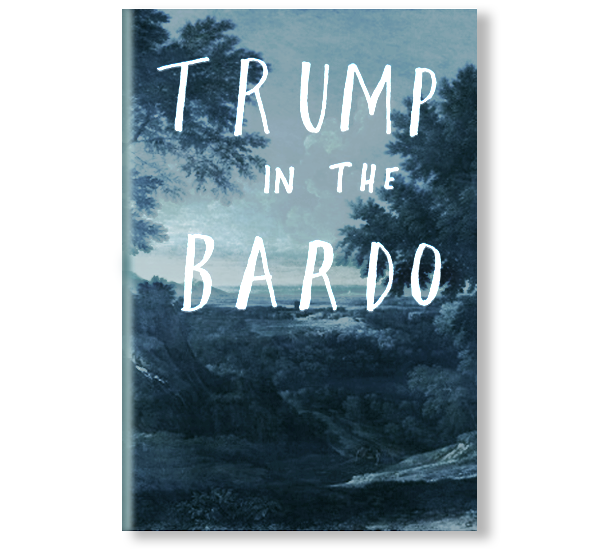
David Remnick’s piece (from which this illustration and title is unabashedly taken) in the New Yorker is vulnerably sympathetic to the Tsarnaev family, a liberal impulse which is needed, should one brave the harsher waters of the more “patriotic” sentiment i.e. that we should just bomb “them,” whoever they are (just when you thought the postmodern “Other” was dead). That a white male has taken the throne of the Other may launch us into a new era. Not colored, or queer, or part of some thesis, mush less exotic, he is simply another one of the ever expanding “us” lost in the fold of America, whose race is ostensibly raceless, and whose nationality is a slow and steady reduction of endless immigrations. The idea is rather genius. A country for all, though it often seems like we’ve stopped earning this.
Not since the Revolutionary War — with the exception of Pearl Harbor and 9/11, both quickly mythologized, as if to eagerly render them irrelevant — has foreign conflict breached American soil. Truman’s Hiroshima and Bush’s Afghanistan were respective responses, the former’s flattening sadly more effective. War for us is cordoned off as an abstraction of what happens “over there,” bestowing the general populace a bloodless, though vehement, discourse about its many possible meaning(s) from behind televisions and computers. The Boston explosions simultaneously remind us of two somewhat contradictory things: that there will always be insane, strangely entitled, people (usually white men, or boys) who kill for no reason at all, pointing at in inward pathos; or, more formidably, that a spreading global war, whose disenfranchised have less and less to live for, can always permeate our borders. The easy allusions to Syria or Gaza, frankly, scare the shit out of me, and I think all of us. As for the Tsarnaev brothers (one notes the eerie invocation of the Karamozov brothers), their patricide may be indirectly directed at our founding fathers: brave, violent, and tired men, who likewise came to America to escape a troublesome place.

Brain Ramen and the Cattail Noose
by Haruki Murakami
Vintage, July 2013
345 pages / $22
One late afternoon, unemployed narcoleptic celibate Uno Moribundo, pensively awaiting the shipment of a real doll and some obscure jazz CDs, falls asleep in a large bowl of scalding ramen. Permanently disfigured with third-degree burns to his face, he wanders Tokyo’s underground wearing a Ringo Starr mask looking for blind children to bring home and love. With some weary repetitions, troublesome inconsistencies, and heavy-handedly overlapping plot points, it becomes apparent that Moribundo may be in a coma. “His pillowed brain resembled bloated ramen left in a bowl, the spilled broth grown tepid over the months as floor thought bubbles trying to remember something,” Murakami deftly writes. Enter Yoshi Yummimoto, a 14-year-old goth school girl whose Lorazepam habit may be seen as complicit auto-narcolepsy. She falls asleep in class, and on his face. Follow this unlikely pair through the mental labyrinths of memory, identity, intimacy, and self — to a climactic hot pot binge, which spilled, brings them to their knees.

Time may be a sedative, for it’s always harder to know who exactly the bad people were, yet so easy to tell — in the incessant now from which we cannot run — who the bad people are. Either moral clarity diminishes with time, or we simply stop caring, the euphemism being humility. Prisoner of war Lt. Col. Robert L. Stirm is greeted by his family at Travis Air Force Base in Fairfield, California on March 17, 1973, about a year after Phan Thi Kim Phuc, aged 9, was photographed running from a South Vietnamese napalm attack on their own land after it had been occupied by the North. Richard Nixon, in his earnest paranoia loop, wondered to his Chief of Staff “if that was fixed,” upon seeing the iconic photo. Denial may be war’s greatest offense. The Strim girlfriend (wife, or sister) will come to know, understand, and to be forced to love, the dark PTSD crevices welled with ink inside Strim’s newly wired brain, as Phuc will be free to recount — with whatever pre-juvenile coping mechanisms she can employ — the senseless events of that day (June 8, 1972), its morning feigning repetition, on her little village road during her 14 month hospitalization slash 17 surgical procedures which returned her skin to human. Both enemy and kin run away from their personal and global hauntings, towards the idea of freedom, to a kind of endless finish line whose ribbons have already been broken by faster folks. And so, it’s not really a finish line, but a place to run away from something by running towards something else. Everyday we show ourselves how ugly and beautiful we can be, the shinny red inside us spilled out, touching others.
My recent Netflix “viewing activity,” which I discovered to my horror, follows the break. If you would like me to review any of these movies (or shows), or engage in commentary with me about any movie (or show), just list it in the comments. I will tend to this post, as best I can, for the next few days. This post may or may not be deleted, depending on the results.

I once temped in the “equity research” department of a large investment firm. I had to be there at 6:30AM PST, given that markets open at 9:30AM EST in New York. Seeing the sunrise from the train felt romantic, the graffiti scratched windows cutting the sun. Daily fluctuations in the market function as a myth; the only two numbers that count are how much you buy and sell, the latter in theory exponential to the former. The gentlemen for whom I worked — my entire job consisted of printing out stock reports and making binders out of them — were all younger than me, with better educations, abs, and weekend plans. They kept me at a cordial distance yet treated me with intuitive bro code sympathy. I exuded humiliation, hiding whatever morose novel I was reading. Short of inviting me to lunch, they asked if I wanted the leftover fries upon their return. Greasy fingered and self-loathing, I printed the fuck out of various stocks — whose sudden peaks and valleys told the bipolar story of our free market — while eavesdropping on tales of roughly coordinated fellatio in sports cars during metered parking. A quarter buys diminishing time, guaranteeing itself business again. I wondered who these women were, their red lipstick further deepened by a $24 dollar glass of Côtes du Rhône seeming as blood under a sole candle flame wavering inside glass. And this is just happy hour.

Between 1915 and 1923, Marcel Duchamp tedious arranged seemingly arbitrary shapes concerning a myth about a bride and her nine bachelors that he would refuse to convey to others. The Bride Stripped Bare by Her Bachelors, Even leaves us with an eerie Avant-garde cartoon embedded between panes of cracked glass which conform to a unique “mechanomorphic” law of physics, whose notes began in 1913, he was to incorporate in The Green Box (1934), a limited edition (of 320) scrap heap compilation of its conception and execution — though let not the word “edition” and the auspices of printing fool you; he produced each one by hand. The cracks in the glass are ostensibly controlled, which may explain why he was both insane and spent eight years to create it. None is this is really meant to make any sense. Duchamp’s self-enthralled solipsisms juggle meaning and nonsense, until the viewer is just left to stare. If there is a God, he too must be a fan: In 1926, the Brooklyn Museum accidentally broke the art piece in transport, making the cracks worse (via the actual laws of physics). Marcel, unfortunately, was not there to repair what he described as a “hilarious picture” in the first place.

The controversy surrounding Picasso’s Les Demoiselles d’Avignon (1907) lay not so much in its sexual inclination — to which most of Western painting, perhaps even religious, had been dedicated — but in the grotesque and primitive fashion the whores had been rendered. The painting may have been an antagonistic response to a more gentle work (Le bonhuer de vivre, 1906) by Henri Matisse, with whom the former had been in heated rivalry. It shows five prostitutes in a brothel in Barcelona, the still life at the bottom a phallic placeholder. Before racism, Europe simply eroticized Africa, where our artist had gotten tribal masks by which he was noticeably influenced. The offense, then, it seems, was less of a feminist encounter than an Anglo-Saxon European one; simply, we had been unwittingly drawn into bed with dark monsters from another land. As we gleefully await Harmony Korine’s Spring Breakers, which promises to be Girls Gone Wild meets Cops meets every rap video ever made, we are teased with promotional images and film stills. And it would take Selana Gomez — our lady of $4 million net worth; 14,417,325 twitter followers (as of 3/10/13, 11:29 PST); inside whom Justin Bieber first became a man — to swiftly strike a pose that came before her, Madonna, and Marilyn Monroe. An animal, when threatened, will bring their hands to their face; to retract them beyond is to exert trust, the ultimate form of control. To disarm the gaze of its power. Good girl.

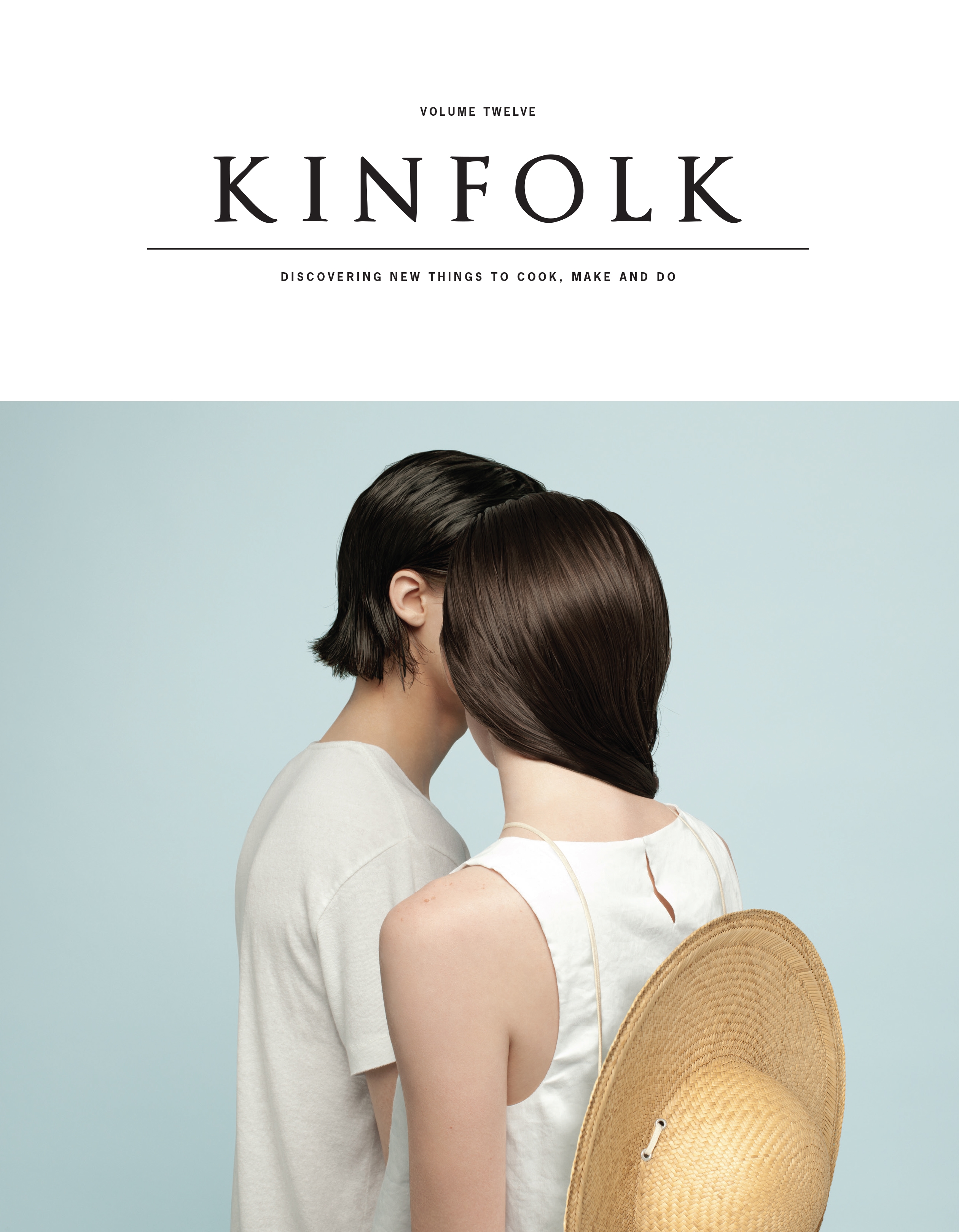
If the split-screen dialog between Woody Allen and Diane Keaton in Annie Hall (1978) seems perfectly timed, of masterful cadence, that is because it was filmed in the same take, the actors next to each other. They built two adjacent therapists’ offices for this. Allen, of course, could have spliced the disparate takes into one, but the “organic,” however inefficient, way of doing this aids the subtly. Alvy is seen in a mahogany-lined office with a Heidegger look-alike — being and time, or rather, time being almost up. Psychotherapists may be called “shrinks” in reference to the Freudian super-ego (conscience, the cause of suffering) one tried to shrink; or, it was first a derisive term from tribal “headshrinkers” who dried the decapitated heads of their enemies. A euphemism for therapist is analyst, the Freudian ghost of anal safely tucked away in the venture. (To see “the rapist” in therapist is, however, your own problem.) Whenever I call my mental health care provider to neurotically reconfirm the breadth of my insurance, an intake counselor pensively — though trained to seem calm, casual — asks me if I feel like either harming myself or others. A phenomenological response would throw us into a two hour conversation, so I just answer No. My therapist is a homosexual Buddhist suspicious that I might be homosexual and Buddhist as well, despite all my efforts to convey otherwise.

“That’s what Mommy made for dinner,” the woman behind me said. The museum was crowded the way Sundays are. Like grocery stores and churches, we apprehensively prepare for the week and the rest of our lives, respectively. I would have ridiculed her — for her provincial and self-involved inclinations towards great art — but found it, now at this point in my life, very touching. A dollop of love hardened in my throat for this dumb person. She held her daughter against her side, the latter who even grazed my ear pointing at the painting the way children always point at referents, as if to convince the world there’s only one thing, to consolidate life’s erratic foci into a single point. “Our fish didn’t look like that!” the daughter said. “Okay but the lemon did.”
The chat to my left is my response to a friend after I had excused myself to go to the bathroom, which the reader may deduce was a “number two.” The first line is an empowered assertion, perhaps stoic celebration. The second line is a critique of its aesthetics, which seems inextricably pointed, upwards, towards myself. Seems like there is a direct correlation between fecal length-girth and perceived and/or anatomical satisfaction of the experience. If this sounds familiar to other physiologies which ought to happen daily, you’re welcome. That men are all self-penetrated, however inversely, by their poop may be our best shot in having a vagina. We all know about penis envy, but frankly, I wish I had a place to hide my gummy bears. If any of this seems Freudian, or disgusting, we may have unintelligent design to blame: that our mouths and anuses are but the openings of a long and twisted tube. Notice that the letter D is next to the letter S on a standard keyboard, such that “dad” can easily replace “sad” in the ultimate critique of one’s self. Or maybe he’s just been on my mind.

That a couch in an average living room faces a television may be an invitation to become what we are watching, namely, a movie — that is, if our couples would just pay attention. Lateral domesticity begs to fall asleep. A man, reduced to emasculated flab, pleads for his unhealthy and coddled relationship to continue; the tacit repose of a couple engaged at their respective laptops seems precious; some bro fantasy of simultaneous bong and munchies with anthropomorphic hump pillow; the platonic diplomacy of former lovers newly registering the full radius between them. The couch may be an obvious place for contemporary dialogue, or its reticence, but there’s something peculiar about the camera choosing the very place of its artifice to peek into these lives, as if these movie directors took for granted — or were even ashamed of — the rectangular boxes in which their creations are manifested. Perhaps we find relief in seeing others situated as us. When a DVD ends, it reverts to the menu page consisting of some thematic snippet which goes onward in an infinite loop. One may lie there out of the remote’s grasp, too tired to hit ■. It is easy to lose track of time in the waiting room of habitual inception, the ▶ untouched. Every disc sheathed inside its tray is a silver sun waiting to rise, spinning out of control. Another reason to sit down, and pretend.

In 1974, Sol LeWitt made a series of “incomplete open cubes,” portraying all the possible configurations an incomplete cube could have. His early sketch studies of them resemble cuneiform, the rise from babble to meaning. The conceptual minimalist wasn’t interested in human volition, discretion, or gesture, but rather, the algorithmic underlining of things. Immune to will, art was granted a meaningless presence that could become beautiful on its own. Some of them sold at Christie’s between $50,000 – $250,000 dollars, depending on how mutated or fucked-up each one was. The more amputated the violated square looked, the more it fetched at auction. In short, absence had been purchased on a sliding scale, and maids finely dusted the masterpieces in their respective homes. His 1968 “Buried Cube Containing an Object of Importance but Little Value” is supposedly buried in its collector’s backyard. LeWitt was photographed digging a hole with a shovel though, the way condemned men are oddly obedient to their imminent executor. The will to prolong life as Darwinian tic. The IKEA “Lack” side table is $9.99 if you want it in “birch finish,” and $7.99 in plain white, a color which — when not imbued with high modernist sheen — concedes to a post-industrial grim boredom, even guilt, that is always trying to find its way back into the woods. This may be Walt Whitman’s fault, who saw a “journey work of the stars” in a blade of grass, so I have him to blame for my meandering horoscope. Everything looks so beautiful in IKEA’s labyrinthian showroom, until you haul a box full of flattened glued sawdust home. The instructions are made for the illiterate; one’s personal language reverts grunts and squeals, reduced to their hands and knees. Hours later, if you’re lucky, the representation of an ideal object has manifested inside your home, itself turned into a new object by its very representation of the original. Every clone in every home is theoretically the same, except secretly broken in unique ways. You come across a bag of screws, and hope they were extra. My personal lack holds an alarm clock for which I lament waking up, each day a slow parody of the one before, my bones buried under flesh, the birch now slowly peeling off. Imagine a species after this one coming across these objects, excavating their parts from the rubble, and trying to put the pieces back together. It might be hard to tell what was missing. The sifted legs resemble robot femurs, as if making the perfect person. They decide we were sloppy aliens. We often lied about what was underneath. In need of a place to rest our keys, and minds, we brought the strangest things home.

Of a kind of modesty far disproportionate to the attention it’s getting — for it would take a hacker to get into our former president’s sister’s email — amateur yet keenly perceptive paintings by George W. Bush have surfaced. They are remarkable: not so much their rendering or skill, but in their quiet internal repose, evocative of the peculiarities of the Nabis post-impressionist school. An immediate, and easy association — if one considers their respective and mindless havoc onto their perceived enemies — is Adolf Hitler, who also produced unexpected touching watercolors of churches. The imperial hubris with which Bush demonized Afghanistan at large, and later Iraq, is a sad example of turning the enemy into an abstraction. The same can be said for liberal media in their inclines against Bush; and so now, it seems, we are perplexed, and very taken aback at being allowed to see this man in a different light. It is simply hard to imagine such a heartless war monger painting such gentle paintings. Yet, the disparity lies not with Bush’s character, but the assumption that artists are somehow — by the very auspices of their art, as if introverted pastime were a moral act — essentially good people. Enter Pierre Bonnard, whose codependent relationship with his wife Marthe has kind of hilariously been documented by the many paintings of the her in the bathtub. She is said to have suffered from OCD and compulsively bathed half-a-dozen times a day, as if trying to wash away the dabs of paint for which she might have been mistaken by her husband. The pairing here is at best merely coincidental, until we look at their perspectives: George W. Bush gives us his own POV, as autoerotic muse, his phallac member just off the bottom of the canvas, perhaps the rod-like stream of water a surrogate hard on. This is the same view Marthe was having back around 1935, and toggling between the two collapses us into a kind of he-said-she-said scenario, of different versions of the same history.