
Michael on Movies: Meet the Blacks
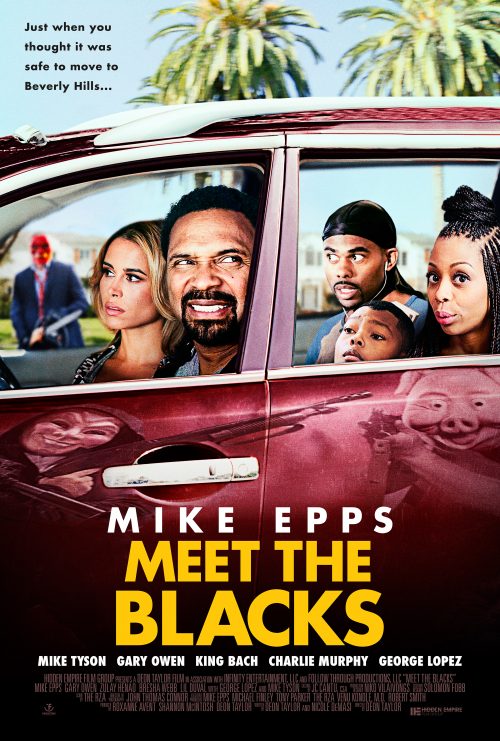
Surprisingly, very good (for something I thought would be very NOT good). There is so much behind-the-scenes stuff happening, it’s actually incredible, when you stop to think about it. So many people dismissed this movie when it first came out as just another spoof movie but, wait up! And look at this shit:
- Snoop Dogg appears in the first five seconds;
- You have Paul Mooney as Klansman #1;
- RZA does the music;
- Mike Tyson suddenly materialises as a character named James Clown (with full makeup and wig);
- Michael Blackson is Mr. Wooky (and it’s never really explained who the character is actually supposed to be or its purpose, in the world of Meet the Blacks);
- George Lopez is the president of the United States;
- And Charlie Murphy literally plays his heart out as a drug dealer fresh out of jail!
I could go on and on, here. Essentially, what I love most about this film is the zany world-building that takes place, which, in and of itself, already requires so much effort that it totally did not need to be in a film of this calibre, but here we are! Everyone and everything sort of follows the same internal logic (and if you can accept that, from the very beginning, you are going to looooove this film). That’s pretty much a guarantee.
I would describe it as a spoof of spoof films. So in the realm of spoof films, you have the OG: Airplane, and then Amazon Women On The Moon and The Kentucky Fried Movie (cause, why not?). Scary Movie comes along in the early 2000s to change the game, but before all that even, there’s Don’t Be a Menace to South Central While Drinking Your Juice in the Hood, Friday (which is less spoof and more, original comedy, but still worth mentioning), and then, Meet the Blacks. (I purposefully omitted the truly horrible examples, like Date Movie and Epic Movie because they don’t even exist, as far as I am concerned). It’s a very unique brand of lowbrow humour, here, and you have to go in knowing that. You think it’s catered toward a certain type of movie-going audience, but that’s just thinking inside of the box. Meet the Blacks actually tries so hard to be offensive (to everyone) that in the end, all of it is so silly and ridiculous, you’re going to laugh at half a dozen jokes (at least) even if you don’t think they’re funny, because it’s so absurd. It’ a nice exercise in finding out who you truly are. (Another good film for this is Edmond, 2005). I laughed at some jokes that on paper, I would have never laughed at. And there’s something to be said about Mike Epps’ delivery (and even though he is not a great actor, I appreciate his stage presence).
Overall, the spoofed-out parts are done brilliantly. There’s several bits where scary music is playing and you can hear the spooky echo of children laughing off in the distance (you know the sound effect) and then there’s the obligatory jump-scare–something a lot of shitty (recent) scary films do. Meet the Blacks wouldn’t be as good if we didn’t have so many terrible modern horror film tropes to harp on. And what’s brilliant is the writers absolutely know this (like full-on mad genius level) and take advantage of all of the inconsistencies that exist in what are essentially releases that are remakes of remakes, marketed as serious films.
I feel that Meet the Blacks is trying to say something–provide a message in the same way Get Out claims it was trying to provide a message. I am not sure I know what the message is, but I feel Meet the Blacks is way more sincere and open about what it is trying to say. There is an odd ambiance to the sound design too! In a few of the scenes, you will hear wind in the background, as the characters are talking and just existing, and this wind is something that was clearly added in post-production. It has no business being there, because it doesn’t add anything to any of the scenes, other than announce its presence. It’s actually pretty David Lynch, and it’s a bit strange, to see/hear in a film like this. It’s these small sort of if-you-aren’t-paying-attention-and-you’re-totally-dismissing-this-film-by-doing-another-sort-of-activity-like-folding-your-laundry… you’re not going to notice. And maybe that’s the point? Like a cool little unnecessary Easter Egg? (Aren’t all Easter eggs unnecessary?)
If you pretend this movie was made by someone you know and they made it over the course of an entire weekend and they didn’t have a lot of money to begin with, but for some reason felt they had a wholly unique vision and the only way to fulfill that vision was to make this film and now that the film is done, they really want you to watch it–this is that film. Meet the Blacks has some of the best use of wacky sound effects I have heard in a long while. Just as a quick aside, and to further cement my disdain (yet again) for many modern films… I would watch this over any of the Bourne films, again and again and again. Meet the Blacks breaks down all of the walls (whatever that means)–something I feel we need more than ever, especially right now, in our current socio-political-COVID-whatever environment/moment. This is a film that wants you to remember that it’s okay to sometimes laugh at something because it’s 100% stupid and doesn’t entirely make sense. ‘Cause life’s just life, y’know? Who gives a damn if you’re not making as much money as you think you should be making? Or that your dream publisher seems to just not want to ever publish you. Or that bad things keep happening in the world and that’s just never going to end. Stop living in the future and come back to the present. Enjoy the now and just slow down for a little bit, yeah? Breathe in. Cool. It’s Meet the Blacks. A high three out of five, from me.
4 Comments
September 4th, 2020 / 10:31 am
September 4th, 2020 / 10:31 am
Valerie and Her Week of Wonders (reviewing films released some time ago)
Swallowing pearls, drinking chicken’s blood, fighting off creepy clergymen: these are among the many bizarre challenges our protagonist must endure in Valerie and Her Week of Wonders (Dir. Jaromil Jireš, 1970). Valerie, played by the beautiful Jaroslava Schallerova, is a 13 year old girl living with her grandmother in a small town where religion is paramount and old-time ideals are treasured. She spends her days practicing piano, attending church services, and having tea with her grandmother: all things seemingly ordinary for an obedient child. But beneath the pretty surface there is something rotten about this rustic Czechoslovakian hamlet. Vampires! Lecherous priests! Debauching actors in animal masks! And witch-hunting townspeople!
Gary J. Shipley on True Detective, Cosmic Pessimism, Etc, Etc
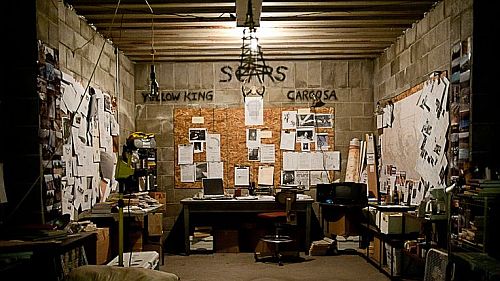
So, I’ve been quite preoccupied with this great essay on True Detective by Gary J Shipley which can be found at Bright Lights Film Journal. The essay, it turns out, is a wonderful, thorough and haunting meditation on the (trapped, locked-room) human condition, conciousness, pessimism, etc, etc:
Cosmic pessimism is the refuge of the pessimist who still finds himself alive, the refuge of a futility he has not made his, the refuge of the mystery of his not knowing and the vanity of trying, and he finds claiming this impossibility, the externally codified nature of his predicament, to be less taxing than any weariness of knowing. For to remain is not to make the world and its secrets yours via the self you have first established as other, but rather to make the self the potential agent of its own redemptive ignorance via the otherness of what’s outside it. Hart diagnoses this condition in Cohle, tells him his denial lies in being “incapable of admitting doubt,” and so articulates how salvation lies not in the flimsy panoply of faith but in acknowledgment of what is not known, for Hart like Cioran knows that “doubt is less intense, less consuming, than despair.” And while, as Eugene Thacker explains, horror and our philosophical interest in the world around us may well be intertwined, both being concerned with “the paradoxical thought of the unthinkable, in so far as it deals with this limit of thought, [ … and] in so far as it evokes the world-without-us as a limit,” pessimism somewhat counter-intuitively becomes the antidote to this horror, and cosmic pessimism the antidote to Lovecraftian/Thackerian cosmic horror: in the case of the pessimist the horror of unthinkability is transformed into a salve, a place of solace for thinking that cannot escape itself, a perspective smeared with the excrement of that which being must always become.
again, to read the full essay click here
Film / Comments Off on Gary J. Shipley on True Detective, Cosmic Pessimism, Etc, Etc
July 18th, 2014 / 4:00 pm
July 18th, 2014 / 4:00 pm
Too Much for American Poetry Circles ?? (Persona Peep Show)
(Persona Peep Show by Sara Tuss Efrik and Mark Efrik Hammarberg)
**********
Over at Montevidayo James Pate wrote the following about Persona Peep Show:
Persona Peep Show is an incredibly visceral work, and, as such, I can imagine it making some parts of the American poetry scene uncomfortable. It’s easy to imagine the standard criticisms: it’s too grotesque, too image-based, it’s too pleasurable (in a funhouse sort of way), it doesn’t properly “critique” or distance itself from XYZ. Its use of fairytale is anachronistic, and therefore conservative (God forbid we should ever disturb the laws of Hegelian-inflected historical linearity). And yet this video makes such criticisms seem old-fashioned and academic. As I’ve written about before on Montevidayo, there is a strong contemporary tradition in the art scene of masquerade, theatricality, excess, color. Jack Smith, Cindy Sherman, Matthew Barney, Ryan Trecartin. And a film like Persona Peep Show is very much related to that sensibility.
And in the comments section of that post Johannes Göransson adds:
Just the mere move of poetry into the video image is already a challenge to a US poetry which for so long has seen itself as inherently ethical precisely in opposition to the spectacularity of film, video etc.
**********
In an earlier Monteviday post–Adventures with weird rabbits and dismemberments: Sara Tuss Efrik’s deformation zone-–Göransson described Efrik’s work (written and video) as an investigation of “wound culture” and found one of her “Automanias” to be “a constant tension between the many and the singular, the diary-narrative and the forces that break apart the body.”
It’s not hard to see that “too much” dismemberment, “too much” of weird rabbits, etc, would make a conservative and old-fashioned Poetry Community uncomfortable but I’m particularly struck by Göransson’s contention that the “the mere move of poetry into the video image” would create some discomfort in the same stodgy circles that view themselves as “inherently ethical in opposition to the spectacularity of film, video etc.”
Perhaps since Art and Ethics have been on my mind a bit lately (see my recent Abramson Debacle post as well as its comment thread) I’m tickled here, particularly, by the the sense of righteousness at play. The sense of a moral superiority.
********
But are these Automanias and Videos too much for American Poetry Circles ?? Some of them ?? Most of them ??
**********
The new ACTION YES contains two more Efrik videos and you can check out some of the Automanias here in an earlier issue.
250 Points: The Hobbit pt 2: The Desolation of the Hobbit
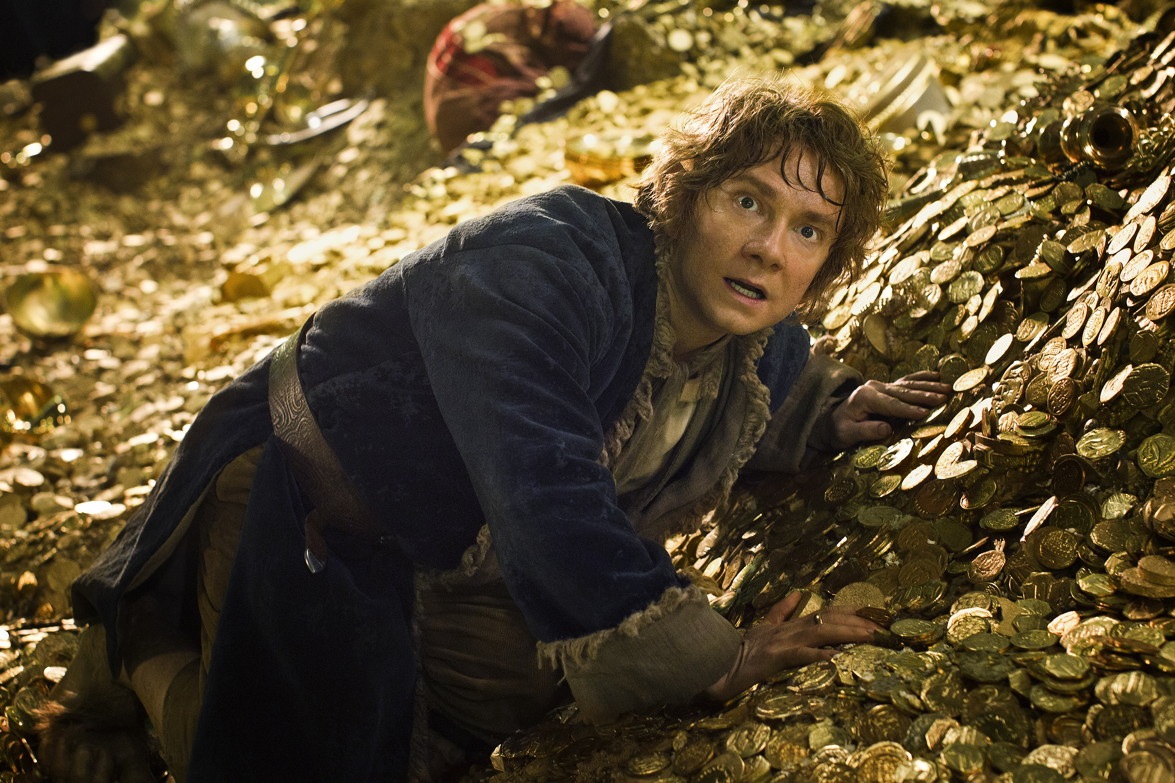
Bilbo Baggins, guarding the film’s box office receipts
- I missed The Hobbit: The Desolation of Smaug in theaters. Obviously since I wrote so much about the last one, I considered seeing its follow-up on more than one occasion, but just couldn’t summon the energy, even though a good friend invited me to join her, promising she’d bring snacks from Trader Joe’s.
- And then a few days after that, while I was out strolling the boulevard, I passed another friend who was en route to see the thing, on a lazy, chilly Sunday afternoon. But instead of joining him, I went home and took a bath.
- So you can see how excited I was to watch this movie. Please keep that in mind as you read this.
- Then the film left theaters, and I realized I’d missed my one and only chance for all time. I rushed to my local multiplex and pleaded with its employees to give me a private screening, but they refused, and threatened to call the police. Again.
- I despaired, and spent a week wondering what had happened to Bilbo, and Gandalf, and Thorin, and Whorin, and Hewy, and Dewy, and Chewy, and Killy, and Thrilly, and Culty, and the ninety-seven other little dwarves, and everyone else in Middle-earth.
- Suddenly, just when I could no longer bear the suspense, a CGI moth flew through my window, gripping an AVI copy of the film in its fuzzy mandible. It landed on my shoulder and mumbled something about how Gandalf was in trouble and “needed me.”
- Well, I need you, too, Gandalf! So I decided to watch the movie, after all, and take a lot of notes.
- These are my notes.
- It’s been fifteen long months since I watched An Unexpected Journey, and I barely remember anything that happened in it.
- It occupied a tremendous number of minutes? And presented a great many wolves and goblins that were born in a super-computer’s digital bowels?
- I do recall that the movie featured at least one terrific scene: the riddle game between Bilbo and the creature known as Gollum.
- Gollum won’t be in this new film, I have heard, which is a minus going in.
- Even still, I have no doubt that this movie will do its best to amuse and delight us, because that is how capitalism works. So let’s get right to it! READ MORE >
Rauan Klassnik—
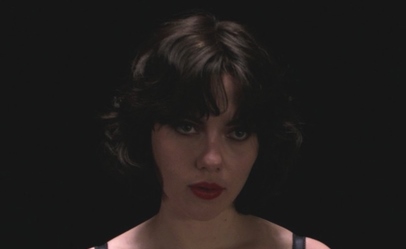
……………….Am I right in thinking that Under The Skin is a kind of beautiful, thought-provoking movie that’s worth seeing, hypnotic, etc, etc…?? But just not quite right??…(I mean that can be a good thing)…But maybe it could have benefited from more terrifying “baby alone on the beach” kind of stuff?? I dunno. Watcha think ??…………..
16
A D Jameson—
Does anyone want to talk about The Grand Budapest Hotel? I think there’s a case to be made it’s Wes Anderson’s best film.
Ringing Bell
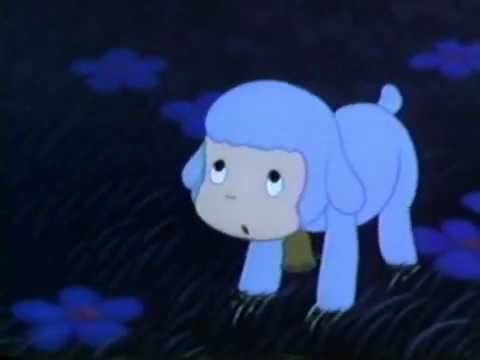
Ringing Bell. Have you seen Ringing Bell? I can’t believe I didn’t know about this film until a few weeks ago.
Ringing Bell (Chirin no suzu) is a Japanese film released in 1978 by Sanrio, the very same company that gave us Hello Kitty.
Ringing Bell is about a cuddly little lamb (“Ringing Bell”) who is always getting lost, and whose mother therefore outfits him with (guess what?) a ringing bell.
Ringing Bell’s mother warns Ringing Bell not to venture beyond the paddock, for fear of the wolf who lurks out there, being the mortal enemy of the lamb!
Can you guess what happens to Ringing Bell?