
Behind the Scenes
James Joyce does not exist
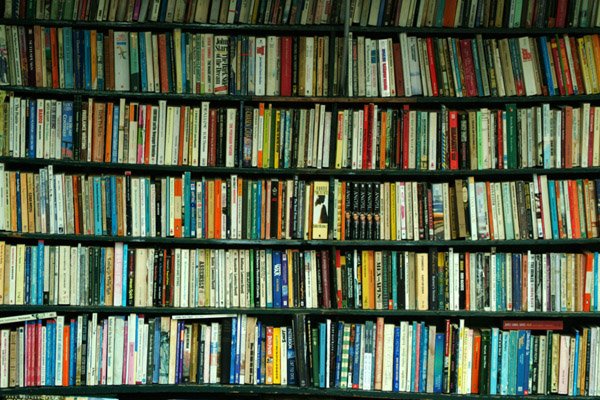
I’ve been thinking a lot lately about books considered legendary, classics, for their language and singularity in time. And then for how those books, over that time, have become books considered timeless and vital to the cause, innovators without which… etc. Joyce, Beckett, Stein, Faulkner, etc. The big names everybody deigns to have read, often via schooling, and who you often hear the more serious critics and often honchos in publishing referring to at large. Seems like I’ve seen or heard of a lot of speech where people in the publishing industry (particularly the larger sections) are talking about their influences and what they like, and many of them referring to these classics, and even if they haven’t said it aloud surely they would not shake their head at the idea that these books are the foundations of how we’ve come to where we are, and etc.
So, then, it becomes confusing to me, in this reckoning, when I think of how most any of these books, if approached today, would not exist. I can’t think of most any publisher, even the major and innovative independents, that would release Ulysses again right now, if instead of an accepted masterpiece, it were a third book by some Irish guy who had published a collection of short fiction and a weird novella. I can’t see even the more edgy presses like Dalkey doing it, or FC2 (EDIT: actually, FC2 recently published Vanessa Place’s La Medusa, which is the closest thing I’ve seen to doing what I’m talking about, which means they might have, maybe), or any of the other countless innovative-based upcroppings. Even the more “languagey” presses often don’t do books that are super-languagey, despite the seeming overwhelming admission that those monsters are the ones that defy time, and sell, perhaps gradually, forever. Maybe it would happen, but it would be a long fight, and a wellspring. I certainly can’t see a major doing it. That kind of freaks me out. Not only in that these works would not exist, but that their influences would not exist either, effectively turning off the power they’ve had in moving things forward over the time they’ve been around.
But those books sold then and sell now (and are curriculum!) for a reason, and part of it is because people since then are being taught not to read what they do not understand. A gradual and stuttered concept that could, over another gradual and stuttered period, be reversed.
It seems particularly confusing to me, this duality of “these are the important works, which also sell” and “we could never publish that,” when you think about how it’s been only pretty recently, say within the past 30 years, that these kinds of things really started getting shorted. Gravity’s Rainbow came out in the 70’s, after Pynchon had proved himself a seller, and V. as a first book is fucking bonkers, and there was Gass and Gaddis and Coover and that wholecrew, but that era kind of seems to me the last real monolith of pure “we are going balls out here.” Then there was the Lish era, which to now seems a total fluke, and the idea of another Lish rising to power in a big house the way he did seems almost so foreign that it is unreal. After that there is Nicholson Baker and David Foster Wallace and Rick Moody, which probably seems like right now the last frontier I can think of where true art was given territory and confidence and was successful in it, if not to the level of those earlier language beasts in the way of syntactic difficulty, but still. Art was put out, people wanted it, and money was made enough to float while still contributing to the pursuit of new language and new story and the idea that PEOPLE REALLY DO WANT TO BE CHALLENGED. Or they used to. And they can again.

No shit.
If you love Beckett, Joyce, Stein, Faulkner, why in the name of god are you publishing Jonathan Franzen???? And not to pick on him (that’s a punchline), but why aren’t you publishing books that can be held up to those names, or, get this, extend their influence even further? What will they be teaching in schools 50 years from now that isn’t from a century passed? You don’t think people want it? You could sell a goat to a goat. The massage is the medium. We know this.
Because, and I am sure of this, it is not a question of money: at a certain level, people will seek things out. Not everybody, not immediately. Consider it a long long term investment. On many levels, not just $$$, but that too.
RT @kenbaumann: “Advertising is the tax you pay for being unremarkable.” -Robert Stephens, founder of Geek Squad, acquired by Best Buy in 2002
The first suit (or tee shirt) that could honestly say “Had somebody handed me Finnegans Wake at my desk today, I would stamp the Yes” is the face that will be kissed (though you’ll have to put your money where your mouth is).
The dwindling of this confidence in the art, the way it seems to taper off further and further each year as publishers become more and more afraid of losing money in the short term by what is essentially a lack of confidence in the progression of human minds, seems absolutely frightening and wild. In the 80 some odd years since Ulysses came out, and the days of those other aforementioned language freaks that are now so easily accepted as the basis of our literature. Again, even in the independent circuit, the number of outlets where books that can not be defined, can not be parsed fully even likely by their publisher, that can not be given a blurb, or encapsulated in some kind of way, seems to have shrunken so small that it makes me wonder what kind of damage is being done to the body tissue of the words. With such a sparse prolonging of those innovations, and making new language laid out in the face of people who only take what you hand them (and yes, though they may not put their dollar down immediately, they will be inundated by its mere propagation), how much more dead can these brains be?
This isn’t meant to be a manifesto to say how cowardly anybody is. Honestly the small press world is more healthy than it has likely ever been. There are more new outlets now than ever, and more making, and ultimately, things feel good. Good books are being published in good places, even in a couple of big house places, and being read and discussed. A lot of small presses, though, seem to me like little fortresses with the same minds that the big ones have, just with less funds and less marketing potential. I am wondering, also, about the overall direction, about the rising of the new, and about breaking bodies, and forcing weight. You can call me too hopeful (ha) or off base (sure) or even say, “Dude, what does it matter who reads what besides these 200 people we all know?” but it seems to me it does matter, and like the places that step up to the mic, especially right now, and take the book-as-body by the balls and just move are the ones that will be regarded, years from now, as the ones that were. And I believe, I hope I believe, maybe I don’t it at all, but I’m trying: it will become.
Ulysses is the most famous book of all time besides the Bible because somebody had some huge, terrific balls.
Tags: James Joyce, Publishing
First thought: maybe people aren’t publishing these type of books anymore because we already have these books? That they started emerging as the academic school was becoming more systematic at the same things being taught in every place. And so it was like “we have ten difficult books that are pretty productive in terms of forcing people to think, why would we need anymore?” That Frankenstein could be the only novel you ever really need in an Eng Lit class. But this sort of doesn’t make sense I think, and your emphasis on the actual decisions (non-decisions?) made by publishers feels right. Did these two things happen in a weird inverse parallel? Like did the academy adopt these books and at the same time publishers began to shy away from them? The proliferation of literature/media/criticism/everything grew in such a short space of time over the 20th century and maybe this is another thing that’s been caused from that, difficult/challenging writing becoming popular in schools because certain things slipped through the net because the checks and balances were a bit more lax and then everything tightened up the closer we got to the millennium and these same people educated on these challenging books maybe have this subconscious feeling that they don’t have to take risks because we already have them? (I edited this paragraph a couple of times and I think it doesn’t have a logical thread anymore, sorry.)
But you’re right that good stuff still emerges. But the celebrity experimental writer. Man.
Good post.
First thought: maybe people aren’t publishing these type of books anymore because we already have these books? That they started emerging as the academic school was becoming more systematic at the same things being taught in every place. And so it was like “we have ten difficult books that are pretty productive in terms of forcing people to think, why would we need anymore?” That Frankenstein could be the only novel you ever really need in an Eng Lit class. But this sort of doesn’t make sense I think, and your emphasis on the actual decisions (non-decisions?) made by publishers feels right. Did these two things happen in a weird inverse parallel? Like did the academy adopt these books and at the same time publishers began to shy away from them? The proliferation of literature/media/criticism/everything grew in such a short space of time over the 20th century and maybe this is another thing that’s been caused from that, difficult/challenging writing becoming popular in schools because certain things slipped through the net because the checks and balances were a bit more lax and then everything tightened up the closer we got to the millennium and these same people educated on these challenging books maybe have this subconscious feeling that they don’t have to take risks because we already have them? (I edited this paragraph a couple of times and I think it doesn’t have a logical thread anymore, sorry.)
But you’re right that good stuff still emerges. But the celebrity experimental writer. Man.
Good post.
Funny you should write this. Just yesterday I was thinking what an interesting exercise it would be to make a list of all the important books that would likely remain unpublished if they were written today. The list would be LONG.
On the other hand, chances continue to be taken by big houses (House of Leaves, for instance), and it’s near-impossible to know what will become those classics we’re required to read in school in 100 years.
The big difference these days, I think, is that popular culture has revolted against “high culture” in a big way. There’s a reverse snobbishness about the way many people view with suspicion and disgust those who’ve seen the view from an ivory tower. I wonder if it’s the dark side of what has also been occurring simultaneously: the rise in esteem, since late modernism, of “low culture” in critical discourse.
It’s as though a major division between the two has been lifted, and a leveling is in the process of occurring. In the meantime, yes, it’s frustrating for writers of “difficult” fiction, because they’re not getting the benefit of the doubt they once received from cultural gate-keepers. But the same gatekeepers who would once have welcomed a text difficult as, say, Scorch Atlas, would never have allowed, say, hip-hop a chance.
Funny you should write this. Just yesterday I was thinking what an interesting exercise it would be to make a list of all the important books that would likely remain unpublished if they were written today. The list would be LONG.
On the other hand, chances continue to be taken by big houses (House of Leaves, for instance), and it’s near-impossible to know what will become those classics we’re required to read in school in 100 years.
The big difference these days, I think, is that popular culture has revolted against “high culture” in a big way. There’s a reverse snobbishness about the way many people view with suspicion and disgust those who’ve seen the view from an ivory tower. I wonder if it’s the dark side of what has also been occurring simultaneously: the rise in esteem, since late modernism, of “low culture” in critical discourse.
It’s as though a major division between the two has been lifted, and a leveling is in the process of occurring. In the meantime, yes, it’s frustrating for writers of “difficult” fiction, because they’re not getting the benefit of the doubt they once received from cultural gate-keepers. But the same gatekeepers who would once have welcomed a text difficult as, say, Scorch Atlas, would never have allowed, say, hip-hop a chance.
That could very well be the reason that publishers have stopped it: that those books exists, and are in place, etc. What I’m saying, beyond that, is that why can it not go further? Why is Ulysses the high water mark? We can’t extend beyond that 80 years later? We can. We have. It’s out there. It just needs a conduit, and more.
I mean, jeez, if we can’t publish books because we already have them, well, what else is left?
Comfort is the word here. And lack of immediate results. You can’t turn the next Ulysses out in people’s heads in two years. But someone should get started.
That could very well be the reason that publishers have stopped it: that those books exists, and are in place, etc. What I’m saying, beyond that, is that why can it not go further? Why is Ulysses the high water mark? We can’t extend beyond that 80 years later? We can. We have. It’s out there. It just needs a conduit, and more.
I mean, jeez, if we can’t publish books because we already have them, well, what else is left?
Comfort is the word here. And lack of immediate results. You can’t turn the next Ulysses out in people’s heads in two years. But someone should get started.
I agree, chances are taken. But not enough of them. And not big enough. Houses of Leaves is daring in form, but I don’t think it will hold up as language 40 years from now.
You are right about the high culture revolt, but you are also wrong. In music, ‘hip weird’ shit sells like hotcakes, because it has been built up over a period of a couple of decades that if you listen to new weird shit with balls, you are cool. This happens with books too, but to a much lesser extent, and partially, or significantly, because it is less available and less marketed and less made known.
I think it’s less frustrating for me as an author, as I’ve accepted it long ago, and more scary for me, as a person.
I agree, chances are taken. But not enough of them. And not big enough. Houses of Leaves is daring in form, but I don’t think it will hold up as language 40 years from now.
You are right about the high culture revolt, but you are also wrong. In music, ‘hip weird’ shit sells like hotcakes, because it has been built up over a period of a couple of decades that if you listen to new weird shit with balls, you are cool. This happens with books too, but to a much lesser extent, and partially, or significantly, because it is less available and less marketed and less made known.
I think it’s less frustrating for me as an author, as I’ve accepted it long ago, and more scary for me, as a person.
that list would be very very long
that list would be very very long
Well, you know, I basically agree with this, and have said a lot of it myself almost word for word. But I’m optimistic that people will read daring and wonderful things if we give them the chance and share our love. The question becomes, what can you do to share your love? What are the business models and institutions that we can build to support what we think needs supporting? I have dreams of making enough money to publish what I want to publish someday, or finding ways to make it so anyone can afford to. I have dreams of community.
Or, to try it from another angle: What do you think I can do? What can you do? What can any/all of us do? I would sincerely like an answer. I would try it.
Well, you know, I basically agree with this, and have said a lot of it myself almost word for word. But I’m optimistic that people will read daring and wonderful things if we give them the chance and share our love. The question becomes, what can you do to share your love? What are the business models and institutions that we can build to support what we think needs supporting? I have dreams of making enough money to publish what I want to publish someday, or finding ways to make it so anyone can afford to. I have dreams of community.
Or, to try it from another angle: What do you think I can do? What can you do? What can any/all of us do? I would sincerely like an answer. I would try it.
House of Leaves is a good example. Risk: Taken.
TV is to blame.
House of Leaves is a good example. Risk: Taken.
TV is to blame.
I was told there would be cake.
I was told there would be cake.
that’s the hard question. I don’t know what we can do, besides continue building our own, and hope that as times passes the cream rises and somehow finds itself in its own position of power and spreads again, or that people in the right places open their arms again and keep building, find a new Lish, find a new Grove. (Imagine a roster like that of Grove coming to light again! Grove was fucking insane)
Beyond that, Keep getting up and making something new.
that’s the hard question. I don’t know what we can do, besides continue building our own, and hope that as times passes the cream rises and somehow finds itself in its own position of power and spreads again, or that people in the right places open their arms again and keep building, find a new Lish, find a new Grove. (Imagine a roster like that of Grove coming to light again! Grove was fucking insane)
Beyond that, Keep getting up and making something new.
Perhaps I’m being naive, but I find it hard to believe that all publishers in the world have artificially set a high water mark. If an 800 page manuscript landed on thirty desks and it was the next Ulysses, someone would either give it a chance or give it to someone who would give it a chance. Readers at the big house would show it to readers at little houses, who would blog about it, and then some lonely owner of a bookstore in Paris would put all her profits from the previous year towards printing a thousand copies. Publishers wouldn’t stop the next Ulysses; it doesn’t exist.
Perhaps I’m being naive, but I find it hard to believe that all publishers in the world have artificially set a high water mark. If an 800 page manuscript landed on thirty desks and it was the next Ulysses, someone would either give it a chance or give it to someone who would give it a chance. Readers at the big house would show it to readers at little houses, who would blog about it, and then some lonely owner of a bookstore in Paris would put all her profits from the previous year towards printing a thousand copies. Publishers wouldn’t stop the next Ulysses; it doesn’t exist.
Not the next Ulysses. The one beyond Ulysses. If you don’t think something can go beyond Ulysses, damn yo. That’s sad.
really interesting post. i’m sure i’ll be chewing it over all day.
i’m super jealous of those bookshelves in the first pic. i’ve long since run out of room with my own shelving units. big ones like that make me drool.
Not the next Ulysses. The one beyond Ulysses. If you don’t think something can go beyond Ulysses, damn yo. That’s sad.
really interesting post. i’m sure i’ll be chewing it over all day.
i’m super jealous of those bookshelves in the first pic. i’ve long since run out of room with my own shelving units. big ones like that make me drool.
We’ve already gone beyond Ulysesses, again when chances were taken. Infinite Jest is another example of big balls and big payoff. There are more. And there are more waiting.
We’ve already gone beyond Ulysesses, again when chances were taken. Infinite Jest is another example of big balls and big payoff. There are more. And there are more waiting.
Almost no one writes like Joyce, Beckett, Faulkner (well, there’s Cormac McCarthy?) because it’d be derivative and because such skills are rare (you can’t get an MFA in TOWERING LITERARY ARTISTRY) and because lots of authors, publishers, and readers (particularly) value clarity and accessibility and communication beyond formal aspects.
Franzen — an ambitious/readable/intelligent writer — covered all this in his “Why Bother?” essay, in part about Gaddis’s The Recognitions, talking about “status” and “contract” writers. And then there’s Ben Marcus’s excellent defense of difficulty in reply.
Ulysses, also, was first published by Shakespeare and Company, a bookstore — not Random House.
Also, I’m pretty sure that publishers would love to put out the next Joyce but would meet resistance from Barnes and Noble and Borders, maybe the real adversaries in the equation?
Also, what about 2666, which isn’t “languagey” but is unconventional and massive?
Also, Beckett, Faulkner, Joyce and friends were high modernists who had tons to say about the human condition (Faulkner: “the human heart in conflict with itself” – Joyce: “the unwritten consciousness of his race” – Beckett: I can’t go on, I’ll go on – sucking stones, etc) and all that good stuff.
Their content, more than their form, is where it’s at, I think.
Also, Finnegan’s Wake is one of the most arrogant pieces of art in the world. Joyce: “They shouldn’t be having this war (WWII) – they should be reading my book” and “It took me 17 years to write it, I expect people to take 17 years to read it.”
Almost no one writes like Joyce, Beckett, Faulkner (well, there’s Cormac McCarthy?) because it’d be derivative and because such skills are rare (you can’t get an MFA in TOWERING LITERARY ARTISTRY) and because lots of authors, publishers, and readers (particularly) value clarity and accessibility and communication beyond formal aspects.
Franzen — an ambitious/readable/intelligent writer — covered all this in his “Why Bother?” essay, in part about Gaddis’s The Recognitions, talking about “status” and “contract” writers. And then there’s Ben Marcus’s excellent defense of difficulty in reply.
Ulysses, also, was first published by Shakespeare and Company, a bookstore — not Random House.
Also, I’m pretty sure that publishers would love to put out the next Joyce but would meet resistance from Barnes and Noble and Borders, maybe the real adversaries in the equation?
Also, what about 2666, which isn’t “languagey” but is unconventional and massive?
Also, Beckett, Faulkner, Joyce and friends were high modernists who had tons to say about the human condition (Faulkner: “the human heart in conflict with itself” – Joyce: “the unwritten consciousness of his race” – Beckett: I can’t go on, I’ll go on – sucking stones, etc) and all that good stuff.
Their content, more than their form, is where it’s at, I think.
Also, Finnegan’s Wake is one of the most arrogant pieces of art in the world. Joyce: “They shouldn’t be having this war (WWII) – they should be reading my book” and “It took me 17 years to write it, I expect people to take 17 years to read it.”
I’m not seeing a lot of Ulysses-grade stuff come in. I’m not running the press that would, of course, but I suspect that’s why you’re not seeing many new behemoth’s rise out of the small press world.
I’m not seeing a lot of Ulysses-grade stuff come in. I’m not running the press that would, of course, but I suspect that’s why you’re not seeing many new behemoth’s rise out of the small press world.
Wasn’t HOL published in a very small first run?
Wasn’t HOL published in a very small first run?
I’d prefer to read “A Personal Matter” by Kenzaburo Oe than Ulyssess. The next step isn’t always bigger balls and bigger payoff.
People thinking new things that go on in their own way in the same level of innovation as those men 100 years ago do not exist is really baffling to me.
Joyce was right, about the war and his book thing.
I’d prefer to read “A Personal Matter” by Kenzaburo Oe than Ulyssess. The next step isn’t always bigger balls and bigger payoff.
People thinking new things that go on in their own way in the same level of innovation as those men 100 years ago do not exist is really baffling to me.
Joyce was right, about the war and his book thing.
I mean the next as in the one beyond, not next as in the same thing. Substitute Infinite Jest for Ulysses if you want, even though you’re the one who said “if not to the level of those earlier language beasts in the way of syntactic difficulty, but still.” I don’t think it’s out there at the moment but it probably will be sometime, maybe soon if a couple of us can kick this nasty Internet addiction.
Seriously: If Ulysses were printed today, it would not be banned and smuggled into America, nor would it have suffered seventeen reprints “fixing” its errors. However, the point is moot because Joyce would never have written Ulysses today, he would have been too busy moderating a fetish website
it gained a cult status when it was basically distributed in xeroxed copies. and the first print run was very small. but i think just based on the status it had gained they knew their expenses would be recouped.
I wrote that comment like 20 minutes ago and got distracted and when I finally hit submit everyone had already made my point. Maybe I made it shorter though.
I mean the next as in the one beyond, not next as in the same thing. Substitute Infinite Jest for Ulysses if you want, even though you’re the one who said “if not to the level of those earlier language beasts in the way of syntactic difficulty, but still.” I don’t think it’s out there at the moment but it probably will be sometime, maybe soon if a couple of us can kick this nasty Internet addiction.
Seriously: If Ulysses were printed today, it would not be banned and smuggled into America, nor would it have suffered seventeen reprints “fixing” its errors. However, the point is moot because Joyce would never have written Ulysses today, he would have been too busy moderating a fetish website
it gained a cult status when it was basically distributed in xeroxed copies. and the first print run was very small. but i think just based on the status it had gained they knew their expenses would be recouped.
I wrote that comment like 20 minutes ago and got distracted and when I finally hit submit everyone had already made my point. Maybe I made it shorter though.
that’s an interesting point
really like this post, blake, and i feel you. totally.
my feeling is that it will happen and when it does it might very well be a woman. something like zadie smith on acid. because i think a totally self-actualized female genius could push the language in a way men could never think of, and perhaps can’t think of. i honestly believe this and have every hope that it will happen.
if you want to relate it to music, it would be like lester bangs’ article about the shaggs, “better than the beatles (and DNA too)” – http://www.keyofz.com/vvoice.htm
You guys are seriously scaring me thinking new masterpieces of new language do not exist.
jesus.
that’s an interesting point
really like this post, blake, and i feel you. totally.
my feeling is that it will happen and when it does it might very well be a woman. something like zadie smith on acid. because i think a totally self-actualized female genius could push the language in a way men could never think of, and perhaps can’t think of. i honestly believe this and have every hope that it will happen.
if you want to relate it to music, it would be like lester bangs’ article about the shaggs, “better than the beatles (and DNA too)” – http://www.keyofz.com/vvoice.htm
You guys are seriously scaring me thinking new masterpieces of new language do not exist.
jesus.
You published Chris Higgs’s new language.
Hotcakes, really? Tell that to Themselves, or anyone else on the anticon label. Sure, they have an audience, but very few of them support themselves with their music. You’re talking about a tiny subculture, just like that which exists in fiction (proportionally), compared to Jay-Z.
Also, I believe many people are afraid.
You published Chris Higgs’s new language.
Hotcakes, really? Tell that to Themselves, or anyone else on the anticon label. Sure, they have an audience, but very few of them support themselves with their music. You’re talking about a tiny subculture, just like that which exists in fiction (proportionally), compared to Jay-Z.
Also, I believe many people are afraid.
Or more aptly, have taught themselves to think, Why bother.
Or more aptly, have taught themselves to think, Why bother.
actually you saying that reminds me that FC2 published Vanessa Place’s La Medusa, which might be the most recent book that broke so many bounds
Art moves in cycles, thought moves in cycles, and the best minds of our generation are addicted to the fucking Internet. I am not joking about this.
actually you saying that reminds me that FC2 published Vanessa Place’s La Medusa, which might be the most recent book that broke so many bounds
Art moves in cycles, thought moves in cycles, and the best minds of our generation are addicted to the fucking Internet. I am not joking about this.
But the market exists. Perhaps it does not filter down as well to the artist, but kids are all about fashion music.
Pitchfork can make you rich now.
i’m going to try and be optimistic as thinking like this has fucking shattered my brain for so many years. i do think there are individuals out there. i do think, at times, that presses get it right.
i don’t think major moves or upheavals or shifts happen all that often and that we were lucky to get the glut of gaddis, coover, barthelme, barth, pynchon, etc. when we did. and then the coterie of writers surrounding lish. and then dfw. and i would add vollmann and maybe someone like ben marcus to that list. so, maybe we’ve been lacking for the last 5-10 yrs? obviously vollmann and marcus are still alive, still working, but what since IJ has been a mindbender?
i’d say vanessa place. la medusa scrapes brains. so does dies: a sentence. but the problem is that while amazing shit is cropping up here and there, i’d disagree with ken in that it has to do with television (although we all know the effects of television on us as writers, us as contemporary culture) as much as it has to do with the internet. it’s the bad w/ the good. so much good is being made right now it’s almost over saturation. a lot of good can block out the great. gets lost in the mix. i found out about vanessa place after your wrote up la medusa on your blog. bought up dies and la medusa with quickness. read it and sat awestruck. i bet most people haven’t read it. i’ll best most people don’t write as good as her fucking blog posts. i have hope man. i’ve already told you who i think are the fucking torchbearers. i do think readers are less apt to want to be challenged and there are a variety of reasons for this, which i won’t go into now, but i have hope that motherfuckers are so good that they can’t be denied. usain bolt’n motherfuckers.
I thought voluminocity was at issue.
In that case, I’m the king!
Also, how do you know what to look for? Our culture has changed, and we have different concerns. How do you know that the book that finally defines our era isn’t something you’ve read and dismissed? Frankly, if it could be recognized so easily, it wouldn’t be very visionary, would it.
and joyce was probably addicted to reading the newspaper?
what’s your point?
But the market exists. Perhaps it does not filter down as well to the artist, but kids are all about fashion music.
Pitchfork can make you rich now.
i’m going to try and be optimistic as thinking like this has fucking shattered my brain for so many years. i do think there are individuals out there. i do think, at times, that presses get it right.
i don’t think major moves or upheavals or shifts happen all that often and that we were lucky to get the glut of gaddis, coover, barthelme, barth, pynchon, etc. when we did. and then the coterie of writers surrounding lish. and then dfw. and i would add vollmann and maybe someone like ben marcus to that list. so, maybe we’ve been lacking for the last 5-10 yrs? obviously vollmann and marcus are still alive, still working, but what since IJ has been a mindbender?
i’d say vanessa place. la medusa scrapes brains. so does dies: a sentence. but the problem is that while amazing shit is cropping up here and there, i’d disagree with ken in that it has to do with television (although we all know the effects of television on us as writers, us as contemporary culture) as much as it has to do with the internet. it’s the bad w/ the good. so much good is being made right now it’s almost over saturation. a lot of good can block out the great. gets lost in the mix. i found out about vanessa place after your wrote up la medusa on your blog. bought up dies and la medusa with quickness. read it and sat awestruck. i bet most people haven’t read it. i’ll best most people don’t write as good as her fucking blog posts. i have hope man. i’ve already told you who i think are the fucking torchbearers. i do think readers are less apt to want to be challenged and there are a variety of reasons for this, which i won’t go into now, but i have hope that motherfuckers are so good that they can’t be denied. usain bolt’n motherfuckers.
I thought voluminocity was at issue.
In that case, I’m the king!
Also, how do you know what to look for? Our culture has changed, and we have different concerns. How do you know that the book that finally defines our era isn’t something you’ve read and dismissed? Frankly, if it could be recognized so easily, it wouldn’t be very visionary, would it.
and joyce was probably addicted to reading the newspaper?
what’s your point?
I doubt there are many TOWERING LITERARY ARTISTS alive right now — or more so, Kafka, Joyce, Woolf, the High Modernists, they’re sort of like the Gods of Olympus. It’s not so easy to ascend that mount. But I agree that it’d’ve have been way cooler if everyone read Finnegan’s Wake instead of fighting WWII.
Also, yes, many people are afraid or think why bother — which is another post in itself. This is a good post for conjuring other posts.
I doubt there are many TOWERING LITERARY ARTISTS alive right now — or more so, Kafka, Joyce, Woolf, the High Modernists, they’re sort of like the Gods of Olympus. It’s not so easy to ascend that mount. But I agree that it’d’ve have been way cooler if everyone read Finnegan’s Wake instead of fighting WWII.
Also, yes, many people are afraid or think why bother — which is another post in itself. This is a good post for conjuring other posts.
i could name 11 towering literary artists alive right now
i could name 15
don’t ask me to because it’s sidebar, but have a little faith
i could name 11 towering literary artists alive right now
i could name 15
don’t ask me to because it’s sidebar, but have a little faith
i am drooling for ben marcus’s next work. it could be huge.
I think that you might be right (although there’s no way to know) that, say, Ulysses would likely be passed over for publication by many house. But I also think that many of the books you mentioned had difficult paths to publication in their own time, and that the story that began to attach to those difficult paths to publication became part of their appeal, and part of the reason that they became culturally significant.
I also think that one flaw in the argument is that it doesn’t take into account the fact that those books are classics in part because the addressed in some way the social and historical context into which they appeared. A book like Ulysses wouldn’t seem so revolutionary now, because we’ve already had Ulysses. A book like Ulysses wouldn’t shock now on faux-prurient grounds, because it’s tame in comparison to books that appear now on the front table of the Barnes & Noble. A book like Ulysses wouldn’t be banned now because it helped to usher in a literary climate opposed to government-sponsored book banning in the United States. A book like Ulysses wouldn’t be as effective in relationship to our context because its play with genre wouldn’t be fresh anymore — everyone plays with genre now — and because the genres with which it makes its play aren’t part of the contemporary literary context in the same way they were. A book like Ulysses wouldn’t be the next step in the evolution of modernism anymore because modernism isn’t new anymore, nor is it the most fashionable place where the avant garde meets the dominant culture anymore.
You could make similar arguments about many of these other books. Gravity’s Rainbow is not Gravity’s Rainbow on its aesthetic merits alone, nor is Lolita, nor is anything of Faulkner’s. Part of the reason we read them is that they are great, but part of the reason we read them is that there came a point in literary history where they became significant to the community of readers.
One thing in the assessment that is right on is that Gravity’s Rainbow gets a chance in the marketplace because of the commercial success of V. What’s implicit here is still true — if somebody proves they can sell by way of their challenging novel, they get the chance to get a big platform for their more-challenging novel. On this premise, we’re soon going to see a major publicity campaign for a posthumous, unfinished, reconstructed novel ostensibly about boredom in which the author’s major linguistic virtue — complication — is said to be replaced with plainspokenness, and all of this, yes, because of the cult of Infinite Jest, without which the death of David Foster Wallace would be unspeakably sad to a reader like me, but likely wouldn’t have been the cultural touchstone it has become, which made possible the climate into which The Pale King will get a hero’s reception, whether it is any good or not.
I remember an interview with Toni Morrison in which she notes that Robert Gottlieb began to become receptive to encouraging and publishing the big, challenging books of her middle period (Beloved, Song of Solomon, etc.) only after the aesthetic and commercial success of her more slim and conventional (on narrative grounds, anyway) early novels The Bluest Eye and Sula.
I think that in the hands of a serious literary editor at a serious New York house (and they do still exist — Gerald Howard at Doubleday, Michael Pietsch at Little, Brown, Lorin Stein at FSG, and Gary Fisketjon at Knopf, to name just three), the writer who establishes him or herself with a first book will certainly find the opportunity to launch the bigger, bolder, more difficult book. Perhaps the biggest problem is that once writers find success with the less ambitious project, the impetus to create the bigger, more difficult, and hopefully more significant and aesthetically virtuous project is diminished. We all like to have some success and then to have some more, even if it means replicating what we did before.
Of course, the corollary issue which this passage hasn’t yet explored is whether or not difficulty is itself a primary determinant of what makes a literary work big or important or groundbreaking. Because lately I’ve been reading late-model Philip Roth — Sabbath’s Theater and American Pastoral particularly — and he’s as accessible as anybody who ever put pen to paper, and more transgressive than almost any novelist I’ve ever read on multiple fronts (the literary, the aesthetic, the moral, the political, the historical), and these two books are challenging on many of these levels, and yet I never hear them mentioned in these discussions about literary triumph versus the marketplace, a marketplace Roth himself has conquered many times over, which doesn’t to my taste diminish the artistic accomplishment one whit.
i am drooling for ben marcus’s next work. it could be huge.
I think that you might be right (although there’s no way to know) that, say, Ulysses would likely be passed over for publication by many house. But I also think that many of the books you mentioned had difficult paths to publication in their own time, and that the story that began to attach to those difficult paths to publication became part of their appeal, and part of the reason that they became culturally significant.
I also think that one flaw in the argument is that it doesn’t take into account the fact that those books are classics in part because the addressed in some way the social and historical context into which they appeared. A book like Ulysses wouldn’t seem so revolutionary now, because we’ve already had Ulysses. A book like Ulysses wouldn’t shock now on faux-prurient grounds, because it’s tame in comparison to books that appear now on the front table of the Barnes & Noble. A book like Ulysses wouldn’t be banned now because it helped to usher in a literary climate opposed to government-sponsored book banning in the United States. A book like Ulysses wouldn’t be as effective in relationship to our context because its play with genre wouldn’t be fresh anymore — everyone plays with genre now — and because the genres with which it makes its play aren’t part of the contemporary literary context in the same way they were. A book like Ulysses wouldn’t be the next step in the evolution of modernism anymore because modernism isn’t new anymore, nor is it the most fashionable place where the avant garde meets the dominant culture anymore.
You could make similar arguments about many of these other books. Gravity’s Rainbow is not Gravity’s Rainbow on its aesthetic merits alone, nor is Lolita, nor is anything of Faulkner’s. Part of the reason we read them is that they are great, but part of the reason we read them is that there came a point in literary history where they became significant to the community of readers.
One thing in the assessment that is right on is that Gravity’s Rainbow gets a chance in the marketplace because of the commercial success of V. What’s implicit here is still true — if somebody proves they can sell by way of their challenging novel, they get the chance to get a big platform for their more-challenging novel. On this premise, we’re soon going to see a major publicity campaign for a posthumous, unfinished, reconstructed novel ostensibly about boredom in which the author’s major linguistic virtue — complication — is said to be replaced with plainspokenness, and all of this, yes, because of the cult of Infinite Jest, without which the death of David Foster Wallace would be unspeakably sad to a reader like me, but likely wouldn’t have been the cultural touchstone it has become, which made possible the climate into which The Pale King will get a hero’s reception, whether it is any good or not.
I remember an interview with Toni Morrison in which she notes that Robert Gottlieb began to become receptive to encouraging and publishing the big, challenging books of her middle period (Beloved, Song of Solomon, etc.) only after the aesthetic and commercial success of her more slim and conventional (on narrative grounds, anyway) early novels The Bluest Eye and Sula.
I think that in the hands of a serious literary editor at a serious New York house (and they do still exist — Gerald Howard at Doubleday, Michael Pietsch at Little, Brown, Lorin Stein at FSG, and Gary Fisketjon at Knopf, to name just three), the writer who establishes him or herself with a first book will certainly find the opportunity to launch the bigger, bolder, more difficult book. Perhaps the biggest problem is that once writers find success with the less ambitious project, the impetus to create the bigger, more difficult, and hopefully more significant and aesthetically virtuous project is diminished. We all like to have some success and then to have some more, even if it means replicating what we did before.
Of course, the corollary issue which this passage hasn’t yet explored is whether or not difficulty is itself a primary determinant of what makes a literary work big or important or groundbreaking. Because lately I’ve been reading late-model Philip Roth — Sabbath’s Theater and American Pastoral particularly — and he’s as accessible as anybody who ever put pen to paper, and more transgressive than almost any novelist I’ve ever read on multiple fronts (the literary, the aesthetic, the moral, the political, the historical), and these two books are challenging on many of these levels, and yet I never hear them mentioned in these discussions about literary triumph versus the marketplace, a marketplace Roth himself has conquered many times over, which doesn’t to my taste diminish the artistic accomplishment one whit.
you are also publishing andy devine you fucking bastard
get hired to a major house already
:)
you are also publishing andy devine you fucking bastard
get hired to a major house already
:)
Sorry for all the typos!
Sorry for all the typos!
Well, but, like, here’s my thing: You’ve got a house, right? A small one, a new one, but you can publish the things you want to, and you can promote them the way that you want to. So it seems like this fretful energy would be better spent there, as obnoxious as it may be to say that. We aren’t responsible for how the world responds to our efforts. Only our efforts. Etc.
Well, but, like, here’s my thing: You’ve got a house, right? A small one, a new one, but you can publish the things you want to, and you can promote them the way that you want to. So it seems like this fretful energy would be better spent there, as obnoxious as it may be to say that. We aren’t responsible for how the world responds to our efforts. Only our efforts. Etc.
I don’t get the ‘this Ulysses wouldn’t happen’ thread because again I’m not looking for a Ulysses, but something that can shake the way it did. and it could. like amelia said, there are cycles, and it is possible to again well over those same bars, in our new time. it is not impossible.
The Pale King, i am scared for it, and trembling. honestly.
I wish I could think more about Roth. I’ve read several of his books and never felt much of anything for them.
but yes, for sure, there are fearless editors out there trying to make things happen, and making them happen. you are right that it usually happens after a small commerical success that then spreads. Rick Moody is a great example i think. You go from Garden State, which is pretty standard, to the insane Black Veil and then even further to the what the fuck that the Diviners was, etc.
it does happen. it just takes lots of tiny miracles and circles.
i think it could happen more.
I don’t get the ‘this Ulysses wouldn’t happen’ thread because again I’m not looking for a Ulysses, but something that can shake the way it did. and it could. like amelia said, there are cycles, and it is possible to again well over those same bars, in our new time. it is not impossible.
The Pale King, i am scared for it, and trembling. honestly.
I wish I could think more about Roth. I’ve read several of his books and never felt much of anything for them.
but yes, for sure, there are fearless editors out there trying to make things happen, and making them happen. you are right that it usually happens after a small commerical success that then spreads. Rick Moody is a great example i think. You go from Garden State, which is pretty standard, to the insane Black Veil and then even further to the what the fuck that the Diviners was, etc.
it does happen. it just takes lots of tiny miracles and circles.
i think it could happen more.
Name them. Seriously. 15 towering literary artists in form AND CONTENT (caps intended to respectfully emphasize importance, not shouting very loudly etc)
Name them. Seriously. 15 towering literary artists in form AND CONTENT (caps intended to respectfully emphasize importance, not shouting very loudly etc)
I’m more optimistic. I bet somebody’s doing it right now, and maybe somebody lurking on this message board.
ill write a post about it this weekend
I’m more optimistic. I bet somebody’s doing it right now, and maybe somebody lurking on this message board.
ill write a post about it this weekend
i hope you are right. i believe you are right. i hope you are right.
What bounds? Read Tristam Shandy. Or at least the wikipedia page about it: http://en.wikipedia.org/wiki/Tristram_Shandy
i hope you are right. i believe you are right. i hope you are right.
What bounds? Read Tristam Shandy. Or at least the wikipedia page about it: http://en.wikipedia.org/wiki/Tristram_Shandy
I don’t think it would be hard to get to 15. The 20th century was a golden age of literature, and a lot people are still alive.
no really. i feel good about things. believe is the word.
evidence continues.
I don’t think it would be hard to get to 15. The 20th century was a golden age of literature, and a lot people are still alive.
no really. i feel good about things. believe is the word.
evidence continues.
15 is a snap really
15 is a snap really
I agree. My Ulysses hardcover is my bible. Sometimes, I like to think the creation of it was beyond Joyce…though I’m not incredibly spiritual or anything. And the money game’s irritated me for a while, as far as what sells big in modern pop culture’s ambiguous art market. I try to view it as a separate entity, a machine in the context of people who want power/money/sex, exploiting a mass eternally obsessed with sophisticated distractions. I just hope more and more innovative minds become involved; but recognizing and appreciating greatness on a technical level is a rare talent on its own.
There’s a passage in a Vonnegut book called ‘Bluebeard’ that’s always stuck with me; it applies here. These are chunks of what I found online about it:
“One of Vonnegut’s characters (Slazinger) has written a book titled “The Only Way to Have a Successful Revolution in Any Field of Human Activity.” Supposedly extracted from a study of history this ‘only’ method requires a team of ‘mind openners’ to break people out of their current mindset, regardless of how unrealistic or dumb that mindset may be.”
This team of ‘mind-openners’ consists of three people:
1) An Authentic Genius: a person with seemingly good ideas not in
general circulation.
2) A highly intelligent person in good standing in the community who
will stand up and attest that the genius is not mad.
3) A person who can explain anything, to anyone.”
“Vonnegut then distinquishes between the types: 1) genius or original thinker, 2) one of public standing who will more or less ‘second’ the original thoughts as having validity, and 3) an explainer or person with the common touch who can make new ideas understandable to all.”
It’s definitely worth thinking about anyway.
I agree. My Ulysses hardcover is my bible. Sometimes, I like to think the creation of it was beyond Joyce…though I’m not incredibly spiritual or anything. And the money game’s irritated me for a while, as far as what sells big in modern pop culture’s ambiguous art market. I try to view it as a separate entity, a machine in the context of people who want power/money/sex, exploiting a mass eternally obsessed with sophisticated distractions. I just hope more and more innovative minds become involved; but recognizing and appreciating greatness on a technical level is a rare talent on its own.
There’s a passage in a Vonnegut book called ‘Bluebeard’ that’s always stuck with me; it applies here. These are chunks of what I found online about it:
“One of Vonnegut’s characters (Slazinger) has written a book titled “The Only Way to Have a Successful Revolution in Any Field of Human Activity.” Supposedly extracted from a study of history this ‘only’ method requires a team of ‘mind openners’ to break people out of their current mindset, regardless of how unrealistic or dumb that mindset may be.”
This team of ‘mind-openners’ consists of three people:
1) An Authentic Genius: a person with seemingly good ideas not in
general circulation.
2) A highly intelligent person in good standing in the community who
will stand up and attest that the genius is not mad.
3) A person who can explain anything, to anyone.”
“Vonnegut then distinquishes between the types: 1) genius or original thinker, 2) one of public standing who will more or less ‘second’ the original thoughts as having validity, and 3) an explainer or person with the common touch who can make new ideas understandable to all.”
It’s definitely worth thinking about anyway.
I’m not talking about GREAT writers. I mean TOWERING LITERARY ARTISTS. I mean writers who discover and claim vast territories that other readers and writers forerver after inhabit.
Maybe it takes at least fifty years for readers to settle in . . .
I’m not talking about GREAT writers. I mean TOWERING LITERARY ARTISTS. I mean writers who discover and claim vast territories that other readers and writers forerver after inhabit.
Maybe it takes at least fifty years for readers to settle in . . .
Aren’t we making impossible comparisons here? Joyce wouldn’t have been published. Joyce would have been moderating a fetish web site. Are those even remotely things we can guess at? Are we suddenly the cast of Sliders? I think Blake is making the right argument with the wrong evidence. We can’t compare what didn’t happen to what did. But we can accuse acquiring editors and book buyers (like B&N) of not having balls. Because it’s true, their publishing is based on tried-and-true formulas, and deep down in their BA-in-English hearts they all know it.
You don’t think there is a difference between reading the newspaper and having at your disposal every newspaper in the world, updated by the minute? In addition, methods by which we can easily publish our fragmented thoughts, philosophies, and half-formed inklings of stories that could have evolved into something larger? The act of writing something even approaching the language level of Ulysses requires a carefully balanced amount of connection/disconnection that the Internet removes. When that ascetic focus is gone, the world becomes too large. I’m saying it worries me.
Aren’t we making impossible comparisons here? Joyce wouldn’t have been published. Joyce would have been moderating a fetish web site. Are those even remotely things we can guess at? Are we suddenly the cast of Sliders? I think Blake is making the right argument with the wrong evidence. We can’t compare what didn’t happen to what did. But we can accuse acquiring editors and book buyers (like B&N) of not having balls. Because it’s true, their publishing is based on tried-and-true formulas, and deep down in their BA-in-English hearts they all know it.
You don’t think there is a difference between reading the newspaper and having at your disposal every newspaper in the world, updated by the minute? In addition, methods by which we can easily publish our fragmented thoughts, philosophies, and half-formed inklings of stories that could have evolved into something larger? The act of writing something even approaching the language level of Ulysses requires a carefully balanced amount of connection/disconnection that the Internet removes. When that ascetic focus is gone, the world becomes too large. I’m saying it worries me.
also: what are you people saying? that ulysses is only a great work because of the context of when it was released? that those sentences would not ring now because of their contextlessness? that they required the fire of being banned and all the other hype that occurred around them in that period? no.
i think you are underestimating what aura is.
i like the concept of the #2 mind opener a lot.
also: what are you people saying? that ulysses is only a great work because of the context of when it was released? that those sentences would not ring now because of their contextlessness? that they required the fire of being banned and all the other hype that occurred around them in that period? no.
i think you are underestimating what aura is.
i like the concept of the #2 mind opener a lot.
i think david foster wallace and roberto bolano will be canonized for sure. personally, 2666 topped any experience i’ve had reading joyce.
that being said, i think academic canonization is also the “problem.” at most universities, teachers are adhering to the same, boring curriculum they’ve been using for decades. sure joyce is a master, but when you have professors only teaching joyce for the rest of their academic lives, or only teaching nabokov, then you have a rusty machine. there can’t be room for new masterpieces if every lit major has to take ENGL 3000: Shakespeare’s Comedies. if even “higher learning” refuses to introduce something new, something fresh to the worn out dickensian model, then what the fuck are we doing to do? start our own movement of savage detectives?
and in response to the “it might be a woman” comment. i think sorties and laugh of the medusa may be the most recent achievement of a “new language.” cixous’ concept of “white ink” and writing with the body is the most exciting thing to happen to linguistics in recent years.
i think david foster wallace and roberto bolano will be canonized for sure. personally, 2666 topped any experience i’ve had reading joyce.
that being said, i think academic canonization is also the “problem.” at most universities, teachers are adhering to the same, boring curriculum they’ve been using for decades. sure joyce is a master, but when you have professors only teaching joyce for the rest of their academic lives, or only teaching nabokov, then you have a rusty machine. there can’t be room for new masterpieces if every lit major has to take ENGL 3000: Shakespeare’s Comedies. if even “higher learning” refuses to introduce something new, something fresh to the worn out dickensian model, then what the fuck are we doing to do? start our own movement of savage detectives?
and in response to the “it might be a woman” comment. i think sorties and laugh of the medusa may be the most recent achievement of a “new language.” cixous’ concept of “white ink” and writing with the body is the most exciting thing to happen to linguistics in recent years.
i very very much agree lorian. not only is it in universities, but it is in high and middle schools. curriculum has not been shaken for the most part for so long.
the day i will vote will be the day a candidate says he wants to overhaul the reading lists of all the schools. i.e., i will likely never vote again
i do not, though, agree about bolano
:)
i very very much agree lorian. not only is it in universities, but it is in high and middle schools. curriculum has not been shaken for the most part for so long.
the day i will vote will be the day a candidate says he wants to overhaul the reading lists of all the schools. i.e., i will likely never vote again
i do not, though, agree about bolano
:)
this makes me nervous
All of this seems to assume that all these great books you mentioned (and I’m not knocking them or arguing that they’re not great) were published because they were so great and timeless, and I don’t think I buy that entirely. I’m too lazy to actually look up publication history of each, but there are plenty of classic works that were published because the author was friends with a publisher, or some other reason that had nothing to do with the greatness of the writing. There are even works that are considered great and taught in numerous classrooms that were first self-published and sold very few copies early on (like Walden, I think). And innumerable books that languished in obscurity for years before they were rediscovered and canonized or made great.
Anyway, it’s true that some great writing is never published, or is published and lies forever undiscovered, but I don’t know if that’s just a symptom of the current state of publishing. Maybe some unnamed contemporary of Joyce topped Ulysses long ago, but his/her (believe it or not, women are capable of writing great works, too) book has never been published or been out of print for decades because of any number of possibly arbitrary reasons having nothing to do with neglected “greatness.” Maybe he lacked the charm to make friends with a publisher, or maybe she died on the way to the post office to mail her brilliant manuscript to the publisher.
this makes me nervous
All of this seems to assume that all these great books you mentioned (and I’m not knocking them or arguing that they’re not great) were published because they were so great and timeless, and I don’t think I buy that entirely. I’m too lazy to actually look up publication history of each, but there are plenty of classic works that were published because the author was friends with a publisher, or some other reason that had nothing to do with the greatness of the writing. There are even works that are considered great and taught in numerous classrooms that were first self-published and sold very few copies early on (like Walden, I think). And innumerable books that languished in obscurity for years before they were rediscovered and canonized or made great.
Anyway, it’s true that some great writing is never published, or is published and lies forever undiscovered, but I don’t know if that’s just a symptom of the current state of publishing. Maybe some unnamed contemporary of Joyce topped Ulysses long ago, but his/her (believe it or not, women are capable of writing great works, too) book has never been published or been out of print for decades because of any number of possibly arbitrary reasons having nothing to do with neglected “greatness.” Maybe he lacked the charm to make friends with a publisher, or maybe she died on the way to the post office to mail her brilliant manuscript to the publisher.
I think, actually, that the innovation of the internet is part of the furthering of it, not a detractor. Adaptation. It’s why the next forms continue to make themselves new: not necessarily because of the brain of the creator as a flesh, but because of what it has been through and is surrounded by.
You’re right: Joyce likely would go into a coma if we could have him here today. But if his same brain had been born in 1970 and was writing the top of his works now, they might be something just as grand in a totally different multileveled way.
Again, prospecting, but still.
i know little of art but I know of the Mona Lisa (the Ulysses of the art world). would the mona lisa be as successful if it came out today?.. oversimplifying it, maybe.
for the record, my roommate is a manager at borders. he’s pretty much been harassed for the last few months to sell the new dan brown, to make it a life goal to sell 500 copies of the new dan brown. not once has his supervisor mentioned the original of laura, which comes out in november.
lesson learned: dan brown is hotcakes. nabokov is nobody.
I think, actually, that the innovation of the internet is part of the furthering of it, not a detractor. Adaptation. It’s why the next forms continue to make themselves new: not necessarily because of the brain of the creator as a flesh, but because of what it has been through and is surrounded by.
You’re right: Joyce likely would go into a coma if we could have him here today. But if his same brain had been born in 1970 and was writing the top of his works now, they might be something just as grand in a totally different multileveled way.
Again, prospecting, but still.
i know little of art but I know of the Mona Lisa (the Ulysses of the art world). would the mona lisa be as successful if it came out today?.. oversimplifying it, maybe.
for the record, my roommate is a manager at borders. he’s pretty much been harassed for the last few months to sell the new dan brown, to make it a life goal to sell 500 copies of the new dan brown. not once has his supervisor mentioned the original of laura, which comes out in november.
lesson learned: dan brown is hotcakes. nabokov is nobody.
ooo. my tattoo will fight you.
ooo. my tattoo will fight you.
you’re right. and a lot of people don’t care about stretching beyond a certain audience. but i think it is important to do more than just make something and let it sit there and who finds it finds it. at least sometimes i think that is important.
creating is easy. changing the fabric of minds is less easy.
you’re right. and a lot of people don’t care about stretching beyond a certain audience. but i think it is important to do more than just make something and let it sit there and who finds it finds it. at least sometimes i think that is important.
creating is easy. changing the fabric of minds is less easy.
For some reason, a concern about “new language” sounds dated to me, like Rimbaud wanting to write in colors.
For some reason, a concern about “new language” sounds dated to me, like Rimbaud wanting to write in colors.
i have some faith in some pretty big places right now i think
i have some faith in some pretty big places right now i think
what does thomas
what does thomas
me neither, he’s failed to impress me many times. beginning to think it’s just a fad or something.
me neither, he’s failed to impress me many times. beginning to think it’s just a fad or something.
i don’t think we’re talking about postmodernism or post-postmodernism or who-gives-a-fuck – that’s all structure stuff. pretty sure we’re talking about syntax and tristram shandy does nothing interesting in that regard. in fact, it’s really conventional, syntactically speaking.
clicked on your link and it won’t open but I see the name “Von Hayes”. Dude could hit and wear a stache.
Holy shit this conversation erupted.
Blake wins. I love everybody.
i don’t think we’re talking about postmodernism or post-postmodernism or who-gives-a-fuck – that’s all structure stuff. pretty sure we’re talking about syntax and tristram shandy does nothing interesting in that regard. in fact, it’s really conventional, syntactically speaking.
clicked on your link and it won’t open but I see the name “Von Hayes”. Dude could hit and wear a stache.
Holy shit this conversation erupted.
Blake wins. I love everybody.
reynard, thank you for helping me keep sane.
Sure, a book’s lack of saleability and implicit tough-to-readness might hurt its chances of getting published today, but the situation is a helluva lot better than, say, trying to get any book of ideas published during the Inquisition, or, say, in the Soviet Union (I’m thinking here of Life & Fate here, which is a long, difficult, mind-blowing slog). Pulps and other brain candy have always sold better than real books. Doesn’t mean the great ones won’t be written, and eventually will see the light of day. And, frankly, the joy of reading these would be less if every dipshit in America was buying them along with the newest Hannah Montana joint up at Borders.
reynard, thank you for helping me keep sane.
Sure, a book’s lack of saleability and implicit tough-to-readness might hurt its chances of getting published today, but the situation is a helluva lot better than, say, trying to get any book of ideas published during the Inquisition, or, say, in the Soviet Union (I’m thinking here of Life & Fate here, which is a long, difficult, mind-blowing slog). Pulps and other brain candy have always sold better than real books. Doesn’t mean the great ones won’t be written, and eventually will see the light of day. And, frankly, the joy of reading these would be less if every dipshit in America was buying them along with the newest Hannah Montana joint up at Borders.
um, i hope joyce didn’t suggest no WW II and his book be later translated into German only…
um, i hope joyce didn’t suggest no WW II and his book be later translated into German only…
Sure it’s better than the Inquisition, man. How lazy. That’s like saying, well, Gay rights have come a long way since the 40s, so what’s all the fuss?
OK, that’s me pushing too hard, but you know what I mean.
And no, I do not agree with your last statement. If everyone was up buying Vanessa Place with their Hannah Montana, the joy might be even that much more so. And the world would most definitely be a better place.
of course lorian. that’s why it’s fucking borders. i used to work at a barnes and noble forever and shit was the same. publishers would walk in and be upset at their book not being in a prominent display area because they paid for that shit. on the flip, i work at an independent bookstore in boston, one of the best, where my latest staff recs were oblivion and wittgenstein’s mistress and the book buyers constantly ask me to bring to their attention small press shit. i even made it a goal to sell a dfw book every day for a month. got close. you know how many old lady paws i placed brief interviews, ij, and oblivion into?
God, some of ya’lls some downtrodden scared sad of the day peoples. It’s okay to push and push and have hope and push and push.
Sure it’s better than the Inquisition, man. How lazy. That’s like saying, well, Gay rights have come a long way since the 40s, so what’s all the fuss?
OK, that’s me pushing too hard, but you know what I mean.
And no, I do not agree with your last statement. If everyone was up buying Vanessa Place with their Hannah Montana, the joy might be even that much more so. And the world would most definitely be a better place.
of course lorian. that’s why it’s fucking borders. i used to work at a barnes and noble forever and shit was the same. publishers would walk in and be upset at their book not being in a prominent display area because they paid for that shit. on the flip, i work at an independent bookstore in boston, one of the best, where my latest staff recs were oblivion and wittgenstein’s mistress and the book buyers constantly ask me to bring to their attention small press shit. i even made it a goal to sell a dfw book every day for a month. got close. you know how many old lady paws i placed brief interviews, ij, and oblivion into?
God, some of ya’lls some downtrodden scared sad of the day peoples. It’s okay to push and push and have hope and push and push.
gene kwak and brookline booksmith are both national treasures.
gene kwak and brookline booksmith are both national treasures.
In 1867, 10,000 admirers attended the NYC funeral of famous writer Fitz-Green Halleck – there’s even a statue of him in central park:
http://en.wikipedia.org/wiki/Fitz-Greene_Halleck
Meanwhile, Melville worked as a customs inspector and when he died the NYTimes obiturary called him Henry.
Not many people (50,000 tops?) care now (or ever cared) about serious lit. And it’s not like you can turn people on to it who aren’t pre-equipped with an instinct for it.
all this is not to say either that there aren’t editors and big bosses out there trying to get real art into the waves. there are. many of them get defeated by the impetus of $$$.
In 1867, 10,000 admirers attended the NYC funeral of famous writer Fitz-Green Halleck – there’s even a statue of him in central park:
http://en.wikipedia.org/wiki/Fitz-Greene_Halleck
Meanwhile, Melville worked as a customs inspector and when he died the NYTimes obiturary called him Henry.
Not many people (50,000 tops?) care now (or ever cared) about serious lit. And it’s not like you can turn people on to it who aren’t pre-equipped with an instinct for it.
all this is not to say either that there aren’t editors and big bosses out there trying to get real art into the waves. there are. many of them get defeated by the impetus of $$$.
“And it’s not like you can turn people on to it who aren’t pre-equipped with an instinct for it.”
well that’s the most incorrect thing i’ve heard all year
“And it’s not like you can turn people on to it who aren’t pre-equipped with an instinct for it.”
well that’s the most incorrect thing i’ve heard all year
Who are you, Herbie Mann?
http://www.jazz.com/assets/2008/1/9/albumcoverHerbieMann-PushPush.jpg
Who are you, Herbie Mann?
http://www.jazz.com/assets/2008/1/9/albumcoverHerbieMann-PushPush.jpg
it’s all about trying to take the perfect shit.
@reynard seifart:
The verbs auxiliary we are concerned in here, continued my father, are, am; was; have; had; do; did; make; made; suffer; shall; should; will; would; can; could; owe; ought; used; or is wont.—And these varied with tenses, present, past, future, and conjugated with the verb see,—or with these questions added to them;—Is it? Was it? Will it be? Would it be? May it be? Might it be? And these again put negatively, Is it not? Was it not? Ought it not?—Or affirmatively,—It is; It was; It ought to be. Or chronologically,—Has it been always? Lately? How long ago?—Or hypothetically,—If it was? If it was not? What would follow?—If the French should beat the English? If the Sun go out of the Zodiac?
Now, by the right use and application of these, continued my father, in which a child’s memory should be exercised, there is no one idea can enter his brain, how barren soever, but a magazine of conceptions and conclusions may be drawn forth from it.—Didst thou ever see a white bear? cried my father, turning his head round to Trim, who stood at the back of his chair:—No, an’ please your honour, replied the corporal.—But thou couldst discourse about one, Trim, said my father, in case of need?—How is it possible, brother, quoth my uncle Toby, if the corporal never saw one?—’Tis the fact I want, replied my father,—and the possibility of it is as follows.
A White Bear! Very well. Have I ever seen one? Might I ever have seen one? Am I ever to see one? Ought I ever to have seen one? Or can I ever see one?
Would I had seen a white bear! (for how can I imagine it?)
If I should see a white bear, what should I say? If I should never see a white bear, what then?
If I never have, can, must, or shall see a white bear alive; have I ever seen the skin of one? Did I ever see one painted?—described? Have I never dreamed of one?
Did my father, mother, uncle, aunt, brothers or sisters, ever see a white bear? What would they give? How would they behave? How would the white bear have behaved? Is he wild? Tame? Terrible? Rough? Smooth?
—Is the white bear worth seeing?—
—Is there no sin in it?—
Is it better than a Black One?
— from “The Life and Opinions of Tristram Shandy, Gentleman”
it’s all about trying to take the perfect shit.
@reynard seifart:
The verbs auxiliary we are concerned in here, continued my father, are, am; was; have; had; do; did; make; made; suffer; shall; should; will; would; can; could; owe; ought; used; or is wont.—And these varied with tenses, present, past, future, and conjugated with the verb see,—or with these questions added to them;—Is it? Was it? Will it be? Would it be? May it be? Might it be? And these again put negatively, Is it not? Was it not? Ought it not?—Or affirmatively,—It is; It was; It ought to be. Or chronologically,—Has it been always? Lately? How long ago?—Or hypothetically,—If it was? If it was not? What would follow?—If the French should beat the English? If the Sun go out of the Zodiac?
Now, by the right use and application of these, continued my father, in which a child’s memory should be exercised, there is no one idea can enter his brain, how barren soever, but a magazine of conceptions and conclusions may be drawn forth from it.—Didst thou ever see a white bear? cried my father, turning his head round to Trim, who stood at the back of his chair:—No, an’ please your honour, replied the corporal.—But thou couldst discourse about one, Trim, said my father, in case of need?—How is it possible, brother, quoth my uncle Toby, if the corporal never saw one?—’Tis the fact I want, replied my father,—and the possibility of it is as follows.
A White Bear! Very well. Have I ever seen one? Might I ever have seen one? Am I ever to see one? Ought I ever to have seen one? Or can I ever see one?
Would I had seen a white bear! (for how can I imagine it?)
If I should see a white bear, what should I say? If I should never see a white bear, what then?
If I never have, can, must, or shall see a white bear alive; have I ever seen the skin of one? Did I ever see one painted?—described? Have I never dreamed of one?
Did my father, mother, uncle, aunt, brothers or sisters, ever see a white bear? What would they give? How would they behave? How would the white bear have behaved? Is he wild? Tame? Terrible? Rough? Smooth?
—Is the white bear worth seeing?—
—Is there no sin in it?—
Is it better than a Black One?
— from “The Life and Opinions of Tristram Shandy, Gentleman”
I don’t think reading The Recognitions or Correction etc for “pleasure” can really be learned — in part, it’s nature, not nurture.
‘(you can’t get an MFA in TOWERING LITERARY ARTISTRY’ is really funny. :)
B&N and Borders as enemies: that will change sooner rather than later as the distribution channels move more and more in the online cloud, I think. Would you agree? Once there is close to 0 overhead and P.O.D. models rule, risk-taking will skyrocket. I hope/believe/bet.
2666: change ‘unconventional’ to ‘quirky’ and reread sentence. (to be fair, I haven’t read 2666 — just an experiment, this substitution)
‘Their content, more than their form, is where it’s at, I think.’ Can you separate the two? Sorry, just want to play a little Sontag-devil’s-advocate, here. After all, the problems of philosophy haven’t really changed much in, well… ever. And to go all Wittgenstein (and Deleuze): they can’t, unless language is transformed. Language : Form.
Finnegans Wake is badass and a lot of fun to read, or at least it has been to me. But I’m geeking out about the book, at the moment. Making it my pet. But I am responding to it, severely.
I don’t think reading The Recognitions or Correction etc for “pleasure” can really be learned — in part, it’s nature, not nurture.
‘(you can’t get an MFA in TOWERING LITERARY ARTISTRY’ is really funny. :)
B&N and Borders as enemies: that will change sooner rather than later as the distribution channels move more and more in the online cloud, I think. Would you agree? Once there is close to 0 overhead and P.O.D. models rule, risk-taking will skyrocket. I hope/believe/bet.
2666: change ‘unconventional’ to ‘quirky’ and reread sentence. (to be fair, I haven’t read 2666 — just an experiment, this substitution)
‘Their content, more than their form, is where it’s at, I think.’ Can you separate the two? Sorry, just want to play a little Sontag-devil’s-advocate, here. After all, the problems of philosophy haven’t really changed much in, well… ever. And to go all Wittgenstein (and Deleuze): they can’t, unless language is transformed. Language : Form.
Finnegans Wake is badass and a lot of fun to read, or at least it has been to me. But I’m geeking out about the book, at the moment. Making it my pet. But I am responding to it, severely.
Seriously.
Seriously.
in part it is nature. but everyone has the ability to nurture however little of that they have.
it’s like singing. literally anyone can learn to sing. for some it comes naturally, others have to work and work, beginning from a point of total shit.
the difference is the level of interest in yourself and how much you are pushed and what you are exposed to.
again it comes back to parenting and school
really this is a much bigger problem that houses trying to make money. it is a fundamental human question. where values are placed and by whom.
in part it is nature. but everyone has the ability to nurture however little of that they have.
it’s like singing. literally anyone can learn to sing. for some it comes naturally, others have to work and work, beginning from a point of total shit.
the difference is the level of interest in yourself and how much you are pushed and what you are exposed to.
again it comes back to parenting and school
really this is a much bigger problem that houses trying to make money. it is a fundamental human question. where values are placed and by whom.
We’re talking about making the world a better place now? I didn’t know that’s what we were talking about. And okay, the Inquisition was lazy. I think enough great books were ignored in their day, though, that you could argue that this isn’t a new phenomenon. In closing, my $10 for your book will be sent through the Internets soon. Rough it up good.
We’re talking about making the world a better place now? I didn’t know that’s what we were talking about. And okay, the Inquisition was lazy. I think enough great books were ignored in their day, though, that you could argue that this isn’t a new phenomenon. In closing, my $10 for your book will be sent through the Internets soon. Rough it up good.
you’re right, you’re right. i’m being way too forward and unreally optimistic. i knew that when i typed the post up i think. you can’t change the world with a blog. but you can talk about it.
i appreciate that man. i will rough it up.
you’re right, you’re right. i’m being way too forward and unreally optimistic. i knew that when i typed the post up i think. you can’t change the world with a blog. but you can talk about it.
i appreciate that man. i will rough it up.
To speak for Blake (yes Blake shut yr mouth), I don’t think he meant ‘new’ as in ‘hey bro let’s do something nobody has done before, EVER!’, but more so an expression that seems innovative in form/process.
And, yeah, it’s a dated, i.e. human, concern, that will probably never go away as long as brains are thinking in art. Want to transcend.
Gene — Were you at Brookline Booksmith when I read there with Kathy Rooney and Steve Almond last spring? Did we meet? If we did, and I didn’t know it, I feel like I’ve impoverished myself.
the want of ‘innovative’ being a modest and tangible concern, I think.
To speak for Blake (yes Blake shut yr mouth), I don’t think he meant ‘new’ as in ‘hey bro let’s do something nobody has done before, EVER!’, but more so an expression that seems innovative in form/process.
And, yeah, it’s a dated, i.e. human, concern, that will probably never go away as long as brains are thinking in art. Want to transcend.
Gene — Were you at Brookline Booksmith when I read there with Kathy Rooney and Steve Almond last spring? Did we meet? If we did, and I didn’t know it, I feel like I’ve impoverished myself.
the want of ‘innovative’ being a modest and tangible concern, I think.
This is agree with and think is maybe the most important takeaway from this conversation
The TV posit was more of a joke. :)
This is agree with and think is maybe the most important takeaway from this conversation
The TV posit was more of a joke. :)
this comment thread is weird
this comment thread is weird
Also, having a tendency to read big or difficult books etc is a sort of gloriously dorky rebellion against the worst of pop culture. But if everyone were reading Gaddis or Bernhard or Finnegans Freakin’ Wake, I’d maybepet the underdog’s underappreciated pelt, even if that dog were named Dan Brown.
Also, having a tendency to read big or difficult books etc is a sort of gloriously dorky rebellion against the worst of pop culture. But if everyone were reading Gaddis or Bernhard or Finnegans Freakin’ Wake, I’d maybepet the underdog’s underappreciated pelt, even if that dog were named Dan Brown.
oh, cool. thanks, mark. my life and opinion of tristram shandy have been changed irreparably.
i wish the irony mark was available in apple’s character palette.
oh, cool. thanks, mark. my life and opinion of tristram shandy have been changed irreparably.
i wish the irony mark was available in apple’s character palette.
i’m still waiting for you to say something i can agree with
I think that artists, in channeling, are certainly accessing something totally shared and therefore I kind of have to call it ‘spirit.’ When you’re creating and the ego is seemingly completely gone and something is just moving through you, be it the subconscious expression, or something else… it’s definitely an act in spirit, if not spiritual. I think.
Vonnegut: I miss him. I respect him and his body of work more so than most. And That thing from Bluebeard seems right on.
haha. little old ladies reading brief interviews. i love it.
roberto bolano: a fad? are you kidding me?! have you read 2666? the savage detectives? by night in chile? amulet? my heart hurts.
blake butler, i think this comment thread is awesome. it’s like being in a classroom with smart people and not having to pay for it.
With the turnover rate at many of the press houses, an editor can’t make a gamble on a book that may take 5, 10, 20 years to pay off. Books need to pay off, well, now. If an editor publishes a difficult work that doesn’t sell well within a year or so, they’ll get canned. Those big-time editors Kyle Minor mentioned are probably even affected by the culture of currency that infects the production of art.
I look forward to your list of 15 or so TOWERING GIANTS.
i’m still waiting for you to say something i can agree with
I think that artists, in channeling, are certainly accessing something totally shared and therefore I kind of have to call it ‘spirit.’ When you’re creating and the ego is seemingly completely gone and something is just moving through you, be it the subconscious expression, or something else… it’s definitely an act in spirit, if not spiritual. I think.
Vonnegut: I miss him. I respect him and his body of work more so than most. And That thing from Bluebeard seems right on.
haha. little old ladies reading brief interviews. i love it.
roberto bolano: a fad? are you kidding me?! have you read 2666? the savage detectives? by night in chile? amulet? my heart hurts.
blake butler, i think this comment thread is awesome. it’s like being in a classroom with smart people and not having to pay for it.
With the turnover rate at many of the press houses, an editor can’t make a gamble on a book that may take 5, 10, 20 years to pay off. Books need to pay off, well, now. If an editor publishes a difficult work that doesn’t sell well within a year or so, they’ll get canned. Those big-time editors Kyle Minor mentioned are probably even affected by the culture of currency that infects the production of art.
I look forward to your list of 15 or so TOWERING GIANTS.
‘Are we suddenly the cast of Sliders?’
That is awesome, and reminds me of that show, which was awesome.
‘Are we suddenly the cast of Sliders?’
That is awesome, and reminds me of that show, which was awesome.
Ooh, lorian, post pictures. (Literary) tattoos are fun.
Ooh, lorian, post pictures. (Literary) tattoos are fun.
wait, now i can’t tell if you were being ironic when you first said tristram shandy was syntactically conventional.
seriously. grandma checkin out ‘mr squishy’ would eat my mind in glee.
i did try to read the savage detectives. it bored me to the core. pages and pages of dude talking about wanting to be a poet. ish.
i have been meaning to give him a second chance on 2666. sounds more my alley. though honestly i’ve tried starting the shorter books too and they just don’t feel it for me. 2666 i’ll try.
i am glad you are enjoying it. it is a good discussion in a thread for once i think, if weird.
wait, now i can’t tell if you were being ironic when you first said tristram shandy was syntactically conventional.
seriously. grandma checkin out ‘mr squishy’ would eat my mind in glee.
i did try to read the savage detectives. it bored me to the core. pages and pages of dude talking about wanting to be a poet. ish.
i have been meaning to give him a second chance on 2666. sounds more my alley. though honestly i’ve tried starting the shorter books too and they just don’t feel it for me. 2666 i’ll try.
i am glad you are enjoying it. it is a good discussion in a thread for once i think, if weird.
this is why we need bosses who kick ass in the mind.
a new lish. a new grove.
it’s really not as hard as it sounds.
this is why we need bosses who kick ass in the mind.
a new lish. a new grove.
it’s really not as hard as it sounds.
Yeah, I disagree with that last statement, too.
I think that to some extent some of this is true, but here’s something else that’s true: Not every book that is published by a big house is sold for a big advance. Smart editors who are making money with some of their books have capital enough to take small financial risks on more adventurous books, and justify it with the knowledge that if these books gain traction in the marketplace they can in fact bring large profits to the publishing house the editor serves.
The other thing worth noting is that I believe (and not without cause from direct observation, conversations with editors, etc.) that there are still some people involved in publishing in large New York houses who believe in literature and mean to support it, including all of the people on the list I made earlier in this thread. And some of them have had mammonish success enough that they have power to buy books they believe to be worth the expenditure of personal capital. Sure, they’re impacted by capital concerns, as is anyone who doesn’t have inexhaustible resources to throw around, but that doesn’t mean that they might not take a risk on a novel whose aesthetic greatness and staying power they believe they can foresee.
Yeah, I disagree with that last statement, too.
I think that to some extent some of this is true, but here’s something else that’s true: Not every book that is published by a big house is sold for a big advance. Smart editors who are making money with some of their books have capital enough to take small financial risks on more adventurous books, and justify it with the knowledge that if these books gain traction in the marketplace they can in fact bring large profits to the publishing house the editor serves.
The other thing worth noting is that I believe (and not without cause from direct observation, conversations with editors, etc.) that there are still some people involved in publishing in large New York houses who believe in literature and mean to support it, including all of the people on the list I made earlier in this thread. And some of them have had mammonish success enough that they have power to buy books they believe to be worth the expenditure of personal capital. Sure, they’re impacted by capital concerns, as is anyone who doesn’t have inexhaustible resources to throw around, but that doesn’t mean that they might not take a risk on a novel whose aesthetic greatness and staying power they believe they can foresee.
I agree with this very much Kyle.
I agree with this very much Kyle.
and good. odd waters.
show us ur ink. :)
and good. odd waters.
show us ur ink. :)
taking risks for small investments and caring about the product first, while still covering your ass monetarily, and letting the big books sell, seems like it could be much more common than it is.
taking risks for small investments and caring about the product first, while still covering your ass monetarily, and letting the big books sell, seems like it could be much more common than it is.
All these comments and nobody has the rack or lack of tact to tell the man he used “deign” improperly. I thought this was a writers paradise.
You used deign wrong.
Becket’s novels were published by a small house at first (and probably continue to have only small press scale sales), and the publishment of Joyce’s tome-stone wasn’t exactly met with open acceptance. Shakespeare, in his lifetime, was mostly distributed by publishers making their pence hustlin’ pirated quartos.
You might just have to simmer on the thought that if [you] were to write such one as they have, it might not reap immediate distro, readership, acceptance nor lucre. But worrying about that shit is a waste of an erection. The best use for an erection not doing what is most natural for it, is to re-purpose its energy, not wax with it. Now there’s a punchline.
You don’t know [they] aren’t right now publishing the very thing you want most, which is the thing professional readers and amateur writers will still be reading 50 completely unrecognizable years from today. You forgot the paralax when you zoomed the past, imputed it for now, and presumed some later date.
Mostmodernist
this may be my favorite HTML G thread ever
All these comments and nobody has the rack or lack of tact to tell the man he used “deign” improperly. I thought this was a writers paradise.
You used deign wrong.
Becket’s novels were published by a small house at first (and probably continue to have only small press scale sales), and the publishment of Joyce’s tome-stone wasn’t exactly met with open acceptance. Shakespeare, in his lifetime, was mostly distributed by publishers making their pence hustlin’ pirated quartos.
You might just have to simmer on the thought that if [you] were to write such one as they have, it might not reap immediate distro, readership, acceptance nor lucre. But worrying about that shit is a waste of an erection. The best use for an erection not doing what is most natural for it, is to re-purpose its energy, not wax with it. Now there’s a punchline.
You don’t know [they] aren’t right now publishing the very thing you want most, which is the thing professional readers and amateur writers will still be reading 50 completely unrecognizable years from today. You forgot the paralax when you zoomed the past, imputed it for now, and presumed some later date.
Mostmodernist
this may be my favorite HTML G thread ever
All Bolano books other than 2666 fell short for me. In 2666, he suggested that his other books were trees obscuring the massive lake of his masterpiece.
All Bolano books other than 2666 fell short for me. In 2666, he suggested that his other books were trees obscuring the massive lake of his masterpiece.
you misspelled Beckett if you really wanna argue.
and i’m not sure why people are so hell bent on saying “well, dude, back then things were this way and that way. this and that happened and then that happened.” i’m not talking about then. i’m talking about now. and later. choices one can make. mostmodernist, you are not very modern with this comment.
the fact is, at some point somebody with power picked up these books and said, We are going to do something with this.
you misspelled Beckett if you really wanna argue.
and i’m not sure why people are so hell bent on saying “well, dude, back then things were this way and that way. this and that happened and then that happened.” i’m not talking about then. i’m talking about now. and later. choices one can make. mostmodernist, you are not very modern with this comment.
the fact is, at some point somebody with power picked up these books and said, We are going to do something with this.
I feel less alone when I read and participate in threads like this. I feel like my life is better thanks to HTML Giant. If that sounds overly sincere or whatever, I don’t care.
More rich folk with a love for literature need to OWN publishing houses. Used to be that way quite a bit more. Now it’s all conglomerates. Such things impact the distribution and acquisition streams in ways that we can’t adequately comprehend yet.
Perhaps there is a decreasing love for literature? It’s so in the general populace. I’ve heard many times, “Well, I don’t want to read the book. I’ll just wait for the movie.” Might be we’re beginning to witness that decline as younger editors move into the fray.
I feel less alone when I read and participate in threads like this. I feel like my life is better thanks to HTML Giant. If that sounds overly sincere or whatever, I don’t care.
More rich folk with a love for literature need to OWN publishing houses. Used to be that way quite a bit more. Now it’s all conglomerates. Such things impact the distribution and acquisition streams in ways that we can’t adequately comprehend yet.
Perhaps there is a decreasing love for literature? It’s so in the general populace. I’ve heard many times, “Well, I don’t want to read the book. I’ll just wait for the movie.” Might be we’re beginning to witness that decline as younger editors move into the fray.
I think your comment about universities is a bit of a generalization and I’ll admit my opinion is based on my university (big research 1 state school), so maybe not true across the board, but here’s my take on it anyway – there’s a reason universities teach Shakespeare, Milton, Woolf, Joyce, Austen, Nabokov et al over and over again – they were great fucking writers. And reading (and talking about, writing about) books by (but not limited to) Cervantes, Sterne, Fielding, Proust, Woolf, George Eliot has taught me more about writing, sadly, than anything I’ve read that has been published in the last twenty years. Of course there are amazing books from the last twenty, thirty years – that’s not meant to be an insult – but there’s a lot to read, and if a book has stood out in the way Ulysses, Moby Dick, Middlemarch has been written I’ve yet to see it. They’re taught because they’re great books. That’s not to say that there’s not room for contemporary stuff – but that stuff’s taught all the time in universities now because of the way money works in most public universities – you have to fill classrooms. I’ve seen classes on contemporary science fiction, victorian sci-fi, detective novels, etc being taught by ‘old guard’ professors. And while I’m sure a ton of professors cling to their hobby horses (like Toby Shandy!) most of the profs I interact with actually love to read and are really into contemporary writers.
As for more language-oriented stuff – you can’t force feed this stuff to students. I only teach contemporary writers in my creative writing classes and expose my students to stuff like Marcus and you know what? They don’t like it. Every semester I have one or two magic students who are really turned on by Lutz, Marcus, etc, so I still teach that stuff, but they’re the exceptions. How many people actually read Ulysses? Very few. So you know, maybe if we start early, but I’m not sure I’d say ‘hey now, we have to get rid of Ethan Frome from the curriculum in favor of something more hip and now’ because Ethan Frome is a great fucking book and as much as I don’t write anything like Wharton, it still taught me to read.
I think your comment about universities is a bit of a generalization and I’ll admit my opinion is based on my university (big research 1 state school), so maybe not true across the board, but here’s my take on it anyway – there’s a reason universities teach Shakespeare, Milton, Woolf, Joyce, Austen, Nabokov et al over and over again – they were great fucking writers. And reading (and talking about, writing about) books by (but not limited to) Cervantes, Sterne, Fielding, Proust, Woolf, George Eliot has taught me more about writing, sadly, than anything I’ve read that has been published in the last twenty years. Of course there are amazing books from the last twenty, thirty years – that’s not meant to be an insult – but there’s a lot to read, and if a book has stood out in the way Ulysses, Moby Dick, Middlemarch has been written I’ve yet to see it. They’re taught because they’re great books. That’s not to say that there’s not room for contemporary stuff – but that stuff’s taught all the time in universities now because of the way money works in most public universities – you have to fill classrooms. I’ve seen classes on contemporary science fiction, victorian sci-fi, detective novels, etc being taught by ‘old guard’ professors. And while I’m sure a ton of professors cling to their hobby horses (like Toby Shandy!) most of the profs I interact with actually love to read and are really into contemporary writers.
As for more language-oriented stuff – you can’t force feed this stuff to students. I only teach contemporary writers in my creative writing classes and expose my students to stuff like Marcus and you know what? They don’t like it. Every semester I have one or two magic students who are really turned on by Lutz, Marcus, etc, so I still teach that stuff, but they’re the exceptions. How many people actually read Ulysses? Very few. So you know, maybe if we start early, but I’m not sure I’d say ‘hey now, we have to get rid of Ethan Frome from the curriculum in favor of something more hip and now’ because Ethan Frome is a great fucking book and as much as I don’t write anything like Wharton, it still taught me to read.
I quit on Savage Detectives after 350 pages . . . but 2666 kicks into serious overdrive around pg 230 or so.
I quit on Savage Detectives after 350 pages . . . but 2666 kicks into serious overdrive around pg 230 or so.
To some degree you’re certainly right, Brad. I had a great relationship with a young editor at Random House — a smart, engaged, talented, hardworking person with an eye for literature — but he left too soon to take a job at Google, and I suspect he’ll never return. Soon after, his boss, Daniel Menaker, left publishing as well, and he was truly one of the good guys.
Nah, that’s not true. It just takes a long time to learn to read a book like The Recognitions. Nobody’s born with the ability to read a book like that, or any book for that matter. Same with Ulysses.
To some degree you’re certainly right, Brad. I had a great relationship with a young editor at Random House — a smart, engaged, talented, hardworking person with an eye for literature — but he left too soon to take a job at Google, and I suspect he’ll never return. Soon after, his boss, Daniel Menaker, left publishing as well, and he was truly one of the good guys.
Nah, that’s not true. It just takes a long time to learn to read a book like The Recognitions. Nobody’s born with the ability to read a book like that, or any book for that matter. Same with Ulysses.
i wasn’t.
discussing and experimenting with syntax on the surface level is NOT the same thing as creating a new set of rules from which to write and then doing so without hesitation (or as blake said, ‘going balls out’).
plenty of other writers did/do this: cervantes, rabelais, machado de assis, barth, coover, and i like them, actually – i do.
tristram shandy pushes boundaries in terms of how a story can be told. (meta,meta,etc.) but a heartbreaking work of staggering language it does not make.
perhaps this is an important distinction or maybe i’m just being an ass. either way, the section you pulled made me
i wasn’t.
discussing and experimenting with syntax on the surface level is NOT the same thing as creating a new set of rules from which to write and then doing so without hesitation (or as blake said, ‘going balls out’).
plenty of other writers did/do this: cervantes, rabelais, machado de assis, barth, coover, and i like them, actually – i do.
tristram shandy pushes boundaries in terms of how a story can be told. (meta,meta,etc.) but a heartbreaking work of staggering language it does not make.
perhaps this is an important distinction or maybe i’m just being an ass. either way, the section you pulled made me
Second that.
Second that.
here is someone with power in publishing who speaks in a way i am excited and hopeful in hearing: Carrie Kania
http://www.publishersweekly.com/flashVideo/element_id/2140217405/taxid/33791.html
here is someone with power in publishing who speaks in a way i am excited and hopeful in hearing: Carrie Kania
http://www.publishersweekly.com/flashVideo/element_id/2140217405/taxid/33791.html
want to be an ass, i wanted to be an ass. the verbs auxiliary we are concerned in here are, want; wants; wanted; or is wont to be an ass.
She has recently published a lot of first collections of stories (mostly paperback originals) by a surprisingly wide variety of writers, many of which I’ve read and liked. Hooray for Carrie Kania.
want to be an ass, i wanted to be an ass. the verbs auxiliary we are concerned in here are, want; wants; wanted; or is wont to be an ass.
She has recently published a lot of first collections of stories (mostly paperback originals) by a surprisingly wide variety of writers, many of which I’ve read and liked. Hooray for Carrie Kania.
Carrie is a great mind and a great heart, and HarperPerennial is the best (in my mind) publishing company around. She is steering that boat in the right direction.
Carrie is a great mind and a great heart, and HarperPerennial is the best (in my mind) publishing company around. She is steering that boat in the right direction.
Oh I don’t think anyone should make anything and let it sit there. I think we should make new models for distribution and new models for marketing (dirty word, I know, but) and new venues for disseminating praise until something sticks, is all. I had one idea a while ago along those lines but it didn’t take off. I’m hoping another one will.
Oh I don’t think anyone should make anything and let it sit there. I think we should make new models for distribution and new models for marketing (dirty word, I know, but) and new venues for disseminating praise until something sticks, is all. I had one idea a while ago along those lines but it didn’t take off. I’m hoping another one will.
(This is just to say I’m constantly staggered by the language of Tristram Shandy, whatever kind of syntax it uses.)
(This is just to say I’m constantly staggered by the language of Tristram Shandy, whatever kind of syntax it uses.)
I mostly agree with you, Mr. Butler.
I’m just throwing some ideas out there about there potentially being a sort of recessive gene for having a tendency to spend a lot of time and energy reading (let alone writing) serious lit.
And also that maybe I’m attracted to Correction and books like that because it’s a wholly fulfilling, challenging, meaningful, life-affirming, perception-enhancing alternative to reams of cultural bullshit, but maybe if Correction etc were the dominant culture, I’d rebel.
I also think that, for me, there’s more to writing and reading than mammoth formal ambition. Not to discount the notion of envelope push-push-pushing ambition, which is surely totally important if it motivates you to make stuff, just that formal “innovation” isn’t my main concern as a writer or reader.
I want to escape into the reality of the world via a fictive world – and I find that formal innovation more often reflects on the author than it creates and sustains these worlds in my readerly imagination.
Kisses.
I mostly agree with you, Mr. Butler.
I’m just throwing some ideas out there about there potentially being a sort of recessive gene for having a tendency to spend a lot of time and energy reading (let alone writing) serious lit.
And also that maybe I’m attracted to Correction and books like that because it’s a wholly fulfilling, challenging, meaningful, life-affirming, perception-enhancing alternative to reams of cultural bullshit, but maybe if Correction etc were the dominant culture, I’d rebel.
I also think that, for me, there’s more to writing and reading than mammoth formal ambition. Not to discount the notion of envelope push-push-pushing ambition, which is surely totally important if it motivates you to make stuff, just that formal “innovation” isn’t my main concern as a writer or reader.
I want to escape into the reality of the world via a fictive world – and I find that formal innovation more often reflects on the author than it creates and sustains these worlds in my readerly imagination.
Kisses.
Here’s my belated take on it – sorry if I’m repeating what others have said. I think the first thing is that Ulysses is a once-a-century kind of book. Of all the books published in the twentieth century, how many do we still read? Meaning, how many have been canonized like Ulysses? A relative few. Same with nineteenth century – tons of books published, but relatively few are still read, right? So there’s that. But I think what Blake’s really asking is where are the Ulysses caliber books, or where are the language-y books being published?
I think, too – take a look around the publishing world. Take a look at the slush pile. Take a look at the bookshelves at the book store. Take a look around the internets. While I think there’re a ton of interesting, amazing books being published, the primary mode for most writers is still narrative realism. If you look at the seventies – writers like Barth, Barthelme, Gass, Adler, Coover, Gardner, Mackey, Reed – doing interesting, exciting stuff, but by the time the 80s role around we’ve got 80s Gardner, Raymond Carver, and the rise of the MFA program all beating back the innovation of the 70s. Sure, there’s still innovation, but not outside of small circles. I think we’re still there, for better or worse. And at a time when ‘big publishing’ is acting more and more like ‘big hollywood’ everyday – there are blips, but for the most part big publishers are taking fewer and fewer risks every day. So there’s less of a venue for this stuff. But my real point is to say that maybe the era of books like Ulysses is over – sure you’ve got a book like Le Medusa, but at this point books like that have very, very small audiences, so I think that the most interesting stuff is going to be there for the few that are interested. A book like Ulysses at this point just won’t have the cultural impact because books just don’t have the same cultural significance now. It’s a shame, yeah, but the solution is not to push difficult, but just to get people reading again. I don’t think Marukami, for example, is the most challenging stuff out there, but I get really excited when people read it. Is Marukami Joyce? No, but it’s a step.
Another thought – why fetishize the book as the place for narrative innovation? House of Leaves is cool, but it’s still a book and not all much more innovative than Mallarme (or Sterne, even though it drives me nuts when people say ‘look Tristram Shandy invented postmodernism! Blah.’ – as writers I think we get hung up on the idea that narrative (or language) innovation will continue to happen as print on a page. I’ve only seen a few examples of multi-media hybrids that are truely exciting (TOC comes to mind, the Apostrophe comes to mind.) I’m as guilty as anybody in using paper as my medium, but at this point, why do we continue to look to a 2000 year old technology for innovation?
Here’s my belated take on it – sorry if I’m repeating what others have said. I think the first thing is that Ulysses is a once-a-century kind of book. Of all the books published in the twentieth century, how many do we still read? Meaning, how many have been canonized like Ulysses? A relative few. Same with nineteenth century – tons of books published, but relatively few are still read, right? So there’s that. But I think what Blake’s really asking is where are the Ulysses caliber books, or where are the language-y books being published?
I think, too – take a look around the publishing world. Take a look at the slush pile. Take a look at the bookshelves at the book store. Take a look around the internets. While I think there’re a ton of interesting, amazing books being published, the primary mode for most writers is still narrative realism. If you look at the seventies – writers like Barth, Barthelme, Gass, Adler, Coover, Gardner, Mackey, Reed – doing interesting, exciting stuff, but by the time the 80s role around we’ve got 80s Gardner, Raymond Carver, and the rise of the MFA program all beating back the innovation of the 70s. Sure, there’s still innovation, but not outside of small circles. I think we’re still there, for better or worse. And at a time when ‘big publishing’ is acting more and more like ‘big hollywood’ everyday – there are blips, but for the most part big publishers are taking fewer and fewer risks every day. So there’s less of a venue for this stuff. But my real point is to say that maybe the era of books like Ulysses is over – sure you’ve got a book like Le Medusa, but at this point books like that have very, very small audiences, so I think that the most interesting stuff is going to be there for the few that are interested. A book like Ulysses at this point just won’t have the cultural impact because books just don’t have the same cultural significance now. It’s a shame, yeah, but the solution is not to push difficult, but just to get people reading again. I don’t think Marukami, for example, is the most challenging stuff out there, but I get really excited when people read it. Is Marukami Joyce? No, but it’s a step.
Another thought – why fetishize the book as the place for narrative innovation? House of Leaves is cool, but it’s still a book and not all much more innovative than Mallarme (or Sterne, even though it drives me nuts when people say ‘look Tristram Shandy invented postmodernism! Blah.’ – as writers I think we get hung up on the idea that narrative (or language) innovation will continue to happen as print on a page. I’ve only seen a few examples of multi-media hybrids that are truely exciting (TOC comes to mind, the Apostrophe comes to mind.) I’m as guilty as anybody in using paper as my medium, but at this point, why do we continue to look to a 2000 year old technology for innovation?
Excellent post.
Excellent post.
OK, two more quick things – if we’re living in an age where realism is at this point the form with the most impact, we might be asking a lot to suggest that books like Ulysses (however we define that) are even important – meaning, if most people are going to read, say The Corrections, that the most important books culturally are going to be in that mode. It’s not my preference, but I think all we can do is write what we write and hope people will read it.
Also, when I’m talking about new technologies – one of the things I hate about ‘hypertext’ is that it still fetishizes the page (web ‘pages’ are essentially books with more features). So I don’t think simply moving to the web is what I’m talking about, but being more exploitive of technology toward more innovative modes of narrative. Who knows what form it will take. I think we’re only beginning to see this stuff emerge.
OK, two more quick things – if we’re living in an age where realism is at this point the form with the most impact, we might be asking a lot to suggest that books like Ulysses (however we define that) are even important – meaning, if most people are going to read, say The Corrections, that the most important books culturally are going to be in that mode. It’s not my preference, but I think all we can do is write what we write and hope people will read it.
Also, when I’m talking about new technologies – one of the things I hate about ‘hypertext’ is that it still fetishizes the page (web ‘pages’ are essentially books with more features). So I don’t think simply moving to the web is what I’m talking about, but being more exploitive of technology toward more innovative modes of narrative. Who knows what form it will take. I think we’re only beginning to see this stuff emerge.
Tolstoy would say that it’s not one person who said we’re gonna make a stand – it’s way more complicated than that. And there’s a reason beyond publisher marketing dollars that people still read Tolstoy’s books more than a century after they were written.
Tolstoy would say that it’s not one person who said we’re gonna make a stand – it’s way more complicated than that. And there’s a reason beyond publisher marketing dollars that people still read Tolstoy’s books more than a century after they were written.
i feel you. i’m just wondering: you really don’t think you’d like something like Correction just because it became mainstream? Does that mean then that the mainstream must always equal shit, as when it does not it the alterior will switch to take over something else and redefine it?
Innovation does not occur by intent, I think. It occurs because.
It is only in the selling and processing–after the fact–that innovation is made known.
i feel you. i’m just wondering: you really don’t think you’d like something like Correction just because it became mainstream? Does that mean then that the mainstream must always equal shit, as when it does not it the alterior will switch to take over something else and redefine it?
Innovation does not occur by intent, I think. It occurs because.
It is only in the selling and processing–after the fact–that innovation is made known.
Matt,
Do you think that because a work situates itself somehow in the realist tradition that this somehow means it can’t innovate formally or at the level of language or some other way? It seems to me that Joyce himself was in a serious conversation with naturalism, and that many modernists were/are. There is a sense in which something like, say, stream of consciousness narration, is the culmination of one strain of realism.
I think many of the most interesting writers at work now are welding modernist innovations onto traditional narrative chassis without much concern for categorization, and that the outcome of these experiments might well be work that will be read 200 years from now and considered great. One contemporary example that is illustrative, in my opinion, is Jeffrey Eugenides’s Middlesex.
That’s not to say that other kinds of writing, including writing that pushes language to its limits, might not also be a source of something great. I’m following the work of Blake Butler, Shane Jones, Brian Evenson, Ben Marcus, etc., with great interest. But even these writers seem to have a different orientation to language book to book, which seems to indicate to me that they know the same thing that writers of a more traditionally narrative bent know, which is that when you push one thing, there is often less air for the other thing, and different books have different needs, which calls for a constant reevaluation on the part of the writer, story to story, and book to book, about how language is deployed, how to deal with the matters of time and space, what character means in relationship to language and if it is important at all and if so in what ways, and what the vision of the story or book requires on grounds of story qua story or not.
Matt,
Do you think that because a work situates itself somehow in the realist tradition that this somehow means it can’t innovate formally or at the level of language or some other way? It seems to me that Joyce himself was in a serious conversation with naturalism, and that many modernists were/are. There is a sense in which something like, say, stream of consciousness narration, is the culmination of one strain of realism.
I think many of the most interesting writers at work now are welding modernist innovations onto traditional narrative chassis without much concern for categorization, and that the outcome of these experiments might well be work that will be read 200 years from now and considered great. One contemporary example that is illustrative, in my opinion, is Jeffrey Eugenides’s Middlesex.
That’s not to say that other kinds of writing, including writing that pushes language to its limits, might not also be a source of something great. I’m following the work of Blake Butler, Shane Jones, Brian Evenson, Ben Marcus, etc., with great interest. But even these writers seem to have a different orientation to language book to book, which seems to indicate to me that they know the same thing that writers of a more traditionally narrative bent know, which is that when you push one thing, there is often less air for the other thing, and different books have different needs, which calls for a constant reevaluation on the part of the writer, story to story, and book to book, about how language is deployed, how to deal with the matters of time and space, what character means in relationship to language and if it is important at all and if so in what ways, and what the vision of the story or book requires on grounds of story qua story or not.
you are giving up. i don’t like giving up.
i’m not going to call a murakami a joyce just because it’s the best of what’s around.
i’m going to tell the people calling the murakami the joyce to go eat a brown corndog.
then i’m gonna keep running my dumbass mouth.
you are giving up. i don’t like giving up.
i’m not going to call a murakami a joyce just because it’s the best of what’s around.
i’m going to tell the people calling the murakami the joyce to go eat a brown corndog.
then i’m gonna keep running my dumbass mouth.
people:
you CAN teach someone to read better.
just like you can teach them to sing, play trombone, play chess, write a formally correct sentence, anything.
most people don’t even know what they like until you tell them.
thanks ethel
and by that i mean, you help them find it out.
‘why do we continue to look to a 2000 year old technology for innovation?’
I understand calling the printed page that, but not language. :) After all, the printed page is just a language vessel. Language cannot be escaped. (As long as the body cannot be escaped)
people:
you CAN teach someone to read better.
just like you can teach them to sing, play trombone, play chess, write a formally correct sentence, anything.
most people don’t even know what they like until you tell them.
thanks ethel
and by that i mean, you help them find it out.
‘why do we continue to look to a 2000 year old technology for innovation?’
I understand calling the printed page that, but not language. :) After all, the printed page is just a language vessel. Language cannot be escaped. (As long as the body cannot be escaped)
ok.
i like rebelais and cervantes a whole lot better than sterne, but i still think sterne belongs in that very small company of “balls out” writers. the passage above is probably the most famous and show-offy in the book (wc williams traces stein’s origins to it), but i find the writing wild and singular throughout.
that said, it’s not one of those books that really hits me in the heart, so i’ll forego a flame war. :-)
ok.
i like rebelais and cervantes a whole lot better than sterne, but i still think sterne belongs in that very small company of “balls out” writers. the passage above is probably the most famous and show-offy in the book (wc williams traces stein’s origins to it), but i find the writing wild and singular throughout.
that said, it’s not one of those books that really hits me in the heart, so i’ll forego a flame war. :-)
Because as far as I can tell, nothing has yet matched the printed page for intensity of pleasure and for communion with consciousnesses not my own.
yes
can i say i like you kyle minor
Because as far as I can tell, nothing has yet matched the printed page for intensity of pleasure and for communion with consciousnesses not my own.
yes
can i say i like you kyle minor
Try NAZI LITERATURE IN THE AMERICAS. It’s a short BOLANOS book. Gossipy, not boring. Totally superficial in its seriousness! Plus: It’s about Nazis!
Try NAZI LITERATURE IN THE AMERICAS. It’s a short BOLANOS book. Gossipy, not boring. Totally superficial in its seriousness! Plus: It’s about Nazis!
yeah, Kyle, I like you too. Right on.
yeah, Kyle, I like you too. Right on.
aww… and here i am getting my flame thrower out its case. maybe next time.
i think part of it for me has always been that a lot of the more unusual language strikes me as that sort of old british syntax stuff that i don’t understand very well being an american and all. so maybe i’m just wrong about it.
aww… and here i am getting my flame thrower out its case. maybe next time.
i think part of it for me has always been that a lot of the more unusual language strikes me as that sort of old british syntax stuff that i don’t understand very well being an american and all. so maybe i’m just wrong about it.
Ken, yes! You’re describing “the zone.” Yes.
Ken, yes! You’re describing “the zone.” Yes.
I’m not saying we can’t teach people to read better – I see this all the time. I think people can be taught to write, too – all I’m saying is that what we hold up to be important (Joyce) might not be important for everybody. I love, love, love language and innovation and try as much as I can to turn my students onto this stuff, but I’m also willing to admit that what’s relevant for me might not be relevant for other writers. That’s all I’m saying – that if 1000 people (probably a high estimate) people read Le Medusa, maybe that’s the best we can hope for right now – I don’t think that diminishes the work at all – I just don’t think it’s necessary for cultural productions to be all things to all people at the same point in history.
Why is it so important that everybody be the same type of reader? And why are you valuing number of readers as a gauge of importance (like why can’t Le Medusa be as important as Ulysses, but perhaps to a smaller number of readers)?
I’m not saying we can’t teach people to read better – I see this all the time. I think people can be taught to write, too – all I’m saying is that what we hold up to be important (Joyce) might not be important for everybody. I love, love, love language and innovation and try as much as I can to turn my students onto this stuff, but I’m also willing to admit that what’s relevant for me might not be relevant for other writers. That’s all I’m saying – that if 1000 people (probably a high estimate) people read Le Medusa, maybe that’s the best we can hope for right now – I don’t think that diminishes the work at all – I just don’t think it’s necessary for cultural productions to be all things to all people at the same point in history.
Why is it so important that everybody be the same type of reader? And why are you valuing number of readers as a gauge of importance (like why can’t Le Medusa be as important as Ulysses, but perhaps to a smaller number of readers)?
Didn’t Danielewski have to publish HOL on his own dime? Or he had to do all the layout himself? Something. Sorry I’m coming to this so late. Anyway, it’s a perfect example, but I know he had to make a strong case and do a lot of the work himself, to get the book in print. Because it had originally been one long webpage? Is that right? Am I way off? God, it sucks coming in to these discussions so late.
Didn’t Danielewski have to publish HOL on his own dime? Or he had to do all the layout himself? Something. Sorry I’m coming to this so late. Anyway, it’s a perfect example, but I know he had to make a strong case and do a lot of the work himself, to get the book in print. Because it had originally been one long webpage? Is that right? Am I way off? God, it sucks coming in to these discussions so late.
sure, all of this is said with taste notwithstanding. no one has the gold key to what is what. i’m just saying that a higher level of quality across the board in bigger markets, with edgier picks and more willingness to take risks and expand, seems important. as does getting a wider and stronger flavor of texts taught in places where the same old shit is taught year after year.
certainly there are plenty of colleges with killer curriculum. shit, i read amazing stuff in the english classes i took at georgia tech of all places.
i’m just saying there can be more, more widespread, etc.
sure, all of this is said with taste notwithstanding. no one has the gold key to what is what. i’m just saying that a higher level of quality across the board in bigger markets, with edgier picks and more willingness to take risks and expand, seems important. as does getting a wider and stronger flavor of texts taught in places where the same old shit is taught year after year.
certainly there are plenty of colleges with killer curriculum. shit, i read amazing stuff in the english classes i took at georgia tech of all places.
i’m just saying there can be more, more widespread, etc.
Jerry O’Connell. Ohhh yeeah. He got cute after being the fatty with the comb in that flick about the dead dude.
Jerry O’Connell. Ohhh yeeah. He got cute after being the fatty with the comb in that flick about the dead dude.
I agree with Blake that HOL won’t hold up. Its form is more like commentary of previously done forms (the academic paper, the footnotes, etc.) than its own.
“most people don’t even know what they like until you tell them” – why is your canon more valid than somebody else’s canon?
I agree with Blake that HOL won’t hold up. Its form is more like commentary of previously done forms (the academic paper, the footnotes, etc.) than its own.
“most people don’t even know what they like until you tell them” – why is your canon more valid than somebody else’s canon?
Nah, I agree with you 100% – I didn’t mean to reduce everything to ‘experimental’ and ‘realist’.
Nah, I agree with you 100% – I didn’t mean to reduce everything to ‘experimental’ and ‘realist’.
i dont have a canon.
by that statement about people not knowing what they like i mean: most people dont read because they dont know what to read, and dont know where to find it. all they know is the shit they were shown in high school was boring. if you can help them find good things, the interest grows. they then learn to find their own things. it’s a cycle.
i dont have a canon.
by that statement about people not knowing what they like i mean: most people dont read because they dont know what to read, and dont know where to find it. all they know is the shit they were shown in high school was boring. if you can help them find good things, the interest grows. they then learn to find their own things. it’s a cycle.
Yeah, for you (and for me) – but not everybody. I know this is probably a stupid thing to suggest at a place where people (myself included!) continue to fetishize book objects – I mean, there’s something special about books, right? OK, that out of the way – could we at least consider that there are other forms (video games?) that perhaps provide the same visceral experience that say a book does for us, and that in those forms may lie the future of narrative innovation?
Look, it’s like vinyl – people still buy it, it sounds great, but more people download MP3s – MP3s are not as cool as vinyl. I like vinyl. But I’m willing to admit that there are better forms for the transmission of music. Same with books – we have perhaps seen everything we are going to see as far as innovation on the printed page. I try to ‘make it new’ ever day, and yeah, the great thing about language is that it’s my own thing and therefore it’s new, but we’re still limiting ourselves to a printed page. I’m not saying that’s bad, but if we’re talking about innovation, I’m just not sure that true innovation is going to be in another form (meaning something other than a printed page) – still language, still narrative, but not simply a webpage or printed page.
i’m not kidding you.
but i only read last evenings on earth and didn’t finish savage detectives either. i thought they were both pretty weak sauce, to be honest, especially given all the rave reviews, etc. i can see how he was cool in chile, i guess, because he doesn’t really write the way most south americans do, probably. anyway, maybe i’ll read 2666 someday. but like most people, i don’t have the energy to read very many 900 page novels by writers i’m not that impressed with.
why can’t bolano be a fad? because too many people say he’s great? because his books are selling in crazy numbers? that’s what a fad is, isn’t it? when it is a fad, i mean. maybe it’s just the translations suck. it’s hard to know with translations. i don’t know but i’m not impressed and it’s comforting to know others aren’t either.
beyond that, though, i do believe in absolutes.
Yeah, for you (and for me) – but not everybody. I know this is probably a stupid thing to suggest at a place where people (myself included!) continue to fetishize book objects – I mean, there’s something special about books, right? OK, that out of the way – could we at least consider that there are other forms (video games?) that perhaps provide the same visceral experience that say a book does for us, and that in those forms may lie the future of narrative innovation?
Look, it’s like vinyl – people still buy it, it sounds great, but more people download MP3s – MP3s are not as cool as vinyl. I like vinyl. But I’m willing to admit that there are better forms for the transmission of music. Same with books – we have perhaps seen everything we are going to see as far as innovation on the printed page. I try to ‘make it new’ ever day, and yeah, the great thing about language is that it’s my own thing and therefore it’s new, but we’re still limiting ourselves to a printed page. I’m not saying that’s bad, but if we’re talking about innovation, I’m just not sure that true innovation is going to be in another form (meaning something other than a printed page) – still language, still narrative, but not simply a webpage or printed page.
i’m not kidding you.
but i only read last evenings on earth and didn’t finish savage detectives either. i thought they were both pretty weak sauce, to be honest, especially given all the rave reviews, etc. i can see how he was cool in chile, i guess, because he doesn’t really write the way most south americans do, probably. anyway, maybe i’ll read 2666 someday. but like most people, i don’t have the energy to read very many 900 page novels by writers i’m not that impressed with.
why can’t bolano be a fad? because too many people say he’s great? because his books are selling in crazy numbers? that’s what a fad is, isn’t it? when it is a fad, i mean. maybe it’s just the translations suck. it’s hard to know with translations. i don’t know but i’m not impressed and it’s comforting to know others aren’t either.
beyond that, though, i do believe in absolutes.
To echo what many have said, great discussion; many great points, including the ones people are typing simultaneously with me that make my own point better than I will.
I think sometimes we are neophiles–we love innovation, or what is apparently innovation, for its own sake. I know I’m guilty of it. My favorite radio show growing up was “Unheard” on WNYU, where they would debut new stuff. My favorite genre was…what I hadn’t heard.
Is it possible that we make a cult of the new (the alien, the unfamiliar), when what we are really after is what blows our minds in some way, i.e. blows apart our whole notion of what it was possible to do with language, with words and typefaces and spatial arrangements on (usually) paper, with people and ideas and emotions and politics, etc.? But to state something perhaps obvious, it’s when intellect and emotion converge that I am most affected. That’s what makes Rick Moody so damned good in a story like “Demonology”–yeah, the story comes at you full-throttle linguistically, but Moody is astoundingly attuned to the emotional resonances that he is setting up throughout, a veritable minefield beneath all that language. And doesn’t have to be “emotion” as in happy/sad, either, or as in offering some big catharsis. I think there’s even an emotional component to what looks like a formal experiment, like Perec’s Avoid…the sheer derangedness and unlikeliness of the project, its utter impracticality, is somehow breathtaking like a highwire act. Emotions are ancient, though, primal…we want formal innovation that tweaks us almost instinctively. So I second the call for innovation but coupled with whatever the word would be for looking at what is ancient and enduring and here and now right in front of us with the same vigor we bring to innovating.
he xeroxed the manuscript and distributed it that way for a long time. when it started having all this chatter a publisher picked it up.
To echo what many have said, great discussion; many great points, including the ones people are typing simultaneously with me that make my own point better than I will.
I think sometimes we are neophiles–we love innovation, or what is apparently innovation, for its own sake. I know I’m guilty of it. My favorite radio show growing up was “Unheard” on WNYU, where they would debut new stuff. My favorite genre was…what I hadn’t heard.
Is it possible that we make a cult of the new (the alien, the unfamiliar), when what we are really after is what blows our minds in some way, i.e. blows apart our whole notion of what it was possible to do with language, with words and typefaces and spatial arrangements on (usually) paper, with people and ideas and emotions and politics, etc.? But to state something perhaps obvious, it’s when intellect and emotion converge that I am most affected. That’s what makes Rick Moody so damned good in a story like “Demonology”–yeah, the story comes at you full-throttle linguistically, but Moody is astoundingly attuned to the emotional resonances that he is setting up throughout, a veritable minefield beneath all that language. And doesn’t have to be “emotion” as in happy/sad, either, or as in offering some big catharsis. I think there’s even an emotional component to what looks like a formal experiment, like Perec’s Avoid…the sheer derangedness and unlikeliness of the project, its utter impracticality, is somehow breathtaking like a highwire act. Emotions are ancient, though, primal…we want formal innovation that tweaks us almost instinctively. So I second the call for innovation but coupled with whatever the word would be for looking at what is ancient and enduring and here and now right in front of us with the same vigor we bring to innovating.
he xeroxed the manuscript and distributed it that way for a long time. when it started having all this chatter a publisher picked it up.
God, yes. Demonology the story does something phenomenal, the way it turns. The only other text I’ve seen that works like that is DFW’s ‘Good Old Neon.’ They both employ that sudden, heartwrenching and meta in a way I can’t figure out method. I wish I could do what those two stories do.
God, yes. Demonology the story does something phenomenal, the way it turns. The only other text I’ve seen that works like that is DFW’s ‘Good Old Neon.’ They both employ that sudden, heartwrenching and meta in a way I can’t figure out method. I wish I could do what those two stories do.
as far as i’ve heard/read once it got picked up he’s biggest concern was making sure they printed it to his specifications. but who wouldn’t take that deal?
as far as i’ve heard/read once it got picked up he’s biggest concern was making sure they printed it to his specifications. but who wouldn’t take that deal?
I’m not sure how to keep this all in one thread – I think we’re all on the same page (har) here – I believe in what you are saying 100% – I expose my students to new shit all the time and like I said even if I’m speaking to ONE person I’m happy. But I’m not sure that it’s really worth dropping say Moby Dick from a curriculum in favor of something contemporary – if we make the argument that Moby Dick is no longer relevant to young readers, that they should instead read, say Age of Wire and String (a cool book, but come on, it’s not Moby Dick) that we’re still at the same place.
I’m also (maybe cynically) suggesting that books are maybe not as culturally important as they once were. I’m not saying that’s good, but it is what it is. I know this is broad sweeping statement, and I’m in the job of teaching books, but I’m sort of willing for this world to be small right now. I’m not saying we shouldn’t work to change that, but I just don’t care if big presses are publishing good books or not. I prefer the business ethics of the small press – I like that I can know the publisher of say, FC2 or Chiasmus or whatever. At Random House, will you ever meet the Publisher? Will you know the person why does your marketing copy? Will you be able to have a beer with the dude in charge of sales? Probably not. I prefer it the other way. We’ve finally gotten as close to you know, ‘seizing the mode of production’ and you’re complaining?
I’m not sure how to keep this all in one thread – I think we’re all on the same page (har) here – I believe in what you are saying 100% – I expose my students to new shit all the time and like I said even if I’m speaking to ONE person I’m happy. But I’m not sure that it’s really worth dropping say Moby Dick from a curriculum in favor of something contemporary – if we make the argument that Moby Dick is no longer relevant to young readers, that they should instead read, say Age of Wire and String (a cool book, but come on, it’s not Moby Dick) that we’re still at the same place.
I’m also (maybe cynically) suggesting that books are maybe not as culturally important as they once were. I’m not saying that’s good, but it is what it is. I know this is broad sweeping statement, and I’m in the job of teaching books, but I’m sort of willing for this world to be small right now. I’m not saying we shouldn’t work to change that, but I just don’t care if big presses are publishing good books or not. I prefer the business ethics of the small press – I like that I can know the publisher of say, FC2 or Chiasmus or whatever. At Random House, will you ever meet the Publisher? Will you know the person why does your marketing copy? Will you be able to have a beer with the dude in charge of sales? Probably not. I prefer it the other way. We’ve finally gotten as close to you know, ‘seizing the mode of production’ and you’re complaining?
Matt:
Nothing special about books. But we do fetishize them, at least I do.
Video games, movies, yes: but those are not forms that are just words to brain. That transaction, made of those components (just words being read) probably won’t be manifested in a videogame. For the future of story? Sure. We may totally abandon the word to brain transaction. But I doubt it. As long as we can speak we will make that transaction, I think.
It’s funny, Blake, but it seems to me that ULYSSES may constitute the “high water mark” for the “first half” of the twentieth century. But a lot has happened since then. Literature does not concern itself so much with “universals” anymore (to the extent that “every little thing” may become “the thing” of literature).
What fascinates me more about ULYSSES is its attempt to mix “high” (great themes, grand politics, classical aesthetics, etc) with the “low” (the everyday, the shit, the detritus). The combination of “high” and “low” can be really explosive, and can produce big shifts in perspectives, beliefs.
A more contemporaneous writer who experimented in a similar fashion, mixing “high” theory with “low” pornography, was Kathy Acker. Although not as fascinated with “classical” myths in her “earlier” texts, she did attempt to invent new myths in her “later”, more “conventional” texts.
More thoughts later.
Matt:
Nothing special about books. But we do fetishize them, at least I do.
Video games, movies, yes: but those are not forms that are just words to brain. That transaction, made of those components (just words being read) probably won’t be manifested in a videogame. For the future of story? Sure. We may totally abandon the word to brain transaction. But I doubt it. As long as we can speak we will make that transaction, I think.
It’s funny, Blake, but it seems to me that ULYSSES may constitute the “high water mark” for the “first half” of the twentieth century. But a lot has happened since then. Literature does not concern itself so much with “universals” anymore (to the extent that “every little thing” may become “the thing” of literature).
What fascinates me more about ULYSSES is its attempt to mix “high” (great themes, grand politics, classical aesthetics, etc) with the “low” (the everyday, the shit, the detritus). The combination of “high” and “low” can be really explosive, and can produce big shifts in perspectives, beliefs.
A more contemporaneous writer who experimented in a similar fashion, mixing “high” theory with “low” pornography, was Kathy Acker. Although not as fascinated with “classical” myths in her “earlier” texts, she did attempt to invent new myths in her “later”, more “conventional” texts.
More thoughts later.
Wow! I stepped away from the computer for a few hours and missed an amazing dialogue! I want to say so much, don’t know where to start…also, it’s tough coming in so late, after so many interesting ideas have already been shared, but I want to say a couple things…
1) Kyle Minor & I actually did get MFAs in Towering Literary Artistry at Ohio State. It’s one of the unique perks of that particular program.
2) I was struck by Blake’s point: “Even the more “languagey” presses often don’t do books that are super-languagey” — I think this is at the heart of the heart of the issue. Many times, even those venues that claim to be “experimental” don’t really push the envelope to the point where the envelop turns into a canary. I have gotten the feeling over the past few years that it’s almost like raw craziness is completely off the table. Subtle craziness is okay. Pseudo craziness is sometimes acceptable. But it seems like a very rare instance when someone (like Adam Robinson!) has those “huge, terrific balls” Blake is talking about, and goes in for something raw crazy.
I think this causes less writers to attempt the kind of grand scale innovation of someone like Joyce. In other words, because of the fact that most presses wouldn’t publish Ulysses today, I can’t help but wonder how many writers out there tend to shy away from any attempt to match/surpass it. Ulysses has become so monolithic that it’s almost untouchable and therefore hardly worth the time/effort it might take to rival it — which I say because I’m thinking that if more people were taking giant chances then the collection of those voices might instigate the kind of uprising you’re wondering about, Blake: i.e. the next Hawkes/Coover/Gaddis group, etc.
I don’t know. I’m just thinking with my fingers. What I do know is that this is a great topic of discussion. Thanks for starting it.
Oh i’m not arguing that Ulysses is the true high water mark. I’m saying the exact opposite: that that happened a long time ago, and that there is much more with language to be done since then. Etc.
Wow! I stepped away from the computer for a few hours and missed an amazing dialogue! I want to say so much, don’t know where to start…also, it’s tough coming in so late, after so many interesting ideas have already been shared, but I want to say a couple things…
1) Kyle Minor & I actually did get MFAs in Towering Literary Artistry at Ohio State. It’s one of the unique perks of that particular program.
2) I was struck by Blake’s point: “Even the more “languagey” presses often don’t do books that are super-languagey” — I think this is at the heart of the heart of the issue. Many times, even those venues that claim to be “experimental” don’t really push the envelope to the point where the envelop turns into a canary. I have gotten the feeling over the past few years that it’s almost like raw craziness is completely off the table. Subtle craziness is okay. Pseudo craziness is sometimes acceptable. But it seems like a very rare instance when someone (like Adam Robinson!) has those “huge, terrific balls” Blake is talking about, and goes in for something raw crazy.
I think this causes less writers to attempt the kind of grand scale innovation of someone like Joyce. In other words, because of the fact that most presses wouldn’t publish Ulysses today, I can’t help but wonder how many writers out there tend to shy away from any attempt to match/surpass it. Ulysses has become so monolithic that it’s almost untouchable and therefore hardly worth the time/effort it might take to rival it — which I say because I’m thinking that if more people were taking giant chances then the collection of those voices might instigate the kind of uprising you’re wondering about, Blake: i.e. the next Hawkes/Coover/Gaddis group, etc.
I don’t know. I’m just thinking with my fingers. What I do know is that this is a great topic of discussion. Thanks for starting it.
Oh i’m not arguing that Ulysses is the true high water mark. I’m saying the exact opposite: that that happened a long time ago, and that there is much more with language to be done since then. Etc.
Yes, Tim; I agree wholeheartedly.
‘Story’, i.e. an emotional journey, I am more moved by than a primarily intellectual exercise. And when the two meet at a sublime juncture, well, then that is what we all want to make and all want to subsume.
Sorry if I was unclear — there’s a sense that these books offer explorations of unknown worlds, so if these books were the dominant world, I might explore undertraveled territory.
Yes, Tim; I agree wholeheartedly.
‘Story’, i.e. an emotional journey, I am more moved by than a primarily intellectual exercise. And when the two meet at a sublime juncture, well, then that is what we all want to make and all want to subsume.
Sorry if I was unclear — there’s a sense that these books offer explorations of unknown worlds, so if these books were the dominant world, I might explore undertraveled territory.
yes yes yes yes. this is more the exact point i was going after than the talk of $$ and canon and shit.
more importantly, the idea that there are so few markets, big or little, ready to really eat the cake with their whole face, and put out those books that can not be circumscribed.
why are their not more? on the small press level, what is there to fear?
in a way, it seems more criminal when small presses shy from that kind of work, as they have even less to lose.
thanks for steering this back to the center Chris.
yes yes yes yes. this is more the exact point i was going after than the talk of $$ and canon and shit.
more importantly, the idea that there are so few markets, big or little, ready to really eat the cake with their whole face, and put out those books that can not be circumscribed.
why are their not more? on the small press level, what is there to fear?
in a way, it seems more criminal when small presses shy from that kind of work, as they have even less to lose.
thanks for steering this back to the center Chris.
Blake, I wonder–you have an MFA and books–why you’re not teaching? I’ve certainly been molded, and taking a pre-modern, modern, post-modern sequence as an undergrad made me really love reading literature (before that, I was just an English major because I could write an essay and I liked reading and I could bull shit pretty well about things I’d barely read). Then I took a Contemporary American Lit course and read House of Leaves and The Ground Beneath Her Feet and a few other big books. Without these courses, those professors who turned me on to literature I had no idea existed, I’d maybe still be reading and talking about Shakespeare, or medieval or Renaissance literatures. Not sure what my point is. Just that it’d be cool to think of you teaching a creative writing class, talking to those kids about Joyce and Beckett and Stein, etc., and saying, “Take it to the next level, now. Or you fail.” Kidding. Sort of.
Blake, I wonder–you have an MFA and books–why you’re not teaching? I’ve certainly been molded, and taking a pre-modern, modern, post-modern sequence as an undergrad made me really love reading literature (before that, I was just an English major because I could write an essay and I liked reading and I could bull shit pretty well about things I’d barely read). Then I took a Contemporary American Lit course and read House of Leaves and The Ground Beneath Her Feet and a few other big books. Without these courses, those professors who turned me on to literature I had no idea existed, I’d maybe still be reading and talking about Shakespeare, or medieval or Renaissance literatures. Not sure what my point is. Just that it’d be cool to think of you teaching a creative writing class, talking to those kids about Joyce and Beckett and Stein, etc., and saying, “Take it to the next level, now. Or you fail.” Kidding. Sort of.
Yeah, everybody: I’ve seen Christopher’s Towering Literary Artist Monument. It’s very tall and gold. Phallic and impressive.
Also, to Chris and everyone: To be fair, I’ll say that I can understand presses not publishing something that is ‘raw craziness’ if the editors in question don’t emotionally connect to said work. I mean, it can be hard to convince your peers that something should be paid for if you can’t even convince yourself. Innovation for innovations sake is hard when your heart isn’t in it. So, it may just boil down to the lack of the ‘right’ people in the ‘right’ places.
In other words, LET’S ALL START PRESSES, DAMNIT.
Yeah, everybody: I’ve seen Christopher’s Towering Literary Artist Monument. It’s very tall and gold. Phallic and impressive.
Also, to Chris and everyone: To be fair, I’ll say that I can understand presses not publishing something that is ‘raw craziness’ if the editors in question don’t emotionally connect to said work. I mean, it can be hard to convince your peers that something should be paid for if you can’t even convince yourself. Innovation for innovations sake is hard when your heart isn’t in it. So, it may just boil down to the lack of the ‘right’ people in the ‘right’ places.
In other words, LET’S ALL START PRESSES, DAMNIT.
right now i just like writing. maybe i could teach one day, but i like having my own time, and as long as i can afford to do it this way, i likely will. unless there was a gig that was just too good, or i really needed the money. etc. but i appreciate you saying i could. :)
I started a book club with my girlfriend Amy because I’m afraid she’ll break up with me because we don’t have enough in common, but she was too busy raising her baby son to finish Ulysses. I really wish I could fuck her, but I guess I’ll have to wait until my secret Italian lover visits this summer to get some action. It makes me really depressed, especially considering even Grace Bowman is getting laid.
right now i just like writing. maybe i could teach one day, but i like having my own time, and as long as i can afford to do it this way, i likely will. unless there was a gig that was just too good, or i really needed the money. etc. but i appreciate you saying i could. :)
I started a book club with my girlfriend Amy because I’m afraid she’ll break up with me because we don’t have enough in common, but she was too busy raising her baby son to finish Ulysses. I really wish I could fuck her, but I guess I’ll have to wait until my secret Italian lover visits this summer to get some action. It makes me really depressed, especially considering even Grace Bowman is getting laid.
Ken – Yeah, I’m with you – hey, I do nothing but read and write all day. I don’t have TV or video games. I’m with you on this, for sure. I’m not sure I completely by the words-to-brain thing linguistically, but I know what you’re saying. I’m just suggesting that the next Ulysses might not be a book, that’s all. I’m not saying that the possibilities have been exhausted on the printed page, either, but maybe it’s ok that books are not as culturally relevant as they once were. That if more artists were thinking about true innovation, beyond pushing this form as far as it’ll go, that maybe we’ll get more culturally relevant, innovative texts. That maybe the books not where that will happen. I think it’s ok to love books and write and be ok with this. One (maybe not earth shattering) example of what I’m thinking about is a work like The Apostrophe or even Young-Hae Chang’s stuff – still printed words, but exploring.
Von Hayes was the bomb.
Ken – Yeah, I’m with you – hey, I do nothing but read and write all day. I don’t have TV or video games. I’m with you on this, for sure. I’m not sure I completely by the words-to-brain thing linguistically, but I know what you’re saying. I’m just suggesting that the next Ulysses might not be a book, that’s all. I’m not saying that the possibilities have been exhausted on the printed page, either, but maybe it’s ok that books are not as culturally relevant as they once were. That if more artists were thinking about true innovation, beyond pushing this form as far as it’ll go, that maybe we’ll get more culturally relevant, innovative texts. That maybe the books not where that will happen. I think it’s ok to love books and write and be ok with this. One (maybe not earth shattering) example of what I’m thinking about is a work like The Apostrophe or even Young-Hae Chang’s stuff – still printed words, but exploring.
Von Hayes was the bomb.
Moral of the story:
http://www.youtube.com/watch?v=YHJKQrZJ5UA
Writers: Keep writing.
Publishers: Keep publishing.
Readers: Keep reading.
Not for anyone else. For you.
Moral of the story:
http://www.youtube.com/watch?v=YHJKQrZJ5UA
Writers: Keep writing.
Publishers: Keep publishing.
Readers: Keep reading.
Not for anyone else. For you.
Did we give up when the Germans bombed Pearl Harbor?
Did we give up when the Germans bombed Pearl Harbor?
We’ve talked about this before. An envelope turning into a canary doesn’t make lasting literature. One thing all those capital G Great authors did was that they subscribed to certain forms that work. And they work because the human mind uses such forms to apprehend and understand the world. Perhaps humans are even a collection of such forms themselves. Sure, those bigtime dudes jacked with them. Joyce rearranged them, obscured them, stretched them, but fundamentally all Great works communicate with us using form and language that have essentially been in place since chisel took to stone. When experimental works tear down these basic structures instead of combining them or adding to them or rearranging them in some fashion, then those works fail to communicate to us on levels that enough people appreciate for a long enough time for the little g to morph into its big brother.
Try on a little Gardner for size here. Those truly Great works are all works of what he calls Moral Fiction. It is this urge toward the Good, Beautiful, and True that so many works lack. Perhaps our modern mind can’t even clearly conceive of the GB&T. One can not approach the GB&T by fundamentally altering the formative structures through which narrative communicates. At least I don’t think so.
We’ve talked about this before. An envelope turning into a canary doesn’t make lasting literature. One thing all those capital G Great authors did was that they subscribed to certain forms that work. And they work because the human mind uses such forms to apprehend and understand the world. Perhaps humans are even a collection of such forms themselves. Sure, those bigtime dudes jacked with them. Joyce rearranged them, obscured them, stretched them, but fundamentally all Great works communicate with us using form and language that have essentially been in place since chisel took to stone. When experimental works tear down these basic structures instead of combining them or adding to them or rearranging them in some fashion, then those works fail to communicate to us on levels that enough people appreciate for a long enough time for the little g to morph into its big brother.
Try on a little Gardner for size here. Those truly Great works are all works of what he calls Moral Fiction. It is this urge toward the Good, Beautiful, and True that so many works lack. Perhaps our modern mind can’t even clearly conceive of the GB&T. One can not approach the GB&T by fundamentally altering the formative structures through which narrative communicates. At least I don’t think so.
seizing the mode of production? I’m sorry, i’m not sure what you mean. everything has always been what you make it. it’s not a football game.
And i’m not complaining. I’m doing the opposite.
i think dudes at big houses still drink beer.
but again, that’s not the issue here that i’m really interested in. i’m interested in seeing the doors open wider.
seizing the mode of production? I’m sorry, i’m not sure what you mean. everything has always been what you make it. it’s not a football game.
And i’m not complaining. I’m doing the opposite.
i think dudes at big houses still drink beer.
but again, that’s not the issue here that i’m really interested in. i’m interested in seeing the doors open wider.
you and have argued this so many times Brad, I just don’t think I can again.
sitting on one horse your whole life because it feels good isn’t how great art is made.
you and have argued this so many times Brad, I just don’t think I can again.
sitting on one horse your whole life because it feels good isn’t how great art is made.
i think i am now both laughing and afraid.
i think i am now both laughing and afraid.
[…] a similar note, HTML Giant’s Blake Butler bemoans the cowardice of publishing with regards to difficult works, works whose language is so challenging that it can dissuade the casual reader. He’s […]
I’d take your class. :)
I’d take your class. :)
I was joking (a little) about seizing the mode of production – I’m not talking about football, I was just making a reference to Marx.
I’m with you up to a point – it would be awesome if big publishers started to publish more interesting, vital books and those writers were paid handsomely for their effort. Of course there are exceptions, but if you’re a money making machine, then money’s what you’re going to make. Not books.
And I’m not saying that there aren’t living breathing humans in big publishing. I used to work for a huge house and certainly drank some beer. And maybe there’s a world where Bertelsmann will suddenly get turned on to the idea of publishing good books and yeah, that would be truly amazing because they DO have the power to get these books into people’s hands. But, are you going to know the person who’s making money from your book? No.
What I’m saying is this – but we’re at the point where we don’t need Random House to publish our books because we have the power to do it ourselves. We can know the people that run the businesses. Wal mart has the power to get CDs into more hands than anybody, but would you want your CD sold at Wal mart? I’m just saying fuck the big presses. I’d rather spend my money somewhere other than a conglomerate. If this means smaller readership, so be it.
I was joking (a little) about seizing the mode of production – I’m not talking about football, I was just making a reference to Marx.
I’m with you up to a point – it would be awesome if big publishers started to publish more interesting, vital books and those writers were paid handsomely for their effort. Of course there are exceptions, but if you’re a money making machine, then money’s what you’re going to make. Not books.
And I’m not saying that there aren’t living breathing humans in big publishing. I used to work for a huge house and certainly drank some beer. And maybe there’s a world where Bertelsmann will suddenly get turned on to the idea of publishing good books and yeah, that would be truly amazing because they DO have the power to get these books into people’s hands. But, are you going to know the person who’s making money from your book? No.
What I’m saying is this – but we’re at the point where we don’t need Random House to publish our books because we have the power to do it ourselves. We can know the people that run the businesses. Wal mart has the power to get CDs into more hands than anybody, but would you want your CD sold at Wal mart? I’m just saying fuck the big presses. I’d rather spend my money somewhere other than a conglomerate. If this means smaller readership, so be it.
OHHH, EWWW. I’ve got your intellectual semen all over my face.
OHHH, EWWW. I’ve got your intellectual semen all over my face.
i understand, matt, i do. at the end of the day, though, i think it comes down to what is really going on. the people at certain houses are real people too, like you said, and not evil clowns trying to eat your art. sure, a lot of them are, and have no mind for what a good book is, but i think to just say that across the board for all ‘big houses’ seems to me like the punkrock kid saying all bands that aren’t putting out their own records suck dick. it’s just not true. sure, it might be way more rare, but realistically, budget seems an arbitrary qualifier.
if the art is the art, and it is not compromised to its detriment, and everyone is happy, then why would you not want a bigger market?
again, we’re outside the point of the fact that i am calling out small houses too. not having money is not a credibility alone. it is in the quality of the books. how many small houses exist that just publish bland books? a lot.
i’ll spend my money wherever i am getting a product that is worth that money.
i understand, matt, i do. at the end of the day, though, i think it comes down to what is really going on. the people at certain houses are real people too, like you said, and not evil clowns trying to eat your art. sure, a lot of them are, and have no mind for what a good book is, but i think to just say that across the board for all ‘big houses’ seems to me like the punkrock kid saying all bands that aren’t putting out their own records suck dick. it’s just not true. sure, it might be way more rare, but realistically, budget seems an arbitrary qualifier.
if the art is the art, and it is not compromised to its detriment, and everyone is happy, then why would you not want a bigger market?
again, we’re outside the point of the fact that i am calling out small houses too. not having money is not a credibility alone. it is in the quality of the books. how many small houses exist that just publish bland books? a lot.
i’ll spend my money wherever i am getting a product that is worth that money.
i have to ask, too, why it becomes again about money?
who gets paid what where, etc.
why does it matter so much?
make good books.
i have to ask, too, why it becomes again about money?
who gets paid what where, etc.
why does it matter so much?
make good books.
Ken,
Maybe I’m opening the wrong can of worms here, but I really want readers, and don’t see why anyone would write without the idea that the writing would reach readers. In other words, I don’t just write for myself.
Ken,
Maybe I’m opening the wrong can of worms here, but I really want readers, and don’t see why anyone would write without the idea that the writing would reach readers. In other words, I don’t just write for myself.
Whoops! Yeah, me too; I should change that, i.e. nix that last line.
:)
This is what happens when I get sentimental and watch ‘motivational’ videos on YouTube.
Whoops! Yeah, me too; I should change that, i.e. nix that last line.
:)
This is what happens when I get sentimental and watch ‘motivational’ videos on YouTube.
ken, i’m going to disagree with you on this one. the lack of overhead is not a good thing in itself. i mean it was the “overhead” that published the above authors, correct?
an actual person decided “i believe in this” and published the book(s).
when most of these books were published what was lacking? not overhead. not balls.
i personally think the real issue here is the shift from what i would consider “mogul” owned publishing houses to corporate owners.
the same thing has happened to hollywood.
moving purely online only assists the end result == $$$.
probably not for the person writing the book.
and most definitely not for the sake of “balls” or challenging the line in the dirt.
ken, i’m going to disagree with you on this one. the lack of overhead is not a good thing in itself. i mean it was the “overhead” that published the above authors, correct?
an actual person decided “i believe in this” and published the book(s).
when most of these books were published what was lacking? not overhead. not balls.
i personally think the real issue here is the shift from what i would consider “mogul” owned publishing houses to corporate owners.
the same thing has happened to hollywood.
moving purely online only assists the end result == $$$.
probably not for the person writing the book.
and most definitely not for the sake of “balls” or challenging the line in the dirt.
Why is the notion of a TOWERING LITERARY ARTIST necessary? If the internet has helped induce a kind of “leveling” in relation to literary accessibility and publicity, then why this thirst for a hierarchical tower? To say, “such-and-such is GOD”?
Literature is ALREADY “our” great substitute. Why pollute it with more ontological hierarchies? As if “literature” itself did not already constitute the zenith of writing in general.
Help me understand.
Why is the notion of a TOWERING LITERARY ARTIST necessary? If the internet has helped induce a kind of “leveling” in relation to literary accessibility and publicity, then why this thirst for a hierarchical tower? To say, “such-and-such is GOD”?
Literature is ALREADY “our” great substitute. Why pollute it with more ontological hierarchies? As if “literature” itself did not already constitute the zenith of writing in general.
Help me understand.
please do not ever teach.
please.
i will chop your balls off.
no joke.
please do not ever teach.
please.
i will chop your balls off.
no joke.
janey, i really like this that you said: “Literature is ALREADY “our” great substitute. Why pollute it with more ontological hierarchies? As if “literature” itself did not already constitute the zenith of writing in general.”
i’m not sure that i can fully subscribe to it (as a reader and lover of books, it’s hard to not create hierarchies even in one’s own mind) but i like what you are getting at here.
janey, i really like this that you said: “Literature is ALREADY “our” great substitute. Why pollute it with more ontological hierarchies? As if “literature” itself did not already constitute the zenith of writing in general.”
i’m not sure that i can fully subscribe to it (as a reader and lover of books, it’s hard to not create hierarchies even in one’s own mind) but i like what you are getting at here.
i think adam should keep doing what he is doing and stay out of corporate america.
it would be best for all.
i think adam should keep doing what he is doing and stay out of corporate america.
it would be best for all.
‘i personally think the real issue here is the shift from what i would consider “mogul” owned publishing houses to corporate owners.’
I agree with that, actually. Committees can be awful, and the larger they are the more herd thinking comes into play.
My stance: Same thing happening with Hollywood; as distribution model changes (more online, on demand, streamed, etc.), hopefully the control over distribution will not just shift from the studios/$ to the telecom companies/$. Hopefully artists and technology enthusiasts and better — more ethical — companies will step in and allow the artist a little more room for freedom of creation, i.e. cheap creation.
Will the artist make less money if this happens? Yes. Unfortunately. But will more art get made and seen? Hopefully.
?
‘i personally think the real issue here is the shift from what i would consider “mogul” owned publishing houses to corporate owners.’
I agree with that, actually. Committees can be awful, and the larger they are the more herd thinking comes into play.
My stance: Same thing happening with Hollywood; as distribution model changes (more online, on demand, streamed, etc.), hopefully the control over distribution will not just shift from the studios/$ to the telecom companies/$. Hopefully artists and technology enthusiasts and better — more ethical — companies will step in and allow the artist a little more room for freedom of creation, i.e. cheap creation.
Will the artist make less money if this happens? Yes. Unfortunately. But will more art get made and seen? Hopefully.
?
Thought that immediately after I clicked submit. Oops.
that is a matter of ego and/or $$$.
Thought that immediately after I clicked submit. Oops.
that is a matter of ego and/or $$$.
Yes it is. :)
I still would nix the last line, though. Unless it was read as just being solipsistic.
Yes it is. :)
I still would nix the last line, though. Unless it was read as just being solipsistic.
If I wanted complete dissolution of ego, which I’m not a huge fan of, and try to fight, hence why I write, but if I wanted a complete dissolution of ego I would become a Zen monk.
I want to make things and share those things with people.
Therapy is good. Community is good, too. As is validation and all that other beautiful ego-massage. Human industry. Why not?
If I wanted complete dissolution of ego, which I’m not a huge fan of, and try to fight, hence why I write, but if I wanted a complete dissolution of ego I would become a Zen monk.
I want to make things and share those things with people.
Therapy is good. Community is good, too. As is validation and all that other beautiful ego-massage. Human industry. Why not?
“Ulysses is the most famous book of all time besides the Bible because somebody had some huge, terrific balls.”
Yep. And Joyce first of all, a very considerable pair, for writing the thing. When you read Ellmann’s swell biography of JJ you see that he had this weird preternatural presumptuous idea from a very young age that he was James Joyce and not some other schmuck, the intense arrogance you would need to persist in writing such “impossible” books, which, as BB has said, are probably even more impossible today . . .
And Sylvia Beach too had a major set of stones for printing the thing — she wasn’t even a publisher really, just a bookdealer, but she believed in it (as Amelia for one pointed out in her comment above) . . . In other words it was already a pretty daunting proposition for publishers at the time, mainstream or indy. And then cajones-awards for all the other people around Joyce who promoted the work (Pound et al.), got bits of it published, spread the word . . .
I think there are still a lot of folks like that out there (and in here), and many of them are at the indy presses. But there are other constraints besides the possible lack of an audience for language-y difficulty; I think one of the biggest for the indies has got to be (most unfortunately) a matter of cost: The biggest expense in publishing is paper. They’re lucky to be able to bring out, say, three or four titles a year, typically shortish volumes of around 150-225 pages or so each. Ulysses would be their sole title for the year (or longer even), and everything would hinge on how it did. Sucks to be in that position, and yeah, the editor who made that choice would have some elephantine rocks. But the position itself has so much to do with this rotten market system and big sucky squeeze…
And kudos to Dalkey Archive for reprinting Gass’ The Tunnel.
I agree with most of what you’re saying, for sure. And the last thing I want to be accused of is being a punkrock kid. But here’s my experience, this from working for a ‘big house.’ Author writes book. Editors are genuinely excited about the book. Super excited! They are book lovers, just like me, just like the author. Pay the author a moderate advance. Book gets published. Book gets sent to bookstores. Book doesn’t pay out the author’s moderate advance. Editor is bummed. Author does not get second chance with second book because the book didn’t make the company any money. This happens over and over and over again. I watched it happen again and again. I don’t know anybody (personally) who has published with a big house that hasn’t experienced this. I admit that I don’t know everybody, though, so I hope there are exceptions. It didn’t used to be like this, but you know, it’s the way it is now. This has happened to the people I know who got ‘major label’ record deals, too. So you ask why it becomes about money – for big presses, it is about money! Random House is full of good people, I’m sure, but they’re owned by Bertelsmann, a huge conglomerate, right? Does the conglomerate care about art? Probably not. These rules are going to have to change if houses are going to publish challenging work – it’s not going to be the case that people will readily be spoon fed whatever random house or whoever decides to publish. So the model’s going to have to change. Is that going to happen? Maybe. The big houses are losing money, so maybe they will convince Bertelsmann that a return to a mid-list model – nurturing authors from the ground up, building readership slowly, hiring true editors, etc. – it could happen, for sure. So even then, it’s going to be about money. But we’ve already got that in the small press world. So why look to big houses when we’ve got the opportunity to make it happen much more quickly?
I’m not saying small presses aren’t also making decisions based on money, too. And small presses publish plenty of shitty books, for sure. And my copy of Villette that I’m about to read is published by a big house. Nothing’s perfect, I’m not perfect, but I think the opportunity for change is going to come from small presses. And like I said, I’d much rather read a book by an author that I can know, published by a Publisher I can know – interact with these folks in a way that I’m not going to get with say, the Publisher at Random House. I would never begrudge somebody a huge readership, but I kind of like that the writers I think are doing important work are accessible to me (say via email).
So YEAH, there are totally exceptions. A former editor at a major house is very close to me. She is a rad human being.
And you’re the one referring to books as ‘products’, right?
“Ulysses is the most famous book of all time besides the Bible because somebody had some huge, terrific balls.”
Yep. And Joyce first of all, a very considerable pair, for writing the thing. When you read Ellmann’s swell biography of JJ you see that he had this weird preternatural presumptuous idea from a very young age that he was James Joyce and not some other schmuck, the intense arrogance you would need to persist in writing such “impossible” books, which, as BB has said, are probably even more impossible today . . .
And Sylvia Beach too had a major set of stones for printing the thing — she wasn’t even a publisher really, just a bookdealer, but she believed in it (as Amelia for one pointed out in her comment above) . . . In other words it was already a pretty daunting proposition for publishers at the time, mainstream or indy. And then cajones-awards for all the other people around Joyce who promoted the work (Pound et al.), got bits of it published, spread the word . . .
I think there are still a lot of folks like that out there (and in here), and many of them are at the indy presses. But there are other constraints besides the possible lack of an audience for language-y difficulty; I think one of the biggest for the indies has got to be (most unfortunately) a matter of cost: The biggest expense in publishing is paper. They’re lucky to be able to bring out, say, three or four titles a year, typically shortish volumes of around 150-225 pages or so each. Ulysses would be their sole title for the year (or longer even), and everything would hinge on how it did. Sucks to be in that position, and yeah, the editor who made that choice would have some elephantine rocks. But the position itself has so much to do with this rotten market system and big sucky squeeze…
And kudos to Dalkey Archive for reprinting Gass’ The Tunnel.
I agree with most of what you’re saying, for sure. And the last thing I want to be accused of is being a punkrock kid. But here’s my experience, this from working for a ‘big house.’ Author writes book. Editors are genuinely excited about the book. Super excited! They are book lovers, just like me, just like the author. Pay the author a moderate advance. Book gets published. Book gets sent to bookstores. Book doesn’t pay out the author’s moderate advance. Editor is bummed. Author does not get second chance with second book because the book didn’t make the company any money. This happens over and over and over again. I watched it happen again and again. I don’t know anybody (personally) who has published with a big house that hasn’t experienced this. I admit that I don’t know everybody, though, so I hope there are exceptions. It didn’t used to be like this, but you know, it’s the way it is now. This has happened to the people I know who got ‘major label’ record deals, too. So you ask why it becomes about money – for big presses, it is about money! Random House is full of good people, I’m sure, but they’re owned by Bertelsmann, a huge conglomerate, right? Does the conglomerate care about art? Probably not. These rules are going to have to change if houses are going to publish challenging work – it’s not going to be the case that people will readily be spoon fed whatever random house or whoever decides to publish. So the model’s going to have to change. Is that going to happen? Maybe. The big houses are losing money, so maybe they will convince Bertelsmann that a return to a mid-list model – nurturing authors from the ground up, building readership slowly, hiring true editors, etc. – it could happen, for sure. So even then, it’s going to be about money. But we’ve already got that in the small press world. So why look to big houses when we’ve got the opportunity to make it happen much more quickly?
I’m not saying small presses aren’t also making decisions based on money, too. And small presses publish plenty of shitty books, for sure. And my copy of Villette that I’m about to read is published by a big house. Nothing’s perfect, I’m not perfect, but I think the opportunity for change is going to come from small presses. And like I said, I’d much rather read a book by an author that I can know, published by a Publisher I can know – interact with these folks in a way that I’m not going to get with say, the Publisher at Random House. I would never begrudge somebody a huge readership, but I kind of like that the writers I think are doing important work are accessible to me (say via email).
So YEAH, there are totally exceptions. A former editor at a major house is very close to me. She is a rad human being.
And you’re the one referring to books as ‘products’, right?
I would also ask, in the vein of why is this about money, why do we care about readership? What is the difference between having a 100 readers and 10,000 readers? Or no readers?
I would also ask, in the vein of why is this about money, why do we care about readership? What is the difference between having a 100 readers and 10,000 readers? Or no readers?
The Tunnel is beyond.
nice comment. thank you EC
The Tunnel is beyond.
nice comment. thank you EC
haha it almost seems like you are sad to agree with me?
anyways, i hear what you are saying but let’s analyze this shit (but i’m going to be brief because i am at work).
let’s say everything goes online
poof
online! no more brick and mortar shops.
okay cool.
so now what? people still need to know what to read. somewhere in the weeds below blake said something i really liked.
he said “brown corndog”
he also said something like “a person has to be told what they like”. Do you agree with that? i do.
so everything is online and powells or whatever site is king and now there is so much book saturation how does a person know what to read?
they don’t have borders or b&n to tell them what to read any more.
the same marketing will occur online. the same corporations will own the online marketplaces.
corporate 101 teaches us to do whatever makes the most money and cut out everything that doesn’t.
i see no change in the future as long as a person stays within the confines of corporate jurisdiction.
haha it almost seems like you are sad to agree with me?
anyways, i hear what you are saying but let’s analyze this shit (but i’m going to be brief because i am at work).
let’s say everything goes online
poof
online! no more brick and mortar shops.
okay cool.
so now what? people still need to know what to read. somewhere in the weeds below blake said something i really liked.
he said “brown corndog”
he also said something like “a person has to be told what they like”. Do you agree with that? i do.
so everything is online and powells or whatever site is king and now there is so much book saturation how does a person know what to read?
they don’t have borders or b&n to tell them what to read any more.
the same marketing will occur online. the same corporations will own the online marketplaces.
corporate 101 teaches us to do whatever makes the most money and cut out everything that doesn’t.
i see no change in the future as long as a person stays within the confines of corporate jurisdiction.
Concerns of the ego. :) Why we get up in the morning.
Concerns of the ego. :) Why we get up in the morning.
Well, maybe not why we wake up. But definitely concerns of the ego.
Past ‘art as self-therapy’, it’s all ego. But, again, so is eating ‘healthy’.
Why not?
Well, maybe not why we wake up. But definitely concerns of the ego.
Past ‘art as self-therapy’, it’s all ego. But, again, so is eating ‘healthy’.
Why not?
also, i do think what Adam R. is doing is key. stay local, control everything and let the big corporate assholes take notice down stream.
they will. anything worth $$$ will be noticed.
and what great art doesn’t eventually make money?
also, i do think what Adam R. is doing is key. stay local, control everything and let the big corporate assholes take notice down stream.
they will. anything worth $$$ will be noticed.
and what great art doesn’t eventually make money?
But it doesn’t have to happen that way. It happens that way a lot because those books are not promoted or, hmm, maybe they aren’t really good books? So many middling books go to the middle because again, they do not have balls.
I am not saying it is the major houses job to do this alone. Nor is it indie publishing’s, or really anybody’s ‘job’ at all. I am saying that something has changed or is changing in the way people, even very careful readers, consume books. It is a core problem, and one way outside of where the $$ is.
Again, Joyce makes a ton of money now. It took a lot of time, but in the long run, think of the return on that investment.
So, then, if handled properly, a ‘tough’ book doesn’t have to be seen as a sinkhole. But again, that goes back to the mind of the people. Maybe it is not possible for these kinds of works to become embedded so deeply in the culture anymore. Is that true? Is there are way to turn it around?
I think the way to turn it around is to put more of it out there, to a wider audience. Yes, to have readers for these little objects we spend so many hours on. The hoarding of it into these closets is how it became such a boutique industry.
Yes more people should read these books! Of course!
If people didn’t want more people to be part of their ‘readership’ they would not bother to send a book out at all. What’s the point of a small press if you only need 100 readers? Send that shit around in your email! Photocopy it at kinkos.
Shit, why even write it down at all?
No.
Books are made for people to read.
But it doesn’t have to happen that way. It happens that way a lot because those books are not promoted or, hmm, maybe they aren’t really good books? So many middling books go to the middle because again, they do not have balls.
I am not saying it is the major houses job to do this alone. Nor is it indie publishing’s, or really anybody’s ‘job’ at all. I am saying that something has changed or is changing in the way people, even very careful readers, consume books. It is a core problem, and one way outside of where the $$ is.
Again, Joyce makes a ton of money now. It took a lot of time, but in the long run, think of the return on that investment.
So, then, if handled properly, a ‘tough’ book doesn’t have to be seen as a sinkhole. But again, that goes back to the mind of the people. Maybe it is not possible for these kinds of works to become embedded so deeply in the culture anymore. Is that true? Is there are way to turn it around?
I think the way to turn it around is to put more of it out there, to a wider audience. Yes, to have readers for these little objects we spend so many hours on. The hoarding of it into these closets is how it became such a boutique industry.
Yes more people should read these books! Of course!
If people didn’t want more people to be part of their ‘readership’ they would not bother to send a book out at all. What’s the point of a small press if you only need 100 readers? Send that shit around in your email! Photocopy it at kinkos.
Shit, why even write it down at all?
No.
Books are made for people to read.
ken, yes i understand.
i am not saying ego is bad or good.
i am saying how sad to hear some one writes to impress others.
thank god van gogh was shit on.
could you image what horrible crap he would have painted if he was immediately adored by the masses?
yuck. american idol van gogh.
so gross.
ken, yes i understand.
i am not saying ego is bad or good.
i am saying how sad to hear some one writes to impress others.
thank god van gogh was shit on.
could you image what horrible crap he would have painted if he was immediately adored by the masses?
yuck. american idol van gogh.
so gross.
I don’t really understand the horse comment, Blake. It sounds like some sort of assumption or dismissal. That’s ok. There’s a great amount of variety between Joyce, Melville, Shakespeare, Dante, Homer…etc. That one horse has many shades and shapes, but it does not look like a corndog. Ever.
Usually we come down dividing about taste, although I think taste plays no major part in great art. It plays a part in whether a person likes it (Ulysses, for example) but even people that don’t particularly like Ulysses don’t normally deny that it should be part of the canon.
I would like to hear how you think great art is made. I suppose it could tie in with your towering masters post you’ll make.
I don’t know. The fucking baby is screaming now. Great art pales in immediate concern.
I don’t really understand the horse comment, Blake. It sounds like some sort of assumption or dismissal. That’s ok. There’s a great amount of variety between Joyce, Melville, Shakespeare, Dante, Homer…etc. That one horse has many shades and shapes, but it does not look like a corndog. Ever.
Usually we come down dividing about taste, although I think taste plays no major part in great art. It plays a part in whether a person likes it (Ulysses, for example) but even people that don’t particularly like Ulysses don’t normally deny that it should be part of the canon.
I would like to hear how you think great art is made. I suppose it could tie in with your towering masters post you’ll make.
I don’t know. The fucking baby is screaming now. Great art pales in immediate concern.
because you are a weak minded human being and want things that you don’t deserve like the adoration of 10,000 people.
that’s why buddy.
because you are a weak minded human being and want things that you don’t deserve like the adoration of 10,000 people.
that’s why buddy.
I think it is also okay to write for other people, too. Dennis Cooper’s FRISK is an excellent example of this “practice”. FRISK is murderous and generous and relies, in part, on the memories of friends and the strong desire to see them again (and to re-live certain memories with them).
Nevertheless, this notion of doing “everything” for yourself is gross. And it is also dominant. Perhaps “we” could infuse it with a little more generosity, a little more “otherness”, a little more “for the other”?
I think it is also okay to write for other people, too. Dennis Cooper’s FRISK is an excellent example of this “practice”. FRISK is murderous and generous and relies, in part, on the memories of friends and the strong desire to see them again (and to re-live certain memories with them).
Nevertheless, this notion of doing “everything” for yourself is gross. And it is also dominant. Perhaps “we” could infuse it with a little more generosity, a little more “otherness”, a little more “for the other”?
Not take, Blake, make!
Not take, Blake, make!
Agreed.
Agreed.
Yeah, Blake – I’m down with everything you’re saying, but Random House (or any bug publishing house) is a slow ship to steer. So given that, I think the best we can do is take this stuff on ourselves.
And the point about small presses – I read a fair amount of book manuscripts for a small press, and I’m just not sure there’s a ton of stuff being passed on that’s worth publishing – of course there are many good books that go unpublished, and one small press can’t publish everything, but in my little corner of this world, I’m not seeing the next Ulysses. If we saw it, I’ll bet it would be out there.
And I know this is punkrock kid speaking, but I think it’s up to us to be teachers, writers, readers, and advocates. We can’t be looking to New York (or whoever) to make the change because it’s not going to happen. I really think the era of the big book may be over and while this is a bummer in some ways, I have a huge stack of unread ‘big books’ that will last a long time – I think it’s ok, though – at the same time we’re seeing an explosion of really amazing books. So they don’t get read by everybody, but I know for a fact that it’s spreading. Slowly, but yeah, it’s getting bigger. And I think if a small press put out something that got the traction of say, Ulysses (our favorite strawman in this thread) it would reach a huge audience.
Yeah, Blake – I’m down with everything you’re saying, but Random House (or any bug publishing house) is a slow ship to steer. So given that, I think the best we can do is take this stuff on ourselves.
And the point about small presses – I read a fair amount of book manuscripts for a small press, and I’m just not sure there’s a ton of stuff being passed on that’s worth publishing – of course there are many good books that go unpublished, and one small press can’t publish everything, but in my little corner of this world, I’m not seeing the next Ulysses. If we saw it, I’ll bet it would be out there.
And I know this is punkrock kid speaking, but I think it’s up to us to be teachers, writers, readers, and advocates. We can’t be looking to New York (or whoever) to make the change because it’s not going to happen. I really think the era of the big book may be over and while this is a bummer in some ways, I have a huge stack of unread ‘big books’ that will last a long time – I think it’s ok, though – at the same time we’re seeing an explosion of really amazing books. So they don’t get read by everybody, but I know for a fact that it’s spreading. Slowly, but yeah, it’s getting bigger. And I think if a small press put out something that got the traction of say, Ulysses (our favorite strawman in this thread) it would reach a huge audience.
I just spent an hour reading this…
I don’t think I’ve seen anyone comment on this, but it seems to me a lot of world-readjusting literature came about during/in the wake of world-readjusting times, i.e. the world wars or 60’s counterculture. Hemingway (and a lot of others) believed war was the best subject–maybe it takes a kind of shattering of your preexisting beliefs to produce truly great art, whether through war or otherwise.
I just spent an hour reading this…
I don’t think I’ve seen anyone comment on this, but it seems to me a lot of world-readjusting literature came about during/in the wake of world-readjusting times, i.e. the world wars or 60’s counterculture. Hemingway (and a lot of others) believed war was the best subject–maybe it takes a kind of shattering of your preexisting beliefs to produce truly great art, whether through war or otherwise.
Also, I believe in story. Not that words can’t create story–they can, a turn in an Amy Hempel sentence is an entire novel–but words that just create an interesting aural effect are music, not literature.
Also, I believe in story. Not that words can’t create story–they can, a turn in an Amy Hempel sentence is an entire novel–but words that just create an interesting aural effect are music, not literature.
i think it wasn’t just wars or global things that can readjust someone’s brain to a state that inspires something great. i believe every person has things that happen and make them feel this way. becoming a father has readjusted my brain in a way i never thought possible. i’m sure it will be impacting my writing for the rest of my life.
i’m not disagreeing with you, just saying that i think there are a billion things happening every day on personal and global levels that have the potentially to impact someone with such a force. i don’t think our world is short of these opportunities both positive (fatherhood, e.g.) and negative (wars, genocides, etc.)
i think it wasn’t just wars or global things that can readjust someone’s brain to a state that inspires something great. i believe every person has things that happen and make them feel this way. becoming a father has readjusted my brain in a way i never thought possible. i’m sure it will be impacting my writing for the rest of my life.
i’m not disagreeing with you, just saying that i think there are a billion things happening every day on personal and global levels that have the potentially to impact someone with such a force. i don’t think our world is short of these opportunities both positive (fatherhood, e.g.) and negative (wars, genocides, etc.)
Seizing the modes of production should be funny! Anytime you kick the shit out of wealthy pricks who don’t care about you so YOU CAN MAKE A WORLD, well, that’s hilarious!
Seizing the modes of production should be funny! Anytime you kick the shit out of wealthy pricks who don’t care about you so YOU CAN MAKE A WORLD, well, that’s hilarious!
there are no altruistic goals janey. everything is a matter of selfishness in the end.
but sure “otherness” no problem.
define it and i’ll give you the thumbs up.
there are no altruistic goals janey. everything is a matter of selfishness in the end.
but sure “otherness” no problem.
define it and i’ll give you the thumbs up.
I get what you’re saying, Ryan, but I think one thing that makes Joyce or Eliot or, say, Brautigan, big and important is that their work seems big. They seem to speak about, or even for, their whole generation. Reading a sentence of Joyce you get the feeling that anyone at that time might have walked out of a war and into a bar and shouted in his voice in your ear. I think maybe that kind of literature takes a reconfiguration on a larger scale than the personal. Or, on both the large scale and the personal.
That sounded more convincing in my head…
I get what you’re saying, Ryan, but I think one thing that makes Joyce or Eliot or, say, Brautigan, big and important is that their work seems big. They seem to speak about, or even for, their whole generation. Reading a sentence of Joyce you get the feeling that anyone at that time might have walked out of a war and into a bar and shouted in his voice in your ear. I think maybe that kind of literature takes a reconfiguration on a larger scale than the personal. Or, on both the large scale and the personal.
That sounded more convincing in my head…
i think simple every day things like fatherhood are possibly more universal than things like war. there will always be more fathers and mothers than people who have directly felt/seen/been involved in war. and ultimately it was the everyday that Ulysses was dealing with in the first place. maybe we aren’t so far off each other’s point here.
i think simple every day things like fatherhood are possibly more universal than things like war. there will always be more fathers and mothers than people who have directly felt/seen/been involved in war. and ultimately it was the everyday that Ulysses was dealing with in the first place. maybe we aren’t so far off each other’s point here.
Blake,
I have thought about this post a lot and think you are simply impatient. i think you realize you are a meat bag with a very finite amount of time on this earth and want to hurry things along, to be part of them, to maybe witness greatness blossom around you and (hopefully) be part of it. i think the desire for balls, challenge, and progress is out of frustration.
frustration partially towards yourself and partially towards others for being lazy and weak minded.
your ego comes to mind.
this is one of the times i would say ego is good though.
you are wanting to improve something because you believe in it. not for the $$$ and not for the adoration.
maybe for the legacy.
look at the span of “time” as we know it. we are talking about such a meaningless small space in that time line but expecting so much out of it.
you’ll get your coveted change and progress but not at the pace you want.
good luck in changing the minds of strangers.
i think you will succeed, eventually.
Blake,
I have thought about this post a lot and think you are simply impatient. i think you realize you are a meat bag with a very finite amount of time on this earth and want to hurry things along, to be part of them, to maybe witness greatness blossom around you and (hopefully) be part of it. i think the desire for balls, challenge, and progress is out of frustration.
frustration partially towards yourself and partially towards others for being lazy and weak minded.
your ego comes to mind.
this is one of the times i would say ego is good though.
you are wanting to improve something because you believe in it. not for the $$$ and not for the adoration.
maybe for the legacy.
look at the span of “time” as we know it. we are talking about such a meaningless small space in that time line but expecting so much out of it.
you’ll get your coveted change and progress but not at the pace you want.
good luck in changing the minds of strangers.
i think you will succeed, eventually.
read 2666 and get back to me on that “fad” idea.
read 2666 and get back to me on that “fad” idea.
How do most south american’s write?
I’d say Savage Detectives owes a HUGE debt to Cortazar (Hopscotch in particular.)
How do most south american’s write?
I’d say Savage Detectives owes a HUGE debt to Cortazar (Hopscotch in particular.)
You’ll have to forgive me not agreeing that lugubrious moaning all WHY AREN’T PEOPLE SELLING/BUYING MODERN CLASSICS IN THE NOW?? is at all an essential or appropriate use of passing time, especially for writers. If enough people were in on the joke, this kind of activity would be a caricature of Writer. Instead it’s tired (or maybe the writer is).
You’ll have to forgive me not agreeing that lugubrious moaning all WHY AREN’T PEOPLE SELLING/BUYING MODERN CLASSICS IN THE NOW?? is at all an essential or appropriate use of passing time, especially for writers. If enough people were in on the joke, this kind of activity would be a caricature of Writer. Instead it’s tired (or maybe the writer is).
Blake, I feel you, but have to disagree with some things. David Markson is published, William Gass, Robert Bolano. There are only so many great books that survive the centuries. 200 years from now, no one will read Jonathan Franzen or Jonathan Safran Foer: they will still be reading Saramago, Markson, John Ashbery, Pynchon or any of a handful of authors that we can only guess at. That’s four right there and that’s a pretty good historical average. Also, the anglo hegemony has been split up. Does anyone here read Rodrigo Rey Rosa or Ryu Murikami? Americans aren’t translating their books, but those authors are being published in their home countries.
It is a separate issue that this type of literature pays less than ever before. Text is now free, and until authors constrain their supply, or individualize it in some way, they will never make significant money. Which is sad and terrible, if you’re living it–but no one else cares. . . .
AZ
Blake, I feel you, but have to disagree with some things. David Markson is published, William Gass, Robert Bolano. There are only so many great books that survive the centuries. 200 years from now, no one will read Jonathan Franzen or Jonathan Safran Foer: they will still be reading Saramago, Markson, John Ashbery, Pynchon or any of a handful of authors that we can only guess at. That’s four right there and that’s a pretty good historical average. Also, the anglo hegemony has been split up. Does anyone here read Rodrigo Rey Rosa or Ryu Murikami? Americans aren’t translating their books, but those authors are being published in their home countries.
It is a separate issue that this type of literature pays less than ever before. Text is now free, and until authors constrain their supply, or individualize it in some way, they will never make significant money. Which is sad and terrible, if you’re living it–but no one else cares. . . .
AZ
i’m late to the game on this one, but i think it’s one of the more interesting conversations i’ve seen on here.
blake, i’m pretty sure i agree with you on some mystical level here — we’ve had some brief exchanges that make me think we’re looking for similar things — but i’m getting lost in all the terms and comparisons.
this is serious and not a provocation: can anyone tell me what this push beyond joyce is/might be?
from my perspective, joyce (finnegans wake) pushed beyond joyce (ulysses) right away, and beckett pushed beyond joyce (just in the opposite direction) like a week later, and then beckett pushed beyond beckett etc all the way up to, i don’t know, dfw (for the sake of a pretty solid example) or place (who i’ve yet to read, but i’ll take everyone’s word).
at first i thought we were talking about some combination of ambition and syntactic innovation, but then the sterne digression threw me off. if sterne was not innovative and ambitious for his time (and also a forerunner of joyce by joyce’s own admission), i’m not sure what y’all could mean by syntactic innovation. i mean, the em-dash is practically a character in tristram shandy. go far beyond this and you’re in finnegans wake territory, or, in the opposite direction, worstward ho. these styles seem terminal to me, syntactically.
on the other hand, lutz and evenson (just for the two examples that spring to mind) seem to be innovating at the syntactic level. and vollmann just published a doorstop. and a friend of mine — a first-time novelist — just had his 1,300 page novel accepted (albeit by an indie).
i’m with blake in that i want more, but i guess i understand why people have brought history into the discussion — first, because ulysses was used as an example, but then also because people who love great (and often difficult) books have always wanted more.
but, and here’s where i lose my cred: i never much cared for ulysses (though i understand the importance) and i loved 2666.
i’m late to the game on this one, but i think it’s one of the more interesting conversations i’ve seen on here.
blake, i’m pretty sure i agree with you on some mystical level here — we’ve had some brief exchanges that make me think we’re looking for similar things — but i’m getting lost in all the terms and comparisons.
this is serious and not a provocation: can anyone tell me what this push beyond joyce is/might be?
from my perspective, joyce (finnegans wake) pushed beyond joyce (ulysses) right away, and beckett pushed beyond joyce (just in the opposite direction) like a week later, and then beckett pushed beyond beckett etc all the way up to, i don’t know, dfw (for the sake of a pretty solid example) or place (who i’ve yet to read, but i’ll take everyone’s word).
at first i thought we were talking about some combination of ambition and syntactic innovation, but then the sterne digression threw me off. if sterne was not innovative and ambitious for his time (and also a forerunner of joyce by joyce’s own admission), i’m not sure what y’all could mean by syntactic innovation. i mean, the em-dash is practically a character in tristram shandy. go far beyond this and you’re in finnegans wake territory, or, in the opposite direction, worstward ho. these styles seem terminal to me, syntactically.
on the other hand, lutz and evenson (just for the two examples that spring to mind) seem to be innovating at the syntactic level. and vollmann just published a doorstop. and a friend of mine — a first-time novelist — just had his 1,300 page novel accepted (albeit by an indie).
i’m with blake in that i want more, but i guess i understand why people have brought history into the discussion — first, because ulysses was used as an example, but then also because people who love great (and often difficult) books have always wanted more.
but, and here’s where i lose my cred: i never much cared for ulysses (though i understand the importance) and i loved 2666.
Bolano is perhaps the perfect example of a strange book being sold to people by good marketing. But in a slightly different way than what I am talking about above.
Because I really don’t see what he has over any of so many other writers. In fact, he’s kind of weak if you ask me.
But he is being marketed to brilliance, and is making a fucklot of money in the meantime.
Now take that kind of push on a book of even bigger magnitude, and things are moving.
Bolano is perhaps the perfect example of a strange book being sold to people by good marketing. But in a slightly different way than what I am talking about above.
Because I really don’t see what he has over any of so many other writers. In fact, he’s kind of weak if you ask me.
But he is being marketed to brilliance, and is making a fucklot of money in the meantime.
Now take that kind of push on a book of even bigger magnitude, and things are moving.
ok, but what are you disagreeing with? I don’t think you said anything I disagree with.
ok, but what are you disagreeing with? I don’t think you said anything I disagree with.
and I’m sorry, but on a language level Bolano is absolutely nothing special. at all.
to put him on a Joyce level seems really weird to me.
way to get it way wrong
and I’m sorry, but on a language level Bolano is absolutely nothing special. at all.
to put him on a Joyce level seems really weird to me.
way to get it way wrong
i am certainly impatient. i like fireworks. and movement.
i am certainly impatient. i like fireworks. and movement.
i am no longer laughing and scared now. just laughing.
i wasn’t comparing the two, just saying which one i liked better. but there really is a big difference between savage detectives and 2666 (which has some really excited stylistic moves that come at you out of nowhere). the comparison was just meant to point out where i’m coming from.
i am no longer laughing and scared now. just laughing.
i wasn’t comparing the two, just saying which one i liked better. but there really is a big difference between savage detectives and 2666 (which has some really excited stylistic moves that come at you out of nowhere). the comparison was just meant to point out where i’m coming from.
i’m going to give dude a second chance and read 2666. if it is as shitty as the savage detectives my brain will implode.
vollmann is another of the last remaining major house gemstones, i think
i’m going to give dude a second chance and read 2666. if it is as shitty as the savage detectives my brain will implode.
vollmann is another of the last remaining major house gemstones, i think
it’s at the bottom of my list. will probably take me years. but hey, that’s how masterpieces work, right?
it’s at the bottom of my list. will probably take me years. but hey, that’s how masterpieces work, right?
i don’t know
i don’t know
totes on that… but he seems really obsessed with nonfiction right now. although i guess he’s always sort of been writing nonfiction, in a way.
totes on that… but he seems really obsessed with nonfiction right now. although i guess he’s always sort of been writing nonfiction, in a way.
What do we deserve, Jereme?
If an person makes a book that makes 10,000 people feel happy, and those people want to ‘adore’ the author for making that thing, why shouldn’t they? And why would the artist not deserve it?
What do strong minded human beings want? Nothing?
What do we deserve, Jereme?
If an person makes a book that makes 10,000 people feel happy, and those people want to ‘adore’ the author for making that thing, why shouldn’t they? And why would the artist not deserve it?
What do strong minded human beings want? Nothing?
I feel like I heard him, in person, say otherwise, that he had to do it all himself. Like, he had to lay out the metal things. God, here’s where my lack of knowledge of printing comes in. The plates? That he had to make those for each of his weird pages of text, himself.
Where is he? MD! Back me upon this, wherever you are . . .
I feel like I heard him, in person, say otherwise, that he had to do it all himself. Like, he had to lay out the metal things. God, here’s where my lack of knowledge of printing comes in. The plates? That he had to make those for each of his weird pages of text, himself.
Where is he? MD! Back me upon this, wherever you are . . .
Bolano’s language is clear and readable yet never reduced and occasionally explodes or goes transparent so a reader can better see. His language is expertly controlled and at times ecstatic. To say that what he does language-wise is nothing special is arrogant and wrong. Sorry, but It freaks me out when people swoon over hypersculpted “art” language yet disrespect transparent, flowing, apparently effortless language. Anyway, I can’t imagine not respecting Bolano’s (translated) language after finishing 2666. Your brain probably won’t implode.
Bolano’s language is clear and readable yet never reduced and occasionally explodes or goes transparent so a reader can better see. His language is expertly controlled and at times ecstatic. To say that what he does language-wise is nothing special is arrogant and wrong. Sorry, but It freaks me out when people swoon over hypersculpted “art” language yet disrespect transparent, flowing, apparently effortless language. Anyway, I can’t imagine not respecting Bolano’s (translated) language after finishing 2666. Your brain probably won’t implode.
molly, re: HOL that may be the case, though when i’ve read stuff like that it’s always been about the copies he was xeroxing himself (i’m not trying to be an authority, just saying what i remember). and i can understand going to those lengths to ensure your vision stays true.
molly, re: HOL that may be the case, though when i’ve read stuff like that it’s always been about the copies he was xeroxing himself (i’m not trying to be an authority, just saying what i remember). and i can understand going to those lengths to ensure your vision stays true.
i dunno ken. i only know what is right for me. my comment was negative.
we are all weak minded human beings.
you’re an actor. why do you do it? is it for fame or for art?
as far as why shouldn’t the masses adore a person?
seriously?
idol worship never ends beautifully.
I want to think about what you’ve said a bit longer, but, for now:
‘haha it almost seems like you are sad to agree with me?’ Not at all! Haha, no ‘tone’ from me.
But I do think that the individual, or the community (HTMLGiant for example) will be the person/place that says ‘READ THIS’, etc. More of a shift to that, and away from marketing. Do you disagree?
I mean, yes, I think that capitalism is a limit, but it will be interesting to see how much flex can be found within it. Before catastrophic/revolutionary change.
And I agree about Adam R. Freedom > $.
i dunno ken. i only know what is right for me. my comment was negative.
we are all weak minded human beings.
you’re an actor. why do you do it? is it for fame or for art?
as far as why shouldn’t the masses adore a person?
seriously?
idol worship never ends beautifully.
I want to think about what you’ve said a bit longer, but, for now:
‘haha it almost seems like you are sad to agree with me?’ Not at all! Haha, no ‘tone’ from me.
But I do think that the individual, or the community (HTMLGiant for example) will be the person/place that says ‘READ THIS’, etc. More of a shift to that, and away from marketing. Do you disagree?
I mean, yes, I think that capitalism is a limit, but it will be interesting to see how much flex can be found within it. Before catastrophic/revolutionary change.
And I agree about Adam R. Freedom > $.
i’m going to cut and paste this:
“Bolano’s language is clear and readable yet never reduced and occasionally explodes or goes transparent so a reader can better see. His language is expertly controlled and at times ecstatic.”
and use it whenever anyone asks what i think of bolano’s style. then i will add that i think his unit of composition is the paragraph and that he specializes in understatement. then i will have said most of what i’ve ever thought about his style, mostly in the words of a person whose name i can’t decipher, but who, i think, i’ve seen on the tennis courts of philly.
now if only i could pronounce the title 2666 without sounding drunk.
***not negative in connotation.
sorry about that.
although my comment could easily be misconstrued as negative i suppose.
i am too busy dealing with my own insecurities to worry about others.
i’m going to cut and paste this:
“Bolano’s language is clear and readable yet never reduced and occasionally explodes or goes transparent so a reader can better see. His language is expertly controlled and at times ecstatic.”
and use it whenever anyone asks what i think of bolano’s style. then i will add that i think his unit of composition is the paragraph and that he specializes in understatement. then i will have said most of what i’ve ever thought about his style, mostly in the words of a person whose name i can’t decipher, but who, i think, i’ve seen on the tennis courts of philly.
now if only i could pronounce the title 2666 without sounding drunk.
***not negative in connotation.
sorry about that.
although my comment could easily be misconstrued as negative i suppose.
i am too busy dealing with my own insecurities to worry about others.
If you don’t want readers you’re just keeping a diary.
Not that there’s anything wrong with keeping a diary, necessarily. I like to write down my secret crushes in mine.
If you don’t want readers you’re just keeping a diary.
Not that there’s anything wrong with keeping a diary, necessarily. I like to write down my secret crushes in mine.
totally unfair. give 2666 another shot, blake. i want to believe in you, which means i want to believe you’ll love this book.
aside from which, the translation (because i can’t read the original) is lovely & the concept is brilliant. not just a fad. he’s that great.
totally unfair. give 2666 another shot, blake. i want to believe in you, which means i want to believe you’ll love this book.
aside from which, the translation (because i can’t read the original) is lovely & the concept is brilliant. not just a fad. he’s that great.
‘i am saying how sad to hear some one writes to impress others.’
Yes. But storytelling exists for a reason. It’s the joy of telling, of sharing. I don’t think Kyle’s explicit goal is to impress other people, but to make others feel, to share in the act of telling… maybe a more beautiful thing than the story itself.
But I’m sure that in his room in front of his computer (or notepad) he gets to the same place we all do when we’re at our best, when we’re just vessels…
‘i am saying how sad to hear some one writes to impress others.’
Yes. But storytelling exists for a reason. It’s the joy of telling, of sharing. I don’t think Kyle’s explicit goal is to impress other people, but to make others feel, to share in the act of telling… maybe a more beautiful thing than the story itself.
But I’m sure that in his room in front of his computer (or notepad) he gets to the same place we all do when we’re at our best, when we’re just vessels…
well the question at heart, as i see it, is how do we get the work of great writers into the minds of the public. Let me know if you disagree.
I think, as usual, Michael Kimball is way ahead of every one else. Here is a guy putting words on a postcard and gaining a life long friend that will buy his books. Here is a guy making a documentary movie about writers. Here is a guy working outside the normal modes of literature to promote literature.
pay attention people. this is how you do it.
Kimball has some mean gangster swerve but most people are staring at their dicks too intently to notice.
well the question at heart, as i see it, is how do we get the work of great writers into the minds of the public. Let me know if you disagree.
I think, as usual, Michael Kimball is way ahead of every one else. Here is a guy putting words on a postcard and gaining a life long friend that will buy his books. Here is a guy making a documentary movie about writers. Here is a guy working outside the normal modes of literature to promote literature.
pay attention people. this is how you do it.
Kimball has some mean gangster swerve but most people are staring at their dicks too intently to notice.
Mike,
no, not really. storytelling without outside influence is still storytelling. diary is diary shit.
there is a big difference.
ken,
yes we agree in a circuitous type of way.
Mike,
no, not really. storytelling without outside influence is still storytelling. diary is diary shit.
there is a big difference.
ken,
yes we agree in a circuitous type of way.
Check your email. :)
I’m not saying idol worship; I was thinking ‘adore’ as ‘deep respect’, not reverence.
No need to apologize, I’m feelin you. :)
Check your email. :)
I’m not saying idol worship; I was thinking ‘adore’ as ‘deep respect’, not reverence.
No need to apologize, I’m feelin you. :)
We agree.
And yeah, not only is Kimball a brilliant artist, but he’s one of the nicest guys I know. A generous patron, a good and authentic promoter/voice. Good call. Gangsta.
We agree.
And yeah, not only is Kimball a brilliant artist, but he’s one of the nicest guys I know. A generous patron, a good and authentic promoter/voice. Good call. Gangsta.
ok, i’ll take your word for it, but i can see and enjoy fine and clean sculpted and brilliant language just as well as i can the ornate shit (recent evenson is masterful example of brilliance in that way), but when I read the first half of Savage Detectives i felt like i was reading someone’s diary about wanting to become a poet and fuck women. i seriously wanted to vomit on my chest.
i have heard 2666 is much different. i will try it. i’m going to have to find a free copy though because i’m not paying for that thing.
ok, i’ll take your word for it, but i can see and enjoy fine and clean sculpted and brilliant language just as well as i can the ornate shit (recent evenson is masterful example of brilliance in that way), but when I read the first half of Savage Detectives i felt like i was reading someone’s diary about wanting to become a poet and fuck women. i seriously wanted to vomit on my chest.
i have heard 2666 is much different. i will try it. i’m going to have to find a free copy though because i’m not paying for that thing.
I’m not a Bolano super nerd or anything, but I think the masterful thing about the Savage Detectives is what it adds up to. The first 150 by itself is irritating, but the book as a whole is pretty interesting (meaning the first 150 pages only work because of the other 450 or so).
I’m not a Bolano super nerd or anything, but I think the masterful thing about the Savage Detectives is what it adds up to. The first 150 by itself is irritating, but the book as a whole is pretty interesting (meaning the first 150 pages only work because of the other 450 or so).
i didn’t mean to derail the main conversation (which is what i was really into), and i also wasn’t trying to convince anybody to read bolano (his estate is rich enough now, i’m sure), and also i can see why he might look like a fad (i took it for that at first), but i gotta say one more thing — i think your (blake’s) critique of sd is true, but also part of the point of the book. to bring it back around to the macro-discussion, bolano used sd to explore the same issues you brought up in your post. but it’s like he’s exploring them and making fun of them at the same time. the voices that come in after the first section provide counterpoint.
still, it’s definitely a much weaker book than 2666. or ulysses.
i didn’t mean to derail the main conversation (which is what i was really into), and i also wasn’t trying to convince anybody to read bolano (his estate is rich enough now, i’m sure), and also i can see why he might look like a fad (i took it for that at first), but i gotta say one more thing — i think your (blake’s) critique of sd is true, but also part of the point of the book. to bring it back around to the macro-discussion, bolano used sd to explore the same issues you brought up in your post. but it’s like he’s exploring them and making fun of them at the same time. the voices that come in after the first section provide counterpoint.
still, it’s definitely a much weaker book than 2666. or ulysses.
Knopf published the Tunnel in 1995 and it won the American Book Award – it got a lot of shitty reviews, but I wonder why Knopf (and then HarperCollins) let this book go out of print. I feel like it’s only recently gotten the recognition it deserves, but does anybody know why Knopf let it go out of print? Certainly not for lack of ball-strength.
Knopf published the Tunnel in 1995 and it won the American Book Award – it got a lot of shitty reviews, but I wonder why Knopf (and then HarperCollins) let this book go out of print. I feel like it’s only recently gotten the recognition it deserves, but does anybody know why Knopf let it go out of print? Certainly not for lack of ball-strength.
I like this. Tristram Shandy’s an amazing book for sure – it’s a book, though, that I found really irritating to read while at the same time being surprised again and again at all the crazy stuff Sterne was doing not just with the sentence, but also with the idea of memoir, structure, its relationship to Don Q, on and on. But the book still drives me crazy.
I like this. Tristram Shandy’s an amazing book for sure – it’s a book, though, that I found really irritating to read while at the same time being surprised again and again at all the crazy stuff Sterne was doing not just with the sentence, but also with the idea of memoir, structure, its relationship to Don Q, on and on. But the book still drives me crazy.
I hear you. My first year as a teacher at art school I made the mistake of assigning it in a 2 part survey. By the time we got done I think I even came to hate it. But, not to get all sentimental, kids from that class still come up to me on the street to talk about it. And when the movie came out a year later they all dragged their friends to see it. Still I don’t think I’ll ever teach it again.
I hear you. My first year as a teacher at art school I made the mistake of assigning it in a 2 part survey. By the time we got done I think I even came to hate it. But, not to get all sentimental, kids from that class still come up to me on the street to talk about it. And when the movie came out a year later they all dragged their friends to see it. Still I don’t think I’ll ever teach it again.
certainly great books with great language are being published; i don’t think that is being argued against. that is not what i was arguing against. i am talking about something more symptomatic and pervasive, and while there are exceptions to any argument, i think the general rule is one that could use a lot of improving, outside of monetary concerns on the part of the publisher, the artist, or anybody else. the large response to this issue seems like it is something really important right now, and not just to me. thanks to everyone for continuing this conversation with such passion. it is nice.
certainly great books with great language are being published; i don’t think that is being argued against. that is not what i was arguing against. i am talking about something more symptomatic and pervasive, and while there are exceptions to any argument, i think the general rule is one that could use a lot of improving, outside of monetary concerns on the part of the publisher, the artist, or anybody else. the large response to this issue seems like it is something really important right now, and not just to me. thanks to everyone for continuing this conversation with such passion. it is nice.
[…] talks today over at the GIANT on the subject of Ulysses and if anyone would have the stones to print it today. I found myself […]
gotta agree with the HarperPerennial shout. I like some of the stuff Riverhead does as well. They’ll put out books with runs of 35,000–just cause they believe in them. Like Nami Mun’s debut. And in hardcover.
gotta agree with the HarperPerennial shout. I like some of the stuff Riverhead does as well. They’ll put out books with runs of 35,000–just cause they believe in them. Like Nami Mun’s debut. And in hardcover.
Honestly, you had me until the Bolano comment. Soothesayer! Betrayed by your own forked tongue, Saruman!
Bolano’s weak? I am Gandalf, the Grey Pilgrim, and what you said was fucking garbage! You just aren’t looking hard enough, Blake Butler. So is Ulysses > Quixote just because of the difficult language? Okay. I’ll cast a spell that re-arranges the words in Don Quixote and puts some together until Quixote is a total mess and you can come back and suck Gandalf’s dick when you’re done reading it, if all you wanted was a fucking puzzle.
Maybe you’re right and a lot of publishers won’t publish really groundbreaking stuff anymore, or maybe a lot of this experimental stuff is bullshit smoke and mirrors, and when something really good comes along it’ll get published, and you can add another name to a list of authors that will keep growing because it’s practically impossible to squelch true genius, and good writing finds it’s audience, but your name won’t be on this new list because you’ll be too busy wondering why you missed the boat. Suck it!
Honestly, you had me until the Bolano comment. Soothesayer! Betrayed by your own forked tongue, Saruman!
Bolano’s weak? I am Gandalf, the Grey Pilgrim, and what you said was fucking garbage! You just aren’t looking hard enough, Blake Butler. So is Ulysses > Quixote just because of the difficult language? Okay. I’ll cast a spell that re-arranges the words in Don Quixote and puts some together until Quixote is a total mess and you can come back and suck Gandalf’s dick when you’re done reading it, if all you wanted was a fucking puzzle.
Maybe you’re right and a lot of publishers won’t publish really groundbreaking stuff anymore, or maybe a lot of this experimental stuff is bullshit smoke and mirrors, and when something really good comes along it’ll get published, and you can add another name to a list of authors that will keep growing because it’s practically impossible to squelch true genius, and good writing finds it’s audience, but your name won’t be on this new list because you’ll be too busy wondering why you missed the boat. Suck it!
See, when you discount good work, Blake, because you didn’t like an earlier novel from an author, maybe you’ve become the dude who wouldn’t recognise or publish the next Ulysses if it was delivered to his lap? Or that guy’s best friend. You’re an enabler, man.
See, when you discount good work, Blake, because you didn’t like an earlier novel from an author, maybe you’ve become the dude who wouldn’t recognise or publish the next Ulysses if it was delivered to his lap? Or that guy’s best friend. You’re an enabler, man.
heres some thoughts i’ll ramble a riddle re reading htmlgiant thread on difficult article snap. of the discussion i don’t feel qualified to engage, i don’t come at literature academically so in me is a jealous of ones of priviledge who do but maybe also is my fault and quit it but also is maybe beneficial to building a unique me inside me. ive read ulysses and half of wake and becketts trilogy and barthelmes 100 and ij and gr all outside of academia or even nearby others who have read them so i can discuss with it. these works work in my head probably i think in a different way than people who know what they are about in a one plus one sense and guided by word peers and word profs. so igree with comments kuncerning one can learn if one wishes or if its stuffed into one for one to know what, but i am an exception prolly. if i’d not taken a partic lit course i’d not of known and not of seeked anything because who knows whats there besides stephen king in line at the grocery behind nora roberts unless you are of a priviledge or of a happenstance to stumble into humans who seriouesly write seriously or now also google into avatars who virtually write virtually and seriously but maybe not, and this eludes to i agree with amelia re the internet is maybe making the acknowledgement of greatness that requires patience and intelligence a more difficult thing to realize. here are my honest thoughts on these works. ulysses was incredibly boring. i read it before id read almost anything else. my nearest thing to compare it with was sk’s the stand. ulysses was a lesson in a lot of patience for little payoff. gr the same. ij was the first book doing something that i could grab onto and say, oh, a book can be this? and looking back i see it as a catalyst in me continuin to be interested in words and writing. but other than that i am me and this way because i have the patience of a rock or to the point i am almost in a coma. barthelmes 40 also, kind of boring and dont get it. fastforward five years of reading and writing and discovering and i read barthelmes 60 and it slaps me crazy as it ought. then becketts tri does the same. now fwake is doing the same. the tunnel is doing the same. it all took a shitload of time to learn to read in a way where my expectations are giant from having read enough great work to know how to like great work and what great to you or me is and like it and romance with it, but I came late and took weird and/or wierd routes to try to get at a place where my great expectation was/is as great as other great readers of life having come from a world of your television is all you need, but i am exception(al). no way would i expect tv watchers of the world to pick up and read ulysses and acknowledge it as something other than a waste of csi miami time. to teach him would be to say, please sacrifice all your existing entertainment you are used to and sit in a room for ten years with nothing but these library bricks and then come out and now you’re cured. i at some point maybe when i am 60 will i feel like i am an actual reader to attempt reading ulysses again and gr and be able to handle the scope i couldn’t handle before and suspect i still cannot handle although maybe i can and am just frightened. all for ending this thoughts, i dont lament the oh-no-ness that people arent reading these readings becuase i think for the average its too gigantic of a learning unles you are born into the love because of your parent’s lit love or get to go to a college of your choice and peruse available lifestyles. i am done ramble this and was writing thinking putting it for on my blog but i might just post this in a comment on htmlgiant. okay.
heres some thoughts i’ll ramble a riddle re reading htmlgiant thread on difficult article snap. of the discussion i don’t feel qualified to engage, i don’t come at literature academically so in me is a jealous of ones of priviledge who do but maybe also is my fault and quit it but also is maybe beneficial to building a unique me inside me. ive read ulysses and half of wake and becketts trilogy and barthelmes 100 and ij and gr all outside of academia or even nearby others who have read them so i can discuss with it. these works work in my head probably i think in a different way than people who know what they are about in a one plus one sense and guided by word peers and word profs. so igree with comments kuncerning one can learn if one wishes or if its stuffed into one for one to know what, but i am an exception prolly. if i’d not taken a partic lit course i’d not of known and not of seeked anything because who knows whats there besides stephen king in line at the grocery behind nora roberts unless you are of a priviledge or of a happenstance to stumble into humans who seriouesly write seriously or now also google into avatars who virtually write virtually and seriously but maybe not, and this eludes to i agree with amelia re the internet is maybe making the acknowledgement of greatness that requires patience and intelligence a more difficult thing to realize. here are my honest thoughts on these works. ulysses was incredibly boring. i read it before id read almost anything else. my nearest thing to compare it with was sk’s the stand. ulysses was a lesson in a lot of patience for little payoff. gr the same. ij was the first book doing something that i could grab onto and say, oh, a book can be this? and looking back i see it as a catalyst in me continuin to be interested in words and writing. but other than that i am me and this way because i have the patience of a rock or to the point i am almost in a coma. barthelmes 40 also, kind of boring and dont get it. fastforward five years of reading and writing and discovering and i read barthelmes 60 and it slaps me crazy as it ought. then becketts tri does the same. now fwake is doing the same. the tunnel is doing the same. it all took a shitload of time to learn to read in a way where my expectations are giant from having read enough great work to know how to like great work and what great to you or me is and like it and romance with it, but I came late and took weird and/or wierd routes to try to get at a place where my great expectation was/is as great as other great readers of life having come from a world of your television is all you need, but i am exception(al). no way would i expect tv watchers of the world to pick up and read ulysses and acknowledge it as something other than a waste of csi miami time. to teach him would be to say, please sacrifice all your existing entertainment you are used to and sit in a room for ten years with nothing but these library bricks and then come out and now you’re cured. i at some point maybe when i am 60 will i feel like i am an actual reader to attempt reading ulysses again and gr and be able to handle the scope i couldn’t handle before and suspect i still cannot handle although maybe i can and am just frightened. all for ending this thoughts, i dont lament the oh-no-ness that people arent reading these readings becuase i think for the average its too gigantic of a learning unles you are born into the love because of your parent’s lit love or get to go to a college of your choice and peruse available lifestyles. i am done ramble this and was writing thinking putting it for on my blog but i might just post this in a comment on htmlgiant. okay.
This is a crazy amount of comments.
This is a crazy amount of comments.
* number.
* number.
The greatest trick the devil ever pulled was convincing the world he didn’t exist.
The greatest trick the devil ever pulled was convincing the world he didn’t exist.
cracked me up
cracked me up
[…] There is an interesting, vigorous discussion about publishing and writing that requires work at HTML […]
This discussion keeps reminding me of something Denis Johnson said when he was interviewed by the national book award folks:
“Storytellers have enjoyed quite a wide audience over the last few centuries. Now it’s dwindling, and if the world’s leaders have their way they’ll probably return us to an era when we tell tales around small fires in caves. But we’ll always have stories to tell. It’s nice to be doing it when folks still think it’s something worth giving out awards for.”
This discussion keeps reminding me of something Denis Johnson said when he was interviewed by the national book award folks:
“Storytellers have enjoyed quite a wide audience over the last few centuries. Now it’s dwindling, and if the world’s leaders have their way they’ll probably return us to an era when we tell tales around small fires in caves. But we’ll always have stories to tell. It’s nice to be doing it when folks still think it’s something worth giving out awards for.”
I love this post and thread.
I love this post and thread.
We don’t need another Joyce, or the next Joyce, or the next, next Joyce.
We’ve got that. Nailed. to the Floor.
We need another Kipling.
Oh, and Bolano’s language is amazing…emphasis, rhythm, long sequences. 2666 over Savage Detectives, though.
We don’t need another Joyce, or the next Joyce, or the next, next Joyce.
We’ve got that. Nailed. to the Floor.
We need another Kipling.
Oh, and Bolano’s language is amazing…emphasis, rhythm, long sequences. 2666 over Savage Detectives, though.
Jesus, I’ve been reading the comment stream as a late comer, but got maybe a fifth of the way down and gave up -= so I’m sorry if someone else has said this.
But Ulysses was fucking difficult to publish in the first place -= a bookshop, in paris, had to publish it as the first and only title they ever printed.
And Stein hardly got any of her really avant-garde work published till she was famous -Tender Buttons took a lot of work to get printed. I’m not sure about Beckett’s prose but that’s worth looking into.
I’ve got an early ed. of Ulysses, and one of the pull quotes on the jacket is that it is “one of the most variously estimated novels of our age” – if their using that for promo, you’ve got to know that there’s a struggle going on (not to mention the court cases etc)
You’ve got to remember that this was the Avant-Garde, not what everyone was reading at the time. In poetry we remember Pound and Eliot and Stein and co, but they (i guess) never sold the books that DJ Enright or Robert Graves, etc did.
Jesus, I’ve been reading the comment stream as a late comer, but got maybe a fifth of the way down and gave up -= so I’m sorry if someone else has said this.
But Ulysses was fucking difficult to publish in the first place -= a bookshop, in paris, had to publish it as the first and only title they ever printed.
And Stein hardly got any of her really avant-garde work published till she was famous -Tender Buttons took a lot of work to get printed. I’m not sure about Beckett’s prose but that’s worth looking into.
I’ve got an early ed. of Ulysses, and one of the pull quotes on the jacket is that it is “one of the most variously estimated novels of our age” – if their using that for promo, you’ve got to know that there’s a struggle going on (not to mention the court cases etc)
You’ve got to remember that this was the Avant-Garde, not what everyone was reading at the time. In poetry we remember Pound and Eliot and Stein and co, but they (i guess) never sold the books that DJ Enright or Robert Graves, etc did.
The audience is bigger than ever, but storytelling now has its biggest medium (film & television).
The audience is bigger than ever, but storytelling now has its biggest medium (film & television).
so you are the last teachable soul. congratulations.
heh.
so you are the last teachable soul. congratulations.
heh.
ok ok people, i’ll try 2666. but boy is there going to be a firestorm from me if it is shit like savage det.
ok ok people, i’ll try 2666. but boy is there going to be a firestorm from me if it is shit like savage det.
Stein self published her first book (Three Lives)!
Stein self published her first book (Three Lives)!
Does anyone have a comprehensive history of self-publishing, esp. regarding ‘classics’?
Does anyone have a comprehensive history of self-publishing, esp. regarding ‘classics’?
i think it’s really interesting that we’re using ulysses (mainly) as the example, because the book kinda invites and/or anticipates, postmodern fragmentation — the way each chapter abruptly changes form and tone. that one chapter with all the newspaper headlines are like commercials. DFW may be seen as the logical conclusion to this erratic way of thinking, which points at the way we see or read things. Television is a huge influence (i think Ken B. mentioned TV), and I’m surprised more people aren’t mentioning it; I read an article once about how if you took the narrative density of complexities of The Sopranos, or Lost, or other saga-like series, it would compare with War and Peace. I guess my point is, it’s a question of work/effort, and you can tell a lot by a culture by what they are willing to work for, and J. Joyce then (W. Vollman or Bolano now) may be too much work. But look at how much “work” it is to watch a one hour show every week for five years, or to play world of warcraft 16hrs a day. I think Virginia Woolf’s bro-in-law started a press to pub her, something like that. I don’t have a clear point about all this; I really like this post and thread.
i think it’s really interesting that we’re using ulysses (mainly) as the example, because the book kinda invites and/or anticipates, postmodern fragmentation — the way each chapter abruptly changes form and tone. that one chapter with all the newspaper headlines are like commercials. DFW may be seen as the logical conclusion to this erratic way of thinking, which points at the way we see or read things. Television is a huge influence (i think Ken B. mentioned TV), and I’m surprised more people aren’t mentioning it; I read an article once about how if you took the narrative density of complexities of The Sopranos, or Lost, or other saga-like series, it would compare with War and Peace. I guess my point is, it’s a question of work/effort, and you can tell a lot by a culture by what they are willing to work for, and J. Joyce then (W. Vollman or Bolano now) may be too much work. But look at how much “work” it is to watch a one hour show every week for five years, or to play world of warcraft 16hrs a day. I think Virginia Woolf’s bro-in-law started a press to pub her, something like that. I don’t have a clear point about all this; I really like this post and thread.
I’m about as late as anyone can come to a party on this–basically kicking around in the plastic cups on the morning after–but I was teaching all day yesterday then went straight to TOM PETTY FEST at the Bowery Ballroom, where like 30 people from indie bands nobody’s heard of (the most famous guy was the drummer from the Strokes) rotated on and off stage for 2+ hours of Tom Petty favorites. It was seriously amazing.
But the point is that the next/present James Joyce is Joshua Cohen. Now was that really so hard?
I’m about as late as anyone can come to a party on this–basically kicking around in the plastic cups on the morning after–but I was teaching all day yesterday then went straight to TOM PETTY FEST at the Bowery Ballroom, where like 30 people from indie bands nobody’s heard of (the most famous guy was the drummer from the Strokes) rotated on and off stage for 2+ hours of Tom Petty favorites. It was seriously amazing.
But the point is that the next/present James Joyce is Joshua Cohen. Now was that really so hard?
my point does not require the endless pummeling of the idea that these authors didn’t just jump into the light. that they struggled, yes, and that many self published. this we know.
my point is THAT WAS 80 YEARS AGO, and by god, can’t we have seen that those books were successful, and that sometimes in order to build a legacy you have to start at a more difficult point, and can’t we glean something from the community of readers by the big backlog of our ‘important’ works not only being read widely but sold widely, and couldn’t we take that information to the forefront and therein PUBLISH MORE DIFFICULT BOOKS MORE REGULARLY NOW?
this is not 1920. this is 2009.
some cultures learn from a century of evidence. some are more stubborn.
my point does not require the endless pummeling of the idea that these authors didn’t just jump into the light. that they struggled, yes, and that many self published. this we know.
my point is THAT WAS 80 YEARS AGO, and by god, can’t we have seen that those books were successful, and that sometimes in order to build a legacy you have to start at a more difficult point, and can’t we glean something from the community of readers by the big backlog of our ‘important’ works not only being read widely but sold widely, and couldn’t we take that information to the forefront and therein PUBLISH MORE DIFFICULT BOOKS MORE REGULARLY NOW?
this is not 1920. this is 2009.
some cultures learn from a century of evidence. some are more stubborn.
IF NO ONE CAN LEARN TO READ AND ENJOY DIFFICULT TEXTS, AND IF NO ONE WANTS TO, WHY DIDNT JOYCE END UP KILLING HIMSELF A NOBODY IN A BOX ON THE BEACH? WHY ARE HIS BOOKS STILL IN PRINT? WHY DO PEOPLE TEACH THEM? WHY DID THAT LANGUAGE NOT DIE IN A SHOEBOX UNDER HIS MOTHER’S BED? HOW DID THEY MAKE THIS LEAP FROM OBSCURITY TO CELEBRITY? IS THIS MAGIC? IS THIS A JOKE?
Remember, ULYSSES was first published by an individual, Sylvia Beach of Shakespeare and Company bookstore, not a big house. Random House picked it up only after its notoriety and reputation (and, yes, its quality) made it a no-brainer for them to do so. Joyce also had tremendous difficulty getting DUBLINERS published — it’s a famous story, in fact.
That said, the reason publishers aren’t publishing many Joyce-like novels nowadays is because so few novelists have the chops or the inclination to write one. And when they do, there’s not much of a reading public interested in discovering them anyway.
IF NO ONE CAN LEARN TO READ AND ENJOY DIFFICULT TEXTS, AND IF NO ONE WANTS TO, WHY DIDNT JOYCE END UP KILLING HIMSELF A NOBODY IN A BOX ON THE BEACH? WHY ARE HIS BOOKS STILL IN PRINT? WHY DO PEOPLE TEACH THEM? WHY DID THAT LANGUAGE NOT DIE IN A SHOEBOX UNDER HIS MOTHER’S BED? HOW DID THEY MAKE THIS LEAP FROM OBSCURITY TO CELEBRITY? IS THIS MAGIC? IS THIS A JOKE?
Remember, ULYSSES was first published by an individual, Sylvia Beach of Shakespeare and Company bookstore, not a big house. Random House picked it up only after its notoriety and reputation (and, yes, its quality) made it a no-brainer for them to do so. Joyce also had tremendous difficulty getting DUBLINERS published — it’s a famous story, in fact.
That said, the reason publishers aren’t publishing many Joyce-like novels nowadays is because so few novelists have the chops or the inclination to write one. And when they do, there’s not much of a reading public interested in discovering them anyway.
you clearly have not read the thread.
you clearly have not read the thread.
‘That said, the reason publishers aren’t publishing many Joyce-like novels nowadays is because so few novelists have the chops or the inclination to write one.’
What does that even mean? Can you please tell me what that means.
‘That said, the reason publishers aren’t publishing many Joyce-like novels nowadays is because so few novelists have the chops or the inclination to write one.’
What does that even mean? Can you please tell me what that means.
Hey Jimmy,
Where’s that article on “the narrative density of complexities of The Sopranos?”
Thanks.
Hey Jimmy,
Where’s that article on “the narrative density of complexities of The Sopranos?”
Thanks.
Sounds like the stuff Johnson deals with in his book Everything Bad Is Good for You: How Today’s Popular Culture Is Actually Making Us Smarter.
Sounds like the stuff Johnson deals with in his book Everything Bad Is Good for You: How Today’s Popular Culture Is Actually Making Us Smarter.
yah, you got it, that’s the one — the article was a review on that book, by gladwell in new yorker i think.
yah, you got it, that’s the one — the article was a review on that book, by gladwell in new yorker i think.
the relative conservatism of writers. look for other audiences for spearhead.
the relative conservatism of writers. look for other audiences for spearhead.
“In fact the true postmodern novel is here, hiding in plain sight. We just haven’t noticed it because we’re looking in the wrong aisle. We were trained—by the Modernists, who else—to expect a literary revolution to be a revolution of the avant-garde: typographically altered, grammatically shattered, rhetorically obscure. Difficult, in a word. This is different. It’s a revolution from below, up from the supermarket racks.”
“In fact the true postmodern novel is here, hiding in plain sight. We just haven’t noticed it because we’re looking in the wrong aisle. We were trained—by the Modernists, who else—to expect a literary revolution to be a revolution of the avant-garde: typographically altered, grammatically shattered, rhetorically obscure. Difficult, in a word. This is different. It’s a revolution from below, up from the supermarket racks.”
that seems obvious to me. Infinite Jest answers that question. it is a mega complex book that did it without obscurity beyond the sheer size of thoughts.
we don’t need a revolution.
i don’t know what we need.
that seems obvious to me. Infinite Jest answers that question. it is a mega complex book that did it without obscurity beyond the sheer size of thoughts.
we don’t need a revolution.
i don’t know what we need.
i dunno why i linked it.
haha don’t let me browbeat you into not knowing. i feel angry today.
i dunno why i linked it.
haha don’t let me browbeat you into not knowing. i feel angry today.
felt like i should link to it i guess.
like grossman was going after it in another way or something.
felt like i should link to it i guess.
like grossman was going after it in another way or something.
i am back to feeling scared and laughing, but also have my panties in an uproar
where are margaritas
i am back to feeling scared and laughing, but also have my panties in an uproar
where are margaritas
no not browbeaten. i should have read it closely before linking.
it seemed ‘interesting’
no not browbeaten. i should have read it closely before linking.
it seemed ‘interesting’
seems like she is going after readers rather than publishers. which is fair enough. a different argument for sure, but a valid one as well.
seems like she is going after readers rather than publishers. which is fair enough. a different argument for sure, but a valid one as well.
we need a sandwich
we need a sandwich
just ate one.
just ate one.
Cohen’s awesome. I’d pay good shekels to hear Schneidermann’s interpretation of “Free Falling.”
Cohen’s awesome. I’d pay good shekels to hear Schneidermann’s interpretation of “Free Falling.”
mr butler,
a ‘friend’ would like to sip a rita with you and see your panties while flipping through savage detectives. can i hook that up for said friend at the upcoming 510?
mr butler,
a ‘friend’ would like to sip a rita with you and see your panties while flipping through savage detectives. can i hook that up for said friend at the upcoming 510?
haha, i will sip ritas and flash panties all day everyday. let’s
haha, i will sip ritas and flash panties all day everyday. let’s
Kyle & Blake–
I admire your optimism. Really, I do. It’s heartening.
Personally, though, I’ve been feeling mostly ambivalent about literature lately, both reading and writing it. And so, when I read…
“But I also think that many of the books you mentioned had difficult paths to publication in their own time, and that the story that began to attach to those difficult paths to publication became part of their appeal, and part of the reason that they became culturally significant.”
I begin to wonder…Will there ever again be a book that is culturally significant? I would bet that 20 websites alive on the interwebs right now end up having more cultural significance than any book published in the past forty years.
The monuments (Twitter, Facebook, Perez Hilton), it seems to me, have changed.
Maybe I’m being a little defeatist. And maybe, too, the optimism on this board will bring me out of it. I hope so.
Kyle & Blake–
I admire your optimism. Really, I do. It’s heartening.
Personally, though, I’ve been feeling mostly ambivalent about literature lately, both reading and writing it. And so, when I read…
“But I also think that many of the books you mentioned had difficult paths to publication in their own time, and that the story that began to attach to those difficult paths to publication became part of their appeal, and part of the reason that they became culturally significant.”
I begin to wonder…Will there ever again be a book that is culturally significant? I would bet that 20 websites alive on the interwebs right now end up having more cultural significance than any book published in the past forty years.
The monuments (Twitter, Facebook, Perez Hilton), it seems to me, have changed.
Maybe I’m being a little defeatist. And maybe, too, the optimism on this board will bring me out of it. I hope so.
I disagree with Lev right off the bat. First sentence:
‘A good story is a dirty secret that we all share.’
Wrong. Lev is likening ‘good story’ to something that ‘reeks of crass commercialism and cheap thrills’, something that is just an ‘entertainment. Good story ≠ cliche thrills.
‘Good story’ is/can be found in Ulysses. It’s found in almost all the books Lev cites:
‘In the 1920s alone they gave us “The Age of Innocence,” “Ulysses,” “A Passage to India,” “Mrs. Dalloway,” “To the Lighthouse,” “Lady Chatterley’s Lover,” “The Sun Also Rises,” “A Farewell to Arms” and “The Sound and the Fury.” Not to mention most of “In Search of Lost Time” and all of Kafka’s novels. Pity the poor Pulitzer judge for 1926, who had to choose between “The Professor’s House,” “The Great Gatsby,” “Arrowsmith” and “An American Tragedy.” (It went to “Arrowsmith.” Sinclair Lewis prissily declined the prize.) The 20th century had a full century’s worth of masterpieces before it was half over.’
Monomythical story, ‘traditional’ story structure, can be found in all of those books.
I disagree with Lev right off the bat. First sentence:
‘A good story is a dirty secret that we all share.’
Wrong. Lev is likening ‘good story’ to something that ‘reeks of crass commercialism and cheap thrills’, something that is just an ‘entertainment. Good story ≠ cliche thrills.
‘Good story’ is/can be found in Ulysses. It’s found in almost all the books Lev cites:
‘In the 1920s alone they gave us “The Age of Innocence,” “Ulysses,” “A Passage to India,” “Mrs. Dalloway,” “To the Lighthouse,” “Lady Chatterley’s Lover,” “The Sun Also Rises,” “A Farewell to Arms” and “The Sound and the Fury.” Not to mention most of “In Search of Lost Time” and all of Kafka’s novels. Pity the poor Pulitzer judge for 1926, who had to choose between “The Professor’s House,” “The Great Gatsby,” “Arrowsmith” and “An American Tragedy.” (It went to “Arrowsmith.” Sinclair Lewis prissily declined the prize.) The 20th century had a full century’s worth of masterpieces before it was half over.’
Monomythical story, ‘traditional’ story structure, can be found in all of those books.
Cuz I wanna:
Making time
Shooting lines
For people to believe in
Things you say
Gone in a day
Everybody leavin’
Everybody leavin’
Why do we have to carry on?
Always singing the same old song
Same old song
The same old song
Tellin’ lies
Closing your eyes
Making more excuses
Pullin’ the wool
Actin’ the fool
People have their uses
People have their uses
Why do we have to carry on?
Always singing the same old song
Same old song
The same old song
Lookin’ for
An open door
Never taking chances
Take your pick
Makes you sick
Seekin’ new advances
Seekin’ new advances
Why do we have to carry on?
Always singing the same old song
Same old song
The same old song
-lyrics from Making Time by Creation.
Cuz I wanna:
Making time
Shooting lines
For people to believe in
Things you say
Gone in a day
Everybody leavin’
Everybody leavin’
Why do we have to carry on?
Always singing the same old song
Same old song
The same old song
Tellin’ lies
Closing your eyes
Making more excuses
Pullin’ the wool
Actin’ the fool
People have their uses
People have their uses
Why do we have to carry on?
Always singing the same old song
Same old song
The same old song
Lookin’ for
An open door
Never taking chances
Take your pick
Makes you sick
Seekin’ new advances
Seekin’ new advances
Why do we have to carry on?
Always singing the same old song
Same old song
The same old song
-lyrics from Making Time by Creation.
i disagree with that first sentence as well. in fact i think it’s rather repugnant. but as for the rest of it, i’m not sure that she is arguing that a good story should be pure entertainment of cliche thrills. i saw it more as “it’s okay to entertain while doing something more.” maybe, i’m just in a happier mindset because i’m thankful it’s finally friday, but i think we’d all agree that we wouldn’t exactly be into reading something that didn’t entertain us. the difference is that some of us are entertained by different things. i’m entertained by Ulysses because every time i read it i feel like i learn more about writing and about life.
i disagree with that first sentence as well. in fact i think it’s rather repugnant. but as for the rest of it, i’m not sure that she is arguing that a good story should be pure entertainment of cliche thrills. i saw it more as “it’s okay to entertain while doing something more.” maybe, i’m just in a happier mindset because i’m thankful it’s finally friday, but i think we’d all agree that we wouldn’t exactly be into reading something that didn’t entertain us. the difference is that some of us are entertained by different things. i’m entertained by Ulysses because every time i read it i feel like i learn more about writing and about life.
it is so fucking on. the pluralized rita got my friend ‘happy’, real quick.
it is so fucking on. the pluralized rita got my friend ‘happy’, real quick.
Found this via Eugene Lim’s site:
“Fiction’s Future: Words, Sentences, Quotes”
http://americanbookreview.org/currentIssue_features.asp?Issue=12&id=2
Found this via Eugene Lim’s site:
“Fiction’s Future: Words, Sentences, Quotes”
http://americanbookreview.org/currentIssue_features.asp?Issue=12&id=2
“Always relevant, always necessary, not on the verge of death, but the pasture is steadily getting more crowded with other options, and people do not have more time.
—Aimee Bender”
I think it’s this fact that could make the most vital books of our “era” whatever they end up being, even more vital comparably to our “generation” of literature
“Always relevant, always necessary, not on the verge of death, but the pasture is steadily getting more crowded with other options, and people do not have more time.
—Aimee Bender”
I think it’s this fact that could make the most vital books of our “era” whatever they end up being, even more vital comparably to our “generation” of literature
And these elaborations:
http://americanbookreview.org/currentIssue_features.asp?Issue=12&id=3
And these elaborations:
http://americanbookreview.org/currentIssue_features.asp?Issue=12&id=3
there was a some discussion early on about the relative popularity of weird/difficult music as compared to similarly challenging books. i think what we need to realize is that that grows out of a strong tradition of bands piling into shitty cars and playing every basement and punkhouse they can find. there are people all over the place that really want to get fucked by their experiences with art, but they don’t even know that people are making bizarre language-y books. we need to be starting presses, sure, but we need also to be touring and reading and getting out and physically building the community we want to be part of. when i did a book tour, i brought a trumpet player and a physicist and most of the kids that came out would never have gone to see just a reading but i sold out the (admittedly very small) whole first run of the book and met lots of great people and got a chance to tell them about the other weird books in the world that i was psyched on. i think that touring and also reading with non-lit acts gives the potential to bring challenging and strange writing to a much larger audience. and if anyone wants to read in my livingroom in philadelphia, let me know.
there was a some discussion early on about the relative popularity of weird/difficult music as compared to similarly challenging books. i think what we need to realize is that that grows out of a strong tradition of bands piling into shitty cars and playing every basement and punkhouse they can find. there are people all over the place that really want to get fucked by their experiences with art, but they don’t even know that people are making bizarre language-y books. we need to be starting presses, sure, but we need also to be touring and reading and getting out and physically building the community we want to be part of. when i did a book tour, i brought a trumpet player and a physicist and most of the kids that came out would never have gone to see just a reading but i sold out the (admittedly very small) whole first run of the book and met lots of great people and got a chance to tell them about the other weird books in the world that i was psyched on. i think that touring and also reading with non-lit acts gives the potential to bring challenging and strange writing to a much larger audience. and if anyone wants to read in my livingroom in philadelphia, let me know.
Great topic, one that I think about a lot. One of the things that particularly bothers me is the way presses or journals tout themselves as experimental or avant-garde yet when you look at what they’ve published it doesn’t _look_ that way at all, and I guess by “look” I mean in terms of language. It seems that there _is_ a relative willingness to publish works with experimental content, but a resistance to those pieces which render it in challenging/off-the-wall words, a la Ulysses or Finnegans Wake. I truly believe that there just isn’t much confidence in publishing such works (or, as said earlier, a sense of purpose in the writer because, after all, why bother), which makes me confused and sad. Why, after all the writing that’s happens since these Modern giants and their great strides, are we afraid to go further, much further? How can our consciences allow such reticence?
Great topic, one that I think about a lot. One of the things that particularly bothers me is the way presses or journals tout themselves as experimental or avant-garde yet when you look at what they’ve published it doesn’t _look_ that way at all, and I guess by “look” I mean in terms of language. It seems that there _is_ a relative willingness to publish works with experimental content, but a resistance to those pieces which render it in challenging/off-the-wall words, a la Ulysses or Finnegans Wake. I truly believe that there just isn’t much confidence in publishing such works (or, as said earlier, a sense of purpose in the writer because, after all, why bother), which makes me confused and sad. Why, after all the writing that’s happens since these Modern giants and their great strides, are we afraid to go further, much further? How can our consciences allow such reticence?
Okay I realize Christopher Higgs basically said everything I did first. :(
Okay I realize Christopher Higgs basically said everything I did first. :(
[…] not to start the same argument all over again, but certain comments got me really wondering: if you think a book that meets or surpasses what […]
[…] the course of an engaging discussion on htmlgiant last week about, as far as i can tell at least, literary ambition, i found myself […]
[…] Recently at htmlgiant there was a long and stimulating discussion about literary innovation and ambition in the present day. Could there be another Ulyssess in 2009? And would any press even publish it? The post is over 300 comments long, but click here to read it. […]
he’s describing “the flow”
he’s describing “the flow”
[…] 8, 2009 Hallelujah! Haha, that money quote above distills the essence of htmlgiant’s provocative piece on the lack of ballsy writing like Ulysses in this day and age as well as the […]
Although I like Franzen, and believe that there are far more complacent and facile artists out there to criticize, I’m in complete agreement with the sentiment expressed here. The Joyce of today, I believe, is Evan Dara, the pseudonymous Paris-based American writer who has written the masterpiece of the 90s, The Lost Scrapbook, and an equally ambitious (though not as successful) follow-up, The Easy Chain. Both received one review apiece, upon publication. The latter book was essentially self-published last year to zero press attention. While Ulysses was also published by what amounted to a vanity press, it at least received enough attention to rock the entire literary world. Dara will likely not be so lucky.
Although I like Franzen, and believe that there are far more complacent and facile artists out there to criticize, I’m in complete agreement with the sentiment expressed here. The Joyce of today, I believe, is Evan Dara, the pseudonymous Paris-based American writer who has written the masterpiece of the 90s, The Lost Scrapbook, and an equally ambitious (though not as successful) follow-up, The Easy Chain. Both received one review apiece, upon publication. The latter book was essentially self-published last year to zero press attention. While Ulysses was also published by what amounted to a vanity press, it at least received enough attention to rock the entire literary world. Dara will likely not be so lucky.
Awesome article, thank you for reading my mind.
I noticed in the blogospheeere that a lot of those entrenched in the industry are criticizing this. Sorry, I don’t buy it. I think a lot of great work’s being passed up, not being published. Most lit mag slush piles are read by college kids, right? Most agents are looking for crude gimicks and stupid concepts, right? Most publishers are not very wellread or literary, yes.
Remember that LROD blog? Literary Rejections on Display. A year ago or longer, maybe two years ago, it was a wild place before it went capoot. There seemed to be a “rage” there against this exact thing. Some incredible anonymous insider “rants” on this exact concept, on how the Great Books (of the past) would NEVER be published today and yet so much of today’s SHITE would never pass muster in the past. Something is Seriously Screwed Up.
Awesome article, thank you for reading my mind.
I noticed in the blogospheeere that a lot of those entrenched in the industry are criticizing this. Sorry, I don’t buy it. I think a lot of great work’s being passed up, not being published. Most lit mag slush piles are read by college kids, right? Most agents are looking for crude gimicks and stupid concepts, right? Most publishers are not very wellread or literary, yes.
Remember that LROD blog? Literary Rejections on Display. A year ago or longer, maybe two years ago, it was a wild place before it went capoot. There seemed to be a “rage” there against this exact thing. Some incredible anonymous insider “rants” on this exact concept, on how the Great Books (of the past) would NEVER be published today and yet so much of today’s SHITE would never pass muster in the past. Something is Seriously Screwed Up.
thanks Wayne. LROD is gone? that’s sad. i liked peeking there now and again.
yeah, blogosphere reaction was mixed. and funny. i liked people saying ‘this gets said every year, but surely if ulysses came around now it would find a home.’
who knows really. its projection. but i cant see ever why more of a good thing should be called for.
anyhow, thanks
thanks Wayne. LROD is gone? that’s sad. i liked peeking there now and again.
yeah, blogosphere reaction was mixed. and funny. i liked people saying ‘this gets said every year, but surely if ulysses came around now it would find a home.’
who knows really. its projection. but i cant see ever why more of a good thing should be called for.
anyhow, thanks
Blake, LROD is still present physically I guess, but it’s not the same blog it was 2 years ago and I think that’s because the fire of the blog came from its anon contributors and not the editor. I discovered it from googling an editor’s name and then found the most intense rants and writings about the state of publishing, stupid glossy bigname magazines, stupid overratted novels-of-the-season, the lit’rary presses, MFAland, Quackademia, and so’s on that – well yes that I’d ever seen. Some of those rants are priceless, as are the commentaries beneath em. But the editor apparently didn’t share that view cause suddly the whole world imploded badly and now it’s this weird ghost town talking about inane silly nothing.
Anyway, I think we do can know yes about Ulysses yes. Even the big-star literary books of now all have certain commanalities you don’t see in the old books, this is a time of intolerance, what parades itself as “freedom” now is bondage and everything is all a mess. Somethin real gonna come make all this blogosphere hipster world scared and brainblown when they see it, they’ll be the ones to try to burn and ban it (especially at the universities) meanwhile they keep going cartoon stupid on us, obscene and all the same swear words bla bla bla.
Always.
Blake, LROD is still present physically I guess, but it’s not the same blog it was 2 years ago and I think that’s because the fire of the blog came from its anon contributors and not the editor. I discovered it from googling an editor’s name and then found the most intense rants and writings about the state of publishing, stupid glossy bigname magazines, stupid overratted novels-of-the-season, the lit’rary presses, MFAland, Quackademia, and so’s on that – well yes that I’d ever seen. Some of those rants are priceless, as are the commentaries beneath em. But the editor apparently didn’t share that view cause suddly the whole world imploded badly and now it’s this weird ghost town talking about inane silly nothing.
Anyway, I think we do can know yes about Ulysses yes. Even the big-star literary books of now all have certain commanalities you don’t see in the old books, this is a time of intolerance, what parades itself as “freedom” now is bondage and everything is all a mess. Somethin real gonna come make all this blogosphere hipster world scared and brainblown when they see it, they’ll be the ones to try to burn and ban it (especially at the universities) meanwhile they keep going cartoon stupid on us, obscene and all the same swear words bla bla bla.
Always.
I have to say I feel like the LROD anons were complaining about something a bit different. Unlike Blake, they seemed against all the kind of experiments and innovative grandness that I take it most people here want. They seemed to be merely be nostalgic, to put it nicely, for the past dominant styles of fiction. Conservative in taste, not at all reaching for something new. In fact, they even called themselves “trad” if I remember. That kind of mindset will never publish a modern day Ulysses, it precludes it I think.
I have to say I feel like the LROD anons were complaining about something a bit different. Unlike Blake, they seemed against all the kind of experiments and innovative grandness that I take it most people here want. They seemed to be merely be nostalgic, to put it nicely, for the past dominant styles of fiction. Conservative in taste, not at all reaching for something new. In fact, they even called themselves “trad” if I remember. That kind of mindset will never publish a modern day Ulysses, it precludes it I think.
i am a bit late, but this post gave me such fucking chills.
if you read deleuze’s essay on american v. french literature in his “dialogues II” (which i can only admit to half-comprehending), he binds american lit up with the process of “deterritorialization.” it seems like that is a quality of the past, at least currently, and we are tending instead to write the small and territorial, french and small-ball mini-masterpieces.
wonderful post, sir.
i am a bit late, but this post gave me such fucking chills.
if you read deleuze’s essay on american v. french literature in his “dialogues II” (which i can only admit to half-comprehending), he binds american lit up with the process of “deterritorialization.” it seems like that is a quality of the past, at least currently, and we are tending instead to write the small and territorial, french and small-ball mini-masterpieces.
wonderful post, sir.
[…] how one might be able to escape it (damn you Blake Butler, but not really), whether Blake had a point about a lack of Ulysses-esque proportions in today’s literary scene, and whether we are in the […]
http://sfist.com/2009/09/10/man_reads_james_joyces_finnegans_wa.php – keeper of the flame
http://sfist.com/2009/09/10/man_reads_james_joyces_finnegans_wa.php – keeper of the flame
Maybe we just have diffrent ideas bout what’s going on; if you HAVE to be all weird and whacko then what’s the difference tween that and the orange yello mohawk and full body tats? Mohawk punk is retro 1977 is thirty years outta style copycat all taken and tats is reversion to PRIMITIVISM of savage cultures and just stupid bondage of the flesh. I remember rants about the pub biz NOT EVEN LOOKING at stuff that’s outta line with now, stuff that (as Blake’s sayin) was published 40 years ago, 50, 75, a hundred … but never never now.
Let some experiment. And hopefully only give us the great grand results (IF ANY) and not the whole messy lab setup yukyuk. Let some innovate weird. Let some innovate in styles that once were dominant, why not? For that is also innovation and experiment and in some ways goes much deeper. I dunno but I do remember something bout how good books can’t be published now and great books of the past would never be repped by today’s ICM / William Morris / Trident whatever, they wouldn’t touch it. Just read a brand new magazine: any good stories? Any place for ideas equivalent to the greats? No only allsame mundane tritery, yucky garbage running on autopilot going nowhere down. Compare current magazines to all the forgotten ones of old, there’s an enormous gap, something big is rong, I think that was the point (of the postings that I so fondly remember, maybe you remember something else).
Maybe we just have diffrent ideas bout what’s going on; if you HAVE to be all weird and whacko then what’s the difference tween that and the orange yello mohawk and full body tats? Mohawk punk is retro 1977 is thirty years outta style copycat all taken and tats is reversion to PRIMITIVISM of savage cultures and just stupid bondage of the flesh. I remember rants about the pub biz NOT EVEN LOOKING at stuff that’s outta line with now, stuff that (as Blake’s sayin) was published 40 years ago, 50, 75, a hundred … but never never now.
Let some experiment. And hopefully only give us the great grand results (IF ANY) and not the whole messy lab setup yukyuk. Let some innovate weird. Let some innovate in styles that once were dominant, why not? For that is also innovation and experiment and in some ways goes much deeper. I dunno but I do remember something bout how good books can’t be published now and great books of the past would never be repped by today’s ICM / William Morris / Trident whatever, they wouldn’t touch it. Just read a brand new magazine: any good stories? Any place for ideas equivalent to the greats? No only allsame mundane tritery, yucky garbage running on autopilot going nowhere down. Compare current magazines to all the forgotten ones of old, there’s an enormous gap, something big is rong, I think that was the point (of the postings that I so fondly remember, maybe you remember something else).
I feel like you are both stacking the argument and being contradictory a bit.
First off, I never said anything about “weird or wacky” I said innovation. But if you want to use the terms weird and wacky in this way I guess it is true that Hemingway seemed weird and wacky to people back then and Kafka seemed wacky before than and ditto with Proust and Joyce and so on and so on.
My point is that you have to be doing something new. New doesn’t mean wacky language po-mo stuff (although it can), but it certainly doesn’t mean a return to copying F. Scott Fitzgerald.
As for the punk thing, that seems more like the problem with the LROD people to me. They are trying to bring back a style that died decades ago. THEY are the people walking around with dyed mohawks and spikes on their leather bracelets talking about how the music of today isn’t as good as it was 30 years ago.
Just read a brand new magazine: any good stories? Any place for ideas equivalent to the greats?
yes! Tons of great stories.
Place for ideas equivelant to the greats? No. But that isn’t because the ideas aren’t there, but because fiction doesn’t hold the place it did in the era of TV, Film and YouTube… not because people stopped writing identically to the modernists.
I feel like you are both stacking the argument and being contradictory a bit.
First off, I never said anything about “weird or wacky” I said innovation. But if you want to use the terms weird and wacky in this way I guess it is true that Hemingway seemed weird and wacky to people back then and Kafka seemed wacky before than and ditto with Proust and Joyce and so on and so on.
My point is that you have to be doing something new. New doesn’t mean wacky language po-mo stuff (although it can), but it certainly doesn’t mean a return to copying F. Scott Fitzgerald.
As for the punk thing, that seems more like the problem with the LROD people to me. They are trying to bring back a style that died decades ago. THEY are the people walking around with dyed mohawks and spikes on their leather bracelets talking about how the music of today isn’t as good as it was 30 years ago.
Just read a brand new magazine: any good stories? Any place for ideas equivalent to the greats?
yes! Tons of great stories.
Place for ideas equivelant to the greats? No. But that isn’t because the ideas aren’t there, but because fiction doesn’t hold the place it did in the era of TV, Film and YouTube… not because people stopped writing identically to the modernists.
Not to knock the tits off the Buddha here, but Ullysses would not be published today because it’s too convoluted for modern tastes. When you go to Huffingotn Post, there’s the face-ff between video and columns and articles without video links. Video wins.
We are not readers who don’t have choices anymore. If you’re looking for high-water mark experimentation, you’re more likely to find it in a graphic novel or a DIY website where the artist or writer has free rein.
Your column is fascinating and I love your passion for The Word but I must reject the premise. We study Hemingway and Ullysses because of academic inertia. Students are told, “This is a masterpiece to stand for all time.” Some of those students become professors who bequeath the same wisdom in perpetuity. If it weren’t taught (i.e. institutionalized) it wouldn’t be sold today at all. What it has is good propaganda going for it. That’s what keep it on shelves. Yeah, context beats the shit out of 80-year-old fiction not because it hasn’t changed. We have. The lag of what is willed us has kicked in and now if you write a single sentence in a query letter that could be remotely ambiguous, it’s rejected.
The arbiters of taste are all MFAers now. That communal, non-inclusive, intolerant-of-challenge homogenized voice will dictate what all our e-books will be. (Paper is dying and the editors are getting younger.)
It’s not the publishers fault, exactly. The subculture of readers, we who equal the number of people who fetishize amputees, want what we want. Our reading has to be multi=platformed, video-ready and video-equivalent.
Of course, you’re thinking I’m not as serious as you guys who actually made it all the way through Ullyses. Okay. True. However, I’m the average reader. (Your number equals the people who fetishize car upholstery.)I’ve got Stephen Hawking’s book on the shelf too, and yeah, most people didn’t read that, either. Maya Angelou is a national treasure blah blah blah who thinks good reading should be tough. Man, I’ve got shit to do. I don’t want convoluted. I want Chuck Pahlaniuk. (Boo! Philistine! Yeah, yeah, I know.)
Sorry. Just got back from a writing workshop and I’m feeling a tad cynical about the entire enterprise.
Not to knock the tits off the Buddha here, but Ullysses would not be published today because it’s too convoluted for modern tastes. When you go to Huffingotn Post, there’s the face-ff between video and columns and articles without video links. Video wins.
We are not readers who don’t have choices anymore. If you’re looking for high-water mark experimentation, you’re more likely to find it in a graphic novel or a DIY website where the artist or writer has free rein.
Your column is fascinating and I love your passion for The Word but I must reject the premise. We study Hemingway and Ullysses because of academic inertia. Students are told, “This is a masterpiece to stand for all time.” Some of those students become professors who bequeath the same wisdom in perpetuity. If it weren’t taught (i.e. institutionalized) it wouldn’t be sold today at all. What it has is good propaganda going for it. That’s what keep it on shelves. Yeah, context beats the shit out of 80-year-old fiction not because it hasn’t changed. We have. The lag of what is willed us has kicked in and now if you write a single sentence in a query letter that could be remotely ambiguous, it’s rejected.
The arbiters of taste are all MFAers now. That communal, non-inclusive, intolerant-of-challenge homogenized voice will dictate what all our e-books will be. (Paper is dying and the editors are getting younger.)
It’s not the publishers fault, exactly. The subculture of readers, we who equal the number of people who fetishize amputees, want what we want. Our reading has to be multi=platformed, video-ready and video-equivalent.
Of course, you’re thinking I’m not as serious as you guys who actually made it all the way through Ullyses. Okay. True. However, I’m the average reader. (Your number equals the people who fetishize car upholstery.)I’ve got Stephen Hawking’s book on the shelf too, and yeah, most people didn’t read that, either. Maya Angelou is a national treasure blah blah blah who thinks good reading should be tough. Man, I’ve got shit to do. I don’t want convoluted. I want Chuck Pahlaniuk. (Boo! Philistine! Yeah, yeah, I know.)
Sorry. Just got back from a writing workshop and I’m feeling a tad cynical about the entire enterprise.
L, what you say here is scary: “Place for ideas equivelant to the greats? No. But that isn’t because the ideas aren’t there, but because fiction doesn’t hold the place it did in the era of TV, Film and YouTube… not because people stopped writing identically to the modernists.”
cuz that’s sayin that stories don’t matter. If writing isnt the place for big ideas (especially fiction, novels & short stories), then there is no point and its dead, a topic for some obscure academic department.
But I have a big However to all this. What TV shows or YouTubes or Hollywood hokums are the equivalent to Hemingway or whatever, in terms of idea and where it takes you, in terms of Art?
How can motion pictures possibly replace writing, anyway? Writing can describe a world in such a way as cannot ever be filmed.
I do agree that most everybody’s watchin TV and not many are reading or at least reading good works (opposed to Dan Brown whatever).
As for the old arguments, the thing that got me (also like this post of Blake’s here) is that good stuff doesn’t seem to be publishable now. Everything now needs some kind of dumb gimmick, if “experimentation” or flashy “innovation” and has to be kind of pomo wacky and I don’t think that writing is a big long line of being wacky. I don’t think it’s always “pushing the boundaries” of the next generation whatever. But something seems Seriously Off right now, it bothers me. No one can really say who “the greats” are right now and if they do they’re not Hemingway Household Word, you know? It’s Off right now. Seems like there is no Authority maybe that is it and has been since late Sixties, the whole anti-authoritarian vibe that killed it. No more Authority no more good stuff. Even nonfiction books, they all have to be cutesy and really dumbed down, don’t they? Even nonfiction can’t be serious for fear of being stodgy or stuffy or uncool, Cardinal Sin, that.
L, what you say here is scary: “Place for ideas equivelant to the greats? No. But that isn’t because the ideas aren’t there, but because fiction doesn’t hold the place it did in the era of TV, Film and YouTube… not because people stopped writing identically to the modernists.”
cuz that’s sayin that stories don’t matter. If writing isnt the place for big ideas (especially fiction, novels & short stories), then there is no point and its dead, a topic for some obscure academic department.
But I have a big However to all this. What TV shows or YouTubes or Hollywood hokums are the equivalent to Hemingway or whatever, in terms of idea and where it takes you, in terms of Art?
How can motion pictures possibly replace writing, anyway? Writing can describe a world in such a way as cannot ever be filmed.
I do agree that most everybody’s watchin TV and not many are reading or at least reading good works (opposed to Dan Brown whatever).
As for the old arguments, the thing that got me (also like this post of Blake’s here) is that good stuff doesn’t seem to be publishable now. Everything now needs some kind of dumb gimmick, if “experimentation” or flashy “innovation” and has to be kind of pomo wacky and I don’t think that writing is a big long line of being wacky. I don’t think it’s always “pushing the boundaries” of the next generation whatever. But something seems Seriously Off right now, it bothers me. No one can really say who “the greats” are right now and if they do they’re not Hemingway Household Word, you know? It’s Off right now. Seems like there is no Authority maybe that is it and has been since late Sixties, the whole anti-authoritarian vibe that killed it. No more Authority no more good stuff. Even nonfiction books, they all have to be cutesy and really dumbed down, don’t they? Even nonfiction can’t be serious for fear of being stodgy or stuffy or uncool, Cardinal Sin, that.
[…] this and Blake Butler’s “James Joyce Does Not Exist,” I’ve had James Joyce on the brain a lot lately. And given the popularity of Infinite Summer, […]
[…] remember when Blake posted about how major publishing houses have basically stopped taking on challenging, innovative fiction? […]
George Bernard Shaw once wrote, “In Ireland they try to make a cat clean by rubbing its nose in its own fifth. mr Joyce has tried the same treatment on the human subject”.
And Tom Stoppard said about james Joyce, “An essentially private man who wished his total indifference to public notice be universally recognized.”
George Bernard Shaw once wrote, “In Ireland they try to make a cat clean by rubbing its nose in its own fifth. mr Joyce has tried the same treatment on the human subject”.
And Tom Stoppard said about james Joyce, “An essentially private man who wished his total indifference to public notice be universally recognized.”
[…] by 300+ comments thread on Blake Butler’s now-infamous “James Joyce Does Not Exist” post, Kyle Minor and I had a critical conversation about Joshua Cohen’s A Heaven of Others. […]
[…] Favor!te Blog/Website: HTMLGiant. Because it contained the Best Essay of 2009: Blake Butler’s “James Joyce does not exist.” […]
[…] existence because of a post about how there are no James Joyces anymore. That post is here. That post got ~5 kajillion hits, because people have a lot of opinions about James Joyce, […]
“I can’t think of most any publisher, even the major and innovative independents, that would release Ulysses again right now, if instead of an accepted masterpiece, it were a third book by some Irish guy who had published a collection of short fiction and a weird novella.”
You make it sound like the publication of Ulysses was a walk in the park. It wasn’t. Nobody wanted to publish Ulysses back in 1922 either. It was turned down by every publisher he approached, and in the end Joyce resorted to Sylvia Beach, an American woman who owned a bookshop in Paris called Shakespeare and Co. She published it out of her own pocket, and only 1000 copies were printed.
You said “why aren’t you publishing books that can be held up to those names?” but it’s hardly as though publishers have enormous piles of world-changing literature just languishing in their inboxes. Certainly, they might have some experimental pieces lying around, but experimental doesn’t necessarily mean good. Geniuses aren’t born every day. If someone would WRITE something brilliant, even if publishers shied away from it, I feel sure it would find its way out into the world sooner or later. After all, in this age of mass-communication word-of-mouth is more powerful than it has ever been.
To my mind a funny thought: Yes, it took balls to publish Joyce, And those balls were Sylvia Beach’s. She lost a good deal of money doing so (money she could ill afford to) in a very limited subscription printing, only later did random house and others make an investment in Ulysses.
I propose a solution to this dilemma: Learn Spanish. South American writers and publishers are still taking risks.
[…] Blake Butler: James Joyce does not exist […]
[…] first found HTMLGIANT and first read a Blake essay because of the involvement of the name James Joyce. Joyce is one of my favorite authors–I […]