

why was the ‘mean monday/justin taylor’ post taken down
EDIT: no but for real, i’m not trying to be cute/passive aggressive/faux confrontational like people in the comments, i really want to know.
Sam Pink—
if anyone would like to go for a walk with me (in chicago), my email is sampinkisalive@gmail.com.
Comments Off on sampinkisalive@gmail.com
STORIES II: A REVIEW, AN ESSAY BY THE AUTHOR AND A STORY FROM THE BOOK
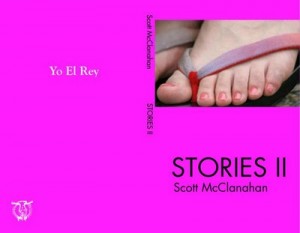
Scott McClanahan is from West Virginia, which, as he has to explain to another person in STORIES II, is not just a part of Virginia, but an entire state of its own.
Sam Pink—
new ROBOT MELON up. issue ten. (click on the N in ROBOT MELON when you get to the main page (i didn’t put the link for issue ten up because now the link will take you to the main page and you might decide that you want to read all of the issues)).
Sam Pink—
new e-book at artistically declined press. written by ja tyler. WHEN WE MAKE OUR DINOSAUR.
Comments Off on
HOW TO DO THINGS WITH WORDS, LECTURE 1
This is the first post concerning the book HOW TO DO THINGS WITH WORDS. The book contains twelve lectures, delivered at Harvard University by JL Austin on the nature of language. The importance of these lectures is, to me, the uncovering of language as a particular kind of instrument between people, and how literal meaning is not the only use of language.
HOW TO DO THINGS WITH WORDS
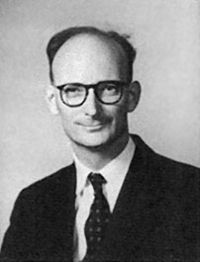
this is john austin
one of the most important books to me is HOW TO DO THINGS WITH WORDS by j.l. austin. it is a book about language and how certain utterances transcend the simple description of things or the world. after reading this book, it is easier to understand other people and the import of certain conversations. the book is based on lectures austin gave at, i think, harvard university. i am going to read it for a third time and try to provide a summary and critique of each lecture in the upcoming weeks. if you a familiar with language philosophy, performative utterances or how derrida has used these theories to augment his own, feel free to help me. the main thrust of the book is that in addition to describing things (constative language, or “my shirt is red.”), language can also produce realities. for instance, when saying “i do” at a wedding, if applied to the right person, in the right situation, with no obstacles denaturing the situation, an effect is produced by the utterance. forgiveness is another example. i think many of the ideas in the book could be applied to comment threads here. for instance, if i call someone a “dipshit” in a comment thread, on account of not knowing the correct placement of a comma, and then i apologize, i have used a “behabitive” utterance. a behabitive characterizes behavioral responses. in the moment i apologize, i place myself and the other person in a situation which can either be, according to austin, not true or false, but “felicitous” or “infelicitous” based on the correct execution. my apology must be worded in such a way as to signify true regret, i must not be sarcastic, i must not whisper it quietly or not type it, and the other person must accept it, etc. i can’t remember if i wrote a post on this before, but i will try to do it more in depth here. i think this kind of book is really helpful for dealing with other people, as it uncovers the unstated context for many “language games.” thanks for reading this.
Sam Pink—
there’s a good interview with scott mcclanahan at WORD RIOT. scott has another book coming out from six gallery press, called STORIES 2. i am getting a review copy soon and will interview/review. here is a line from the interview at WORD RIOT:
(in reference to his home, west virginia)–“This is a place where arm-wrestling still has some kind of cultural importance.”
CONTEST
To celebrate the release of his book, “Sex Dungeon for Sale!”, Patrick Wensink is holding a coloring contest. He had a series of illustrations created based on some of the book’s stories, including a Kindergartener who thinks he’s French, a puddle of ketchup shaped like Elvis and something called, “Chicken Soup for the Kidnapper’s Soul.”
To raise the stakes a little, he is also offering an autographed stack of some of his favorite books of 2009 to the winner.
Fool- By Christopher Moore
AM/PM – By Amelia Gray
Tales Designed to Thrizzle – by Michael Kupperman
Help! A Bear is Eating Me! – By Mykle Hansen
The contest ends December 14.
For all the details visit www.patrickwensink.com/randomness