
STARK WEEK EPISODE 1: “The redonkulous and the sublime” — An interview with Sampson Starkweather
 WEEKS: A lot can kill you in a week. Even more can eat you at your weakness. A whole week of hair growth depends on, uh, genetics? Weeks contain a finite series of burritos and an infinite burrito of choices. Hoopla, regrets, collapses, dancing so hard you have to pour a cup of ice water on your dome, other times that feeling like you have to drag yourself so hard by your own collar your shirt might tear. Huge trucks at night carrying turned-off, unblinking versions of those normally blinking signs that say CONSTRUCTION AHEAD or SLOW LANE ENDS, except the signs are big so the trucks themselves say OVERSIZED LOAD and are blinking, themselves, even though their cargo’s dark. What I would like to do is nominate Sampson Starkweather to rewrite the entirety of America’s highway marginalia, to be the official roadside spokespoet for all of America’s restless feelings. I don’t have shit to do with those decisions, so what is happening instead is that this week will be Sampson Starkweather week here at HTMLGIANT, aka STARK WEEK.
 THE BOOK: Sampson’s debut book of poems, The First Four Books of Sampson Starkweather, is out now from Birds LLC. It’s really big. Like almost 400 pages. Who does that? It’s what it says it is. 4 books. All the feelings enacted in the opening paragraph happen inside of its four books, which are categorized as “poetry/life.” Sure, yes, yeah.
WHAT’S IN IT: It’s a book I’d give to someone just coming to poetry and to someone who feels totally burnt out on poetry. Those are kind of the same readers, I think. That’s why the whole week. Starkweather’s poetry is the existence of a nonexistent photograph of Andre the Giant jumping off the top rope. In his introduction, Jared White mentions “bass-voiced sexy soul-singer slow jams” and “punch-drunk Harlequin-robocop masculinity.” The poems have angry leaked dreams and love before roads and a pistol-whipped desire and the world’s saddest TV and offensive hurricane names and corpses wrapped in huge tropical leaves on islands named after them and that’s just in the poems you can read on the excerpt page.
WTF IS GOING ON: Over the course of this week, we’re going to feature a series of guests talking about Sam’s work in each of the books within T4B—1) King of the Forest, 2) La La La, 3) The Waters, 4) Self Help Poems—and also we’re going to hear from the awesome artists who made the covers for each of these four books. There will be criticism, talk of process, grand sweeping theories, tiny insightful scalpels. You’ll get to read some of Sam’s poetry. There will be some talk of what goes into, in 2013, putting out a 400 page book of your poems that is actually 4 books. Maybe there will be some interaction, multimedia, surprise. Buy a copy of the book if you want to follow along closely. I promise it won’t feel like being stuck on a brokedown bus at a rest stop in Connecticut. There are poems that feel like that, but not in this book. Here’s a list of who’s coming at you: Matt Bollinger, Ed Park, Bianca Stone, John Cotter, Melissa Broder, Eric Amling, Elisa Gabbert, Jonathan Marshall, Amy Lawless, Sommer Browning, and Jared White.
WHO IS SAMPSON STARKWEATHER ANYWAY, IS HE THAT GUY WHO DID THAT THING GUYS DO: The reason a lot of people want to share and talk about Sam’s huge ass tree-killer is because he and his work (which are impossible to unspoon from each other, which is how it should be) is like getting the best high five of your life from Teen Wolf. He is loved and easy to love and easy to mistake in rural supermarkets for Javier Bardem. He’s a longhaired poet surfer with a heart of messy pizza and manic kindness. Thank the exhausted fucking stars he is with us and with poetry. Enjoy STARK WEEK.
HOW DOES STARK WEEK BEGIN: To begin STARK WEEK, I talked to Starkweather:
1) Hi Sam. Welcome to Stark Week. This is how it starts, with an interview of you. Our interview starts with the “who is Sampson Starkweather and what’s going on, what is this stuff all over my arms, is this sap” portion of the interview. So let’s start at the start. Four books? Why? Why buck the prevailing model of slim little precious supermodel books? More importantly, why buck it in this beautifully thunking doorstop fashion?
Sorry about the sap “this forest / is unusually horny.”
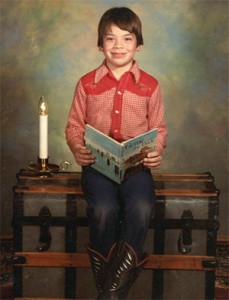 In the end it came down to precisely the opposite of your question: “Why not?” Why not 4 books in 1? Why not a 328 page monster poetry collection that sounds like a seminal lifetime work by some famous, award-winning, about-to-die poet who now tends a garden, published by some big-ass conglomerate press like Penguin, but is actually by some dude with a ridiculous name that no one has heard of (and sounds like a character from Game of Thrones) and has yet to publish a full-length book, on a small indie poetry press that, oh yeah, he just happens to be a publisher/founding-editor of? It seemed ridiculous, audacious, absurd, unheard of, taboo, laughable—in other words, perfect.
5 Comments
July 15th, 2013 / 1:28 pm
July 15th, 2013 / 1:28 pm
Rise in the Fall by Ana Božičević
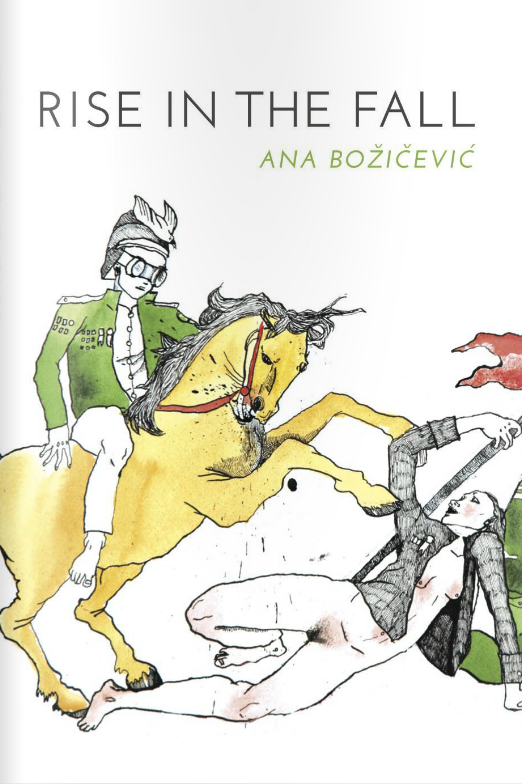 Rise in the Fall
by Ana Božičević
Images by Bianca Stone
Birds, LLC, March 2013
80 pages / $18 Buy from Birds, LLC
Mary (Feng Sun Chen) and I are sitting in a bar on Friday afternoon. We are simple about asking. We are asking: What the fuck is a sad poem? What the fuck is a joyful poem? Bettye LaVette is pushing into the air a version of “I’m Not the One” that I like better than the original by The Black Keys. Soot everywhere. “You think that I’m normal. / All these years / I’m just trying to warn you.”
I go home and look the song up and find out Lavette is quoted. “I don’t know what’s he’s [Dan Auerbach’s] saying, but I’m saying don’t fuck with me.”
Sometimes a book of poems finds you, and you type out an email to your friend describing it as, “Now I have found the Winter of my Disco Tent.” Ana Bozicevic’s book, RISE IN THE FALL, pulls at how a woman might be when she has difficult and exhausting and hard things to write about. It pulls out at how she is a speaking, loving thing who must demand from us and and rub against us, despite the fact that she knows we still might miss it, that we might not hear her. (We’re not great listeners.) Also, the book knows that can still be fun. Also, the book knows that she can die and come back and die and come back shooting out breath she made powerful herself.
The point is, it’s words, and so’s
death. Even in that silence
there’s bird calls or meteors or something hurtling
through space: there’s matter and light. I’ve seen it
through the theater of the trees and it was beautiful
death. Even in that silence
there’s bird calls or meteors or something hurtling
through space: there’s matter and light. I’ve seen it
through the theater of the trees and it was beautiful
It cut my eyes and I didn’t even care.
-Death, Is All
Comments Off on Rise in the Fall by Ana Božičević
March 25th, 2013 / 12:00 pm
March 25th, 2013 / 12:00 pm
23 brief replies to Blake Butler & Elisa Gabbert & Johannes Göransson & Chris Higgs re: (dear god, what else?) the fucking New Fucking Sincerity

ToBS R∞: Arguing in blog posts and on Facebook about aesthetics vs. Going out for a pleasant dinner together, then taking a nice walk at sunset in a park
I’ve decided that, from now on, all I’m going to write about at this goddamned site is this goddamned thing.
… No, seriously, I’m delighted that so many have chimed in. Thanks to everyone! I thought one massive reply would be easiest. If you read this whole thing, may your god shower blessings upon you. And if I missed any pertinent responses, kindly direct me to them in the comments. (I was traveling last weekend, and as such had trouble keeping up with all the discussion.)
1.
I’ve claimed (here, here, here) that one thing at stake in the New Sincerity is the discovery of what maneuvers currently count as “feeling sincere.” That such maneuvers exist I consider more an observation than a topic for debate. E.g., Blake, in his recent post about Marie Calloway’s Google doc pieces, wrote that Calloway’s recent work:
Analysis of War on a Lunchbreak
 War on a Lunchbreak
by Ana Bozicevic
Belladonna Material Lives Chaplet Series, #137
Belladonna Collaborative, 2011
17 pages / $4.00 each; $6.00 signed Buy from Belladonna
Croatian-American poet Ana Bozicevic’s new Belladonna chaplet, War on a Lunchbreak, is a short, intense collection both carefully and carelessly written, working against the confines of time in an always clocked-in environment, where we can’t afford to lyricize.
“I’d like to have time to type this,
but all day long they’re looking over my shoulder.
I dofeel sorry for them. What’s it like
to care so much? Talking morning and night
to a proctor-god, tidy your toy box before bed:
to get degrees, have interests —
is that the anti-war?” (7)
but all day long they’re looking over my shoulder.
I dofeel sorry for them. What’s it like
to care so much? Talking morning and night
to a proctor-god, tidy your toy box before bed:
to get degrees, have interests —
is that the anti-war?” (7)
I love this: writing about not having the time to write, and so positioning the poem as a reclamation of stolen time, founded in its own impossibility, embodying its own disembodiment. That is to say she completes the poem stealthily under the panoptic gaze of the boss, the clock, and so performs what French social theorist Michel de Certeau in The Practice of Everyday Life (University of California Press 1984) calls “la perruque”—“the worker’s own work being performed at the place of employment under the disguise of work for the boss. Nothing of value is stolen; what is taken advantage of is time” (Weidemann 2000). Bozicevic’s work speaks to this need to write in a society that has no need for poetry, and negatively appropriates the surveillance-productivist logic of our laboring culture into the content of the poem, informing us of the circumstance both preventing and, thru la perruque, producing the poem.
2 Comments
May 16th, 2012 / 12:00 pm
May 16th, 2012 / 12:00 pm
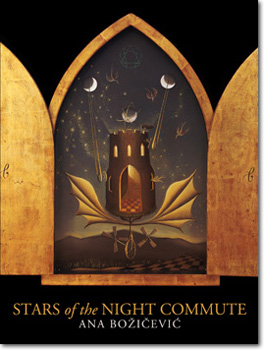
Stars of the Night Commute by Ana Božičević
 I.
I.
Beginning
There is a small world nestled in a big sky. The small world has its own sky, land, people, animals, etc. etc., and although the world is small, if you take the world’s train, you begin to see that the world is vast, because the train travels a meandering route in a hypnotic motion.
We get on this world’s train when we read Ana Božičević’s book, Stars of the Night Commute. The passengers are intimates, yet they are covered with a film of remoteness, and the commute at times bores through this remoteness, and at other times travels the periphery. The abiding mystery of this commute is presented through lines in an early poem, “Always the beast has a remote heart.” And then at the end of the same poem, “At the end of poetry the poem can no longer be remote.” This tension between remoteness of the beast’s heart and intimacy of the poem’s heart causes the whole of the book to ache in the way of a taut muscle stretching to span these disparate realms.
How do we get from point A to B when we are involved in the physics of a dream? Is there a point A and point B in the physics of a dream? In the Stars of the Night Commute, there is a starting point, where the window is opened and air flows in. And, at the end of the book, is the closed and summerless room. But, the route between the two also climbs and descends, skips and glides, as we are woven through memory’s scaffolding. And, on this same variegated route, we are led round and round the circular path, an endless mulling that causes a thought to be worn down to a “white pebble.”
4 Comments
October 12th, 2010 / 3:09 pm
October 12th, 2010 / 3:09 pm