Kristen Iskandrian

Kristen Iskandrian is the author of Motherest. She is the co-owner of Thank You Books, a newish independent bookstore in Birmingham, Alabama.

Kristen Iskandrian is the author of Motherest. She is the co-owner of Thank You Books, a newish independent bookstore in Birmingham, Alabama.
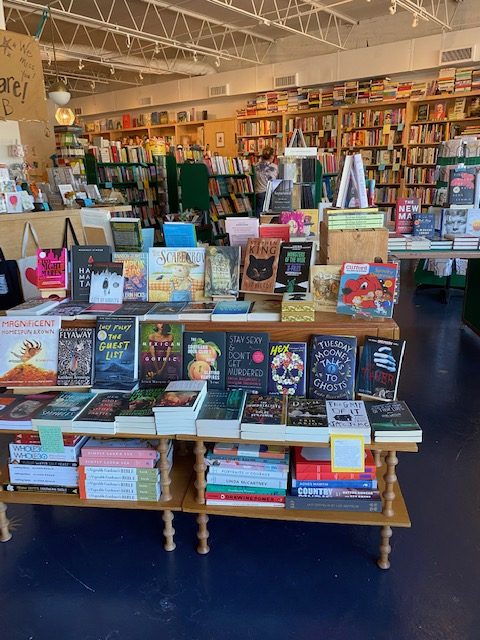
I like to hear about people’s reading habits—not just what they’re reading, but how. In the middle of the night, first thing in the morning, on the train, on the toilet, three books at a time, strictly poetry, in a deep musician biography phase—whatever. I like to hear when people are struggling to read—maybe because they can’t find the time or can’t find a book that holds them, maybe because they’re in the throes of grief or just having too good a time. It occurs to me every once in a while that some people just don’t care about books the way I just don’t care about, say, golf. Part of my job, if I’m being completely honest, is to make books look good, and make the reading life look good. I need people to buy in to the idea that owning stacks of books is important, that books are worth spending money on, especially since it’s entirely possible to own zero books and read as many as you want for free. I love this challenge. I hate capitalism but I love selling books, talking about books, and trying to learn as much as I can about why and how people read.
The place, generally speaking, where I feel most “free” to read, is in bed, before sleeping, after I’ve written in my five-year journal. I started my Tamara Shopsin journal three years ago and I cannot sleep until I’ve written something down—it’s a mental logging off for me, downloading my day somewhere safe and physical, which frees me to read without Bowsers from the day sneak-attacking my brain, enticing me to regret what I said to so-and-so or how I handled xyz parenting situation. Not now, Bowser! I’m reading. I also work hard to clear swaths of daytime hours on the weekend at least a couple of times a month, actually schedule this as I would a doctor’s appointment. Otherwise it won’t happen. The rest of my reading happens catch-as-catch can, while I’m waiting for other things, when I have a surprise thirty minutes, etc.
I read a lot because that’s my job, and it’s my job, in many ways, because I read a lot. The reading a lot part came first, and led me down a very winding path to where I am now. Here’s what I’ve been reading:
READ MORE >
Nothing is more difficult than lashing a vagrant mind suddenly into long self-imposed stints of concentration.*
See the trees, the sidewalk, the trash can turned over, the Auburn flag, the dirty awning, the abandoned tricycle that will never not suggest something sinister. See the leaves, the dried ones on top and the molted ones beneath. See the neat ranch home, the Spanish colonial, the craftsman. Barking, birds, voices. Don’t think about what anything reminds me of. Don’t think about my childhood. Oh, my God–daffodils. Never not shocking with their yellowness, their alien mouths. Stop thinking about Sylvia Plath. Stop thinking about trying to write about her, the experience of re-reading her, the sex scene in THE BELL JAR that causes Esther to hemorrhage in a historical way, the rarest sex in the universe, the day-off-from-the-mental-hospital sex, the sex that punishes, the sex that touches death. How can the bleeding out not symbolize Plath herself, her genius, the violence she must have believed was embedded in her own ambition, in the very anatomy of female ambition.
So many cracks in the sidewalk, it would be impossible to play that game. Forgetting to remember and remembering to forget yield the same result: forgetting. A bird, another bird, so many birds. Too many birds today. How a certain number of birds signifies spring but one more than that number means something terrible is about to happen.
I want to live each day for itself like a string of colored beads, and not kill the present by cutting it up in cruel little snippets to fit some desperate architectural draft for a taj mahal in the future.
I am not an ‘in the moment’ person. The moment pains me with its borderlessness: how long will this last? When can I call it ‘over’? When can I call it the thing that came right before the real thing? When I was a child I sat in the church pew and was transmogrified by my longing for the service to be over. I mean I felt my blood blacken with disquietude, my limbs actually tingled. Sit still, my mother would say, but I would be sitting absolutely still. She could feel the friction in my mind, in my body, and it broke her concentration. Now, when I need to endure something I don’t want to endure, or when I need to wait for something, which I am still terrible at, and I can’t read or look at my phone, I try to pray, for something to do, and because that childhood pew was a crucible where my early ideas of God and suffering and forbearance and waiting got forged.
I’m newer to breathing as a form of coping. I used to become angry when people would talk about deep breathing. I like my breaths fast and shallow. Stop telling me to breathe, world. Stop telling me to slow down. Now I tell myself to breathe, to slow down. Mailbox, mailbox, crushed can, tire-flattened box of Eggos that must have escaped the recycling bin.
I catch up: each night, now, I must capture one taste, one touch, one vision from the ruck of the day’s garbage. How all this life would vanish, evaporate, if I didn’t clutch at it, cling to it, while I still remember some twinge or glory.
My dog–a phrase I never thought I’d say–sniffs everything. As though every day he sets out with one goal: to sniff every single thing. I pull him along, before remembering that I’m not supposed to be hurrying, I’m supposed to be pretending that time doesn’t exist, that all of these things around me are the miracles they’d be if I were a better person, or an animal. A chimney. A brick. So many bricks. I can’t fathom being tasked with building a house, or even just making a single brick. Trees, plants, grass–so much green and I only have the barest understanding of photosynthesis, of the very air I’m abusing. I have no practical skills, my God. Look at those bricks and meditate on the people who know what to do with them. Look at the litter without judging it. Stop judging the litter. The well-swept porch, the shabby car. This is not a cookie-cutter neighborhood. This is a real neighborhood. There is so much to see, if I could just stay with it, stay in the seeing, in the indexing, and out of the dictionary part, where meaning must be ascribed, or the memory part, where connections must be drawn. My dog eats garbage.
I keep believing that the world is loving because I am. I keep waiting for something to jump out of the bushes and harm me, but nothing harms me like I harm myself.
There is a certain clinical satisfaction in seeing just how bad things can get.
*All italicized portions are from The Unabridged Journals of Sylvia Plath, ed. Karen V. Kukil
I gladly add my voice to the chorus of Goodnight and Thank You to Gene and to Blake. Thank you, for creating this bizarre little hole that grew & grew, a hole I happily fell into time & time again. I didn’t post often, and haven’t in ages, but I visited regularly and learned a lot here–about books I would not necessarily have found otherwise, and presses, and people asking important questions and creating amazing things. Thank you to those of you I haven’t met in person, but feel I know vibrationally, which can be better than IRL.
I know there were flare-ups and hurt feelings, but if I’m going to be honest, I more often than not left this space with more–not less–empathy. Behind each voice, behind each screen, is an actual person, and therefore, I think it’s safe to say, a person in pain. Pain is a good teacher.
It might sound silly, but one of the things I learned from the past 4-5 years of clicking around here: the internet is the ultimate nobody & the ultimate everybody. HTMLGiant was a very good place for negotiating this weird, constantly askew binary. And I think, at its best, it was an exemplary art forum–many people here seem to know that the only way to talk about art, really, is to make it. Questions of good or bad, like it or don’t like it, generally didn’t resonate for long. People risked ridicule and criticism to talk about things that moved them.
People risked. I guess I can’t think of a higher compliment.
Now available for pre-order from the always-exciting Jaded Ibis Press, NO ONE TOLD ME I WAS GOING TO DISAPPEAR, “a novel told in thick chunks of language and explosions of lines and colors” by J.A. Tyler & John Dermot Woods. Order soon to receive a limited edition print that’s sure to be gorgeous.
Here’s a nice interview with the authors about the making of the book.
And here are good words from the Los Angeles Review, including this sentence, which has me sold: “Only the barest of plots is visible, yet the story’s climax is as powerful as that of the most meticulously planned novel.”
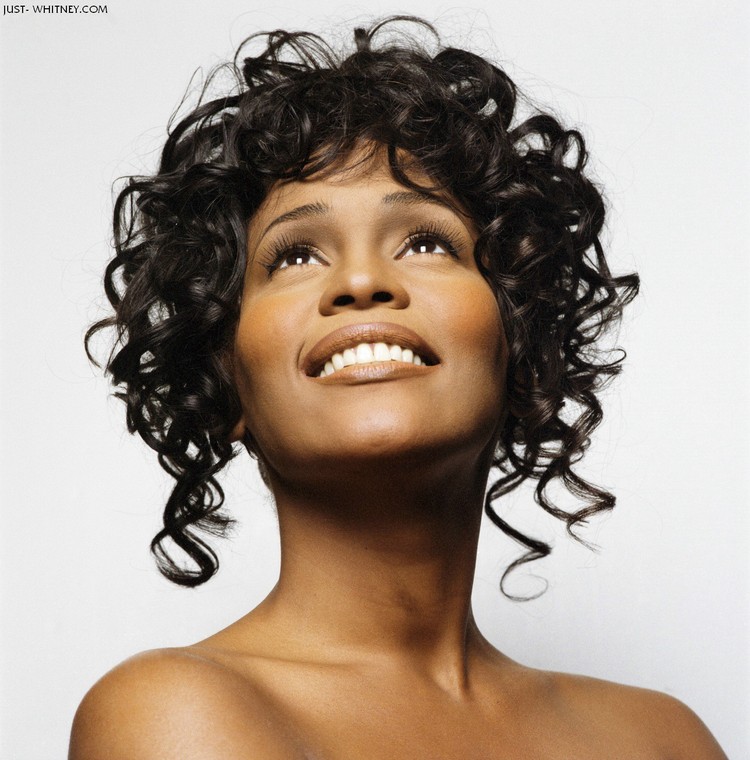
“God gave me a voice to sing with, and when you have that, what other gimmick is there?”
“It’s like, that’s my lair, and nobody messes with my lair.”
“I coulda been a rich man if I accepted all the bribes from the guys wanting to be in this room today.”
“I almost wish I could be more exciting.”
“I finally faced the fact that it isn’t a crime not having friends. Being alone means you have fewer problems.”
“I like being a woman, even in a man’s world. After all, men can’t wear dresses, but we can wear the pants.”
“I’m not crazy about arenas just because I can sell them out. It doesn’t do anything for my ego at all.”
“When I decided to be a singer, my mother warned me I’d be alone a lot. Basically we all are. Loneliness comes with life.”
“Sometimes you do have a good time. But when it gets to the point where you’re sitting in your home and you’re just trying to cover what you don’t want people to know. It’s painful. And then you want more just so that you don’t let anybody see you cry.”
“I have to pray it away.”
“I had the money. I had the cars. I had the house. Had the husband. Had the kid. And none of it was really that fulfilling. For a time, I was happy. I was happy, but I needed that joy. I needed my joy back. I needed that peace that passes all understanding.”
“I will fight you back with anything I can find.”
What makes you laugh? There was a book reviewed recently in the NYTimes that dealt with the science of revulsion; do you think there is a science to what ignites our different senses of humor? Do you think it could be chromosomal or is it strictly learned? Does anyone else feel sad or depressed when they watch Seinfeld? When Kramer enters a room and everyone laughs, doesn’t it just make you want to cry? Why don’t you find the same things funny as many of your friends? When a fat kid falls down and someone gets it on video and puts it on youtube, is that funny to you? How much of what we deem funny is enmeshed in some idea of power? Of (first) relief at not being the one laughed at, and then a growing delight in the privilege? Are we so lonely that when Kramer walks into the room we feel less alone and so we sigh with relief, the sigh which can be a kind of laughter? Or is Kramer walking into a room somehow “legitimately” (scientifically?) funny? READ MORE >
[Matchup #18 in Tournament of Bookshit]
Let’s tie these together.
1. Don’t worry about it: your story/novel excerpt with the talking animal dream sequences is not going to get published in The New Yorker.
2. This might be why you have to talk shit about The New Yorker. You know you will never be published there.
3. This might be why you talk shit about God. You know he doesn’t exist.
4. But still, you submit.
5. But still, you pray.
6. Don’t worry about it: it’s okay not to know who you are. Every rejection will move you closer to some knowing. READ MORE >
Well this last line from John Banville’s review of Joan Didion’s new memoir Blue Nights, I like it:
“However, it is most profound, and most provocative, at another level, the level at which the author comes fully to realize, and to face squarely, the dismaying fact that against life’s worst onslaughts nothing avails, not even art; especially not art.”
Here is a beautiful book trailer for a beautiful new book by the multi-talented Kirsten Kaschock. Rumpus Book Club interview here.
I equate publishing to a certain, necessary loss of innocence. Anyone care to expound?