
What A Book Means
I’ve spent nearly all the hours since March in my apartment. So my attention in these last months has focused on, flitted by, or ignored my books—shelves and shelves of books—more often than in any other period of my life. Yet I’ve read little. I can blame distraction, fatigue, despondency—and I do. But the presence of my books, of so much paper and ink, is also for me a series of unanswered questions: What am I? What part of you do I serve? Do I serve anything at all?
Here is for me what a book has meant.
I’m five. The book is a cradle, but one held right in front of me. I can somehow be in it and outside of it. It’s a gift, a book—but a gift that doesn’t go away. A book is a place I can go anytime from anywhere. I’m not yet able to go there myself, or go alone, but I sense the possibility of this privacy. This possibility is scary, like a shadow of a bigger, stranger possibility that seems like the lives my parents live. An inexplicable life. A book is a path towards that life, but it’s also an escape from it because each book’s colors are so clearly more vivid, more real, than the life outside a book. I’m amazed that my parents don’t talk about this, this secret they open for me whenever we sit down to read.
I’m ten. I seek the secrets of books whenever I can. I’m convinced the worlds they contain are more real than the life of my bedroom, than the life of school. I suspect the books I run away into and the land of my back yard I run across are related in some deep way: that there is a shared wilderness in them, a wilderness which quietly and patiently rejects the status of the fence. I want desperately to make more of this wilderness. So I write. I write because writing and reading are both the act of bearing in my mind what must in all circumstances live. I know that the imagination is a realm which must be protected from the grays and metals and routines of the clothing racks, the grocery store, and homework. I know that what must live is being attacked by regular life, or what everyone else but regular readers call regular life. I hoard books, because of the perspicuity of my situation. And I hoard them because I love their shape, the grain of their pages, the smells they hide, the glint of their spines in every kind of light. I am a fugitive in the world because of the truth of books.
I’m fifteen. There are books, just a few, that scream the unsayable. This scream and its agony are a shelter. These books hide me. These books also make plain the fact that other people have worked so hard to reveal what’s hidden. That this is the role of a book: to reveal, to unearth, to dig up and tear open and point and stare. Reading and writing books is a way—the way, the only way—of being honest. I realize that not only must I continue to structure my life around books, but that books are escape tunnels leading away from the ordinary lies of living. I realize more vertiginously that I am responsible for building these tunnels. And that these tunnels must be beautiful—that books must be beautiful, as objects—because they must be habitable in case someone like me gets caught in them. Because, I suspect, we only ever get caught in them.
I’m twenty-one. The book is an event meant for other people. In making them, in editing and designing and soliciting them, I realize that books are events by which likeminded people are brought together. I view each book as an announcement, too: I have something important to say and I did my best to say it. Books can thus be judged by the social and financial context in which they were produced. Is this book’s announcement simply a commercial for its publisher, a little boon to the capital of that publishing company’s owners? If so, it can be scorned. Mocked. Or, ideally: ignored. The real shit, the real books announcing plain truths newly articulated, live among what our culture’s nervous gardeners call the weeds. The small press, the indie press: watchwords of those with good taste. Books are for and against: for the truth, for improvisation and innovation; against the dumb and redundant lies of the marketplace, against the formulaic and respectable. A book is an event for those rare good people to find and hold onto each other.
I’m twenty-six. A book is a piece of an infinite conversation, maddening in its scope and disunity, revelatory in its accidental harmonies which span thousands of years. To write or produce a book is to participate in this conversation. Yet the intensity and concomitance of this chaos and order makes walking through a bookstore or library exhausting, humiliating. A book, then, is a kind of sacrifice—because it is painful and costly to enter this conversation. The cost for a person who’s serious about books is that they can no longer speak with any grace during all those other conversations called “conversations” in day-to-day life: niceties, weather observations, constant nervous check-ins about the body and the mind and the state of the nation. Why? Because a great book is like a crystal whose form shapes great questions. In order to form these crystals, an author must permit themselves only the cold and arid air of solitude, distance, erudition, and honesty. Being open to this air requires a distance from one’s friends, one’s family. A book requires one’s blood.
I’m thirty-one. As I type this sentence, I’m looking at the rows of books I own. Despite making and spending money, I don’t like the sound of that: that these are my books. They’re not mine. They’re just temporarily living with me. And they do that: they live. They live because a book testifies to life. Not to the bland, back-of-the-cover-copy version of life, with its glib emphasis on the human and the joys and sorrows of social existence. A book testifies to the wider, stranger, more terrifying and fulfilling life we know when we are most inexplicable to ourselves. I’ve known this wider life when I’ve experienced any love whose existence I couldn’t fit into my vision of the order or disorder of things. Every gift points at this wider life; I’m sure of this. And I’m sure that each book is a gift.


Hear with your eyes, see with your ears, until it becomes an act of resistance.
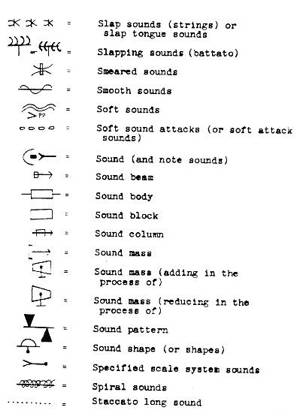
Examples of Sound Classifications / Graphic Notation listed in Anthony Braxton’s Composition Notes
I’m on a huge Anthony Braxton kick right now. Like, inside a free jazz free fall vortex of kaleidoscopic music from Ornette Coleman to Cecil Taylor to Marion Brown to Albert Ayler to Don Cherry to Art Ensemble of Chicago to more and more and more, but right now Braxton’s speaking to me the loudest.
LISTEN TO THIS:
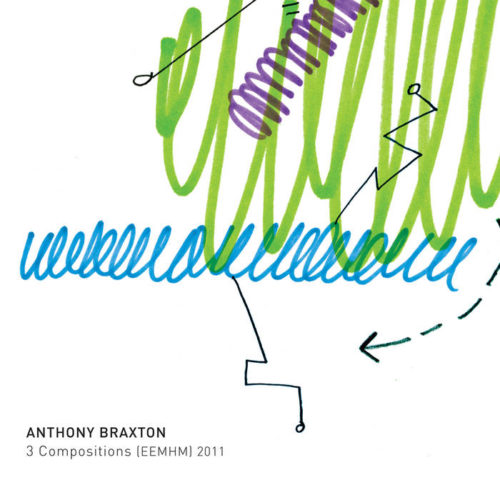
3 Compositions (EEMHM) 2011 by Anthony Braxton
Braxton’s material moves in ways I find massively appealing: bold, dynamic, unpredictable, defiant, aggressive, persuasive, provocative, spooky, scary, creepy, cacophonous, rambunctious, chaotic, discursive, flagrant, abstract, unintelligible, bewildering, soothing, calming, inviting, indulgent, relentless, combative, mutinous, as if it were an act of resistance.
plzplztalk2me: Elizabeth Schmuhl
Welcome back to plzplztalk2me, a semi-regular feature in which I talk to folks who want to talk to me. Recently, I talked and made art with Elizabeth Schmuhl. Schmuhl is a multidisciplinary artist and the author of Presto Agitato (Dancing Girl Press & Zoo Cake Press, 2015) and Premonitions (Wayne State University Press, forthcoming). She illustrates essays for The Rumpus, has taught at the University of Michigan, Ann Arbor, works as a content strategist and writer, and currently lives in New York City.
***
Elizabeth Schmuhl: Last night I saw the sky and it was navy blue with no stars I didn’t expect to see a navy blue sky in a city referred to as a fruit but here I am! Is this the beginning?

p.e. garcia: I’m never sure what color navy blue is but then again I’m opposed to the military industrial complex. I tend to support pacifist colors, like brick red and seagreen. I wish the sky was brick red.
It’s a beginning, unless we cut it out or move it. Then it’s nothing, or it’s something else.
How are you?
Schmuhl: i have been vacillating and trying to just be and maybe that’s all i’m doing?
i feel like sitting down i feel like sleeping and that terrifies me because it usually means my depression is flaring is pulsing once again and why is that any surprise to anyone, least of all me? it’s not. no surprises in this state of emergency no surprises because and emergency is not a surprise it’s a response to an action that’s already happened ( loosing my train of thought because i’m loosing in general i am a woman so minus 5k points for me).
in my head i am writing a book titled WHITE: THE CULTURE OF SILENCE and yes that semi colon is definitely there intentionally.
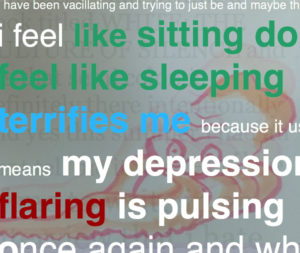
i will be in nyc and not at home i will be in this city in an apartment that is crumbling i am unafraid of anything i need to do i am here and i want to help i am here and i am ready i am getting stronger even on days when it feels like the sky is crushing down on me when that blue is just too much because all i want is peace because of the war i’ve been fighting inside for my whole lifetime i am hoping for peace and if someone calls me and says they are thinking of killing themselves i will never say “sorry , i don’t have time to talk! i’m going to the spa!” because someone said that to me and i know how it feels it’s as if i’m feeling these feelings so i will be ready so that i open even wider i am not my feelings but oh when they move through me they make a big space and i will listen to the memory i will hold it because i am a human and all i want is to be moved, to move you, to move.
garcia: What’s your favorite food?
Schmuhl: Pizza. You?
garcia: What kind of pizza? I like lasagna or any kind of baked pasta.
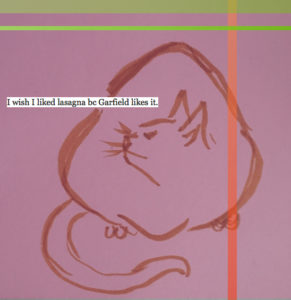
Elizabeth: Goat cheese bc I’m allergic to all other cheese-cheeses. I wish I liked lasagna bc Garfield likes it.
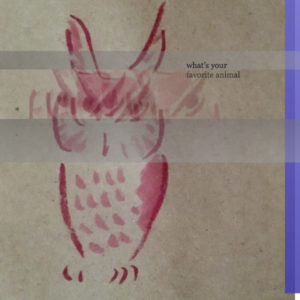
garcia: I feel like Garfield is weird because cats shouldn’t eat lasagna, right? It can’t be good for them. What’s your favorite animal?
***
Images are a collaboration between Elizabeth Schmuhl and p.e. garcia. If you want to talk2me, hit me up: plzplztalk2me@gmail.com.
Walking with Dog & Sylvia
Nothing is more difficult than lashing a vagrant mind suddenly into long self-imposed stints of concentration.*
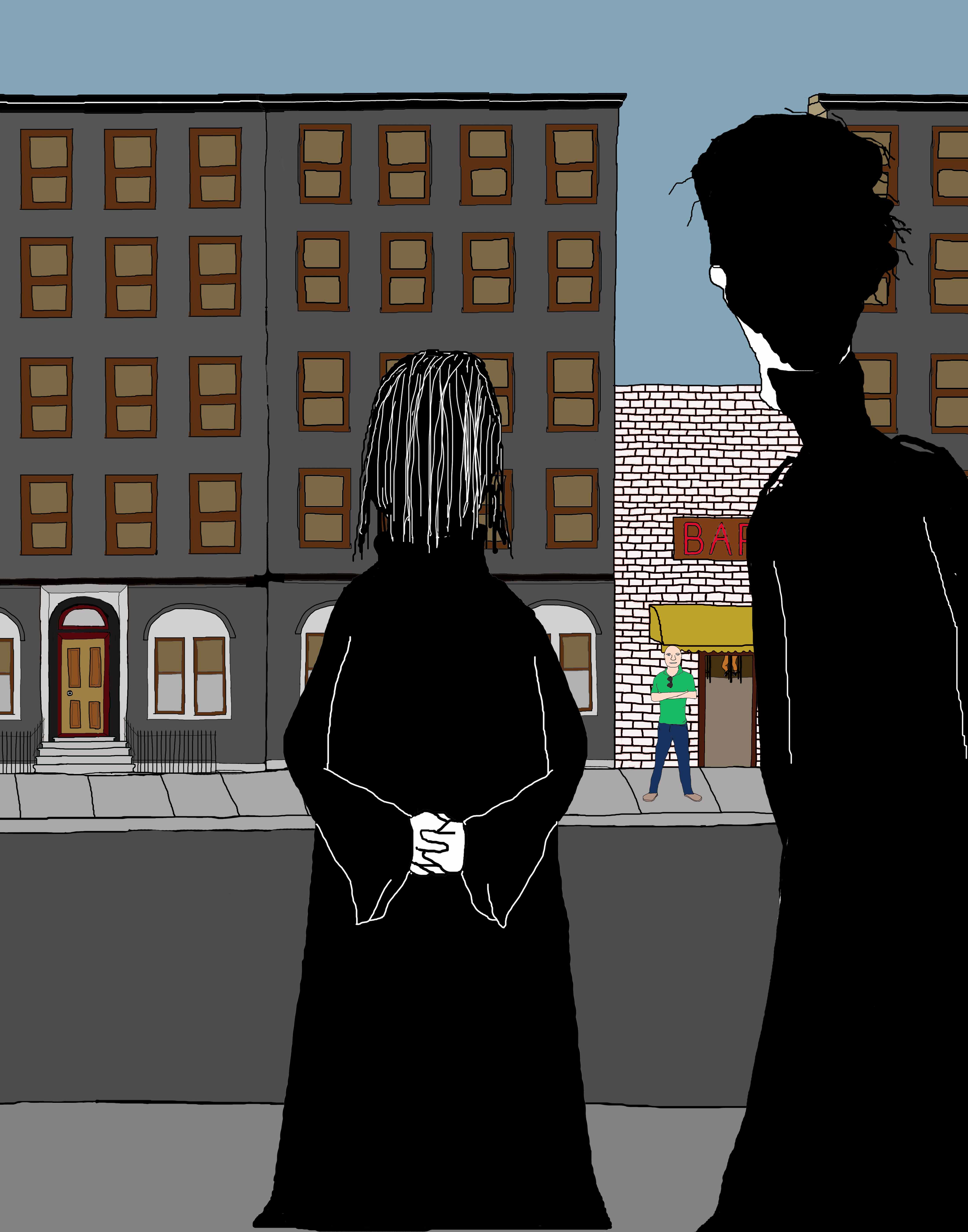
See the trees, the sidewalk, the trash can turned over, the Auburn flag, the dirty awning, the abandoned tricycle that will never not suggest something sinister. See the leaves, the dried ones on top and the molted ones beneath. See the neat ranch home, the Spanish colonial, the craftsman. Barking, birds, voices. Don’t think about what anything reminds me of. Don’t think about my childhood. Oh, my God–daffodils. Never not shocking with their yellowness, their alien mouths. Stop thinking about Sylvia Plath. Stop thinking about trying to write about her, the experience of re-reading her, the sex scene in THE BELL JAR that causes Esther to hemorrhage in a historical way, the rarest sex in the universe, the day-off-from-the-mental-hospital sex, the sex that punishes, the sex that touches death. How can the bleeding out not symbolize Plath herself, her genius, the violence she must have believed was embedded in her own ambition, in the very anatomy of female ambition.
So many cracks in the sidewalk, it would be impossible to play that game. Forgetting to remember and remembering to forget yield the same result: forgetting. A bird, another bird, so many birds. Too many birds today. How a certain number of birds signifies spring but one more than that number means something terrible is about to happen.
I want to live each day for itself like a string of colored beads, and not kill the present by cutting it up in cruel little snippets to fit some desperate architectural draft for a taj mahal in the future.
I am not an ‘in the moment’ person. The moment pains me with its borderlessness: how long will this last? When can I call it ‘over’? When can I call it the thing that came right before the real thing? When I was a child I sat in the church pew and was transmogrified by my longing for the service to be over. I mean I felt my blood blacken with disquietude, my limbs actually tingled. Sit still, my mother would say, but I would be sitting absolutely still. She could feel the friction in my mind, in my body, and it broke her concentration. Now, when I need to endure something I don’t want to endure, or when I need to wait for something, which I am still terrible at, and I can’t read or look at my phone, I try to pray, for something to do, and because that childhood pew was a crucible where my early ideas of God and suffering and forbearance and waiting got forged.
I’m newer to breathing as a form of coping. I used to become angry when people would talk about deep breathing. I like my breaths fast and shallow. Stop telling me to breathe, world. Stop telling me to slow down. Now I tell myself to breathe, to slow down. Mailbox, mailbox, crushed can, tire-flattened box of Eggos that must have escaped the recycling bin.
I catch up: each night, now, I must capture one taste, one touch, one vision from the ruck of the day’s garbage. How all this life would vanish, evaporate, if I didn’t clutch at it, cling to it, while I still remember some twinge or glory.
My dog–a phrase I never thought I’d say–sniffs everything. As though every day he sets out with one goal: to sniff every single thing. I pull him along, before remembering that I’m not supposed to be hurrying, I’m supposed to be pretending that time doesn’t exist, that all of these things around me are the miracles they’d be if I were a better person, or an animal. A chimney. A brick. So many bricks. I can’t fathom being tasked with building a house, or even just making a single brick. Trees, plants, grass–so much green and I only have the barest understanding of photosynthesis, of the very air I’m abusing. I have no practical skills, my God. Look at those bricks and meditate on the people who know what to do with them. Look at the litter without judging it. Stop judging the litter. The well-swept porch, the shabby car. This is not a cookie-cutter neighborhood. This is a real neighborhood. There is so much to see, if I could just stay with it, stay in the seeing, in the indexing, and out of the dictionary part, where meaning must be ascribed, or the memory part, where connections must be drawn. My dog eats garbage.
I keep believing that the world is loving because I am. I keep waiting for something to jump out of the bushes and harm me, but nothing harms me like I harm myself.
There is a certain clinical satisfaction in seeing just how bad things can get.
*All italicized portions are from The Unabridged Journals of Sylvia Plath, ed. Karen V. Kukil
plzplztalk2me: Mary Duffy
Hi there! I’m so glad to see you. Welcome to plzplztalk2me, a semi-regular feature in which I talk to folks who want to talk to me about stuff they want to talk about.
Recently, I talked with Mary Duffy. Duffy works as an editor of interactive fiction at Choice of Games LLC and is an editor at The Scofield. Her work has appeared on Literary Hub, Fusion.net, The Scofield, and Pacific Standard. She lives in Colorado where she is writing a book about the Jewish refugee crisis that preceded America’s entry into the war and her family. She tweets @maryfduffy.