
In defense of romance novels
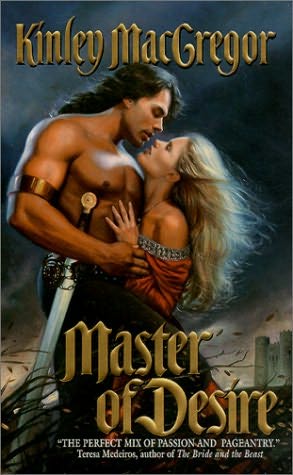 Piggybacking on Mike’s earlier post, I have long found it curious that the romance novel is the one genre no one wants to defend. (See, for instance, this comment.) But time was, romance was the genre.
It seems to me that the contemporary romance novel—of the paperback bodice ripper variety (see right)—arrived on our shores of our literary imagination in no small part due to writers like D. H. Lawrence. And what could be more literary than Lawrence? I myself can conceive of no formal reason why a romance novel can’t be art. Indeed, I suspect that someone out there is already writing great ones. (Hell, isn’t Lolita a romance novel?)
Part of what I love about this Chicago Reader review of The Twilight Saga: Eclipse is its understanding of how Stephanie Meyers’s books and the resulting films—regardless of their quality (I haven’t read or seen them yet, though I intend to)—do partake of a larger literary tradition:
The 2012 Realist Sex Novel Kerfuffle (a response to Blake and Stephen, involving also cowboys, Atlas Shrugged, and the Franzen/Marcus debate)
“Ho hum, I profess an interest in these cavorting sea nymphs only inasmuch as I can use them to allegorically comment on the Human Condition.”
Blake has stated, over at Vice, that he doesn’t want to read any more books about straight white people having sex. Stephen has stated, right here, that he is prepared to read many more novels about people fucking. There are substantial differences in these claims that we could pause to examine (“don’t want to read” vs. “am prepared to read”; “straight white people” vs. “people”; “sex” vs. “fucking”), but forgive me if I let those subtleties drop. Because I would rather observe that, if this is the scope of the debate, then it’s akin to one person saying, “I am tired of books about dogs, and no longer want to read more novels about them,” to which someone else replies, “I’m still willing to read some canine fiction.”
Recast in that light, it’s easy to see that neither person is right or wrong. How could they be? It is simply a matter of taste. One man has gotten tired of all those dog books. The other man is not yet so tired. The literary market, no doubt, will cater to them both. And perhaps, over time, demand for dog-free writing will grow, and drown out the pro-dog side, and the market will shift and, for some time, it will be hard to come by a copy of Marley and Me. (Here it might be helpful to replace “dogs” with some other thing, like vampires, or zombies, or alt-lit.) But through it all, one’s preference is perfectly free to steadfastly remain one’s preference. What’s not at stake, in other words, is the right to like whatever you like. The books you read say something about the person you are, and you should be proud of whoever you are! Display your chosen book(s) on the train to signal your affiliation with one of this nation’s many vibrant subcultures. Who knows? Another member of that subculture may spot you, in which case you can exchange nods, smiles, kisses! What’s more, today, thanks to the Internet, you can even make a list of the books that you like, then talk with fellow fans! (There are even web-sites devoted to this!)
Let’s try thinking instead about this argument in terms of genre. A new cowboy movie has comes out, and you and all of your friends go see it. Afterward, you’re wondering whether it’s any good or not …
I recorded a commentary track for “Drive”
Hey, HTMLGiant. I recorded a commentary track for Drive; you can download it here. It’s an mp3, 42 MB, 104 minutes long.
Of course I made it so brilliant that you can just listen to it on its own. But if you watch it with Drive (recommended!), it’s all synced up, so cue it to start when the Universal logo starts.
Related posts:
- “DRIVE”
- “Let’s watch a scene from Drive and analyze it”
- “Cliché as Necessity (Birthing Innovation)”
- “Something Film Understands but that Literature Doesn’t”
- “A Little Bit More on Cliché”
Next, I’ll record commentary for Inception.
And Scott Pilgrim vs. the World.
And The Lord of the Rings trilogy.
And Southland Tales.
Update: I forgot to include a link to Scorpio Rising. Here’s a clip:
And here’s the full film.
Something Film Understands but that Literature Doesn’t
I was talking with Jeremy M. Davies recently (actually, we were on our way to see Drive), and the topic of genre as art came up. Now, Jeremy and I are both huge into genre, in all media. We’re nuts over spy thrillers, sci-fi, and fantasy, for instance—not to mention Batman comics. (Only the good ones, though, natch.)
And of course lots of people in various lit scenes (all over) don’t think that genre fiction can be art. They’re really wedded to that “high art / low art” divide. (Or the “literary fiction / all else” divide, as it’s so commonly called.)
Me and J, we were saying how we don’t get it. How can someone read, for instance, Patricia Highsmith’s Ripliad and not recognize it as total artistic brilliance? Or Philip K. Dick’s VALIS, which is one of the greatest novels of the 20th century, hands down? And of course I’d argue that Frank Miller’s Batman: The Dark Knight Returns is one of the finest things published in the 1980s, “despite its being” a comic book. (I didn’t spend all that time analyzing it at Big Other because I thought it was merely cute.)
Anyway, I came to a certain conclusion…
Cliché as Necessity (Birthing Innovation)
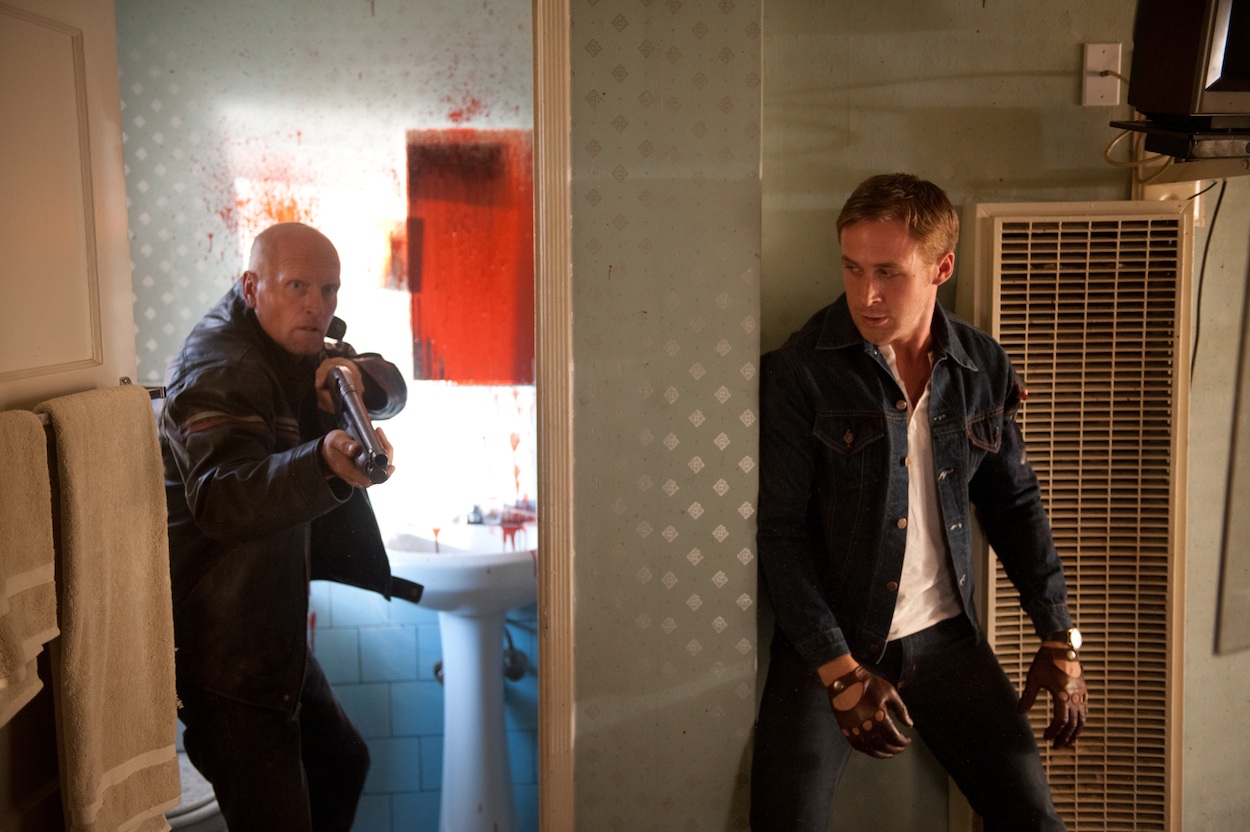
Not entirely an unexpected situation.
Every time I’ve said something nice about Drive, someone has responded by calling the film “clichéd.” Well, I intend to keep saying nice things about Drive (as well as other artistic genre films), so let’s take some time here and now to address that criticism, demonstrating how even when certain material or situations might be clichéd, the artist can still find occasions for artistic expression. Indeed, I want to go so far as to suggest that clichéd situations often provide artists with some of the best opportunities for innovation.
Genre followup, here and at Tin House blog
Christopher Higgs’ post from the other day, “Tin House & Genre Fiction,” has broken 100 comments. One of those comments is from Tonaya Thompson, the author of the Tin House blog post, “To Genre or Not to Genre,” that Higgs was posting about. Thompson has also written a followup post on the Tin House blog, “Genre Redux.”
Anyone who read my original post as saying that we will discount any piece of writing out of hand is willfully misreading it. And I think that’s because my attack on “lazy” writing put a lot of people on the defensive, especially since I equated that with genre writing.
It’s a good piece, and if you’ve been following the thread, you should definitely read this new post. She seems rather generous to me, in terms of treating her detractors with credulity. She’s certainly more conciliatory than I’d ever dream of being, if similarly treated. (Ironically enough I have an obligation to disclose that I am published in the current issue of Tin House: an essay celebrating Needful Things by Stephen King, the very existence of which would seem to put the lie to a whole raft of commenter claims about TH’s–and my–genre-related biases.)
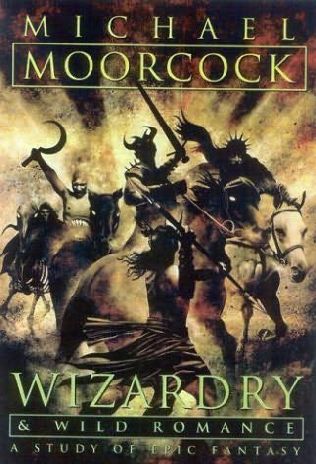
Anyway, for ease of access, after the jump find a copy of Thompson’s comment in the Higgs thread. It’s worth reading the comment before proceeding to the followup post, and you’ll notice that she asks for recommendations of genre writing to read, so feel free to leave those on her blog or on ours. You–or she–could also do much worse, I’d just like to mention, than by reading the Michael Moorcock book pictured above.