
Tyrant Books Midnight Release: Strange Cowboy / Sky Saw
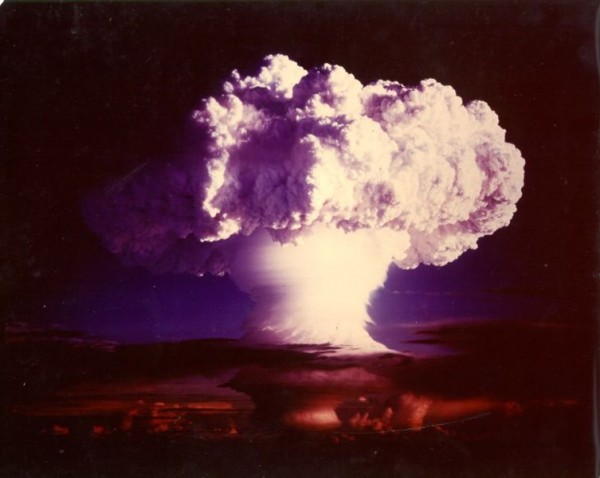
New York Tyrant/Tyrant Books has recently brought two more important texts into the world.
If you’re familiar with the work of these authors, you don’t need me to tell you it is awesome (as in inspiring awe) and wonderful (as in screaming waffle-irons). If you’ve never held an object from Tyrant Books in your hands, I suggest you find a remedy. First lines are below.
My mother sits, dead, could be, though I believe she lives, though she is old in life, and should she not be dead, then might at least appear to some to be more dead than living.
Now
White cone descended in sound blister
Mike Young—
Finding Something
—Jack Gilbert, 1925-2012
I say moon is horses in the tempered dark,
because horse is the closest I can get to it.
I sit on the terrace of this worn villa the king’s
telegrapher built on the mountain that looks down
on a blue sea and the small white ferry
that crosses slowly to the next island each noon.
Michiko is dying in the house behind me,
the long windows open so I can hear
the faint sound she will make when she wants
watermelon to suck or so I can take her
to a bucket in the corner of the high-ceilinged room
which is the best we can do for a chamber pot.
She will lean against my leg as she sits
so as not to fall over in her weakness.
How strange and fine to get so near to it.
The arches of her feet are like voices
of children calling in the grove of lemon trees,
where my heart is as helpless as crushed birds.
6
“We’ve made the future redundant, and therein lies the danger.” — Gonçalo M. Tavares
Power Quote / Comments Off on “We’ve made the future redundant, and therein lies the danger.” — Gonçalo M. Tavares
October 18th, 2012 / 12:33 am
October 18th, 2012 / 12:33 am
Sean Lovelace—
I think you have a duty to contribute, to go on contributing to what Gore Vidal calls “book chat.” For certain self-interested reasons, you want to keep standards up so that when your next book comes out, it’s more likely that people will get the hang of it. I have no admiration for writers who think at a certain point they can wash their hands of book chat. You should be part of the ongoing debate.
Amis, M.
I Love Superhero Wikipedia Pages
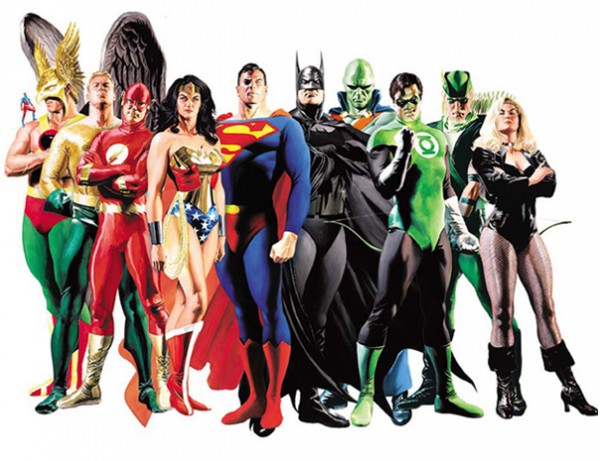
Why? Because they’re awesome. Because they are crash courses in thrilling storytelling. Because they are almost incomprehensible enough to be published by a hip indie lit journal. Because they save me the time and money required to read actual superhero comics, which are mostly garbage anyway (with all due love and respect to their creators: I know you guys are mostly doing your best with a ludicrously difficult format and schedule). Because I have a lot of fondness for characters I enjoyed as a child. Because they are so bad and so beautiful. (I’m also in it for the pouches.)
Superhero Wikipedia pages are insane because hero comics are insane. Understanding the conditions and constraints under which any story is produced will of course help you better appreciate said story, but in the case of hero comics it’s really the only way to understand most of what happens. Here are the key facts: 1) Hero comics are published on a monthly schedule. 2) Hero comics serve two consumer bases: teenage boys, who remember nothing, and nostalgic adults, who remember everything. 3) Hero comics almost always take place on what seems to be a present-day Earth. 4) Though comic book movies have never been bigger business, actual comic book sales seem always to be on the verge of collapse.
GOOD OLD NEON
I know that you know as well as I do how fast thoughts and associations can fly through your head. You can be in the middle of a creative meeting at your job or something, and enough material can rush through your head just in the little silences when people are looking over their notes and waiting for the next presentation that it would take exponentially longer than the whole meeting just to try to put a few seconds’ silence’s flood of thoughts into words. This is another paradox, that many of the most important impressions and thoughts in a person’s life are ones that flash through your head so fast that fast isn’t even the right word, they seem totally different from or outside of the regular sequential clock time we all live by, and they have so little relation to the sort of linear, one-word-after-another-word English we all communicate with each other with that it could easily take a whole lifetime just to spell out the contents of one split-second’s flash of thoughts and connections, etc.—and yet we all seem to go around trying to use English (or whatever language our native country happens to use, it goes without saying) to try to convey to other people what we’re thinking and to find out what they’re thinking, when in fact deep down everybody knows it’s a charade and they’re just going through the motions. What goes on inside is just too fast and huge and all interconnected for words to do more than barely sketch the outlines of at most one tiny little part of it at any given instant.
Well, there are two ways to look at having a career. One way to look at it is as though there’s a finite amount of attention and praise in this world to be earned and enjoyed, and thus look upon other writers as enemies or Darwinian competitors. The other way is to imagine you’re one of a bunch of lucky people riding a cosmic wave into the shore. Writing is hard. Writing out of anger and resentment is even harder. The best reason to help other writers is to remind yourself why you’re writing anything in the first place: to share something.
Tom Bissell
Stop Saying Realistic
 I’ve devoted some time to determining whether a sound is rain, wind, or traffic. Maybe old people, or at least old monks, can accept a sound without an apparent source. Because the source does not change the sound itself. A reality check is a more serious thing than a wake-up call.
Nor, as it pertains to the arts, is “realistic” an at-all useful descriptor of a work. There was a period of art and letters called Realism, but the Modernists and Post-Modernists who rejected the Realistic mode were not rejecting the attempt to record reality; they rejected the way the Realists thought they were doing it. They thought the Realists didn’t get the representation of reality right. Hence fragments, streams, layers and meta-layers, lists, cuts.
When people say, “I don’t like realistic novels,” I can’t figure out what they mean. What kind of novels are they talking about? I would put it to you that they don’t know, either.
The fundamental error in the thought and literature of the West is the conception of dreaming as the opposite of reality. Dreams are not metaphors, wishes, or fantasies. They do not contain symbols or hidden truths. More to the point, reality is not accessible to us; our senses filter and ferment it, and organize it so that we may survive. Dreams, we experience in total. What we perceive in a dream is the dream itself. READ MORE >
Someday Everything Will Matter: Shit Fancy Writers Say
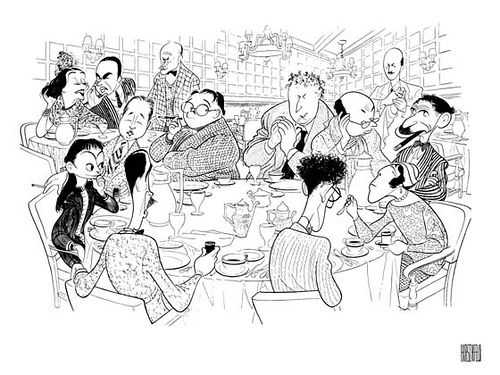
When I read interviews with fancy, famous writers, I am somewhat bewildered. These writers discuss craft and process and influence in near-spiritual terms as if they exist on an alternate plane where they are perpetually able to articulate profundity. There’s writing and there’s being a writer and the more success you achieve, the more you have to spend your time being a writer—being interviewed, writing op eds and essays, getting your picture taken, coming up with pithy lists of what you are reading or cooking or how you are spending each hour of the day and maybe, just maybe, writing new books. All this business of being a writer must have some purpose. There must be an audience with an insatiable desire for the marginalia and minutiae of famous writers or it might be that this is part of the game—write book, sell book, sell book, sell book.
There is writing and there is being a writer and you can’t have one without the other. Helen Dewitt, author of Lightning Rods, alludes to this in a comment on the Paris Review blog when she notes that, “the industry requires the professional to put writing on hold not just for a day or two, or a week, but for years,” and that after he wrote Freedom, “Franzen then had to do a roadshow to shift copies of the artifact. The fact that his editor saw him as the most important writer of his generation did not mean that his editor thought his time would better be spent (gasp) writing.”
It must be exhausting being a writer, all that blah blah blah. I read interviews with fancy, famous writers and wonder, “Do they ever watch television or are they spending that valuable time thinking up intelligent answers to interview questions?”
Nothing is True, Everything is Permitted
But these operations do not occur in neutral territory, Kaye was quick to point out. Burroughs treats all conditions of existence as results of cosmic conflicts between competing intelligence agencies. In making themselves real, entities (must) also manufacture realities for themselves: realities whose potency often depends upon the stupefaction, subjugation and enslavement of populations, and whose existence is in conflict with other ‘reality programs’. Burroughs’s fiction deliberately renounces the status of plausible representation in order to operate directly upon this plane of magical war. Where realism merely reproduces the currently dominant reality program from inside, never identifying the existence of the program as such, Burroughs seeks to get outside the control codes in order to dismantle and rearrange them. Every act of writing is a sorcerous operation, a partisan action in a war where multitudes of factual events are guided by the powers of illusion … (WV 253-4). Even representative realism participates – albeit unknowingly – in magical war, collaborating with the dominant control system by implicitly endorsing its claim to be the only possible reality.
From the controllers’ point of view, Kaye said, ‘it is of course imperative that Burroughs is thought of as merely a writer of fiction. That’s why they have gone to such lengths to sideline him into a ghetto of literary experimentation.’