
Early Bernhard at Little Star
 Little Star has posted “Two Tutors,” an early story by Thomas Bernhard. The story is part of a forthcoming book of prose originally published in German in 1967, but now translated into English for the first time.
Conversation as the expression of the most absurd human miseries is not possible for us. As far as conversation is concerned we are both such characters who must avoid it in order to save ourselves in a totalitarian madness from being frightened to death. Today, too, no conversation came about. We walk well outside the town and above it and in the middle of it through a grotesque alpine limestone flora, constantly at the mercy of critical observation and constantly making critical observations. The soothing effect of a conversation—we do not permit ourselves such a thing. In fact what the new tutor during our walk today had initially taken the liberty of judging a “confession,” he already described, after only a couple of sentences, as if he wanted from the outset to prevent any intervention on my part in this “confession,” to make it impossible, as merely a remark.
Variations on Reading
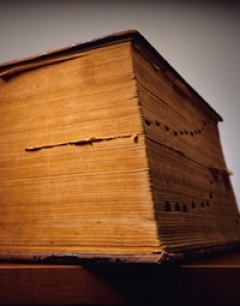 I’m reading some books, sure. We’re always reading books, right? But for some reason, right now, I happen to be reading very big books and very small books. And that’s been the case for the past few weeks. Books are either 800+ or -150 pages. That being the case, I wanted to talk about the different experiences in reading big v. small books.
lokes in damp 3 hotos
1. Neil from ESPN has been emailing me. And he says, “In short: We’re inviting folks to submit (to fictioncontest@espnthemag.com) sports-themed short stories of up to 3,000 words, and the best story (as picked by me and the editor of Stymie) will run in a future issue of ESPN. Then comes the fame and fortune, naturally.”
If you have a sports story, send it. Deadline is June 1st.
2. I just got an iPhone. Why should writers care? What can I do now besides take notes and commit “Douche baggery in a mesmerizing false flame.”

3. This invisible bookshelf is like emo-in-a-seatbelt badass.
Hey, it’s Monday! Time to go back to work!
Let’s get those phones made, people.
for Alec, assuming this is what he was getting at–and that if it wasn’t it maybe should have been.
httpv://www.youtube.com/watch?v=V2LtJ7AKUrc
Happy Saturday night! I’m going out into the wind.
Random / Comments Off on for Alec, assuming this is what he was getting at–and that if it wasn’t it maybe should have been.
May 8th, 2010 / 8:54 pm
May 8th, 2010 / 8:54 pm
Thunk & Theme
Plot and “literary” are not mutually exclusive. We know this.
Cold Mountain (took 15 years to write but worth it)
The Lathe of Heaven (convoluted, yes, but every other page is a closed envelope we want to open)
The Road (obvious, but so is Cajun food with beer. Yet who would eat Cajun food without beer?)
So.
What is the best action/plot/page-churn/turn novel with a theme (a vague term, commence the coughing, but you know I mean: So What?/Idea of Life/Quickening of Human Heart/Quickening of Mind/Aspect of Life Experience/Etc.)?
Plot AND Theme.
Your choice?
“No One Can Advise Or Help You — No One”
 A friend recently sent along some wondering for submission to GIANT discussion. Their question (skip down to the blue if you want to avoid me getting off topic with brain science) maybe intersects Lily’s post yesterday about the definition (and neurobiology) of creativity. Is there “hardwiring” involved in our expression/communication motivations? Is that expression/communication goal-based or process-based? Do we need intense pompadours? I’m getting farther afield with each question I add to the question I haven’t even shown you yet, but I’ve been reading Antonio Damasio’s The Feeling of What Happens: Body and Emotion in the Making of Consciousness, which proposes (among many things) that emotions and feelings are different (emotions are in the body, feelings are the mind’s awareness of emotions), and that we evolved consciousness in order to be aware of our having feelings. Not just feelings, but our having of them. In other words, we have a mind in order to know how we feel. I can’t help but make lazy/lyrical connections between my anonymous friend’s question and those ideas, but I’m feeling too lazy/lyrical to do much besides wonder. I invite you, kind people, to do more. Here is my friend’s question:
In 1903, a nineteen-year old poet by the name of Franz Xaver Kappus wrote to Rainer Maria Rilke to ask for that illustrious writer’s opinions on his poetry. To which Rilke famously replied, in part, to the now misremembered enquirer:
“No one can advise or help you – no one. There is only one thing you should do. Go into yourself. Find out the reason that commands you to write; see whether it has spread its roots into the very depths of your heart; confess to yourself whether you would have to die if you were forbidden to write. This most of all: ask yourself in the most silent hour of your night: must I write?”
Say, today, you weren’t forbidden but were encouraged. Say your writing was very aesthetically impressive, quite observably good. Say you wrote for yourself and no other. Say you had your reasons to write, including the reason that there were no inherent reasons to write, and you felt these very deeply, all the way to the heart. What if the question remained. Must you write?
The “Novelty” of Creativity
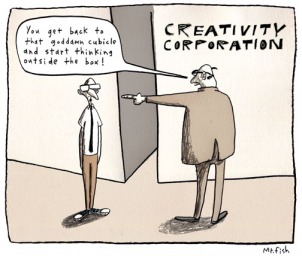 Here‘s an article at NYTimes about a dude mapping creativity in the brain. It’s a moderately interesting read. What caught my eye, however, was his working definition of creativity, which is noted as the “common definition of creativity”: the ability to combine novelty and usefulness in a particular social context.
The OED defines creativity as: Creative power or faculty; ability to create.
So, is creativity “novel”? I have some difficulty balancing the concept of creativity with “novelty,” which the OED defines as: “1a. Something new, not previously experienced, unusual, or unfamiliar; a novel thing.” BUT, but, then, later, “1e. An often useless or trivial but decorative or amusing object, esp. one relying for its appeal on the newness of its design.” This definition is much more pejorative. There’s something extremely problematic about thinking of creativity as a combination of “novelty” and “usefulness,” which the OED defines as: “Having the ability or qualities to bring about good, advantage, benefit, etc.; helpful for any purpose; serviceable.”
To say that creativity is a balancing of novelty and usefulness implies that what is novel (here, insert “new” rather than “trivial”) is inherently useless. How is newness or innovation useless? Furthermore, if this definition the NYT uses is in fact the “accepted” definition, what does this say about creativity as a whole?