
Announcing Requited #10
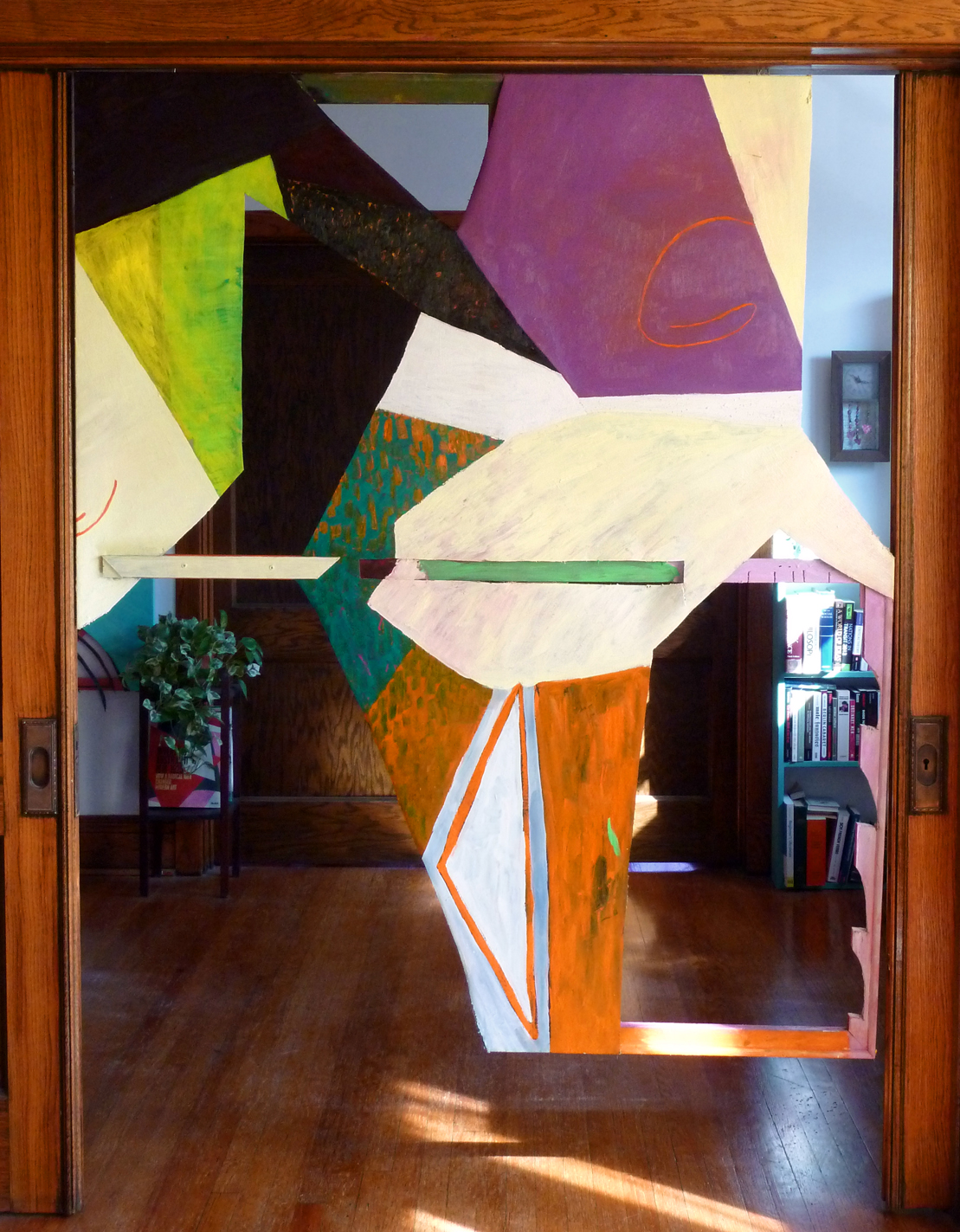
Zoe Nelson, “Cat’s Out of the Bag (a-side)” (2013, mixed media)
I’m pleased to announce that the tenth issue of Requited is now online and contains:
- Fiction by Rich Ives and Lauren Wallach;
- Poetry by Janelle Adsit, Naomi Buck Palagi, Lance Garland, Matt Trease, Lina ramona Vitkauskas, and Caroline Crew & Chris Emslie;
- Nonfiction by Virginia Konchan and Jarrett Neal;
- Visual art by Jenny Magnus, Nicole Matos, and Zoe Nelson.
Furthermore, in the journal’s rapidly-growing archives, you’ll find poetry by Molly Gaudry and Nate Pritts; fiction by James Tadd Adcox, Jimmy Chen, Jac Jemc, Tim Jones-Yelvington, and Suzanne Scanlon; nonfiction by William Bowers, Jeremy M. Davies, Julianne Hill, Steve Katz, Mark Rappaport, Keiler Roberts, Viktor Shklovsky, and Curtis White; interviews with Robert Ashley and Vanessa Place—and other wonderful things.
Enjoy!
Some books I read this yr.
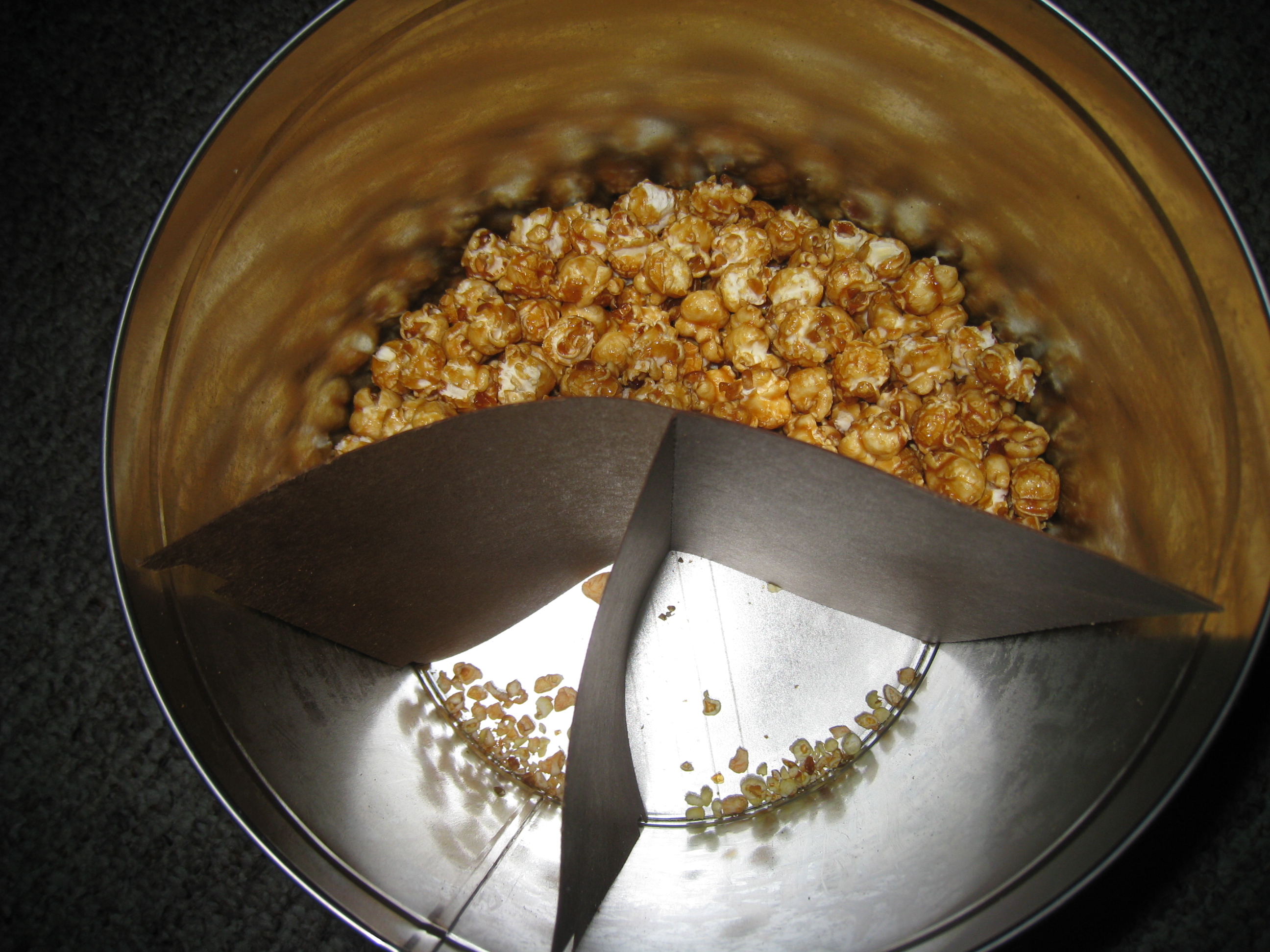
The other day I was eating from a large tin of popcorn. Someone asked which is your favorite. Thru chews I said I like them all / for different reasons. That’s how I feel about these books.
“the law of genre”
How I wrote my latest novel, part 1
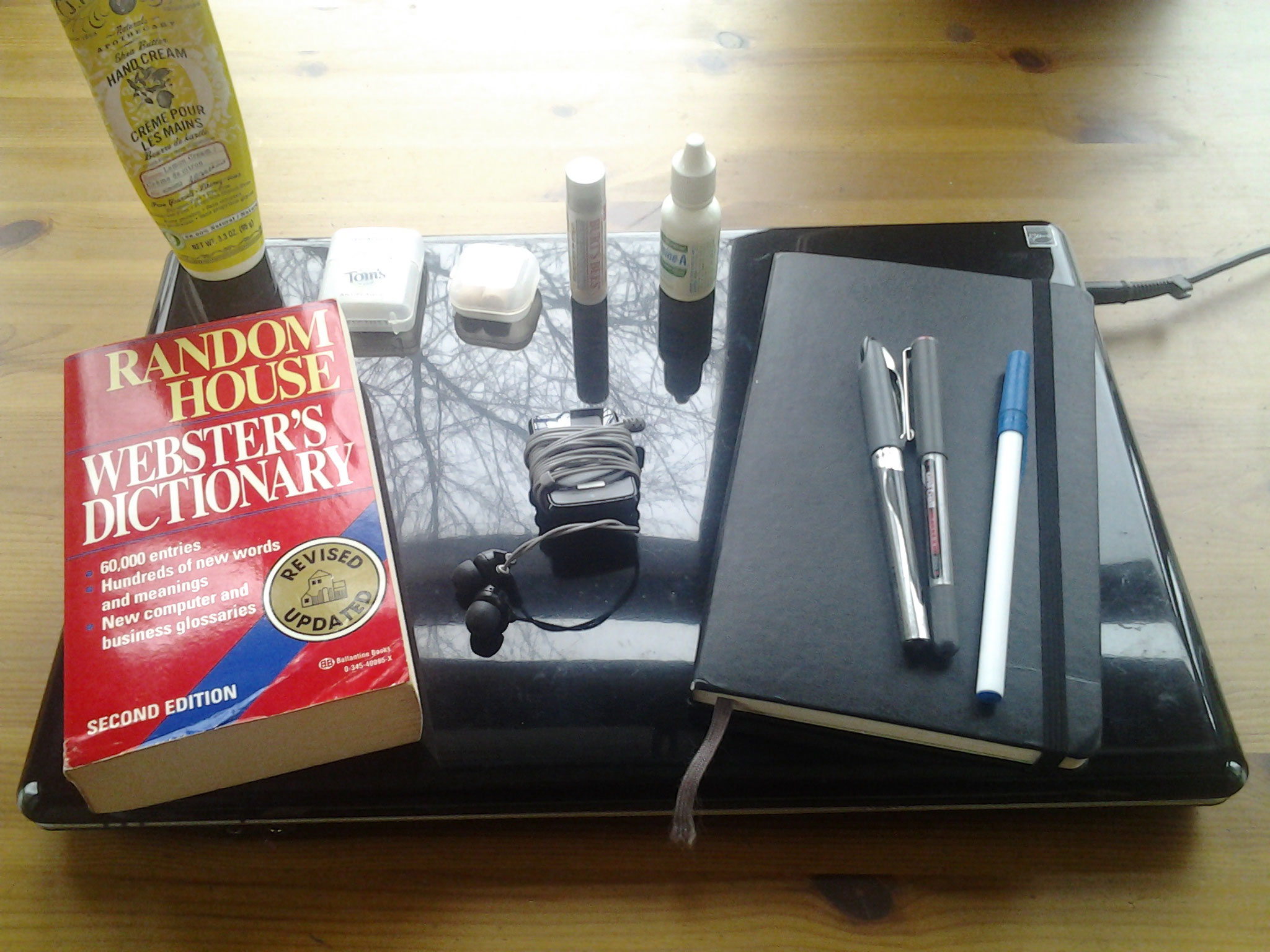
I’ve wanted for a while now to try writing a story “live” here, posting my work as I went from initial idea to finished piece. I might still do that, but for now, here’s a related series of posts. I spent the past forty days writing a new novel (“Lisa & Charlie & Mark & Suzi & Monica & Tyrell,” though my working title was “The Porn Novel”), and want to share with you how I did that. My hope is this will prove less an exercise in vanity and more something instructive—like, you might want to do the exact opposite of me.
Let me state up front that I don’t think there’s any one way to write novels, or fiction, and I don’t approach all of my projects in the same way. And what works for me may not work for you. But I have developed some basic procedures that I find useful and that you might enjoy trying. Also, this time around, I encountered some formal problems that should make for good discussion.
I write pretty quickly, but forty days is the fastest I’ve written a novel. (This is the third one I’ve really completed.) My first novel, Giant Slugs, took nearly a decade from start to finish, during which time I wrote three completely different versions of the book. That experience was, on the whole, difficult and often mystifying. Only in the final two years, when I wrote the final version of the novel, did I feel as though I understood what I was doing, and even then I felt crazily out of control most of the time. I had by then a Master’s in Creative Writing, but never received much instruction in novels, so I had to figure out a great deal on my own. (Perhaps that’s inevitable?)
I wrote my second novel, “The New Boyfriend” (still unpublished) as an anti-Giant Slugs: whereas GS is a mock-epic with dozens of characters and locations, covering several years, “TNBF” is a single scene featuring four characters, set in a single location on a Sunday afternoon/evening. That project took me seventy-five days total, which taught me that time is a resource, and some projects take less of it than others. I’m sure I’ll return to more time-intensive projects later, but for now, I’m having fun sprinting.
Recently I’ve wanted to try writing a novel in one month, and when I dreamed up this new project, it seemed a good candidate for that. (And, no, I’ve never done NaNoWriMo, though I have done the 3-Day Novel Contest about six times. I learned a lot from doing the 3-Day, but never produced what I’d consider a finished novel.)
Curtis White will be reading in Chicago this Thursday

At City Lit in Logan Square, at 6:30pm. Curt will be reading from his new book, The Science Delusion: Asking the Big Questions in a Culture of Easy Answers, which just came out through Melville House.
I did my Master’s degree with Curt at Illinois State University, and he’s one of the smartest and best writers I know. (He’s one of the two profs who first got me reading Viktor Shklovsky.) In the 1980s, he and Ron Sukenick transformed Fiction Collective into FC2, and I learned about FC2 (and ISU) partly through the two “sampler collections” they put out (something I wish more presses did). Curt’s also written seven works of fiction, including The Idea of Home and Memories of My Father Watching TV, and now five works of nonfiction, including his infamous attack on Terry Gross (among other things), The Middle Mind. (He may not have made Gross cry, but he sure pissed off a lot of her fans.)
I’m only halfway through this new book (and will be writing more about it later), but so far I’d describe it as an attack on the idea, currently very en vogue, that scientific knowledge is the only or most superior form of knowledge, and thus the only means of accounting for what it means to be human. Right from the start Curt shows how much of science’s own knowledge is shoddy and unexamined. For example, it’s not uncommon to hear scientists like Stephen Hawking claim that the universe is beautiful, but how do they understand beauty? Not very well, Curt argues. Like in The Spirit of Disobedience, Curt demonstrates how other intellectual traditions—specifically Romanticism, which he traces through the Beats and punk—offer a way around and past some of the more inane debates consuming so many today, such as “science vs. religion.” Plus he’s funny, too.
If you’re in Chicago this Thursday, come by and hear Curt! Discussion will follow during which you can ask him embarrassing questions.
Announcing Requited Journal #8
It is my pleasure to tell you that Requited #8 is now online. This issue features:
- Fiction by Thomas Mundt, Berit Ellingsen, and Matt Rowan;
- Poetry by Lucy Biederman, Carol Guess & Kristina Marie Darling, Gillian Cummings, Zachary Scott Hamilton, Kamden Hilliard, Kati Mertz, M. Pfaff, Amanda Silbernagel, and Michelle Sinsky;
- Performance pieces by Marisa Plumb, Dave Snyder, and Brian Torrey Scott;
- Visual art by Tyler Mallory (including the image you see above);
- Jeff Bursey’s review of Sam Savage’s Glass.
Check it out!
. . .
I am the non-fiction and reviews editor for Requited and am always eager to consider submissions. Previously I’ve published work by William Bowers, Jeremy M. Davies, Julianne Hill, Steve Katz, Mark Rappaport, Keiler Roberts, Viktor Shklovsky, and Curtis White, as well as interviews with Robert Ashley, Vanessa Place, Rosmarie Waldrop, and Curtis White, and reviews by Daniel Green and Jeff Bursey.
Also, please do check out the Requited‘s steadily swelling archives, where you’ll find poetry by Molly Gaudry and Nate Pritts, fiction by James Tadd Adcox, Jimmy Chen, Jac Jemc, Tim Jones-Yelvington, Suzanne Scanlon, and (ahem) myself, as well as many other nice fine things.
Enjoy!
The Internet Political Magazine Blog of the Future
David Fishkind recently asked “Are You Afraid of Politics?“, and a lot of people, myself included, chimed in. Since then I’ve realized I have much more to say on the subject.
I normally don’t think of politics in Democrat/Republican/presidential election terms. I’m registered as an independent, and I prefer to live my politics on a daily basis—which is why I don’t drive, buy organic food when I can, and support local businesses run by people I know, etc. But it would be damn foolish of me to not recognize that “the political is personal” (to invert a phrase), and that the gentle people elected to the state and federal levels regularly impact both my daily life and my career as a writer. Specifically:
Announcing Issue 7 of Requited

"Fresh Cherries" by Mark Aguhar (video still, 2012)
Requited is an online journal that I help edit. I’m pleased to announce that the seventh issue is now up. In the section that is my province (essays) you will find:
- Jeremy M. Davies on reading Gilbert Sorrentino;
- William Bowers on watching Spider-Man;
- & Curtis White on rethinking Freud and childhood sexuality.
There is also a review, by Daniel Green, of the book We Wanted to Be Writers: Life, Love and Literature at the Iowa Writer’s Workshop, edited by Eric Olsen and Glen Schaeffer (Skyhorse Publishing, 2011).
In the rest of the issue you will find:
- fiction by Maya Sonenberg, Hilary Plum, Eugenio Volpe, & Adam Moorad;
- poetry by Neal From, Christine Hamm, j/j hastain, Stephen Daniel Lewis, Amy Pence, Andrea Rexilius, Lina Ramona Vitkauskas, & Daniel Godston;
- excerpts from Calamari Press’s Ark Codex ±0;
- a performance text by Michael J Pagan;
- visual art by Mark Aguhar;
- a video by Dara Greenwald;
- & a comic by Dylan Williams.
Requited is edited by Amanda Marbais (fiction), H.V. Crammond (poetry), Ira S. Murfin (performance texts), Fereshteh Toosi (visual art and videos), and myself (essays and reviews). We publish two issues per year. Our complete archive is accessible here, and our submission guidelines are here. If you have any further questions or comments about the journal, I would be happy to receive them.
Enjoy Issue 7!
Viktor Shklovsky wants to make you a better writer, part 1: device & defamiliarization
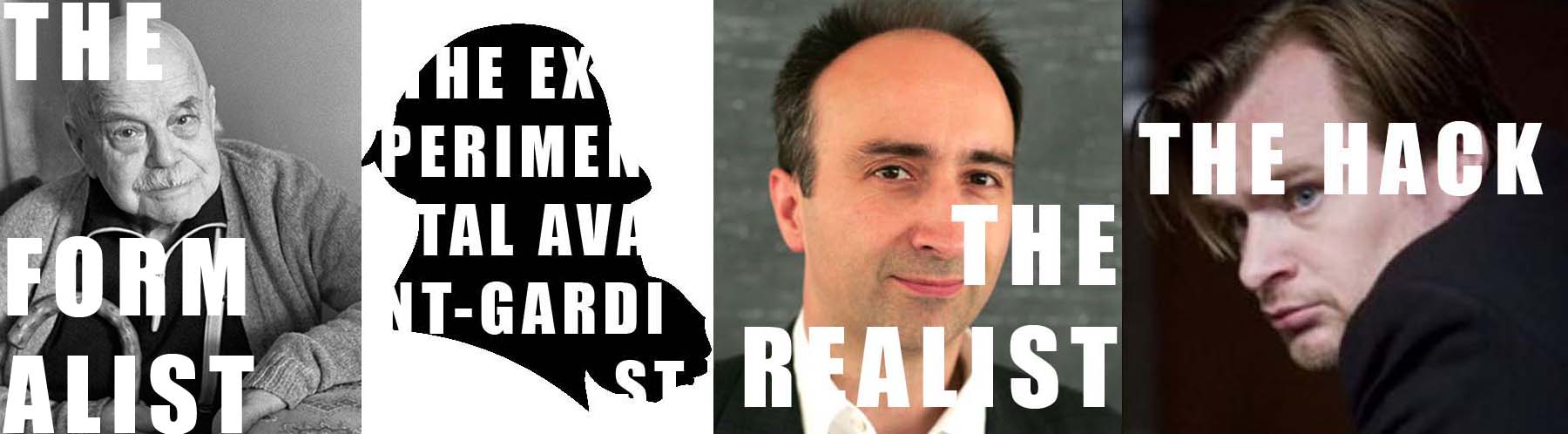
When I was finishing up my Master’s degree at ISU, I worried that I still didn’t know much about writing—like, how to actually do it. My mentor Curtis White told me, “Just read Viktor Shklovsky; it’s all in there.” So I moved to Thailand and spent the next two years poring over Theory of Prose. When I returned to the US in the summer of 2005, I sat down and started really writing.
I’ve already put up one post about what, specifically I learned from Theory of Prose, but it occurs to me now that I can be even more specific. So this will be the first in a series of posts in which I try to boil ToP down into a kind of “notes on craft,” as well as reiterate some of the more theoretical arguments that I’ve been making both here and at Big Other over the past 2+ years. Of course if this interests you, then I most fervently recommend that you actually read the Shklovsky—and not just ToP but his other critical texts as well as his fiction, which is marvelous. (Indeed, Curt has since told me that he didn’t mean for me to focus so much on ToP! But I still find it extraordinarily useful.)
Let’s talk first about where Viktor Shklovsky himself started: the concepts of device and defamiliarization.
Cinema x 3: Melancholia, The Tree of Life, Feature Friday
1.
You no doubt read Greg Gerke’s deeply critical post about Lars von Trier’s Melancholia. Curtis White has now posted his own much more positive impressions of the film. I’ve tried convincing the two of them to go at it like me and Chris Higgs—I even introduced them during AWP—but they’re being too polite. Chime in in the comments section, demanding blood!
2.
Martin Seay is currently posting a series on Tree of Life; the first part went up yesterday, and part 2 is supposedly forthcoming today. (Meanwhile, don’t miss Martin’s meditations on Anonymous.)
(My own thoughts on Tree are here. I have nothing to say about Anonymous.)
3.
Every Friday at Big Other, I’m posting links to feature-length films that are up at YouTube. And I’m doing it for you!
Requited Journal #6
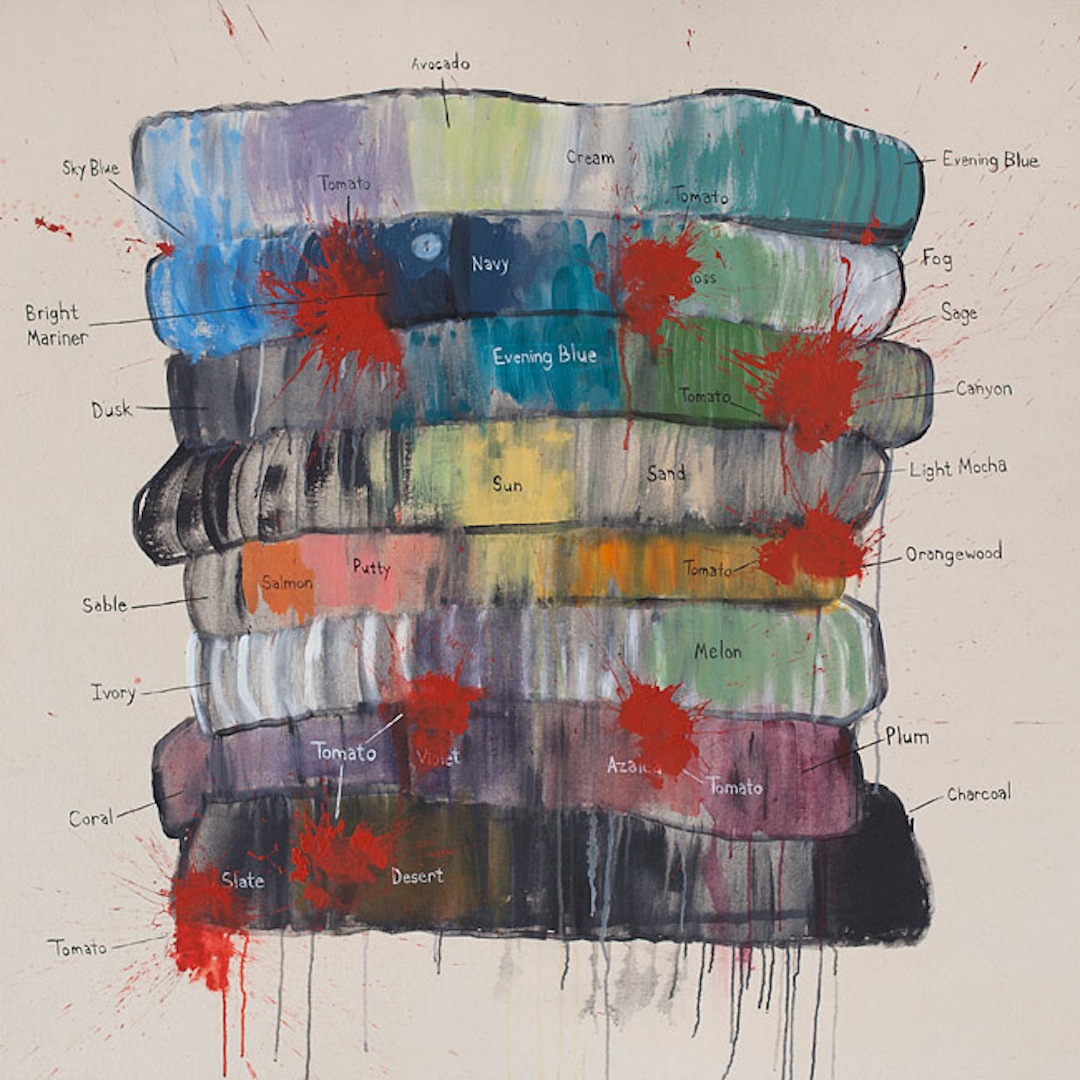
"Call and Response" by Adam Grossi
As the nonfiction & reviews editor of the online journal Requited, it’s my pleasure to announce that Issue 6 just went live. In the Essays section you’ll now find:
- an autobiographical comic by Keiler Roberts (Powdered Milk Volume 5);
- a video essay by Julianne Hill (“So, Mary?”);
- and interviews with Robert Ashley, Vanessa Place, Rosmarie Waldrop, and Curtis White regarding the materials and habits of their respective writing practices (see the introductory note here).
There’s also a new review: Jeff Bursey‘s take on J. Robert Lennon’s story collection Pieces for the Left Hand.
And much more!