
Leaving Proust
Part 1
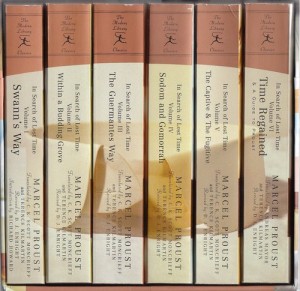
I recently finished Marcel Proust’s seven-volume novel In Search of Lost Time. As I read the last sentence, which appropriately ends with the word “Time,” (clever Proust, very clever) I felt a range of unexpected thoughts and emotions. I knew that I deserved the biggest cookie in the world. I also wanted a sign from the universe to acknowledge this labor of love, because I could be sure as shit that no one else in the world would really care about this personal accomplishment. I just wanted to brag and walk around the city, challenging people by saying, “Hey, I just finished the longest novel ever, what, do somethin!” though I realized that most people would laugh at my pretentiousness. So, instead, embracing the dorkiness of the endeavor, I write about my experience and will wait for the countless plaudits and emails to race my way. Here we go! (Disclaimer: If I sound a bit oh-look-at-me pretentious, please forgive me, I deserve something for this effort. LET ME HAVE THIS.)
Some context/backdrop: Proust and his posthumous publishers split up his over 3,000 page novel into seven volumes. That comes out to over 1 million words, and if you’ve ever tried to read any of his volumes, you know the most prohibitive parts are the never ending sentences and paragraphs. You need to forget about that frequent reinforcement you get in reading that comes from the end of a sentence, paragraph or chapter. This in no way exists in Proust, and you need to give up any expectation of those consistent reinforcements that allow us to finish long literature. This takes time to get over, and I don’t know anyone who can say that the beginning of Proust was smooth or easy sailing. It takes time to learn how to read the book, though Proust will teach you the best way to read his writing, which is very nice of him.
I read this novel over a period of five months, from June to October, but I must mention that I attempted to read the first volume, Swann’s Way, at least twice before to little success. The first two times I made this endeavor, I actually grew to hate Proust. In my arrogance I thought that if I could not even get through one page, then the problem must lie in the author, not in me, the great reader. I soon realized that, attempting to read Proust, even at the age of 21, and then 23, I was neither mentally nor intellectually prepared. It requires some real high level discipline, patience, and even more patience. (If Proust gave me anything, and I would contend that he gave me a lot, he at least gave me a widened attention span. Now, I’ve moved on to reading all of Tolstoy and I find his large books breezy compared to Proust.)
17 Comments
December 28th, 2012 / 12:00 pm
December 28th, 2012 / 12:00 pm
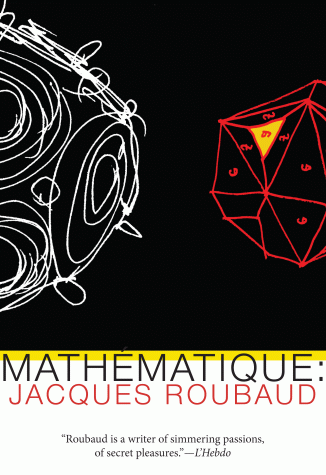
Bourbakists for memory, unite! Jacques Roubaud’s MATHEMATICS: (a novel)
Mathematics: (a novel)
by Jacques Roubaud
Dalkey Archive, 2012
312 Pages, $14.95
Buy from Dalkey Archive or Amazon
Jacques Roubaud, a premiere intellectual force throughout the history, to some extent, of French letters, as they say, is primarily known to American readers as a member of the OuLiPo and a poet. Roubaud’s reach, however, spans far beyond these simple categorical realms, throughout his massive ouevre of work, much of which has actually be translated into English.
Mathematics:, while recalling ideas, perhaps, that come up in specific OuLiPian exercises, is not inherently an OuLiPian work, nor is it a work of poetry. The cover of the book, in Dalkey’s translation, presents the work as “a novel,” and to an extent, within the heterodoxical forms that a novel can take, it is indeed a novel, but in the bookstore-culture of American publishing, it would find a place more comfortable within that loose genre of the memoir, the autobiography, the academic term of ‘creative non-fiction.’
The book at hand is the third “branch,” as Roubaud himself calls them, of a larger project dealing with the issue of memory and also, really, Roubaud’s life. And Roubaud has had a full intellectual life, in his work and his academic career, his interactions with the French literati, his presence in the OuLiPo, his poetry and, as it turns out, his career in mathematics.
Copy on the back cover of the book presents the idea that Roubaud is one of the few writers who has successfully bridged the gap between left brain and right brain thinking, hyperbole to an extent because I would insist that there is not such a clear divide in the generation of texts, but there’s a literal application in Roubaud’s mathematics career, and how it’s affected his interactions with the OuLiPo. But, regardless, despite exploring the branch of his own life that is in tangent with his career in mathematics, this insistence is no more than a structural system for Roubaud to explore memory within this specific realm of his own personal history.
There’s nothing too exciting about the literal events that occur within this branch of Roubaud’s life if you’re not connected to a historical exploration of the development of mathematics, specifically in France, from the early 1950s to the mid-1960s. It is interesting to read about, but there’s nothing specific to launch onto–so really, the question is, what’s the draw to read 300 pages of Roubaud’s life as it connects with mathematics?
The answer is simple, and beyond any sort of right brain articulation–Roubaud writes with a pleasantry that moves swiftly, a story-teller of diversions, splitting his own history into the rhizome of existence, a refusal of a straight narrative, an abundance of (as Roubaud himself points out) non-essential details, simply the creation of a narrative space.
There is no explicitly beautiful language present, as it seems that Roubaud saves that for his more highly emotional works (the incredible beauty that’s present in some thing black, Roubaud’s book of poetry written after the death of his wife Alix Cleo Roubaud, is nowhere to be found here). Instead we move through the maze of memory, constructed within a labyrinthine Proustian totality. Roubaud addresses the reader throughout the work, explaining the project, offering his insistence on the work both as exercise and project, aiming towards, perhaps, an unspoken totality, but this is not the totality that Mallarmé was after with his notes toward le livre, rather this is just a re-articulation of a full life in the form of the book.
Roubaud himself being an interestingly detached character, the scenes that occur are both instantly understandable and curiously casual–in fact, Roubaud’s decision to arbitrarily move from poetry and language into mathematics is an understandable one: there’s this thought, perhaps, a thought that I share at least, that in some way mathematics offers an answer to all the questions we as writers have; mathematics offers a totality to these great ideas of life. None of us could say how, and even if we were to attain the level of higher mathematics required to understand the really heavy and earth-shattering proofs that have arose within mathematics throughout its continued development, the lever of pure abstraction wouldn’t offer any solace. But it’s a quantifiable goal, an idea that while maybe we won’t understand the answer, we’ll at least have it.
And through this there is hardly nothing present outside of Roubaud’s interactions with mathematics–there are tangents that arise, tangents of humanity, but only when they’re linked to the mathematical narrative, through people and places met and involved through classes, other professors, drinking soda in the army, reading treatises on algebra in the desert during the war, watching a woman always wait for the train at the same time; all of these things don’t add up to a point, they simple contribute to a life, life as a whole, as something imperfect and incomplete, as something that can be interesting exclusively in the way it’s told to someone else.
5 Comments
November 1st, 2012 / 8:55 pm
November 1st, 2012 / 8:55 pm
Geography Thursday: people as ‘functions of landscape’
In Jeff Malpas’s excellent book, Place & Experience: A Philosophical Topography, he writes:
In Proust’s work, persons and places intermingle with one another in such a way that places take on the individuality of persons, while persons are themselves individuated and characterized by their relation to place; persons come to be seen, to use a phrase from Lawrence Durrell, almost ‘as functions of a landscape’ – in some cases, even of a particular room or setting. In fact, the narrator of Proust’s novel, Marcel, grasps his own life, and the time in which it is lived, only through his recovery of the places in relation to which that life has been constituted. Remembrance of Things Past is thus an invocation and exploration of a multitude of places and, through those places, of the persons who appear with them.
What do you think about this? Should our characters be ‘functions of landscape’? How does thinking about characters – especially in Proust – in this way alter our experience of a text? Are we – real, live human beings, as opposed to our fictional characters – functions of our landscape?
Commence arguments.
Geography Thursday #14
A few years back, I attended this workshop Susan Steinberg taught, and she said something that rocked me: The only two things that are fundamental to narrative are place and conflict. Maybe I took her offhand comment too seriously, but I’ve really come to believe it. All good stories do indeed have place and conflict. They are cornerstones of narrative.
And so here I am, back at Geography Thursday, and rather than talk about place and space—two of the three big cornerstones of Human Geography, the third being scale—I will talk about neither, while discussing both.
Hypothesis: Collaboration and Alienation
 There is a split in experimental fiction, it would seem, which is hardly a split: a duality which is hardly dual. Articulating it, in addition, will not add to or subtract from what I’m provisionally calling “experimental fiction.” I am not going out of my way to break open or unmask a binary which has, till now, subsisted in relative silence. The following is a brief and incomplete diagnosis–neither positive nor negative, or else both at once. Most importantly, perhaps, these are not two distinct regimes (again, a split which is hardly, or is not, a split). Nor should this be taken as a statement of fact, but as a condition which I’ve begun, more and more, to see in what I read.
Jay-Z may not be the best rapper, but…
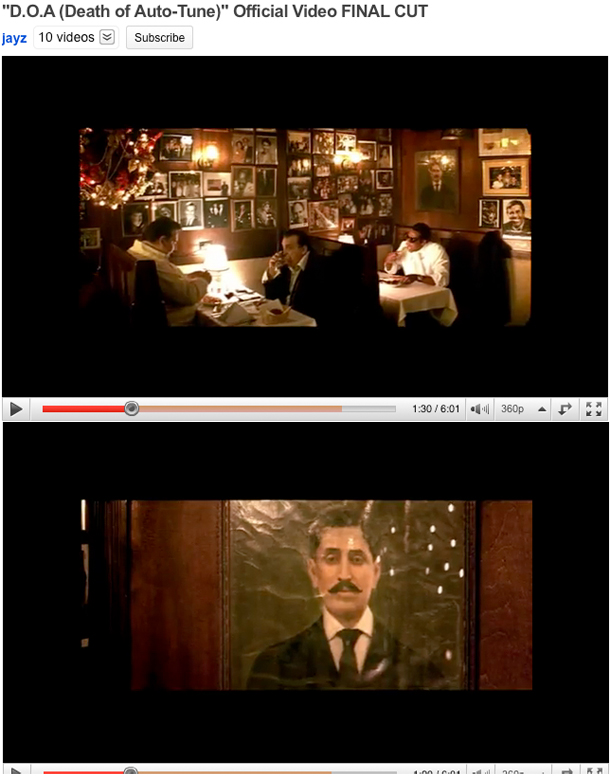
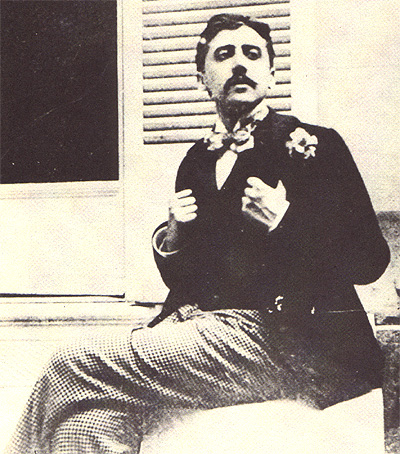
…he’s apparently a big fan of eating under a picture of Proust. And, he’s a Satan-worshiping member of the Illuminati. So, big up to Brooklyn.
A reader responds: Keith Nathan Brown
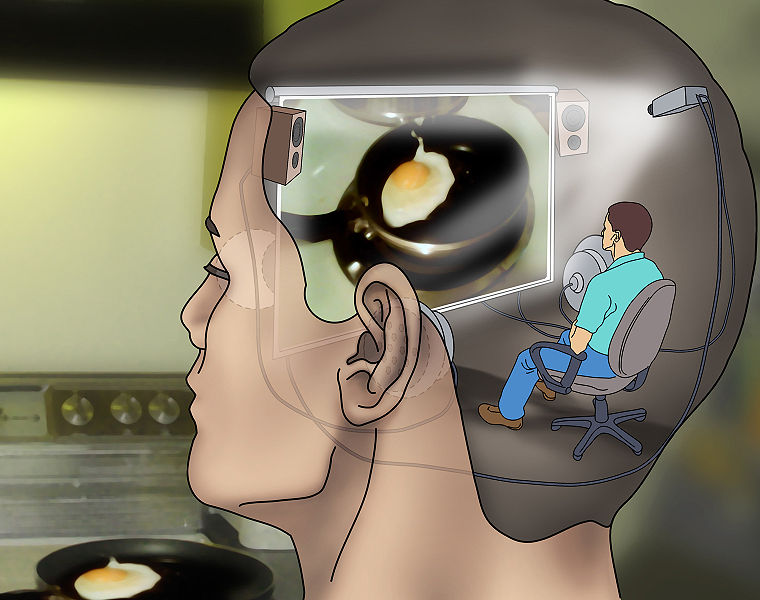
Frequent reader ‘keith n b’ offers a thoughtful response to a recent post quoting Proust, which induced the commentary “the explicitness of today is merely rendered before the eyes, not inside the mind.” When he encouraged me to elaborate, I asked him to do so, which he kindly did. I’ve culled the imperative/exceptional parts (My comments in brackets hereon):
Novelty and innovation, adapting to new information and technology is becoming a genetic disposition, inherited from our parents and ingrained from birth onward. As profound as the effects of electrical technology have been (e.g. the social and psychological consequences of the light bulb, the telephone, the television, etc.), the effects of digital technology stand to surpass those, veritably rewiring our mental hardware; and perhaps one small example of such an effect is the shift from primarily tactile experience to an overwhelmingly informational one.
Power Quote: Marcel Proust
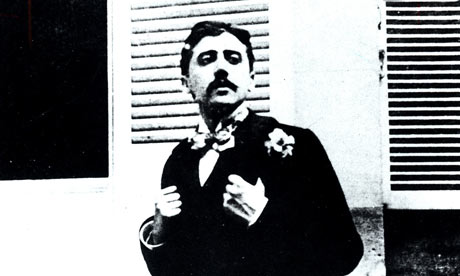
Marcel Proust describes a booger:
Its viscous, warm core had slipped down the linen of one, but had adhered to the cloth of the other, and held the silvery, fluent fringe that dripped from it in suspense above the void. The sun, piercing them, confused the sticky mucus with the diluted solution. One could make out just the one single succulent, quivering mass, transparent and hardening; and in the ephemeral brilliance with which it decorated [his] attire, it seemed to have fixed the prestige of a momentary diamond there, still hot, so to speak, from the oven from which it had emerged, and for which this unstable jelly, corrosive and alive as it was for one more instant, seemed at once, by its deceitful, fascinating beauty, to present both a mockery and a symbol.
From video games to porn, the explicitness of today is merely rendered before the eyes, not inside the mind. In the old days, a sickly gay french dude who lived with his mom was all there was — and it was good.