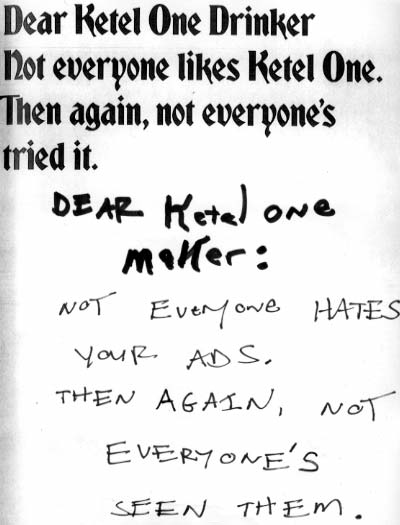
1. Passive Aggressive

1. Passive Aggressive

My apologies to Jereme, who recently commented something along the lines of “htmlgiant is like a teacher’s lounge,” but since I spent the weekend putting together course proposals for next year, I thought I’d share one of the possible reading lists I devised for my “Introduction to American Experimental Fiction” course. You’ll notice that all of the selections are on the shorter side <300 pages. This is crucial, so that I can cover a bunch of different texts. Nothing is set in stone yet, so I would love to hear what you would add or subtract from this list, and why:
Ishmael Reed – Mumbo Jumbo
William S. Burroughs – The Soft Machine
Kathy Acker – Blood and Guts in High School
Carole Maso – Aureole
Jean Toomer – Cane
David Markson – This Is Not A Novel
Gertrude Stein – Tender Buttons
Ben Marcus – The Age of Wire and String
*As a bonus, my wife found this cool database of syllabi for American Lit courses from professors at various universities (including a Poetics syllabus from Susan Howe for a course on “Sexuality and Space in 17th – 19th Century American Literature.”
httpv://www.youtube.com/watch?v=M1I7Vrq0qU4
Thank you, Craig Baldwin.
Opium’s death matches have a refreshing spirit, but I don’t understand this. Are we that competitive?
I’m not sure how to say this, but the new Joanna Newsom album is going to be three CDs/LPs. You can find the first single on the Drag City homepage. It is, um, gorgeous. I feel like most people here probably hate Joanna Newsom. What do you think of Joanna Newsom?
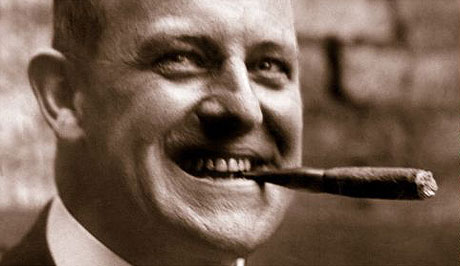
P.G. Wodehouse
“I just read in this morning’s paper that [P.G.] Wodehouse says that they give him $104,000 for doing nothing at Hollywood they keep him there but they do not use what they ask him to do.”
— Gertrude Stein, from a letter to playwright Thorthon Wilder (1936)
—
“It is a good rule in life never to apologize. The right sort of people do not want apologies, and the wrong sort take a mean advantage of them.”
— P.G. Wodehouse
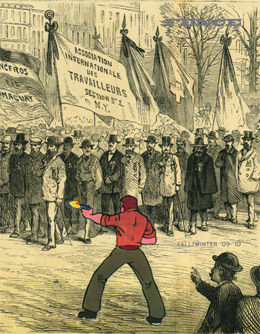 Finally having got a hold of the beautiful latest issue of Fence, I was struck–[before being struck by the words of the pieces, as usual, and by their new colored layout on the page in this issue in a combo of blue/black/gray that I wish more publications would take on]–in reading Rebecca Wolff’s editor’s note. The note concerns itself mainly with an email that she received about an announcement for Brandon Downing’s brand new, and by and large tough to nail down, Lake Antiquity.
The emailer was bitching at Ms. Wolff for calling the book ‘indescribable’ and then simultaneously going on to try to describe it. The emailer apparently thought the book wasn’t as indescribable as she thought it was, and gave his take on how she should have described it. Bitching at her for being in awe of something, and not knowing exactly how to say why. She responds and then takes the consideration of the person’s email as a chance to open up the consideration of her editorial stance, which struck me as so right and crucial that I am going to copy the heart of it right here:
As a publisher, I often find myself in the position of ushering texts into the world that are, frankly, over my head in terms of their erudition or the richness of the literary-historical medium in which they grew–most of the poets I publish have read more than I have, and my appreciation of their work is made up of some combination of savvy (“this work is smart, and, in its position in the literary landscape, is something I feel comfortable being connected to”), curiosity (“I will learn something through the process of putting this book out in the world”), and whatever one calls the kind of literary/aesthetic appreciation that happens DESPITE or IN SPITE OF a kind of glancing or even glib awareness of the aforementioned richesses.
Thank god. A publisher of renown, with a backlog of amazing publications, who understands and can be plain about the idea that an editor, publisher, whoever, need not understand the full breadth or even the full context of the body of work they help bring into the light–beyond simply knowing that it is something of power, worth spreading. If there is anything that plagues the magazine and book publishing industry, it is too wide a margin of people denying that which they do not understand, or can encapsulate, and thereby disallowing themselves to be altered or even expanded by the work, in working harder at it, in letting it open up around them. Is this not what we read for? Is this not what we write for? Are books just another mode of entertainment, continuity, or are they meant to do something more?
This is why many magazines are dying. In something as often ephemeral as an issue of a magazine, why shouldn’t more chances be taken? In something as historically struck as publishing a book, why shouldn’t it be something that lives beyond its grasp? So many magazines and publishers fail financially because first they fail to enthrall, because their contents are bound in breadth enough that they are forced to compete for attention by things like movies, and often wheel around the elements that make text capable of approaching, creating space untouchable by another medium.
If only more editors would be more frank and open and willing to open the gates some, to smudge lines and make things that we can take beyond mere emotional responses and momentary pleasures, and instead create a body that more often interacts on the level of the unnamable, the waking, the eat. The day there are no objects left that we do not understand is the day we begin only ever getting smaller, dumber. Bodies in a stall.
>>>>>> Intuition over containment.
>>>>>>> Prowess over cake.
>>>>>>>>>>> Resonance over immediacy.
>>>>>>>>> ‘What the fuck’ over ‘Oh, neat.’
Pick up the new issue to read the thing in full, it’s worth the price alone, not to mention a ton of other magick words.
Bravo Rebecca. I want to have your kind of fun, too.
 Here is an interview with Carver biographer Carol Sklenicka at The Economic Times, India’s leading business newspaper. This website is quite the thing, especially for the epileptic. It is cluttered and jangly and tries to sell you every square inch of someone’s soul or something. Just focus on the interview.
Noted: a dip in sales of Carver’s books. Why? Why, person who wrote “…a masterful biography rated by the New York Times as one of the best 10 books of 2009”?
For one thing, he was too much imitated and for another, it is usually more important for younger writers to look at living writers.
The imitation thing is one persistent myth, I’ll say that. Is it really more important for younger writers to look at living writers? I absolutely disagree, and my MFA program disagreed, and I am thankful.
You can now purchase Unsaid 4 online. It’s seriously a monolith: a 500 pp. issue I go back to and back to like a textbook.
This Saturday marks the first Literary Death Match: Baltimore, at which our own Mike Young will be reading and representing Publishing Genius, i.e. our own Adam Robinson. Michael Kimball will be judging. Go Mike! It will surely be a night of Mikes. I kind of want to move to Baltimore.