
A to Z of Stupid Feelings About Anybody
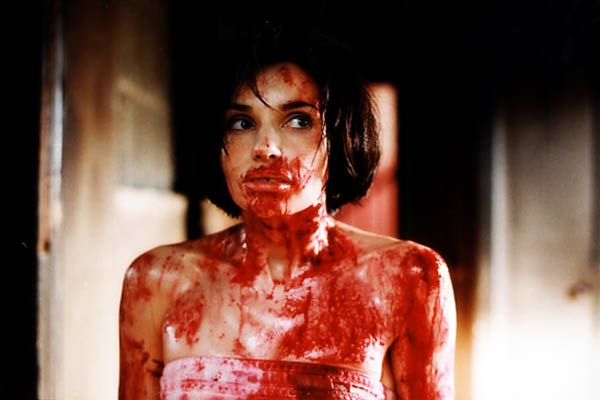
Are you hungry. Did you come because you are hungry. When you eat do you eat more than you had planned to eat and then feel so full you cannot as well move or do you limit yourself to the eating of the thing that might best keep your body toward a vision of something people look toward and do not not see in jest.
Books come in the mail. I stack them up, some on the sofa arms, some on the floor around my bed. At night in the dark trying to walk or piss I slip on them sometimes and often have to move books to make room on my desk to sit my laptop down. I’ve been thinking about reordering my books in the order that I read them. I have been keeping a list for ten years. I’ve yet to make the switch because I am afraid of disrupting the order of the stacks I’ve already put together, which is based on associations such as press, idea, time, generation, like-mindedness, or something else. I mostly know where everything is.
Can you please talk to yourself more. A public forum doesn’t demand the idea of losing steam. It doesn’t mean you are doing a service to people who are mostly wholly worthy of doing service to, but it means there is somewhere doing something and sometimes trying to eat. A girl just sat down next to me in the coffee shop and pulled her shirt down over her pants in such a way. Her pants are too long at her feet. She doesn’t seem to be trying.
Do you think it’s wrong to try. Do you think it’s wrong to say too many good things. Is there so little out here that it’s surprising that the things that get lit to are the things someone would want to talk about. I’m sure there are articles where someone is telling everybody how there are so many books coming out each year. People are worried about machines. Machines are getting older too.
Writing: the balancing act between self and other, solitude and engagement, me and world
Hello my little Giants.
I fell out of blog world for a second. A combination of personal turmoil, relocating to Pittsburgh for a month, and buckling down on my novel has left less room for reaching out to my fellow writers via the internet.
In Pittsburgh, I am doing a writer residency at a punk house. Isn’t that interesting? I think more people that own houses and have a little extra space should do DIY writer residencies. Here, they give you a room to live in for free for a month, and you produce something by the end of your stay. The room has a bed, a desk, clean sheets/blanket, and there is a grocery store just a few steps away. They also have a letterpress studio and the equipment to do perfect binding at the house, so they are always making beautiful DIY books and zines. I’ve only been here for a few days, but already I’ve been immensely productive, averaging about 3,000-3,500 words a day on my novel alone. My head feels clear. And one of my best friends from college lives here, which means I have enough socializing opportunities to feel engaged, satisfied and happy, but not enough to be terribly distracted. Virginia Woolf’s thing about having a room of one’s own is starting to seem true. But I still wonder, are such conditions ideal on a more permanent basis?
Here in Pittsburgh, I am thinking about the conditions under which people are able to write. When are you most productive? I am considering the following factors: free time, personal space, emotional stability, routine, environmental, etc. In Baltimore and Florida, I shared a room with my partner. Right now we are both dedicated artists that don’t have “real” jobs and just work on our projects all day. This is completely different from my life several months ago, when I worked 2 jobs while I was going to school full-time and working on my thesis. While my partner and I are living together, every day we continually have to negotiate how to spend our time, where to work, when and what to eat (who should cook), space (she works best listening to loud music, I can’t focus when loud music is playing), our emotional needs (I feel upset right now, will you put aside your work to talk to me?), sleeping schedules (I will often sneakily get up in the middle of the night to pound out several pages [if I have already taken my ambien, you get this]), etc etc. Rather than seeing this as “bad” for my work because I am quantitatively less productive, I see it as something that indirectly enriches my work because it forces me outside myself, makes me more expansive, forces me to learn how to balance self and other. Plus, we always have the opportunity to bounce ideas off of each other, and since we are hyper-engaged and thoughtful about things, we challenge and move each other in unforeseeable directions.
This balancing act brings me to the next issue I am trying to sort out in my mind. The question of living vs. writing.
READ MORE >
How To Reassert The Universe Of Magic

“There IS a responsibility to the audience,” he said. “We don’t want anything bad to happen to these kids–we don’t want to release anything we can’t handle.” We talked about magic and Aleister Crowley. Jimmy said that Crowley has been maligned as a black magician, whereas magic is neither white nor black, good nor bad–it is simply alive with what it is: the real thing, what people really feel and want and are. I pointed out that this “either/or” straitjacket had been imposed by Christianity when all magic became black magic; that scientists took over from the Church, and Western man has been stifled in a non-magical universe known as “the way things are.” Rock music can be seen as one attempt to break out of this dead soulless universe and reassert the universe of magic.
Binary Countdown to You

00110001 00110000. A reflection, of the kind stylized under internet-based logos ever more increasingly, not only actualizes an object and propels it into space, but implicates a pristine white surface on which it stands.
00111001. An empty white room is a good place for a logo. A white room, if one considers the etymology of white (white blood cell, white wedding, white house), is a good thing, a room of one’s own without an angry Woolf, a good place to write.
00111000. A wall on which one writes one’s thoughts is not graffiti, for graffiti is written on walls by the marginalized other, a group who has been unfriended irl. In real life, people have less friends.
00110111. Your facebook wall is not the Berlin wall, or the Great Wall — a place to keep others out — but the Wailing Wall, a daily place of prayer, where hopes and dreams are stored.
00110110. If you are followed, your wall is on somebody else’s feed. You do not reflect on your wall, but type whatever. When someone says whatever, in that suburban ghetto way, they are dismissing you. A baby bird, a tiny twitter, chirps “feed me.”
00110101. In Caravaggio’s “Narcissus” (c.1599), the eponymous young man, in love with his reflection, is transfixed by its residence on the surface of a pool. Narcissus, in Greek, means “sleep, numbness.”
00110100. Narcissus cannot leave his reflection. Unable to differentiate between himself and his image, he wastes away and dies by the pool. He partied like it was 1599.
00110011. No one considers Pequod’s reflection on the sea, as it was not in a white room, but on a blue circle. The light, one presumes, is turned off in Beckett’s room, so his room is black. When Benjy Compson closes his eyes, he thinks the room turns black.
00110010. At the end of a difficult French film that was excruciatingly boring, you see a black box with the word FIN inside that box. You will write on your wall about seeing that French film, and how you only watched half of it, because half of the time you were reading the subtitles.
00110001. Every word is a subtitle in the film of your life, directed and shot in real time by you. Congratulations. You, in a white room, not reflecting on things, just reflecting.
Productive Imitation, Appropriation, and Transformation of Which I Strongly Approve


Note the similarities (and, as importantly, the differences) between the openings to Lorrie Moore’s “How to Be An Other Woman” (from Self-Help, 1985) and Junot Diaz’s “How to Date a Browngirl, Blackgirl, Whitegirl, or Halfie” (from Drown, 1996), a story that seems to this reader to be written in homage, ten years later, to Moore’s story. Both stories are from debut collections, both collections introduce voicey masters to the world, both masters continue to write deeply idiosyncratic work subsequently, but usually not in second person:
From Lorrie Moore’s “How to Be an Other Woman” READ MORE >
7 is holy like melt butter medium heat
1. Are you short? Well, bless your soul. Here’s a Short Review for you. All October like Alexandre Aja.
14. The Velvet Underground and Nico. Something. Sneeze. I never understand music.
9. 1926 Tao Lin silver dollar!

94. As I have said before, this flash contest will pay you in beer. Beer. Beer. This is why I keep saying it. Beer.
1117: I didn’t even know there was a wordstock festival. Should I have?
2. Duras:
Men like women who write. Even though they don’t say so. A writer is a foreign country.
17. Zines for sale on Etsy. Made by palm, finger, nail.
I Like What The Hell Is Going On Over Here
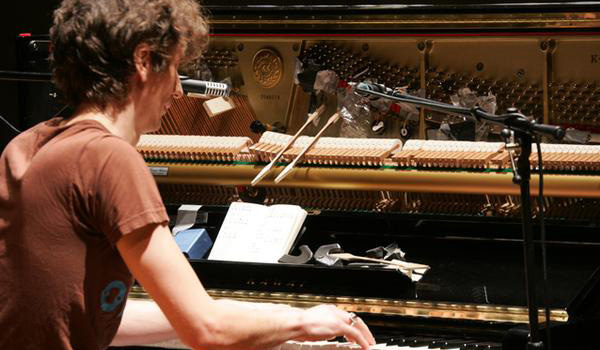
New Hauschka album available for a stream. Preparedly playing prepared piano.
Richard Nash extravaganza at WWAATD. Was gonna do this myself, now I don’t have to.
Noah Cicero doesn’t want no one talking bout no theories. He very upset.
This lady, this movie, every time I think why not. READ MORE >
Geography Thursday! Yippie!

I’ve only been in Geography for four weeks, and I have to admit, I haven’t “learned” a whole lot from classes. I have read a bunch of cool Geography stuff on my own. So rather than vent my frustration about class, I’ll talk about a book.
Benedict Anderson’s Imagined Communities posits that the social/community aspect of citizenship is premised on an imagined solidarity between people based on the arbitrary boundaries of the nation-state.
Let me back up for just one brief digression/explanation: In 1950, T.H. Marshall revolutionized the concept of citizenship by breaking it down to three categories: civil rights, political rights, and social rights. What was so ground-breaking about Marshall’s claim is the addition of social rights into the mix, which ties in notions of solidarity and community. Prior to Marshall, citizenship as a concept focused strictly on the relationship between citizen and nation-state. Marshall acknowledged the power in nationalism, pride, etc.
In order for there to be nationalism–and perhaps more importantly, in order for there to be people willing to die for their nation–there must be a solidarity between citizens (or else: a draft. My comment, not his.), but the key point is that this solidarity is imagined. The kinship felt is imagined, or at least, in its most nascent form, it was imagined. Anderson uses the United States as an example. It is impossible for us to know all 310 million people READ MORE >
“This feels great and you not feeling what I’m feeling is disturbing”
 Over at We Who Are About To Die, Daniel Nester posted a letter from Nas to his label, Def Jam. MTV News spoke to an unnamed source from Nas’s “camp” who confirmed the letter: “”It was a personal e-mail,” the source said. “[The leak] wasn’t planned. It was not meant to be blasted out in the world, but we’re not upset about it.”” You should read the letter, which I feel maybe has some interesting relevance to so-called “indie lit.” And to even broader notions of privacy/publicity/social interaction/creative culture/cultural capital on the internet/feelings. I know less than most people about rap, so I don’t know how legit/awesome Nas is, but I feel like the letter is fun. Here are fun quotes:
“I could go on twitter or hot 97 tomorrow and get 100,000 protesters @ your building but I choose to walk my own path my own way because since day one I have been my own man.”
“People connect to the Artist @ the end of the day, they don’t connect with the executives. Honestly, nobody even cares what label puts out a great record, they care about who recorded it.”
“I have a fan base that dies for my music and a RAP label that doesn’t understand RAP.”