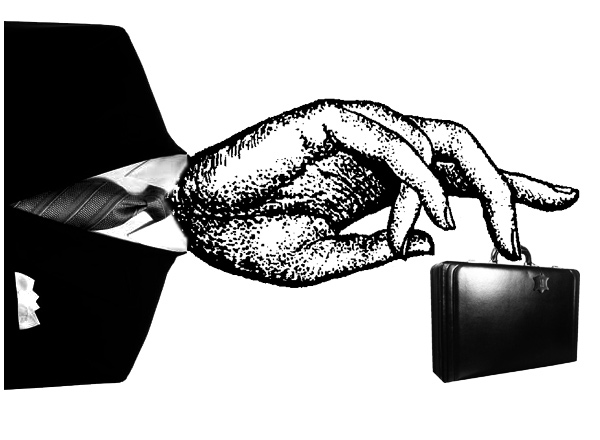
375,000 pounds of litter we left on the moon
11. Kevin Wilson short interview at The Short Review.
I cannot imagine a question I’d ask that would have an answer I’d be happy hearing.
10. Money. FC2 gets cash! Oh, and there is a 25% sale on For Whom the Bells Toll (now $58,500). Even Shakespeare couldn’t make money with all this internet bullshit, waaaaaaa.
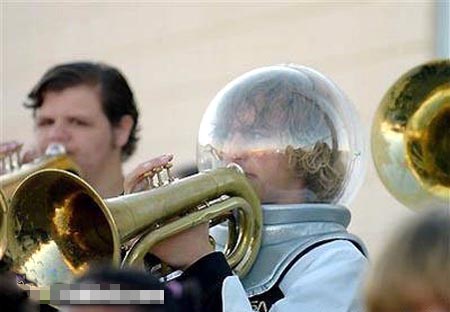
9. Best title, best profile ever.
8. Dude prints out an 1818 edition of John Keats’ book Endymion on New York’s first espresso book machine. Wow.
375,000: Hi, I am vapid. Lady GaGa’s boyfriend (a nightclub manager/long-distance runner/deejay/certified personal trainer/semi-pro bowler) is a notorious drunk. He is also really fit. His blog here. Now he is writing a weight loss book called “The Drunk Diet.” OK.
Big money! Big money! Big money!
Well, our favorite big-bad-wolf-bookstore Border’s spun the wheel, and now, they’re filing for bankruptcy.
What does this mean? Does it matter?
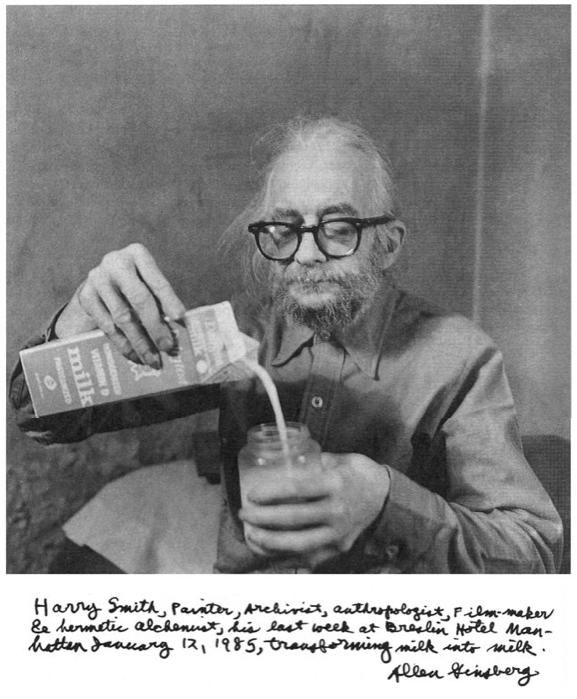
HOW TO TRANSFORM MILK INTO MILK
This photo was taken on my 16th birfday.
A Few Words about the New Yorker

The New Yorker has the same giant bullseye on it that anything that has risen to the level of cultural significance will. It sits at the top of the news chain alongside the New York Times, but its volleys are more focused because it doesn’t publish every day, and instead of shotgunning hundreds of stories a week into the world, it offers four or five high caliber rifle shots. The day a new issue comes out, you’ll hear one or three of the major stories as a headline on NPR or CNN or the networks or even ESPN (the magazine has lately been taking aim at the violence football does to the bodies and minds of those who play.) Also, the numbers: It has the broadest circulation of the few remaining smart people magazines, and because it is the most prestigious magazine in the world and one of the best paying, it can have its pick of writers. It serves, therefore, not just as a mirror to American culture (albeit from a usually-lofty and Eastern vantage point), but also as an influential shaper of American culture. Among its readers are the some of the most powerful among us, and, like it or not, power gets to do the greater share of the shaping. The New Yorker has the ear of some of the shapers.
I stopped subscribing to the New Yorker for three reasons. First, it’s expensive. READ MORE >
House of Prayer No. 2

The narrator of Mark Richard’s new memoir House of Prayer No. 2 sees his past self in a fairly distant third person which has access to the interior life of the past self but which more often treats him as though we are looking at him as a clinical specimen:
“He won’t learn, he doesn’t learn, he can’t learn, the teachers tell the mother. He talks back to the teachers, tries to correct their speech. He was rude to kind Mr. Clary when he came to show the class some magic tricks. You better get him tested. He might be retarded. And he runs funny.” READ MORE >
Who or what is your daddy.

Generally my least/most favorite part of any interview with any artist, and interviews with writers in particular, is when s/he’s asked “who are your influences.” It’s my most favorite because I’m a sucker for superlatives, all those kinds of “favorite book/food/animal” type inquiries. But it’s my least favorite because the answer is often a let-down, or something bordering a cliche, or someone so far-flung that I find myself questioning the subject’s veracity. Which I don’t really want to do. I mean, it’s an interview, not an interrogation, and I’m no arbiter of anything, as much as I might want to think I am.
In any case, I think there are interviewees who probably feel pressured by that question–they want to sound smart, and interesting, and relevant:
“Well, lately I’ve been reading a lot of Derrida with Yo Gabba Gabba on mute, and the overlaps are pretty incredible…”
“Obviously I owe a debt to Pynchon, and to a certain extent, Dostoevsky. But I’d be dishonest if I didn’t credit Bazooka Joe in some way…”
“Oh, I’ve been in an all-consuming back-of-cereal-boxes phase. General Mills, mostly. And I’m re-reading Proust’s A la Recherche for the fourth or fifth time.”
You get it. That mix of high and low, theory and novel, pop and baroque, that says I’m an intellectual, I’m legit, I’ve read things, but I also know how to breakdance.
I’m thinking about how DFW watched a lot of television as a kid.
I’m wondering what we mean, exactly, and Eliot/Bloom notwithstanding, by influence. Beyond the page, beyond the book, beyond all art, what informs your work, that you are conscious of? Do you ever try working against those forces? What’s your objective correlative, and how does it function? Like the bay leaf in the pot that flavors everything vaguely but needs to be removed before eating? You could eat it, but it wouldn’t taste very good? But maybe it needs to be eaten and it needs to not taste good, so that it can be evacuated?
10 Sentences: Jacob Wren
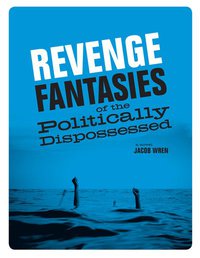 Jacob Wren’s latest book, Revenge Fantasies of the Politically Dispossessed, is pretty awesome and you should know about it. It came out last year from Pedlar Press and is a really fun read. He is also the author of Families Are Formed Through Copulation, a book that is supposed to convince you not to have children. I sent Jacob a 10 sentences assignment and he obliged. Remember 10 sentences? I don’t know, maybe you don’t since it has been a while. (After the jump there is a short interview with Jacob, also.) Enjoy.
1. A sentence that involves poison, an emdash and at least five prepositional phrases.
About to take poison, several pretentious thoughts lash through my mind: that life is a betrayal against which there is no remedy, like this cyanide I ordered on line, looking out the window then as I continue to do now, where little can be seen apart from a bird, a car, a dog – the dog is asleep on his bed (but of course the dog is not asleep on his bed, this is simply one of the examples I found when I googled ‘prepositional phrases’) and, realizing I am unsure whether or not I have reached five, I take the poison, still watching the bird and the car upon which no further grammatical games will be played.
2. A one-sentence answer to a question the speaker would rather not talk about but is tired and answers anyway.
No, I didn’t masturbate yesterday and am not masturbating right now as I type this.
3. A one-line ode to the last inanimate object that you touched that is not your computer.
I read too many books, they are the only objects that give me genuine pleasure, but it is a pleasure tinged with melancholy, the melancholy of being more than a little sick with life.
4.A sentence that someone might call ‘deranged’ which includes the word ‘omelet’ and ‘hallucination.’
Fucking an omelet is, technically, not a criminal act, I thought as I continued to pound away, also wondering if I should have let it cool first, howling in pain but, like so many things in life, unable to stop, just fucking and fucking and fucking, the pain surging through every molecule of my body to the point where I realized I might, at any moment, pass out, and began to wonder if me, the omelet, everything that surrounded us, was merely a hallucination. READ MORE >
14th of Something I Hear
Mornings with clouds. Windy mornings. Mornings with black wind rushing like water. The trees quiver, the windows are creaking like a ship. It’s going to rain.
Yes, I’m sure of it. I’m going to meet her. Of course, I’m a little drunk, a little reckless, and in an amiable condition that lets me see myself destined as her lover, cutting into her life with perfect ease.
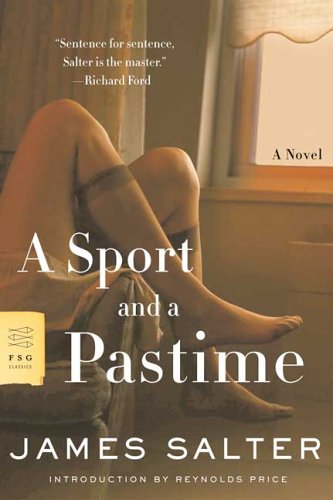
James Salter’s A Sport and a Pastime is my choice for best love novel ever. I don’t know what that means, exactly. But the prose alone will make you believe in that skittering ghost. People do see it, they say. That’s what good prose does–makes you believe. You’ll see something here, in these pages. The story is devastating. And sensual (one of the finer forms of devastation). Go ahead, name your best “love” book ever. Go ahead. It’s OK. If no, read this one, I say.