Massive People (12): Samuel Ligon

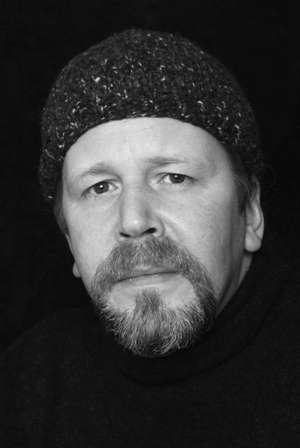
samuelligon-330-Resizeddsc_0128Samuel Ligon is most recently the author of the story collection Drift and Swerve, as well as the novel Safe In Heaven Dead. His stories have appeared in The Quarterly, Alaska Quarterly Review, StoryQuarterly, New England Review, Noise: Fiction Inspired by Sonic Youth, Post Road, Keyhole, Sleepingfish, Gulf Coast, and elsewhere. He is also the editor of the most excellent Willow Springs, and teaches at Eastern Washington University’s Inland Northwest Center for Writers, in Spokane, Washington.

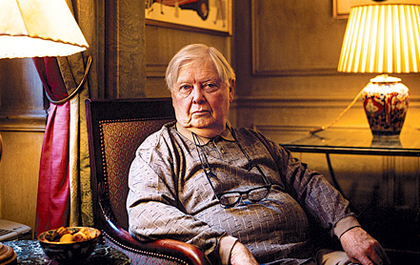
Beyond all that, Sam is simultaneously one of the most laid back and yet enthusiastic editors I’ve ever had the pleasure of meeting. He is, above all else, an excellent person, while also managing to be a hell of a writer. He seems to me a model for what a person in the world of language should be: courageous and yet open minded, enthusiastic and yet no nonsense, giving, attentive, rad. Wise blood, as it were, and most certainly a massive person.

Over the past few weeks I had the pleasure of talking with Sam over email about his new collection, his inspiration, music, the influence of Willow Springs on his work, and much more.
READ MORE >

Massive People / 14 Comments
August 31st, 2009 / 12:00 pm

I’ve been obsessed with this song for like 3 weeks now and don’t see it letting up

Specifically, the version on Live Rust, but this version from Hamburg ’96 (~28 years later) is pretty great too.

httpv://www.youtube.com/watch?v=jdUC_GU4hYw

Random / 12 Comments
August 30th, 2009 / 11:13 pm

Paragraphs That Make Me Warm (6): William Gass

gass_large

Now the horse was quiet and we were breathing careful and if the wind had picked up we couldn’t hear it or any snow it drove. It was warmer in the barn and the little light there was was soft on hay and wood. We were safe from the sun and it felt good to use the eyes on quiet tools and leather. I leaned like Hans against the wall and put my gun in my belt. It felt good to have emptied that hand. My face burned and I was very drowsy. I could dig a hole in the hay. Even if there were rats, I would sleep with them in it. Everything was still in the barn. Tools and harness hung from the walls, and pails and bags and burlap rested on the floor. Nothing shifted in the straw or moved in hay. The horse stood easy. And Hans and I rested up against the wall, Hans sucking in his breath and holding it, and we waited for Pa, who didn’t make a sound. Only the line of sun that snuck under him and lay along the floor and came up white and dangerous to the pail seemed a living thing.

– from ‘The Pedersen Kid’ in In the Heart of the Heart of the Country, pg. 60

Excerpts / 8 Comments
August 30th, 2009 / 9:32 pm

a question: do you like to hang out with other “writer types/academic types/artist types” or do you prefer hanging out with people who aren’t those things, at least not professedly.  and why is that.  i am really interested in what people think about this.  also, to preempt, i mean “instead of being alone,” which is obviously preferable to both.

In a culture whose already classical dilemma is the hypertrophy of the intellect at the expense of energy and sensual capability, interpretation is the revenge of the intellect upon art.

Even more. It is the revenge of the intellect upon the world. To interpret is to impoverish, to deplete the world – in order to set up a shadow world of “meanings.” It is to turn the world into this world. (“This world”! As if there were any other.)

The world, our world, is depleted, impoverished enough. Away with all duplicates of it, until we again experience more immediately what we have.

– Susan Sontag, “Against Interpretation”

3 Fall Books I Just Preordered, All by Debut Authors

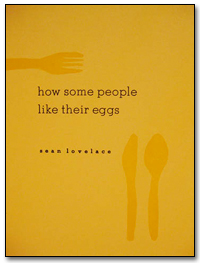
How Some People Like Their Eggs by Sean Lovelace (Rose Metal Press, August 09)

lovelace

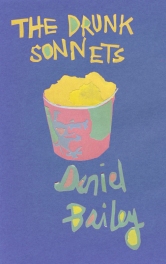
The Drunk Sonnets by Daniel Bailey (Magic Helicopter, October 09)

drunksonnets_promo

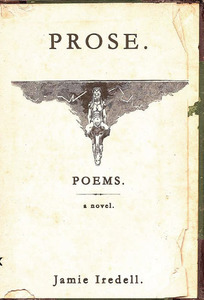
Prose: Poems, a Novel by Jamie Iredell (Orange Alert, fall 09)

iredell

Web Hype / 8 Comments
August 30th, 2009 / 3:49 pm

Laura van den Berg’s website has been hacked by AYS Federal Atack Team.

Update: it has been fixed.

Power Quote: William Hazlitt (for Blake)

dick-cheney

Nature seems (the more we look into it) made up of antipathies: without something to hate, we should lose the very spring of thought and action. Life would turn to a stagnant pool, were it not ruffled by the jarring interests, the unruly passions, of men. The white streak in our own fortunes is brightened (or just rendered visible by making all around it as dark as possible; so the rainbow paints its form upon the cloud. Is it pride? Is it envy? Is it the force of contrast? Is it weakness or malice? But so it is, that there is a secret affinity, a hankering after, evil in the human mind, and that it takes a perverse, but a fortunate delight in mischief, since it is a never-failing source of satisfaction. Pure good soon grows insipid, wants variety and spirit. Pain is a bittersweet, wants variety and spirit. Love turns, with a little indulgence, to indifference or disgust: hatred alone is immortal.

“On the Pleasure of Hating”

Power Quote / 10 Comments
August 29th, 2009 / 6:33 pm

It’s really not OK to like and support everything. It’s just not.

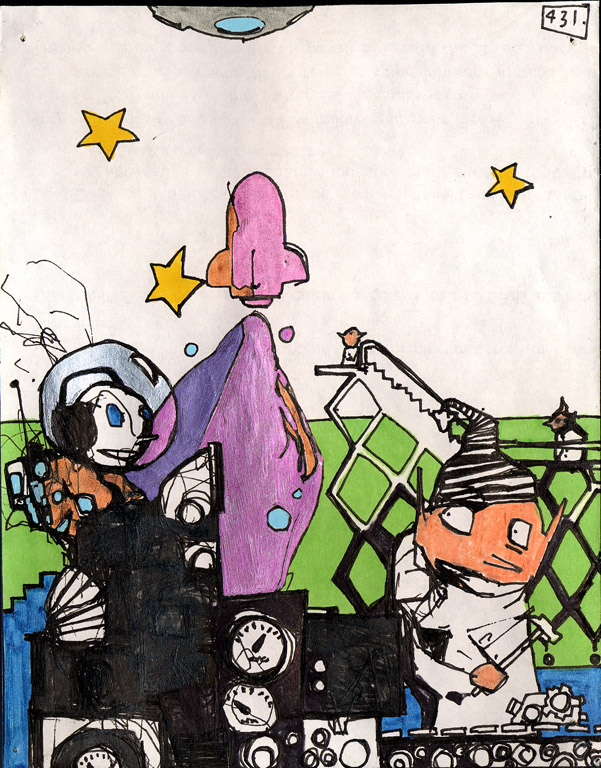
Win Zak Smith’s Book of Illustrations of Gravity’s Rainbow

431

Scott Esposito of The Quarterly Conversation is giving away a copy of Zak Smith‘s Pictures Showing What Happens On Each Page Of Thomas Pynchon’s Novel Gravity’s Rainbow.

If you want to win this book, all you need to do is be a member of our Facebook group and write on our wall telling us why you should get the book. Out of all the entrants, we’ll pick the winner the week of September 7.

Give TQC some of your time, everyone. There’s an interesting excerpt in the latest issue from Macedonia Fernández’s The Museum of Eterna’s Novel (forthcoming from Open Letter). The editors of TQC write:

Museum is a collection of prologues to a book that is not yet written, and, reminiscent of Viktor Shklovsky, part of Museum’s logic is to frustrate the readers’ expectations with continual digressions, as well as to challenge their attempts to predict what kind of a book will follow this series of prologues. That all is to say that Museum is one of those books that makes practically no sense at first and then slowly gets better and better as the reader acclimates to its sensibility.

Contests / 6 Comments
August 29th, 2009 / 9:06 am