
 “I think poetry should do what it was meant to do—exist. And then the big things that need to be done—like saving the world, for instance—needs to be up to us as humans. We need poetry, but we need it like we need a tool. Poetry is our poetry hammer. And likewise, poetry is human, even as it is dead. And so I think poetry can connect us to our humanity if we bring the human back into it. I am interested in this Armantrout statement, as I think I know what she means (or at least can interpret what she means to support my own views). I think she is saying that poetry should bring in the superhuman—the everyhuman—and be the summation of all the voices that it can summate. Because in every person there is some power that can be brought—whether it be coaxed or triggered depending on the specific personality—into every poem. And when we only seek out “voyeuristic identification” in our poems, we only expect the smallest parts of humanity (its meaningless specifics) from them. And in that way, humanity becomes even more and more entrenched in meaninglessness when we identify with poems in these empty ways. To make meaning we need to value meaning and vice versa. It is a feedback loop.” – Dorothea Lasky in Octopus
 “It is difficult to be a so-called successful writer and to occupy a marginal position at the same time, even in our day and age.” – J. M. Coetzee in Ohio Swallow
 “Devil Girl From Mars is the movie that got me writing science fiction, when I was 12 years old. I had already been writing for two years. I began with horse stories, because I was crazy over horses, even though I never got near one. At 11, I was writing romances, and I’m happy to say I didn’t know any more about romance than I did about horses. When I was 12, I had this big brown three-ring binder notebook that somebody had thrown away, and I was watching this godawful movie on television. (I wasn’t allowed to go to the movies, because movies were wicked and sinful, but somehow when they came to the television they were OK.) It was one of those where the beautiful Martian arrives on Earth and announces that all the men on Mars have died and they need more men. None of the Earthmen want to go! And I thought, ‘Geez, I can write a better story than that.’ I got busy writing what I thought of as science fiction.” – Octavia Butler in Locus
 “I wonder if my kind of work will appeal to the West. Writers like Michael Ondaatje are wonderful, I admire them, but they are based in Britain or Canada, in the land of the expatriates, and very consciously write with an eye and ear to another kind of readership.” – Jean Arasanayagam in The Hindu
“An idea had been with me since about 1972: the idea of a siege, as in a besieged city, but it was not clear who was besieging it. Then it evolved into a real siege, which I first thought of as the siege of Lisbon by the Castilians that occurred in 1384. I joined to this idea another siege, which occurred in the twelfth century. In the end, the siege was a combination of those two historical ones—I imagined a siege that lasted some time, with generations of besieged as well as generations of besiegers. A siege of the absurd. That is to say, the city was surrounded, there were people surrounding it, and none of this had a point. In the end all of this came together to form a book that was, or that I wanted to be, a meditation on the notion of the truth of history. Is history truth? Does what we call history retell the whole story? History, really, is a fiction—not because it is made up of invented facts, for the facts are real, but because in the organization of those facts there is much fiction. History is pieced together with certain selected facts that give a coherence, a line, to the story. In order to create that line, many things must be left out. There are always those facts that did not enter history, which if they had might give a different sense to history. History must not be presented as a definitive lesson. No one can say, This is so because I say it happened this way.” – Jose Saramago in the Paris Review


 “My whole life I’ve seen those elevator inspection certificates. I’d go to school, when I was a kid, and come back and the person had been there, the exact same guy for 10 years. The elevator seemed perfectly fine, so what’d he do? I was thinking about what would make a funny detective story. Well, why not put this person in a situation where he actually has to apply his esoteric skills to a straightforward mystery? But then I had to actually make up what kinds of skills he had, and it became all about elevators and not so much this chase-the-McGuffin sort of story.” –
 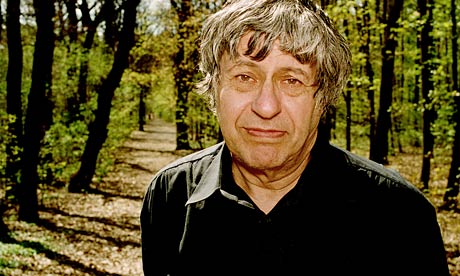 “I said something simple about the situation and there was tremendous applause. The strange thing was that afterwards many people came up and said that they had not known I was living in Prague all these years. Blacklisted writers had been made non-existing persons by the regime. People thought we lived in exile; in a way we did.” –
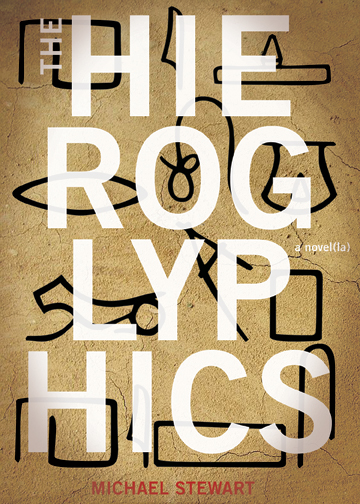
  “Oh yes, I explicitly used cutups for this novel. Lots and lots, especially during the big push, the heavy lifting that took place in ’06. And I’m talking cutups in the classic Burroughs/Gysin sense, two texts sliced down lengthwise and reattached with their opposites: AA and BB become AB and BA. Then you strike out the word fragments caught in between so it looks like a crooked seam. They’re great aesthetic objects, just on their own. You may notice a few words and scenarios in the OEC crop up again and again—I think some of the sections involving day laborers—and that’s the residue of the cutups. Eventually I rewrote things so much that the effect was mostly obliterated, but it did help generate content, which was my reason for doing them. I wanted to come up with ideas that I couldn’t simply conjure up through ordinary means—out of thin air, the old fashioned way.” –
  “Early on there was an assumption from editors that I could write about hip-hop and black music but not about white music. Once an editor suggested I’d be lost writing about Eric Clapton, which is strange because he’s steeped in black music. I just kept fighting and I found white subjects who others didn’t want to cover and did them well. In time my editors realized I could write about anything.” –
  “I don’t see a great difference between The God of Small Things and my works of nonfiction. As I keep saying, fiction is truth. I think fiction is the truest thing there ever was. My whole effort now is to remove that distinction. The writer is the midwife of understanding. It’s very important for me to tell politics like a story, to make it real, to draw a link between a man with his child and what fruit he had in the village he lived in before he was kicked out, and how that relates to Mr. Wolfensohn at the World Bank. That’s what I want to do. The God of Small Things is a book where you connect the very smallest things to the very biggest: whether it’s the dent that a baby spider makes on the surface of water or the quality of the moonlight on a river or how history and politics intrude into your life, your house, your bedroom.” –