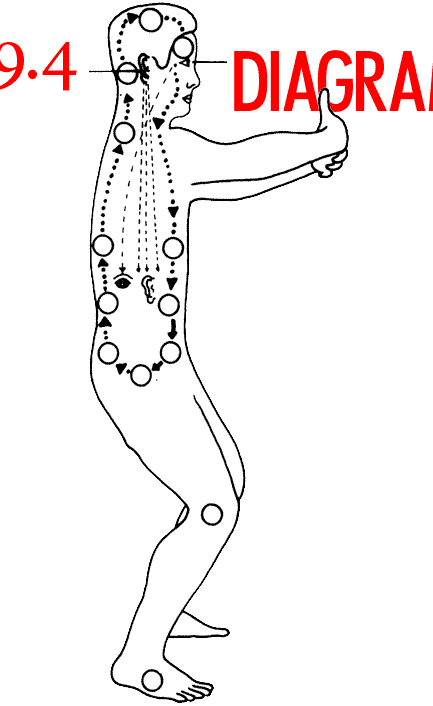
 It’s one of the things I look forward to every year: Diagram’s badass and always mindbending gathering of finalists and winner of their annual $5 innovative fiction issue. The 2009 batch has just gone live, and this year marks another slew of things to stare at open in my web browser while I write my owns, including words by many new-to-me names: August Tarrier, Erica W. Adams, Michael Argest, Kristina Born, Micah Nathan, Lito Elio Porto, Nathania Rosenfeld, Rhodes Stevens, and Jenny Zhang.
Big highlight for me is a new long-ish text from heartthrob Kristina Born (yes, Shane Jones and I are releasing her debut book later this year, take a look!). Check out this sample graph from this fine show of freak:
The Gilmore Commission
Holograms can kill a man. Unlike linear images, which are easily sidestepped, literally. A threadlike sports car races by the locked glass doors. Since early childhood, Jack Twig, it has been your job to know the difference. (You said: the difference is it’s a psychological difference.) Mother and I have been losing our sight for quite some time. Even now, Teddy proposes a game of hangman and she declines, murmuring, patting her hands on her cheeks. Look at her. She is not afraid to die but of almost every other thing. Sometimes I wonder, Who can think without horror on death and the life beyond? and I know it is only my wife and only because her eyeballs are falling out. Sometimes I wonder, When comes the mutually assured destruction promised us by our greatest nations? Jack Twig, take a look for me: I think I still have some extremely deteriorated nerve agent buried in the yard.
I XOX her to death. Read the rest of this brilliant piece: Jack Twig is the Evil Pulse of Canada.
The rest is all as grand as well and a big gleam. Diagram continues to be, to me, one of, if not THE, best web journal around.

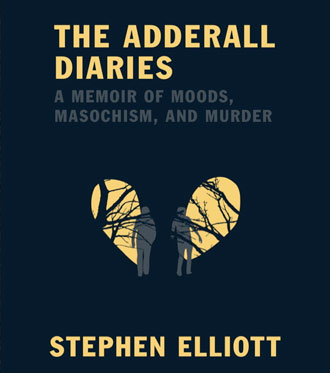 HTMLGIANT and the RUMPUS love each other; everyone knows that. We also work together often; everyone knows that too. It’s like this office romance everyone is really okay with and maybe even roots for because it’s between two basically likeable freelancers who are each a dozen freelancers, none of whom ever actually go to the office, and if they did it wouldn’t be the same one anyway. Which is another way of saying it is AWESOME. But given that fact, it seems ludicrous to pretend to anything like objectivity or critical distance about Rumpus-editor/steam-engine Stephen Elliott‘s new book, The Adderall Diaries. Therefore, I decided to drop all pretense and just write him a letter that says what I think of his book, which, by the way, is officially available today. (Click through to see his generous offer of free used galleys for would-be readers who make less than $25k/year.)


 What would you do if your favorite author (living) punched you right in your face, and then beat you into a coma for good measure? Sue? Have them put in prison, where they might not ever write again? Or pretend like it didn’t happen, in the hope that said violent wordsmith would continue to produce uninterrupted the works that you love so much?