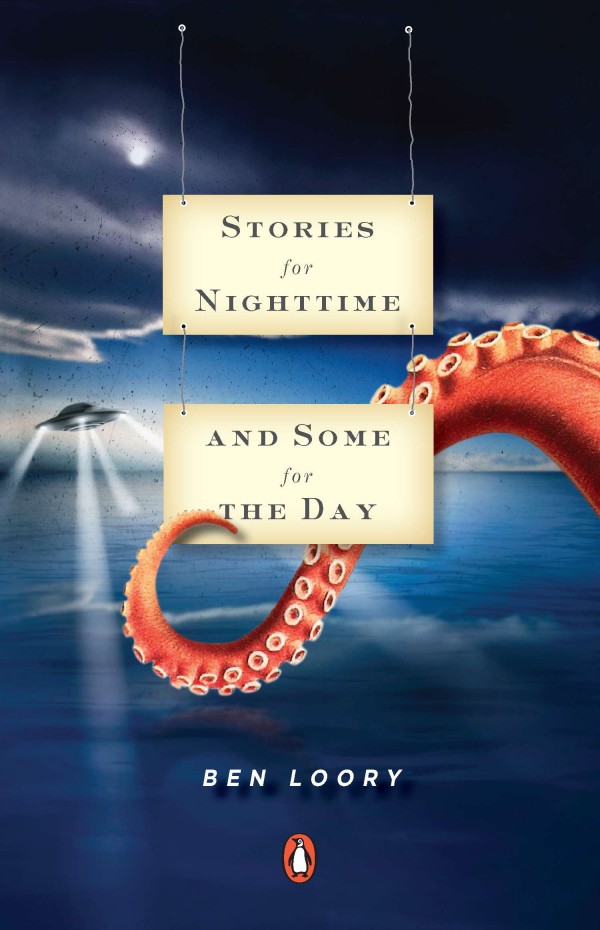
Leave a comment to enter and I’ll randomly pick a winner soon. If you want: write a three sentence story. Err spooky.

Leave a comment to enter and I’ll randomly pick a winner soon. If you want: write a three sentence story. Err spooky.
Dennis Cooper is interviewed in the new issue of the Paris Review (“I’m as interested by what sex can’t give you as by what it can.”)(as is Nicholson Baker)(as is a story by the rad Kerry Howley).
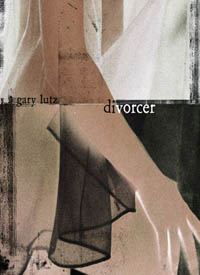 Divorcer
By Gary Lutz
Calamari Press, 2011
120 pages / $13 Buy from SPD
It’s no wonder that someone who might be said to live in the sentence would apply its logic—and its subversions—to his lens on the higher-order structures of life. In Divorcer, Gary Lutz tinkers with each level of human-linguistic interaction, cascading from social power structures, to family dynamics, personal relationships, full-scale utterances, isolated sentences, words, morphemes and phonemes, with an eye to at-once humorous and devastating exposure of the failures of empathy and failures of semantic coherence echoing throughout.
READ MORE >
My friend Tadd over at Big Other has a post up about why Plato wanted to kick all the poets out of his ideal republic. And I’m no philosopher. But my understanding has long been that Plato’s problem with poets/art (besides the whole mimesis “copy of a copy” thing) is that art is messy, uncontrollable.
Like, consider this:
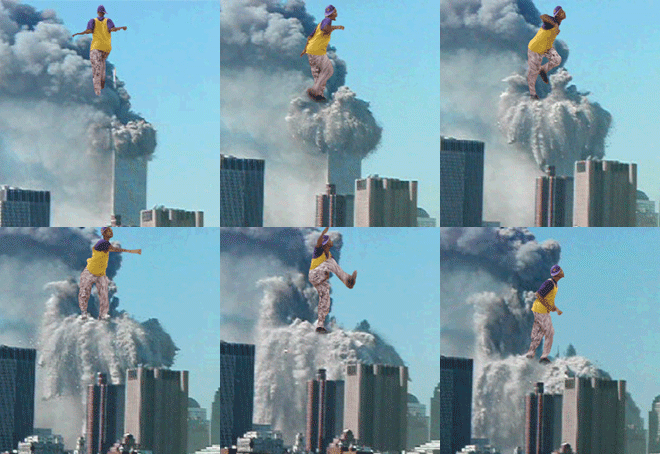
Someone—some artist somewhere—decided to make this. Is it good? Bad? Funny? Sick? Evil? Juvenile? Calculated? Hip? Clever? Stupid? Immoral? Amoral? Sure—it’s all those things, and more! It supports a variety of readings. In fact, the better an artwork is (I think this is a pretty OK one), the more irreducible it tends to be (at least, according to certain lines of aesthetic reasoning that I think Tadd would agree with).
Good art disrupts the social order. It wakes you up, shocks you, makes you feel alive—it makes you see the world again, differently. Bad art is boring, predictable, prescribed, a weak illustration of what you’ve already been thinking. (That’s my problem with so many depictions of September 11th, Roxanne—they reduce that day into something so digestible, so mundane, it’s as though it never happened.)
A follow-up to my last snippet post: What’s the “best” novel or story or poem or comic or song “about” September 11th? (Besides Isabel Allende’s The House of the Spirits).
So the next few days are basically going to consist of trying to avoid any and all 9/11 footage?
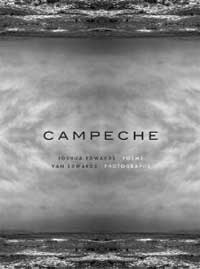 Campeche
Poems by Joshua Edwards
Photographs by Van Edwards
Noemi Press, 2011
112 pages / $15 Buy from SPD
In the national artistic dialogue, there are usually but two coasts: East and West. The Gulf Coast barely enters the radar screen and, when it does, it’s normally because of a great tragedy like Katrina or the BP Horizon disaster. A chance for artists to express their solidarity or disgust or anger or sadness or pity.
When I was on the job market, my friends and I who were looking for faculty positions obsessively watched the academic jobs wiki, a comprehensive site with everything you could possibly need to know about going on the job market in nearly ever field. The site is rigorously updated by job searchers with dates of contact from universities, when interviews are scheduled, when offers are made and accepted or declined and even salary information for some fields. If there are tidbits of “inside information” those are shared. On the creative writing jobs page each year, industrious people track down who was hired in each position and make note of how many books they have. The site is very useful, very intimidating, and very revealing about the state of the academic job market. If you want to really see some frustration, the Venting Page, is well worth the look.