Can We Not Talk About What We’re Working On Again, Please?

The pendulum has swung, as pendulums are so woefully apt to do. When I was small, and first starting reading about what writers said about writing, they all seemed to say that it was better not to discuss a work in progress. At the time, this seemed a kind of magic trick, a superstition of some kind. But I’d be damned if I didn’t take their word for gospel, even though I didn’t understand it any better than I understood the actual Gospels (I heard “Jesus is everywhere” and imagined a thousand teeny tiny invisible Bethlehem babies lounging around even as I bathed).

Apparently, I was damned. By the time I started writing in earnest, the whole mechanism had to do with not only discussing but sharing your work in progress. In college, this was great, because I wasn’t in any way ready to complete anything to the point that it could be published. So participating in workshops was like army boot camp. I learned lots.

In MFA school, I still learned, especially in literature seminars, but I certainly didn’t complete anything publishable. But this time, I was probably ready to, but was hampered by the workshop process. There were three reasons for this, I think. 1, in no workshop that I took did anyone say that a piece should just be abandoned.  All criticism was constructive, which was the point, but in reality some work needs to be torn down so that something better can be built in its place. I’m very impressionable, so after hearing my work discussed for 20 or so minutes, I became convinced it was worth my continued attention even if it really wasn’t. But I ran into trouble with the continued attention because 2, my classmates’ and professor’s opinions about any one piece, even a 3-pager, were so conflicted, and the problems they unearthed so convoluted, that I was totally lost when faced with revision. To make matters worse, 3, my professors and classmates (not to mention lots of other people in my life–they all agreed) also told me what book they thought I should write, and how I should go about it. Almost five years later, I have only just really decided that they were wrong, and that the book they had in mind is not the one I should write, at least not right now. Like I said, I’m very impressionable. I have confidence in my own work, sure, but there is something powerful about everyone you know saying they want to read the same as-yet-unwritten book by you. Powerful and dangerous.
READ MORE >

Craft Notes / 21 Comments
February 1st, 2011 / 12:42 pm

HTMLGIANT Features

Glam Lit: Eight questions from the Jaipur Literature Festival

The DSC Jaipur Literature Festival, held January 21-25 at the Diggi Palace in Jaipur, India, is the biggest literature festival in the Asia Pacific region and supposedly the biggest free literature festival in the world. I spent the festival investigating the new culture of literary glamour that has arrived in the subcontinent.


i. Do glamour and literature make good bedfellows, or should they stop hooking up?

Jaipur is a city on the edge of desert. It is a few-hour or half-day drive from New Delhi (depending on who you’re asking), which is India’s publishing and intellectual capital. I’ve never been to The Hamptons, but Jaipur feels like it could be an equivalent, except the white linen and Bentleys are exchanged for multicolored, mirror-work ethnic wear and camel carts. It is also the bastion of very old money, meaning the town is populated with the offspring of an 11th century clan of feudal rulers known as the Rajputs, who built hundreds of opulent palaces, most of which have been turned into tourist attractions or guest houses.

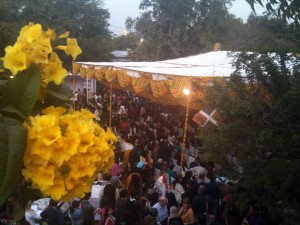
Scene from the balcony of the crowded Jaipur Literature Festival front lawns.

Hearing writers speak under grandly decorated tents at a Rajput mansion built in the 1860s gives all of the Jaipur Literature Festival’s events (even a panel named “The Return of Philosophy”) an inherently glamorous feel. Glamour is defined as “the quality of fascinating, alluring, or attracting, especially by a combination of charm and good looks,” and it is the preposition that makes me suspicious when it comes to the literary scene. But maybe, just two months in to a year of living in India, I’m just not used to it. Because in my experience, book events in America are held in convention center rooms under florescent lights, or in the children’s section of a bookstore set with uncomfortable folding chairs, or in the usual stronghold of American literary glamour: the grimy bar. READ MORE >

19 Comments
February 1st, 2011 / 10:56 am

Death to February

That I hate February so much is one of the reasons I love Shane Jones’s Light Boxes. To mark the first of this horrid month, here are two questions I posed to Shane.

CL: Does February feel like it lasts a few years to you, the way it does in Light Boxes?

Shane Jones: It feels long, like another month hiding inside February, but not a few years. It mostly feels like I’m wearing a blanket of sludge-ice and still trying to go to work and smile at everyone in my sludge-ice blanket.

CL: Given the chance, would you actually remove February from existence?

SJ: Probably not because as much as I’ve talked and written about February, I kind of like it. It’s comparable to Oscar the Grouch. You hate Oscar because he’s a scummer, but you also like him because he’s just exactly who he is, Oscar the fucking Grouch. Every once in a while I have a vision of spending all of February in a place like Los Angeles. That would be a different experience from New York.

Author Spotlight & Random / 4 Comments
February 1st, 2011 / 9:00 am

crazy kollywood (?) terminator thing on writing

Random / 9 Comments
February 1st, 2011 / 5:10 am

Get Me Up Close To the Lives of Others

Anytime an essay’s title riffs on a variation of “The Problem With [insert perceived source of a problem],” there is likely to be a problem. It is a provocative way to begin a conversation, surely, and provocation is often useful to instigate discussion but when there’s “a problem” with something, vague generalizations are likely to follow. In the Sunday Book Review this week, Neil Genzlinger wrote an essay, “The Problem With Memoirs,” where he takes issue with this “age of oversharing.” He writes, “There was a time when you had to earn the right to draft a memoir, by accomplishing something noteworthy or having an extremely unusual experience or being such a brilliant writer that you could turn relatively ordinary occur­rences into a snapshot of a broader historical moment,” as if there should be a vetting process for who is or is not eligible to write a memoir.

For a long time, I was fairly skeptical of memoirs and did not necessarily see the utility in reading an accounting of someone else’s memories, particularly when those memories seemed to come from an ordinary life or a life not yet fully lived, as is the case for young memoirists. I understand Genzlinger’s frustration but his lament felt a bit narrow and shortsighted. When a very young person writes a memoir, I often wonder what they could have possibly learned, but that attitude is not necessarily fair, particularly because people often mistake memoirs for autobiographies and they are not the same thing. As I understand them, autobiographies recount the entirety of a life lived. Memoir, which takes its meaning from the Latin memoria, to reminisce, is about a moment or series of moments in time that might speak to something greater. Memoirs are more intimate in scope. A memoir tells a close story so it is not surprising then that memoirs are written by people of all ages, whether they have accomplished something noteworthy (a relative concept) or had an unusual experience (also relative), or not.

READ MORE >

Craft Notes / 42 Comments
January 31st, 2011 / 10:22 pm

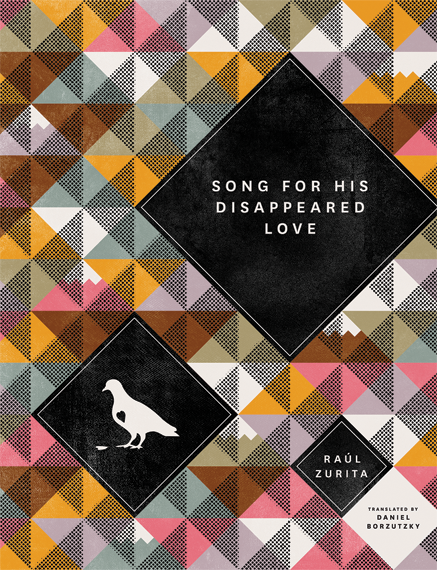
15 random sentences from Raúl Zurita’s Song for his Disappeared Love

15. Now Zurita – he said – now that you got in here into our nightmares, through pure verse and guts: can you tell me where my son is?

14. It’s not tough not the solitude, nothing has happened and my sleep rises and falls as usual.

13. Now everyone is fallen except for us the fallen.

12. From there the wind blew across the inexistent pampas and as it settled the massacred faces became visible, Amen.

11. For his disappeared love he went form hole to hole, grave to grave, searching for the eyes that don’t find.

10. Everything dies sucking itself.

READ MORE >

Excerpts / 12 Comments
January 31st, 2011 / 6:44 pm

Craft and the City: Writer as Flâneur

A while ago, Lily pondered the flâneur in this post, and in the comments section Ken referenced Nassim Taleb, and it seems that interest in the flâneur, like the figure of the flâneur itself, meanders around the consciousness of many of us, possibly. There is something perennially appealing and perhaps romantic about the flâneur–the apartness, the deliberate purposelessness–and I remember that it took, for me, reading Benjamin’s The Arcades Project to understand Baudelaire (the man and the work) in a more complete and meaningful way. Some years ago I wrote an essay (whose title is the title of this post) that sought to explore the idea of text-as-city and reader as flâneur, and then, by extension, the work of writing as its own kind of flânerie. (Really wanted to publish it as Flânerie O’Connor, but then I would’ve had to punch myself in the face really hard. And also get it published.) Anyway, here are some excerpts/cut-ups from that essay:

READ MORE >

Craft Notes / 28 Comments
January 31st, 2011 / 3:58 pm

Belladonna * at AWP!

I’m overwhelmed by how jam-packed with goodness AWP is this year! Belladonna * are going to have some pretty amazing events, which you all should attend! Here are the details:

Belladonna * is part of Table X at the conference bookfair:
ROW I1 – I11 and I28 – I36

AWP BELLADONNA EVENTS:

Friday, February 4, 2011; 4 – 6 pm
SAYING IT:
A Walking Poem Against Censorship
JOIN US for a march & speak-out against the silencing of voices that want & need to be heard and a celebration of voices, of our voices, of your voices. Bring signs, texts, images, costumes!
Location: GATHER outside Marriott Wardman Park Hotel (conference hotel) on corner of Connecticut Ave & Woodley Road NW, Washington DC.
MARCH on Connecticut Ave to Henry Wadsworth Longfellow Monument at M Street NW for SPEAK-OUT, reading, breaking of silences.

Friday, February 4, 2011; 6:30 pm
PROSE EVENT:
Reading and Conversation with Bhanu Kapil, Eileen Myles, & Vanessa Place
The first of four Belladonna* Collaborative PROSE EVENTS: a reading and conversation with prose writers who write at the intersection of fiction and the essay, producing texts that are urgent and often unclassifiable.
Limited edition chaplets available!
Location:
Hamiltonian Gallery;1353 U Street, Suite 101; Washington DC
Directions: Half block away from U Street / Cardozo Metro stop at 13th St. Take the Red Line from Woodley Park, transfer over to green line at Chinatown/Gallery Place, and get off at U Street. Or a 15 minute cab from AWP.

Random / 2 Comments
January 31st, 2011 / 3:04 pm

Gordon Lish on Eugene Marten’s Firework

Tyrant Books

Behind the Scenes / 8 Comments
January 31st, 2011 / 2:12 pm

Raúl Zurita @ AWP

It’s hard to keep track of anything if you’re going to AWP, but here’s one I’m making sure not to miss: Raúl Zurita reading and in conversation Friday at Noon in support of his new book from Action Books, Songs for His Disappeared Love. From Johannes: “This is like getting Neruda to the fucking AWP. This guy spent 6 weeks in a shed being tortured following the Pinochet coup.” More info and locations here.

While you’re at it, come by and say hello as a bunch of us from HTMLGiant will be at a monster table chillin.

What other events are worth seeing?

Events / 23 Comments
January 31st, 2011 / 12:34 pm