
If you’re wondering what Kenneth Goldsmith ended up doing when he read at the White House, here’s the video (he’s at 8:55).
Six Items of Interest
Jennifer Egan commented on the reaction to her comments during a WSJ interview where she implied that certain books were “derivative, banal stuff”. I thought her response was fantastic:
It was, she said, exactly the kind of thoughtlessly casual remark that, with her journalistic background, she should have known better than to say in conversation with a reporter—but which may now linger on the Internet and continue to be seen as her position on the subject. “I have nothing to defend in what I said,” she said. “I really wish I hadn’t said that, and was incredibly and immediately sorry that anyone was hurt by it. I don’t blame anyone for being mad about it.” Though she does believe there’s an interesting conversation to be had about genre and gender and literary culture, she doesn’t see her comments in that interview as any kind of effective contribution to that discussion. “I’m all for criticizing; I’m not saying that no one should ever criticize anyone else,” she continued. “But if you’re going to criticize, you should do it intentionally and thoughtfully and carefully and know whom you’re criticizing and for what. And I didn’t meet any of those criteria.” (Thanks for the link, Cathy Day.)

Interview of a Librarian
Last week I had a slight buzz and randomly phoned 10 public libraries in 10 random states and asked to talk to a librarian. I asked the librarian if they would give me an email interview. Two hung up directly after the question. One woman coughed, and I heard her ask someone a question, and then she hung up. One said, “Quit calling me, Steven.” My name is not Steven. Six graciously said yes, and gave me their email addresses. Then, of the six, only one responded in full to the email interview questions. I have no idea why. These answers are from B. David. He manages a library in Mississippi.
The library seems to be one of the last places in America where no one tries to sell you anything. You can just hang out. Do you have an opinion on the library as a public space?
Absolutely. One of the great things about the library is that it is a place you can go and your privacy is yours. You can read what you want, learn about what you want, talk about what you want and know that your freedoms are not being tampered with. We hold these kind of rights pretty high. One thing that really scared the bejesus out of us library’s was the Patriot Act. The Patriot Act was basically trying to compel libraries to give up information about their patrons while at the same time preventing us from telling the patrons that this was going on. The libraries countered by deleting all patrons loan records so that there was nothing there for the government to look at. What does this have to do with public space? A public space is just that: a place where the public can gather and express their mind and their views. Most libraries come equipped with meeting rooms for this exact reason. Unless you are trying to sell something, or hold a closed meeting, we will allow most anyone to come in and use our room to peddle their silly views.
Does your library have a glory hole?
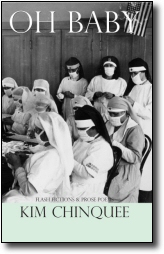
“Cape” by Kim Chinquee
 Last night, I dreamed that I was in a clearing in a forest, and my wife was below me, yelling that I should fly higher to avoid danger. It was nighttime, there were some stars. I felt scared as I rose, but then I felt very happy, because my wife joined me over the forest, and we escaped along the mountain ridges.
It is a dream I have not had in so long. It is the kind of dream that I’ve missed having, one that I had so many times before when I was a young boy. Most of you have probably had this dream as well: the flying dream. Yes, when I was little, I often dreamed that I could fly. In my dream, I floated out of my room, down the stairs to the landing at the front door of our house, and outside.
Elliot Feels His Feelings: an interview with Michael Kimball
Michael Kimball is now the author of three of my favorite books. Before I read his latest, US, I had read and loved THE WAY THE FAMILY GOT AWAY. Before I read US, I read and really, really loved DEAR EVERYBODY. And before I read US, I had purchased but had not yet gotten to HOW MUCH OF US THERE WAS.
Now there’s US: disarmingly simple, gorgeously structured, and as achingly sad a book as I have ever read. I had to stop a couple of times. I really did. The book’s elderly couple—so painfully aware of the fact that one of them is living the last parts of her life—are drawn so concisely, and the situation is so precisely rendered, it was hard not to spend all my time living in it even when I wasn’t reading the book.
Michael and I talked about DEAR EVERYBODY when it came out. When US appeared, we thought it might be nice to talk again.
***
Started your book last night. You are going to break my heart again, aren’t you?
Yes, but in a different way.
Why do our hearts have to break in so many different ways?
It’s one of the surprising things about life, right? When we learn that that can happen.
Or,
I think that it’s partly a structural issue, the heart’s strange shape. READ MORE >
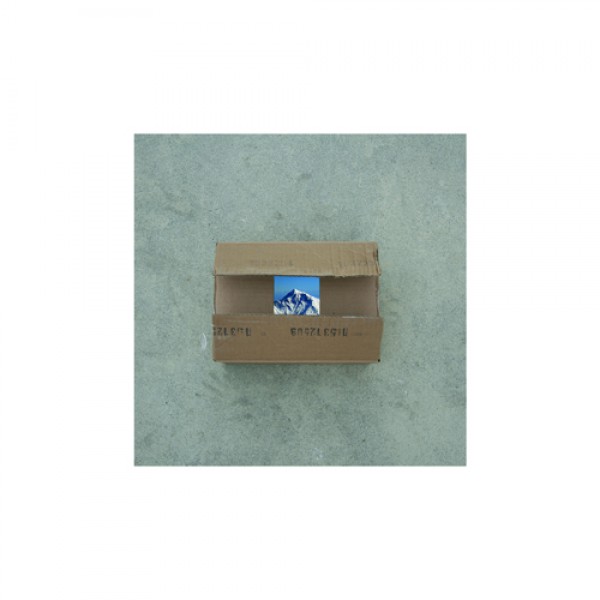
dull, humourless, uptight, inhibited, mindless, depressing, boring and swaggering
1. Amazing Herzog interview in GQ. You should read this:
I’ve always been suspicious. I don’t even look into my face. I shaved this morning, and I look at my cheeks so that I don’t cut myself, but I don’t even want to know the color of my eyes. I think psychology and self-reflection is one of the major catastrophes of the twentieth century. A major, major mistake. And it’s only one of the mistakes of the twentieth century, which makes me think that the twentieth century in its entirety was a mistake.
If an actor knows how to milk a cow, I always know it will not be difficult to be in business with him.
I think there should be holy war against yoga classes.
11. Interesting thoughts on biography in this review of Avraham Shlonsky.
7. American Short Fiction short-short contest ends in 4 days. Send.
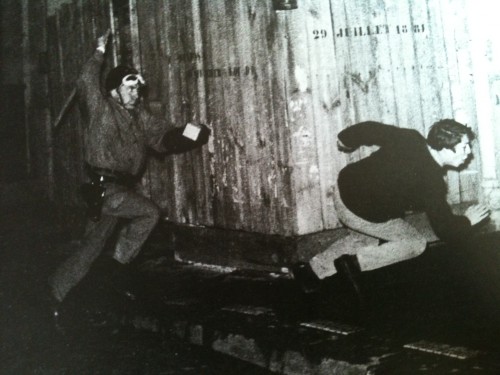
12. Photo montage of writers posing with their typewriters. What is a typewriter?
13. Cathy Day with an interesting post about linked story collections and how to teach such a thing.
What is a novel-in-stories? A linked collection? A story cycle? I find it hard to make distinctions between these terms. Instead, I think of it this way: On one end of the prose spectrum is the traditional linear novel. On the other end is the collection of disparate stories. Linked stories exist on the narrative spectrum between “novel” and “story collection,” and they are unique and valid formal artifacts.
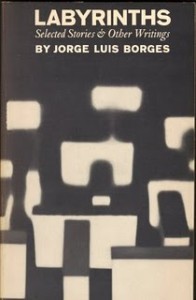
“Tlön, Uqbar, Orbis Tertius” Jorge Luis Borges
 In my last post, I casually mentioned that when I first read The Age of Wire and String, I wasn’t very familiar with the precursors that had ‘made it possible’ as a book. Of course, I’m not sure exactly what earlier books helped Marcus write it, nor do I really know what it means to really ‘make a book possible.’ Instead, I think I meant that I hadn’t yet read writing that gave me a way of better appreciating The Age of Wire and String. My first reading of that book was really exciting, but difficult; I felt lost quite a lot through that book the first time. I felt that the book was isolated–and isolated me–when I first read it, but now that I’ve read some other stories and books, I think I feel comfortable putting it in a group of others that I feel do similar things to me as I read.
“Tlön, Uqbar, Orbis Tertius” is one of those stories that, for me, connects to The Age of Wire and String in a meaningful way. As I’ve mentioned before in some of these other posts, I had previously thought of stories as ABC tales of one character or another’s plights, such as “The Secret Life of Walter Mitty,” “To Build a Fire,” “The Most Dangerous Game,” etc., this next stage in my reading began to tune me into how words might be used for other purposes: world-building, for example.
Two years before I had discovered, in a volume of a certain pirated encyclopedia, a superficial description of a nonexistent country; now chance afforded me something more precious and arduous. Now I held in my hands a vast methodical fragment of an unknown planet’s entire history, with its architecture and its playing cards, with the dread of its mythologies and the murmur of its languages, with its emperors and its seas, with its minerals and its birds and its fish, with its algebra and its fire, with its theological and metaphysical controversy. And all of it articulated, coherent, with no visible doctrinal intent or tone of parody.
Jizz street
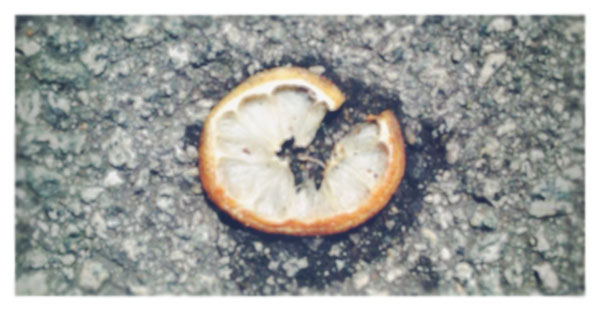
When I see, and it is often, a used condom on the street, I bend down hoping there’s a money shot inside. I don’t think I’m a perv, or gross; it’s just how brains work. You go to college, you want a job. You do crunches, you want sick abs. You see a rubber, you wanna see spunk. A money shot, by definition of it being seen, is a precluded you. When I see any circular thing on the street, like from the other side, I’m drawn towards it, crossing the road without looking both or either way, hoping it’s a condom. I understand not everyone does this, I am sorry. A similar thing happens when I see panties on the street, though that is sadder, because a girl out there is not doing so well. A properly employed condom, this is turning into an essay, represents two responsible people who wanted to feel each other somewhat, and the narrative, this is turning into fiction, is that the ejaculator for some reason feels compelled to walk into the street and snap off the condom, the orange light from the lamp above turning the money into sunny delight. And he lets it flop to the pavement for guys like me to see the next day and think this could be a post. The brightest thing in our universe is conceptual, a circle filled with sun color that goes in the upper right corner of a child’s drawing, its crooked rays as javelins to the face. I want my days to be a gigantic moving child’s drawing, each shape inaccurately drawn by tiny hands and without judgement. I put a circle in the middle of today, now I fill it in with sunset pink and bisect it by a horizontal line that stands for the edge of this world. I want a cocktail mistake to be the sun, the sun to be a condom, and the condom to be jizzed. I want us all to jizz without ever jizzing, which may be Buddhist or something, or just happy.
Michael Kimball’s US [Tyrant Books, 2011]
At last in its U.S. edition, Tyrant Books makes their third release in the form of Michael Kimball’s gorgeous US (formerly released in a different version overseas as How Much of Us There Was).
This is one of like three books ever that made me cry. I read it in a bathtub, all in one go. It is essentially the story of a old man losing his wife to sickness, but rendered in a way that only Michael Kimball knows. You should find out.
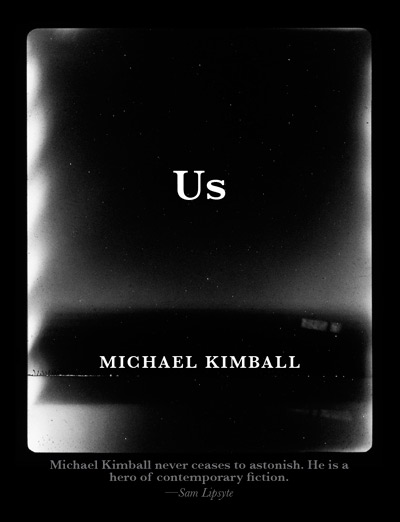
Shipping now from Tyrant Books.