
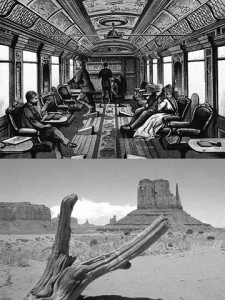
 I was reading Joanna Howard’s lovely book of stories, On the Winding Stair, and thinking about the setting. And thinking about setting in general. And—for pretty obvious reasons, I suppose—was thinking about Brian Evenson’s book Dark Property. And thinking about his settings. And I was wondering if books could have soul-mates, if they could be made for each other.
My favorite work by Evenson is the stuff placed in a minimally rendered, hot, choked with dust, empty of all but the most barren of trees, flat desertscapes. His Beckett-ian Utah. His Old Surrealist West. READ MORE >
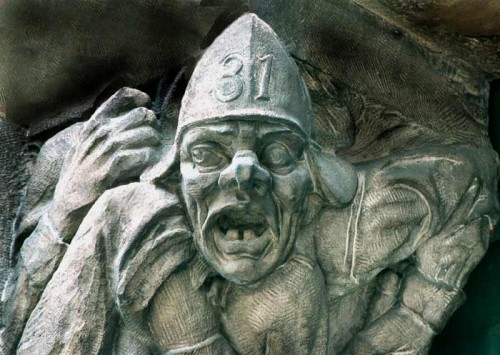
 A few months back, I talked to a painter and animator friend about craft, technique, and composition, with an ear toward what we could learn from each other’s genre. She had recently made a list of all the physical motifs that appear in her work, or in some cases her head and her life, and she read it to me. A motif, as I understand it, is different than a symbol, a metaphor, or a theme in that it simply refers to anything that recurs in a work. It doesn’t have to stand in for something else. It simply gains power and resonance through repetition, brings different parts of a composition into conversation, or provides a kind of unity to the whole.
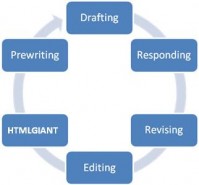 Last night in class we did some process writing. I don’t like process writing, especially when it’s rule-based. I always wonder more if I’m paying attention to the rules. Last night in class I kind of ignored the rules and the process writing. I wrote this poem. Is it any good? Is poetry better with revision? Actually, don’t answer that. Just tell me if you think this poem is good.
  The very generous