Eagerly Anticipating

This Is Not a Tragedy:
The Works of David Markson
by
Françoise Palleau-Papin

The very first book-length study to focus on this seminal American author, This Is Not a Tragedy reviews David Markson’s entire body of work, ranging from his early tongue-in-cheek Western and crime novels to contemporary classics such as Wittgenstein’s Mistress and Reader’s Block. Having begun in parody, Markson’s writing soon began to fragment, its pieces adding up to a peculiar sort of self-portrait—doubtful and unsteady—and in the process achieving nothing less than a redefinition of the novel form. Written on the verge of silence, David Markson’s fiction represents an intimate, unsettling, and unique voice in the cacophony of modern letters, and This Is Not a Tragedy charts Markson’s attempts to find, in art and language, the solace denied us by life.
pre-order from Dalkey Archive

Random / 8 Comments
September 21st, 2010 / 10:37 am

HTMLGIANT Features

Malone and Savoca Week (2): A Conversation with Matthew Savoca

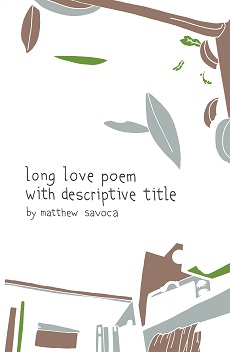
I enjoyed Matthew Savoca’s long poem, Long Love Poem With Descriptive Title, and for Malone and Savoca Week, I interviewed him about it and some novels he’s written. Our talk is almost 3400 words long (edited from ~6,000) and requires no preamble, so let’s get to it. Here is the book cover:

Adam: OK, I want to ask you about Long Love Poem With Descriptive Title. Ready?

Matthew: Yes, let’s do it. I’m drinking a beer.

Adam: Okay, nice. First of all, can I call you the speaker?

Matthew: Yes.

Adam: Oh good. I feel like people make that very complicated.

Matthew: I am definitely the speaker, and I’m not trying to hide it.

Adam: Are you crazy?

Matthew: In what way?

Adam: Well, we should talk first about how much you’ve written.

Matthew: Okay.

Adam: How much have you written? READ MORE >

8 Comments
September 21st, 2010 / 9:49 am

Meeting people is cheesy

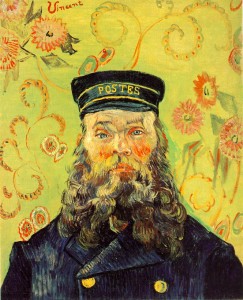
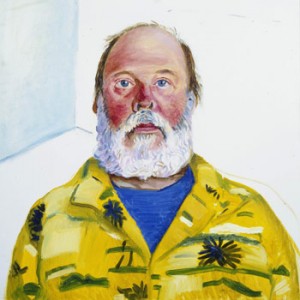
David Hockney’s 1988 portrait of his critic/curator friend Henry Geldzahler is a likely summoning of Van Gogh’s 1889 portrait of his postman Joseph Roulin. Hockney is a known admirer of Van Gogh, so this is not shocking news; it just struck me how similar the subjects look — God’s template for people limited, each person another’s reincarnation. The men, weighed down by middle-aged bulk, look out over rosy cheeks with sky blue eyes. Their collars made from sharp triangles, the guillotine of fabric life.

A cynic will say it’s all about who you know, which might explain Hockney and Van Gogh’s respective ascent and descent in the art world. (Roulin unfortunately could only help with the mail, by which Gauguin’s heated correspondence was no doubt conveyed.) Van Gogh only had a set of brushmarks, and Roulin’s beard is described in the same fashion as the manic trees and clouds of Van Gogh’s dreamlife. Hockney’s less modernist brush work is cleaner, flatter.

“Yah, it’s all about who you know,” I hear myself say at parties to the spinach dip, “fucking system.” Cynicism is rationalism for losers, so hello. If there is a system, Gauguin left it when he moved to Tahiti forever, braising in the humid yellowed air with beautiful brown women. “I shut my eyes in order to see,” he once said, under a spell of sweaty Tahitian sun hinted by Henry’s tropical-themed shirt, which means vacation is either near or just ended.

The eye’s translucence is paradoxically noted with an opaque dab of white. Nothing so fake as painting can be so real. The great thing about art is every stranger, however long ago, has a chance to see and be seen. It’s all about who you don’t know.

Random / 3 Comments
September 21st, 2010 / 2:18 am

I always thought a prince-nez was a nose ring.

N+7:

Is it really so hard for yachtsmen to think outside the boyfriend?

READ MORE >

Craft Notes / 13 Comments
September 21st, 2010 / 12:54 am

Marc Maron sat next to Ken Mehlman on a plane. Marc Maron is an American hero.

Malone & Savoca Week (1): Everything is Quiet

This week we’re going to be highlighting a new pair of poetry releases from Scrambler Books, now available for order: Kendra Grant Malone’s Everything is Quiet and Matthew Savoca’s long love poem with descriptive title. They are $12 each, or $20 together, and both available in limited hardback.

To kick off with K, you can read some of the poems from her book at Bear Creek Feed and via her blog, Tricoteuse.

READ MORE >

Author Spotlight / 6 Comments
September 20th, 2010 / 2:34 pm

The Sisterhood of Travel Books

I’m in the midst of writing research proposals for grants in a discipline I know next to nothing about, and so, naturally, I’m reading a lot. Naturally, I’m also procrastinating by writing this blog. (Brief back story: I’ve just started working on my PhD in Geography, which is only funny if you know me, because if you know me, you know I have no sense of direction. Up until five months ago, I thought Lake Champlain was a great lake. But of course, this has no real bearing on my Geography degree. I’m studying human geography. But either way, my training as a fiction writer has given me little insight, little preparation for grant writing.) The basic premise to my project is “imagined” geographies, that is, how second generation immigrants imagine a homeland they’ve never been to and how this imagining impacts development.

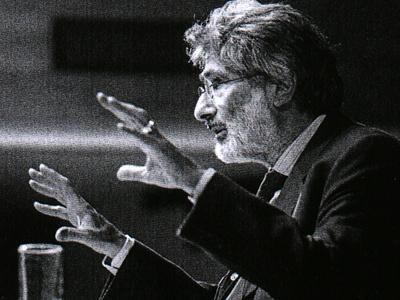
Naturally, considering the premise of my project, I’m reading folks like Benedict Anderson, Edward Said, Foucault (Jesus, people love Foucault), and Agamben.

I’m reading Said for probably the third or fourth time (each reading offers something new, of course), and this time, I found this gem:

Many travelers find themselves saying of an experience in a new country that it wasn’t what they expected, meaning that it wasn’t what a book said it would be. And of course many writers of travel books or guidebooks compose them in order to say that a country is like this, or better, that it is colorful, expensive, interesting, and so forth. The idea in either case is that people, places, and experiences can always be described by a book, so much so that the book (or text) acquires a greater authority, and use, even than the actuality it describes. (93)

READ MORE >

Power Quote / 16 Comments
September 20th, 2010 / 12:03 pm

14 crucifix clutching cocaines

5. The Bateau Press Boom Chapbook Contest is open for submissions until December 31, 2010. Fuck yes!

4. This woman is a fucking conceptual food artist and vegetable butcher.

11. Thing now is to drop F bombs at readings. Three readings, 9 readers, carpet F bombing. Even lamer is to prep the F bomb. “I know you’re college kids, but I’m about to say fuck so deal with it…” or “Hope you people can handle some fuck words. No babies in here, right?” Fuck on. Fuck off. People don’t seem as drunk as usual. Maybe the F bombs are Freudian life relief at reading sober. Fuck.

77. An interview with Luna Miguel by SJ Fowler. Thank you, 3:AM. You are a hitchhiker in my heart.

14. Calvino interview.

But if I think back to my youth, the truth of the matter is that I didn’t pay any attention to criticisms, reproaches, and suggestions either. So I have no authority to speak today.

Random / 11 Comments
September 20th, 2010 / 9:34 am

Mike Young’s All Good for Free

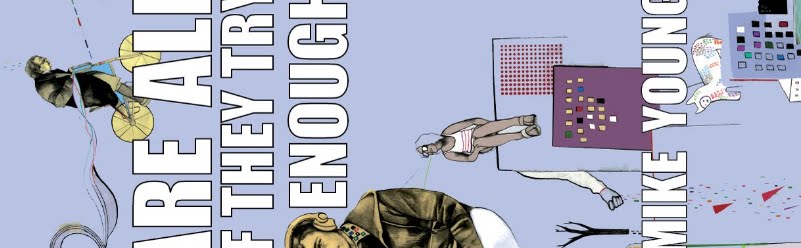
Dennis Cooper said (our own) Mike Young’s collection of poetry, We Are All Good if They Try Hard Enough, is an absolute stunner, and that even though they’re just great poems, he “can’t think of a paragraph anywhere that can match them for style or cover their emotional distance.”

One element of the emotionality of Mike’s poems, which is evident from the funny but sincere video I’ve posted below the fold, is his interest in the way humans communicate and miscommunicate. The book’s epigraph is from Martin Buber, after all, and says, “When they sang of what they had thus named, they still meant You.”

I’ll be giving away three copies of Mike’s book. To win one, leave a comment below describing a miscommunication that was funny or ended up with a positive outcome, or just anything about a miscommunication. Mike and I will select three winners based on a complicated set of guidelines this Friday, so please make sure to leave a way I can get in touch with you.

READ MORE >

Contests / 19 Comments
September 20th, 2010 / 5:55 am

“Please, sir, I want Pessoa.”

I was sick with flu and fever for a few days. In my state I hallucinated a tiny antique piano being fixed by a giant; his fingers were enormous pillows and he used them very delicately. The piano could be mine for fifty bucks. There was also a cartoon faucet that wouldn’t turn off. I wasn’t able to read or watch TV. When the grueling thing left my body, I sipped some mothermade gruel and convalesced not for the first time in The Book of Disquiet: READ MORE >

Excerpts / 18 Comments
September 20th, 2010 / 1:30 am