While we fucked, I’d hold his baby. To keep the baby off the dirt. Clean babies are happy. I’d hold the baby out in front, and he’d fuck me from behind. The baby never cried. The baby wandered. I mean its eyes. The baby appeared unfazed. I mean by the fucking.
We fucked in the park, in the tall grass. When my arms that held the baby bounced, the baby laughed and laughed. And while I got fucked, while I was holding the baby, I’d wonder about the baby’s other daddy. This was what I assumed, that the baby had another daddy, because unlike his first daddy, the daddy who fucked me, this baby was brown. I figured the baby was adopted. Something about the daddy, I could just tell, he seemed like the kind of man with a man at home. Even though he never talked about himself, he didn’t seem like he kept any secrets.
I wanted to ask him, Bring the other daddy to the park! One daddy to kneel on the ground and take me in his mouth. The other daddy to fuck me. And me to hold the baby. To keep the baby clean. But I never had the guts to ask.
That was a few years ago. That daddy disappeared. Now that park has fewer babies. Now those babies toddle. Oh man, those babies are getting big.
Tim Jones-Yelvington lives and writes in Chicago. His work has appeared or is forthcoming in Another Chicago Magazine, Sleepingfish, Annalemma and others. His short fiction chapbook, “Evan’s House and the Other Boys who Live There,” is forthcoming in Spring 2011 in “They Could no Longer Contain Themselves,” a multi-author volume from Rose Metal Press. He is editing the October issue of Pank Magazine to feature Queer poetry and prose. He contributes to the group blog Big Other.
I like capitalizing the first word in every line in poetry. Some people think it’s old fashioned. It doesn’t mean anything really, I just like it.
All the poems are good. Here’s a bit from another one, where the title is the same as the first line of the poem (a convention I also like, though not as much):
Jesus shows inside his flesh.
He is airy marbles and we are
All looking at his un-pain
Flavorwire has spoken out against the five major offenses frequently made in author photos. For my next book I want to take an author photo that breaks all five where I’m smoking while putting my hands to my face while twisting my torso to rest my arm on the couch in my office and supporting my head upon my fist.
Contrary to what the critics tell us, popular fiction is not a swamp of barely literate escapism; popular fiction is composed of ancient myths newly reborn, telling and retelling a simple truth: ordinary people can do extraordinary things. Jack can plant a beanstalk that will provide endless food; a Tom Clancy character can successfully unravel a conspiracy that threatens the lives of millions. A knight can slay a dragon; a Stephen King character can defeat the massed forces of evil. Cinderella can attract the prince through her own innate decency rather than through family connections; a Nora Roberts heroine can, through her own strength, rise above a savagely unhappy past and bring happiness to herself and others.
I have enjoyed three really gorgeous books recently–Baby by Paula Bomer, The Physics of Imaginary Objects by Tina May Hall and Bad Marie by Marcy Dermansky. These are books you’re very much going to want to read because they are, simply, exceptional.
I love domestic stories. There is an intimacy to them that I find very pleasing because we’re allowed to see moments that are terribly personal. Everyday life is always the most interesting to the person living it but there are writers who can take everyday life and make it interesting for anyone. I have discussed, at length, my love for The Little House on the Prairie books and one of the things I loved most about each of those books was how everyday life was made interesting in ways that were always hypnotic. I loved the precise details about home and hearth, the food the Ingalls ate, the bitterness of the cold winters. In the hands of the right writer, a domestic story is more than just a domestic story. Another one of my favorite books is The Age of Innocence by Edith Wharton, another story where the details of domestic life, elegant and refined, are conveyed meticulously. The ordinary becomes extraordinary as we read about the social and domestic mores of a different people in a different time.
I have qualms about contributing to the current hype around Franzen’s Freedom, the endless pop-noise which ironically is confronted in the book’s lakeside allegory; but I feel compelled to, having been so moved by the book, and apologize for attaching my name to this review.
Soon after a quick intro written in omniscient third person, the reader encounters a longish part (broken into 3 chapters, labeled as such) written by one of its characters Patty — and yet, this doesn’t feel like “meta-fiction,” or even the show off flourishes of an adroit author; it seems, while not essential, strangely relevant. The reader’s context, for those who know Franzen, is that he is weary of “difficult” fiction for its preoccupation with language and fragmented narrative/consciousness (he wrote a Harper’s article critical of William Gaddis’ infuriating/challenging techniques, yet strangely aligns himself with D.F. Wallace, also an instigator). So one asks, why the difficult-ish structure?
Why do you feel that commercial fiction, or more specifically popular fiction written by women, tends to be critically overlooked?
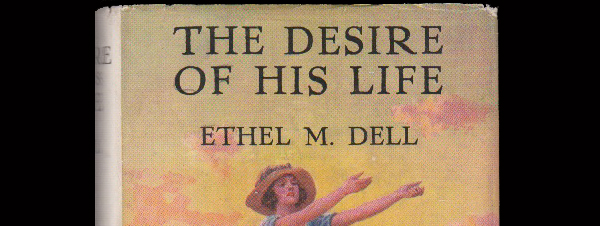
Ethel M. Dell: One has only to really look at the facts. One doesn’t feel one’s efforts to be overlooked in all venues. I do think the Times tends to overlook popular fiction, whether one is man, woman, white, black, or Hottentot. Many of one’s dearest readers tell one how very much they should like to see one reviewed more respectfully in the popular press, but what can one do? The prejudice against lady novelists is not however, I’m very glad to say, universal among the reviewers. The Monkton Combe Post for example, back when they had their book review section, used to say the kindest things about one’s little books…

 The title poem in Natalie Lyalin’s UDP chapbook, Try a Little Time Travel, is funny. It begins:
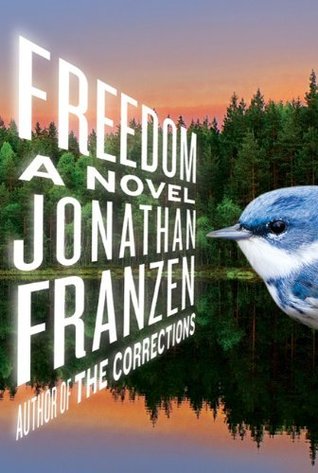 I have qualms about contributing to the current hype around Franzen’s Freedom, the endless pop-noise which ironically is confronted in the book’s lakeside allegory; but I feel compelled to, having been so moved by the book, and apologize for attaching my name to this review.