Reviews

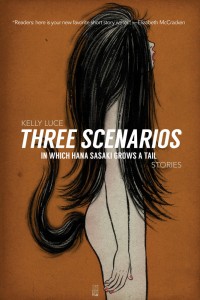
Three Scenarios in Which Hana Sasaki Grows a Tail: Stories

hana-sasaki-cover-finalThree Scenarios in Which Hana Sasaki Grows a Tail: Stories
by Kelly Luce
A Strange Object, 2013
152 pages / $14.95 buy from A Strange Object


1. Three Scenarios in Which Hana Sasaki Grows a Tail is the debut story collection by Kelly Luce.

2. It fits on a bookshelf of modern Japanese writing somewhere between Yoko Ogawa’s Revenge and Banana Yoshimoto, maybe even one shelf up from Haruki Murakami.

3. The only thing is that Kelly Luce grew up in Brookfield, Illinois.

4. How strict is the “write what you know” edict? On Big Think, Nathan Englander reminds us that this advice is too often misconstrued. It really means we should write from a place of emotional familiarity, not that we’re limited to autobiographical writing.

5. But are there limitations when we talk about writers depicting foreign cultures? This story collection seems very Japanese (if a book can even be “very Japanese”) and yet, it’s distinctly American, too.

6. When I was nine I was flipping through channels and caught the end of Akira on basic cable. I had no clue what was going on, but in the weeks, months, and years to follow I found that it left an indelible mark on me—a predilection towards the uncomfortably strange.

7. A Strange Object is the name of the independent press that published Three Scenarios in Which Hana Sasaki Grows a Tail. They’re based out of Austin, TX. This is their first book, too.

8. This is strictly conjecture, but Japanese culture affords for a strangeness that is uniquely its own. Look at all of the Japanese fiction out there: Akutagawa and Mishima, Ryu Murakami and Haruki Murakami, and the scores of manga and J-horror.

9. The characters in Kelly Luce’s collection are outsiders. Many are Americans who move to Japan for work or to connect with the culture that they find so entrancing. Some are only half Asian, an anomaly to the native Japanese—not gaijin, but not Japanese, either. Others are fully Japanese, but do not fit in as with the Japanese school girls who seek refuge from the tedium of their lives through a unique karaoke machine and with the Japanese widower who invented a machine that measures a person’s capacity for love. All are lost. All are searching to fit in.

10. In ninth grade, I ordered a t-shirt with the kanji for gaijin on it. I wore that shirt proudly even though no one at my school in West Tennessee understood what it meant. Looking back, I think I was so drawn to Japanese comic books and cartoons because it was a way to embrace my otherness as a nerdy, awkward white boy. READ MORE >


1 Comment
November 14th, 2013 / 11:14 am

– – watch this imagining it’s Janey Smith!!

– – watch this imagining it’s Johannes Göransson!!

– – watch this imagining it’s Alt Lit in toto!!

(just kidding… just kidding)

Speaking Through

Late 2013

This tribute to anti-office poet-burnout Slash Lovering–who died on this day in 2004–continues indefinitely.

Word Spaces / Comments Off on Speaking Through
November 13th, 2013 / 3:41 pm

“Really expressing my innermost feelings and desires, all of which are unique and special and totally worth experiencing”

Funny-and-Lazy-Animals-7You know that crazy old internet will quickly become a substitute for that lumbering old sun, and I is in the reeds of readyhood. First I will read Drew Kalbach’s spot-the-freak-on essay “Information grab, or what the internet is doing to my poems” over at Actuary Lit, which says which poems are lazy (more lazy poems, please!):

“He’s not being, he’s just nudging and winking. That’s how your poems are lazy. I mean, that’s how my poems are lazy, while they comb through, collect, materialize, and instantiate themselves. These poems are block quotes without the HTML tags. Even when I’m expressing myself, really expressing my innermost feelings and desires, all of which are unique and special and totally worth experiencing, even when I’m doing that I’m stealing from someone else: their form, their words, maybe just some cadence that I heard. Is this just a restatement of intertextuality? Maybe, but intertextuality doesn’t pay enough attention to ctrl+c and ctrl+v. Three finger movements are enough to steal anything. Is that how lazy your poems are? I mean, my poems aren’t lazy so much as they point their fingers at anything but themselves.”

No points for harrumphing about “lazy” poetry until you read the entirety of Drew’s essay and the stuff he links to (I mean c’mon, think how hard your thermostat would work before it would make a comment).

And then shifting gears: great poems and stories in the well-designed new Beetroot (are circles the new white space in web design?), which I dunno if my favorites in there are lazy or not, even this new positively connotated idea of “lazy,” but they are full of travel and danger and white particle that part like Jello and adzuki beans and bird riding and pee filtering and nobody’s body doing the body things your body does.

So those are some things you can read, and how you should look when you read them is like the squirrel that I found doing a Google image search for “lazy winter animal poetry.”

Web Hype / Comments Off on “Really expressing my innermost feelings and desires, all of which are unique and special and totally worth experiencing”
November 13th, 2013 / 3:15 pm

Behind the Scenes & HTMLGIANT Features & Random

POEM-A-DAY from THE ACADEMY OF AMERICAN LUNATICS (#4)

poem a day sandra

poem a day nov 13

sandrinista

Sandra Simonds lives a pretty boring life in Tallahassee, Florida. She works as a professor in Thomasville, Georgia. She is always tired. Sometimes she parks her car in random parking lots and just sits there and listens to music.

Poem Composed Entirely Of Lines From My Stalker

by Sandra Simonds

He doesn’t love you It’s just a way for him
to feel less lonely in his love for me Hope you got some
money to take care of your AIDS and keep
your ignorant mouth shut Hope that you end up
committing suicide If you care
about your life at all you will SHUT THE
FUCK UP WHORE You greasy slimy jstinky
mentally Jewish nasty whore Kill yourself
cunt I will FIND YOU (Namaste) If you care about
your life at all (Namaste) you will SHUT THE
FUCK UP WHORE I am tall witty thin blonde Sorry
If I see one FUCKING THING about me anywhere I am coming
to your house Men of power and influence have been
and are attracted to me You’re writing is
GARBAGE Yes people in the world
Move They
Change You moron you can’t even pronounce “koan”
Sometimes even beautiful poets who come
from money such as myself fall in love
with poor white trash alcoholics and go the south
and live with them a few years Enjoy the charity people
who want their dicks sucked Women get
divorced It is
awful DOG don’t give your kids AIDS
You should commit suicide Believe it! I’m rooting
for you You only had them
so you could be a “mommy poet” (Namaste)

poem a day sandra strip

poem a day about this poemIn some sense, this is a conceptual piece of writing in that it takes verbatim language delivered in one context (the stalker to me) and subverts it by delivering it back (me to the world) in an entirely different context/ new audience. It moves from the private (email) to the public (website) and in this sense it moves from the relationship of abuse (me and the stalker) to the relationship of reality/ sympathy and understanding (me and my other social relations). I would have never dreamed that I would write this sort of poem a year ago, but after having been stalked and harassed by this person for so long, after having called the police, after having ignored the stalker and fought back, I felt like writing the poem was my last recourse.
 
poem a day sandra strip

note: I’ve started this feature up as a kind of homage and alternative (a companion series, if you will) to the incredible work Alex Dimitrov and the rest of the team at the The Academy of American Poets are doing. I mean it’s astonishing how they are able to get masterpieces of such stature out to the masses on an almost daily basis. But, some poems, though formidable in their own right, aren’t quite right for that pantheon. And, so I’m planning on bridging the gap. A kind of complementary series. Enjoy!

poem a day sandra strip

5 Comments
November 13th, 2013 / 9:00 am

<3 Love & Lovers <3

Whoa, hi, I’m still reeling from this reading I went to on Friday night, which was all about Perfect Lovers Press, which is run out of Cincinnati, which (PLP + Cinci) is run by Dana Ward and Paul Coors. It was held at The Poetry Project and it was something that went really, really late into the night and it was something that was just about perfect–with amazing readings from amazing people like Yvette Nepper (who just ruined everyone so here’s her chapbook) and Sue Landers (who has a chapbook called What I Was Tweeting While You Were on Facebook, but I can’t find a link so yeah holler @ Dana & Paul) and Micah Freeman (who said “Hi” to everyone and read these amazing poems that are kind of about Amy Winehouse but also not really, it’s all about our peaks and valleys, the whole thing) and John Coletti (who just wow) and other people and especially Leopoldine Core, who I have really, really liked for a really, really long time so I took some video:


and I just thought everything she read was so full and so rough, especially when she’s all:

i’m ashamed
of how easy it is
to know me
i’m so familiar
naked all the time
my same legs
my ass
i am such a weird little girl
for wanting to live in your
light
picketing in the heat
like an ant

and I don’t know what else to say, besides energy, man–it’s kind of everywhere.

I Like __ A Lot & Massive People / 5 Comments
November 12th, 2013 / 10:27 pm

Reviews

25 Points: A High Wind in Jamaica

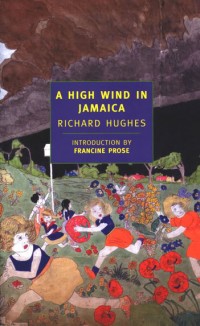
highwproduct-7A High Wind in Jamaica
by Richard Hughes
NYRB Classics, 1999
279 pages / $14.00 buy from NYRB or Amazon


1. On the surface, Richard Hughes’s A High Wind in Jamaica is a dot-to-dot adventure tale. After a hurricane hits an English settlement in Jamaica, two families decide to send their children back to England. Early on in the voyage the children are taken aboard a pirate ship whereupon they visit exotic ports and busy themselves with imaginary games. They are eventually returned home, and the pirates’ subsequent arrest, trial, and execution rounds out the proceedings. Of course, that last part seems a little extreme and out of place, and that’s really the book’s program, because simmering just below this surface is the constant threat of rape and murder.

2. In the spirit of Calvino’s later lecture on lightness versus weight, the narrative manages to float just above the threat of violence. You get the feeling after a while that Hughes is totally aware that you’re aware of the divide between high adventure and childhood trauma, and so he starts to fuck with your sense that awful things need to happen.

3. And, of course, awful things do happen—often and with startling frankness—but they are always quickly buried under the book’s relentless trend towards lightness.

4. The earliest memory I have is of staring up at the bottom of a kitchen table. I don’t know where I was or what I was doing, but I remember looking at a pattern in the wood and then turning toward a doorway. That’s it. I know I’ve told the memory differently over the years, adding in details about toys or sounds or maybe a smell wafting in, but the truth is that I just have this one scant moving image. I don’t think it’s a lie to embellish something so bland and colorless in texture, and at certain points I might have really believed in the additions.

5. Before I reread the novel to work on this review, I kept thinking it opened with a bigger feint at being a lighthearted adventure, but this is totally wrong. By the end of the first chapter’s scene-setting, two colonial ladies starve to death (or are fed ground-up glass by their servants, who knows!), a black servant drowns in a bathing pool, and countless rats and bats are dispatched by the family’s cat. All the while, we’re reminded that this is “a kind of paradise for English children to come to.” Right.

6. I usually skip introductions, but when I talk about AHWiJ, I almost always fall back on Francine Prose’s brief intro for the NYRB edition: “First the vague premonitory chill—familiar, seductive, unwelcome—then the syrupy aura coating the visible world, through which its colors and edges appear ever more lurid and sharp… The experience of reading Richard Hughes’s A High Wind in Jamaica…evokes the somatic sensations of falling ill, as a child.” Sign me up.

7. Another big theme of the book’s opening is the whole colonial question, which is vital and pressing and could probably be handled with greater finesse than I can muster here. Suffice it to say that the first sentence presents ruined slave quarters, sugar-grinding houses, and mansions, all “fruits of Emancipation in the West Indies.” Considering the adventure-story-through-a-fun-house-mirror about to come, it’s hard not to think that this kind of stage-setting is about just rewards, that the English family deserves everything that’s about to come.

8. A brief digression cum recipe: AHWiJ allegedly contains the first mention of a drink called the Hangman’s Blood—a mixture of rum, gin, brandy, and porter—“innocent (merely beery) as it looks, refreshing as it tastes, it has the property of increasing rather than allaying thirst, and so once it has made a breach, soon demolishes the whole fort.” Clearly the kind of mix that leads to public exposure and pissing blood and, of course, piracy.

9. Is there actually such a thing as an anti-adventure novel? (I’d imagine something like Coetzee’s Foe might come close, although its meta-narrative seems more about deconstructing the adventure genre than teasing out its hidden desires.) And furthermore, if there were such an anti-genre, would it stand in opposition to all of the finicky colonial and gender and race problems inherent in Defoe and Dumas and Stevenson? While AHWiJ is never really a wholehearted rejection of the adventure novel’s Victorian and Enlightenment-era point of view, the ways in which it represses and then inverts these views are extremely sneaky and, by the book’s end, terrifying.

10. The narrative portrays the adult world as a haze of concealed motives and consequences. A pirate’s drunken leer and a parent’s concern over a coming hurricane are met with the same curious misapprehension: that something vital or alarming is just beyond one’s young recognition. But while Hughes draws a kind of tight circular POV around the children, he also lets the reader step out into the larger circle of this adult world, and somewhere between the larger circle and the nested one is a place where motives and the threat of their attendant consequences exist. READ MORE >

1 Comment
November 12th, 2013 / 2:14 pm

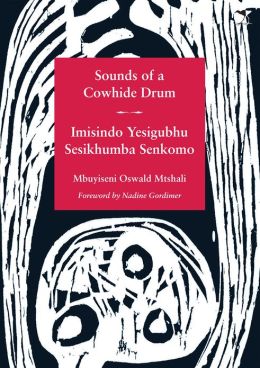
Sounds of a Cowhide Drum // An Interview with Mbuyiseni Oswald Mtshali

sounds of a cowhide drum

***

Look upon me as a pullet crawling
from an eggshell
laid by a Zulu hen,
ready to fly in spirit
to all lands on earth.

A few months ago I posted up some thoughts on Mbuyiseni Oswald Mtshali’s wonderful book “Sounds of a Cowhide Drum” in which I indicated an interview with Mr. Mtshali would be forthcoming. And, well, it took a while longer than I’d wished but here it is:

***

Rauan: When we chatted you mentioned that the first poems you wrote were love poems, that you were writing to “impress girls”—-and besides the dark and serious subjects and moods of Sounds of a Cowhide Drum there is also a joie de vivre to it, a real sensuality.

I want to be adorned
by the silken suit so scintillating in sheen;
it pales even the peacock’s plumage,
and catches the enchanted eye
of a harlot hiding in the alley:
“Come my moulten bird,
I will not charge you a price!”

(from “The moulting country bird”)

And, so, can you talk a bit about the poet as peacock? as shiny bird?

Oswald: A peacock is considered to be the proudest and most colorful bird in the animal kingdom. In the poem “The moulting country bird” the bird symbolizes a transformation of a country boy from the village of KwaBhanya on banks of Blood River in Northern KwaZulu to the bright neon lights of Johannesburg, the Golden City. The bumpkin sheds his garish and comical garments of country life and assumes the mantle of sophistication and “civilization” in a cosmopolitan metropolis of EGoli.

Once he has embraced the city slickers’ fashionable attire he goes back during his village to show off and strut his stuff like a peacock to the envy of his coevals and contemporaries who are still clad in their shabby garments of most clodhoppers in the country. His mannerisms and speech patterns are dramatically changed and he follows the trends of city life and discards all those things that define and remind him of his “backward” people, especially those of his same age group. The whole process is marked by migration from rural areas and transformation by life in the urban areas where he falls under the spell of many influences. His experiences and interactions with a polyphonic of cultures and Babel of languages READ MORE >

Author Spotlight & Massive People / 2 Comments
November 11th, 2013 / 6:16 pm

Mary Jo Bang’s Elegy

Stay-puft-marshmallow-man

I like chocolate chip cookie dough tons and I like death tons too.

Mary Jo Bang’s collection of poems, Elegy, doesn’t really touch on the former, but it does really touch on the latter.

The completely consuming force of death is illuminated in Mary Jo’s book. When someone asks her to define a day, Mary Jo replies: “Tragic from beginning to end.” As with a deft totalitarian leader, death is unceasingly omniscient: Mary Jo is covered in calamity.

There’s no timeout for Mary Jo. Some shut eye is shut down. In “Beneath the Din” Mary Jo reveals she’s in the “insomnia hour.” Later on, Mary Jo declares, “My ear is a beach / And the sea is talking to it incessantly.” Just as Heathcliff won’t let the Catherines be, death won’t stop his pursuit of Mary Jo. In “No Exit,” Mary Jo refers to her “tragic flawed fate going on and on and on.” It’s as if Mary Jo is a Victorian heroine and death is her boyfriend, who, though mean and rough, is still her one true love.

Death’s determination dismantles Mary Jo’s perception of time. The differentiation of months dissolve and what’s to come collies with the present. “A year in tatters is interrupted by the thought / That the future is manacled / To the indefatigable now of February,” says Mary Jo in “January Elegy.” It’s as if Mary Jo keeps her very own calendar. Death’s supplied her with a new system for marking time, which is what those bellicose, guillotine-inclined French Revolution boys did for a bit by altering the number of days in a week and renaming months.

In Ghostbusters II, the Marshmallow Man’s monstrous steps scatters all the New Yorkers in his path.  In Mary Jo’s world, “every step is a dangerous taking.” The Marshmallow Man and death deliver destruction. Each movement is so scary to humans since each movement produces the possibility that humans and human things will be wrecked with impunity. The NYPD (who, unlike liberal New Yorkers, I like) couldn’t punish the Marshmallow Man and they can’t punish death.

So strong is death that non-human entities are scared of it too — even ghosts don’t try speaking to death about baseball or inviting it to tea: they simply “go blank” in its presence.

One of Mary Jo’s poems ends: “These birds eat and eat. Everything.” By birds, is Mary Jo speaking about death? It’s highly likely, since, as with the birds, death can tuck every single thing ever into its tummy.

Another poem of Mary Jo’s commences: “This was the drama / Of impossibility.” Throughout the collection there’s considerable references to performance, such as actors, screens, masks, and audience members. Since everything is performance (and everything really is a performance, so hush), death’s show is the best one, because death lasts forever, and in “Elegy,” Mary Jo spotlights the gargantuan ghastliness of death’s spectacle: “an intolerable end that keeps going on.”

Author Spotlight & I Like __ A Lot / Comments Off on Mary Jo Bang’s Elegy
November 11th, 2013 / 1:26 pm