HTMLGIANT Features

Kevin Killian’s SUMMER READS

Kevin Killian, 02_02_2012

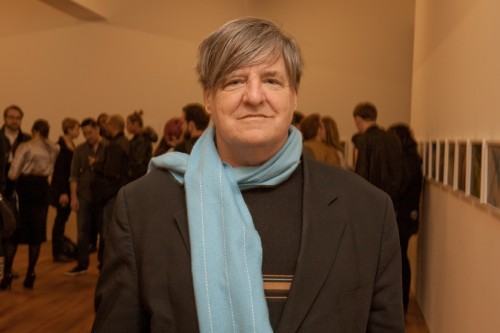
Photo Credit: Daniel Nicoletta


Kevin Killan’s summer reading picks:

***

71Wy7+smVoL._SL1208_While waiting for Dodie Bellamy’s Cunt Norton to appear from Les Figues later on this summer, I’ll recommend a few books I know are already out.  Fairyland, by Alysia Abbott (Norton) is the memoir of a young woman who grew up in the Haight-Ashbury, the only child of a single gay dad, and what happens when AIDS comes in to blow up her fragile world once again. Steve Abbott was a talented poet, thinker, novelist—and the man who coined the expression “New Narrative,”—one of my very first friends here in San Francisco. He’d be proud of the way his beloved and beautiful daughter has returned him to the world he left.



9780819573360_p0_v1_s260x420I’ve been reading Dance for Export: Cultural Diplomacy and the Cold War with much pleasure this weekend and last. In recent years I’ve come to understand generally that the Cold War of my youth impacted just about everything in culture too, as well as ideology, and that the US government secretly poured zillions of dollars into a propaganda game against the Russians to convince the world that, say, US abstract art was better than old-fashioned social realism. Naima Prevotz’ dance history brings us unto the Betlway and Manhattan boardrooms where specialized panels met to debate which US dance troupes were worthy of international exposure (Martha Graham, Jose Limon), and which were too avant-garde (Alwin Nikolais) or too politically suspect (Katherine Dunham). In general the US has always been eager to show the rest of the world what nice guys we are, and what great artists, and you know, for years I believed it. Now I see it’s all been a charade of spy vs spy, money vs. money.



9781439142004_custom-7e81f0840812e7c2097afb8f1ed7955662489442-s6-c30Some of this general background plays out in Rachel Kushner’s new novel The Flame Throwers—a book that needs no introduction from me but a stunning one nevertheless. I’m one who loved Telex from Cuba and have resented the years that have limped on by while I’ve been slavering for a new Kushner novel! Now here it is and I’m still in awe. Her novel of a woman driven by speed and curiosity to flout transnational borders in the service of avant-garde art reminds me so much of one of my old favorites, Joan Didion’s Play It As It Lays. But it’s as if there where a Joan Didion who knew about art instead of finding it, like all modern practices, ridiculous and appalling.



READ MORE >

1 Comment
June 13th, 2013 / 11:05 am

5 Points: Happy Rock

happy rock

Happy Rock by Matthew Simmons (Dark Coast Press)


—  do you like Mothers exploding?

—  hopeful suicides?

He produced a rope of fake pearls. They cinched them under her breasts, coiled them around her neck.

Marie said: “This seems wrong, though. I don’t like being tied.”

Eugene agreed, and they never used the pearls around neck or over her wrists, or around her ankles again.

***

. . .Eugene barely hears the phone ring. But it rings. On the roof, Eugene is laying down sod. He lays it over the shingles. He has a bucket of worms. He lays down the sod and sprinkles it with worms.

—  Blood dried in a Rush groove? (just a drop. a single rose drop)

—  Smashed-up windows falling like snow & crunched underfoot (the highlight of yr life)?

 you can order Happy Rock here

Author Spotlight / 1 Comment
June 13th, 2013 / 9:00 am

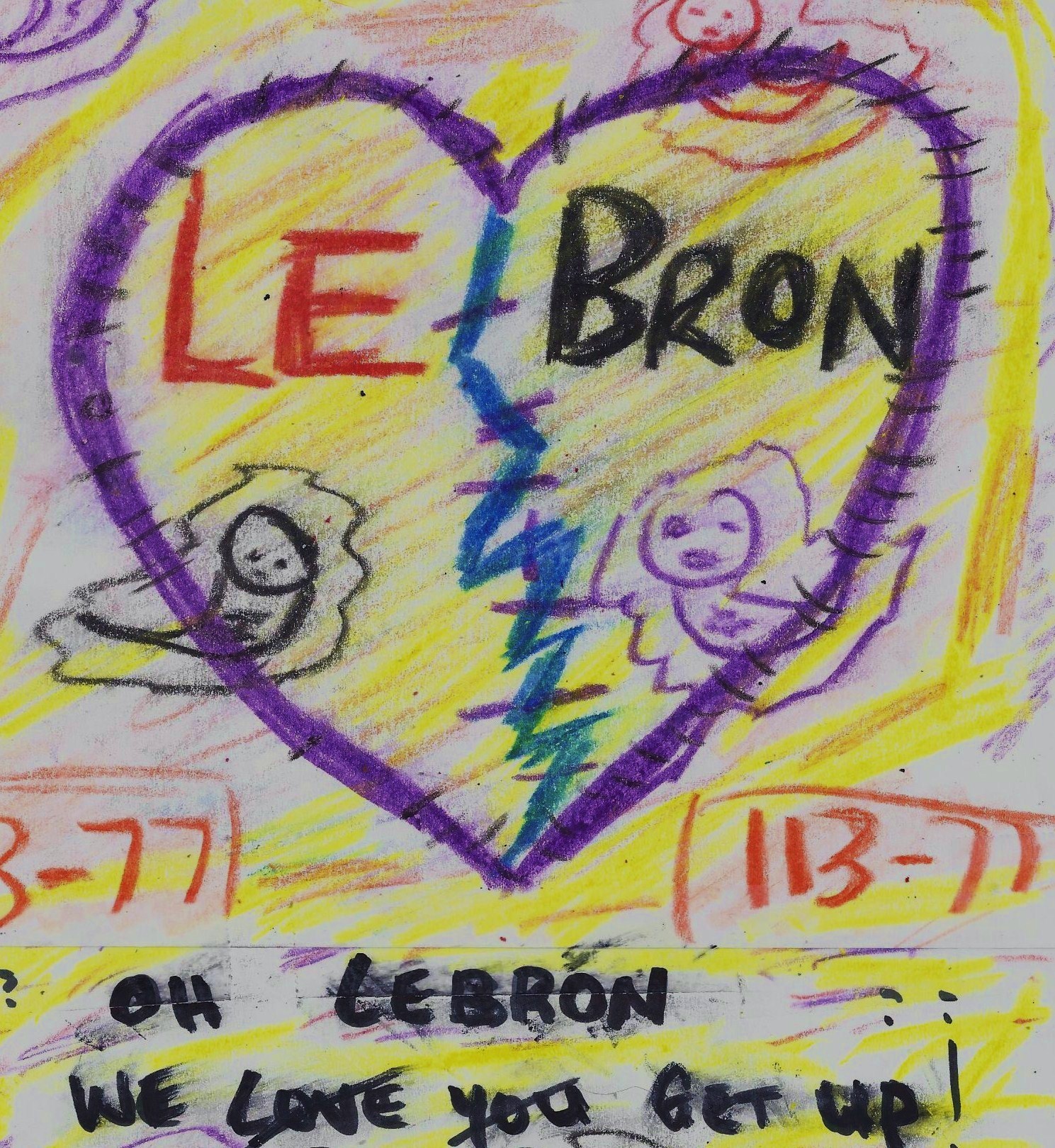
O, Lebron


LeBron


********************

 I know it  hurts, dude, but let me tell you about this puffball sitting in white sunlight in the middle of nowhere. And I inject this puffball into your neck, balls and butt. And you fall on to your hands and knees. And you’re soft and suave as a Pomeranian barking up philosophies, experiences, Robert Hass’s silkiest poems (and I wish I’d rescued you from a fairy tale). And you don’t stop.

Dandelion lebron

o, my puffball!

********************

I am, though, standing in front of the mirror. And I’m holding a bowling bowl. And I smash my face with it. . . And I am you, LeBron James (blah, blah). . . And I haven’t written a sonnet in a thousand years (blah, blah). . .Pigs are buried, dancing, in every second. . .Blood lashed on the hardwood. READ MORE >

Behind the Scenes & Massive People / 28 Comments
June 12th, 2013 / 3:37 pm

HTMLGIANT Features

Amina Cain’s SUMMER READS

Aminagrapes4

Amina Cain’s summer reading recommendations:

***

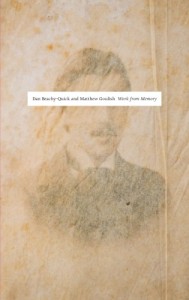
dbq-goulish-315x500Work from Memory by Dan Beachy-Quick and Matthew Goulish (Ahsahta Press, 2012)

My first three recommendations are books I myself plan to read this summer (and you should too!) and this one is at the top of my list. Work from Memory is in response to In Search of Lost Time by Marcel Proust, and Goulish is a performer whose work with Goat Island I’ve loved as much as any of my favorite books and those performances have taught me as much about writing as reading has. I’m also fond of Dan Beachy-Quick’s work because of what feels to me like a deep calmness within it. I can only imagine the territory the two of them cross into here.


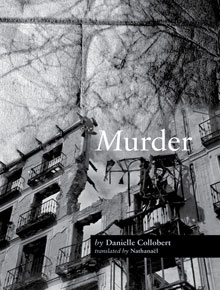
murderMurder by Danielle Collobert, trans. Nathanaël (Litmus, 2013)

This is a short novel I’ve been waiting for all year, dedicated reader of Danielle Collobert (and Nathanaël) that I am. Another title by Collobert, It Then, is one of the most brutal books I’ve ever encountered, performative in its brutality and fragmented in a way that is more elegant than I thought fragments could be. Murder was written during the Algerian war and originally published by Éditions Gallimard in 1964, and from what I can tell, looks closely at the severity of human existence.


READ MORE >

4 Comments
June 12th, 2013 / 11:00 am

Top Three Suicidal Gods

Begotten-god-killing-himself22

3. Mercury

Mercury, god of commerce and poetry, discovered that for most of the contemporary world, he was just the basis for a class of comic book superhero who ran fast everywhere and defeated terrible, terrible villains by running fast at them and away from them. Mercury, who like commerce and poetry, was of an erratic personality type, slumped into a despondency and decided it would be best to not be at all. Mercury decided to run himself to death, and so he found a long, flat place, and connected one end of it to the other, and made a twist in the center. It became a möbius strip. Mercury ran and ran and ran, waiting in motion for his legs to buckle and his heart to burst. For the knitted together sections of his heart to expand and contract faster and faster until they pulled themselves away from each other and splatter blood inside his chest. READ MORE >

Behind the Scenes / 13 Comments
June 11th, 2013 / 7:10 pm

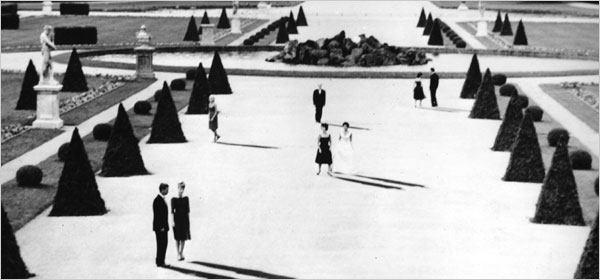
THE ACT OF MEMORY, “LAST YEAR AT MARIENBAD” & THE THING OF INTENTION

13harr600

SUBJECTIVITY OF MEMORY

Suzanne Corkin’s book Permanent Present Tense: The Man with No Memory, and What He Taught the World chronicles the fascinating case of Henry Molaison. Upon receiving a catastrophic lobotomy at the age of 27, Molaison continued his life as an individual incapable of forming new memories. For the remaining 55 years of his life, Molaison was closely studied by Corkin: his unique tragic circumstances constituted him as a one of a kind empirical specimen of anterograde amnesia, the medical term for his inability of forming new memories. Corkin found in him the ideal means to gain a deeper scientific understanding in the field of neuroscience[1].

Unlike the Drew Barrymore character in 50 First Dates, Molaison spent his amnesic reality in the company of a meticulous observer and not the romantic goofiness of Adam Sandler. The focus of Corkin’s book is the scientific exploration of how new memories are cerebrally processed. Corkin observed the short-span consciousness of Molaison’s new memories along with the variation of the feelings and thoughts he exhibited, as everyday provided a new opportunity to reassess her specimen all over, evaluate and reevaluate the pertinent data. Despite the repetitive occurrence of the same questions within his short-span of memory, Molaison’s responses were sometimes indicative of the formation of new memories. This analysis served as a catalyst for a new neuroscientific theory: contrary to previous popular belief that memories “were indelible snapshots of sense experience, stored in chronological sequence like the frames of a celluloid film,”  memories are actually located in more than one location in our brains.

Mike Jay’s exceptional review of Corkin’s book[2], aptly entitled “Argument with Myself,” starts with a powerful definition of memory. Jay concedes that memory shapes one’s identity, but he argues that in addition it simultaneously functions as the (mis)apprehension of a well-founded, whole self: “memory is not a thing but an act that alters and rearranges even as it retrieves.” In this framework, it is evident that the  way we conceive our individual realities, as they are constructed by all the memories we hold, are suspect. The manner in which all of us accentuate the details of what happens, both to us and in the world surrounding us is marked by subjectivity. While the degrees of each person’s paranoia and tendency for narrative exaggeration vary, there is no doubt that in most “realities” much is not real.

In an endeavor to make her students grasp this very fact, Mary Karr once began teaching a creative writing course by performing getting in a huge spat with the educational institution’s program director[3]. Once the program director exited, Karr revealed to her students the argument they had witnessed was a simulation. She then asked them to write down their observations and perception of the incident. The students had an arduous time reaching consensus on a collectively agreed objective account of what had just happened in their classroom. This exercise swiftly presents the validity of the very ambivalent nature of  objective memories.

READ MORE >

Craft Notes & Film / 6 Comments
June 11th, 2013 / 2:09 pm

The Family Project by Julie Sokolow

– – –

Julie Sokolow is a musician, filmmaker, and writer whose work has been acclaimed by Pitchfork, The Washington Post, and Wire, among others. She’s a 2012 recipient of a Creative Development Grant from The Pittsburgh Foundation towards her first feature-length documentary, Aspie Seeks Love, about an Aspergerian writer looking for love on the internet.  The teaser was recently featured by Boing Boing.

Film / 3 Comments
June 11th, 2013 / 1:38 pm

Reviews

25 Points: alphabet

alphabet147924alphabet
by Inger Christensen
New Directions, 2001
64 pages / $12.95 buy from Amazon


0. Inger Christensen—that petite, Danish demigod with her propensity for potted plants and the wild unknown—must have been hounded by the idea of growth. By what is massive. I guess if you look at/dwell on the vastness of things for long enough, you’ll predictably find yourself engaged with death options, the tempered dark where there are no underthings to stabilize you—and you are a little dust, alone with the chilling and the growing of yourself. It’s just you you you and the big outside.

1. Christensen’s alphabet is a sprawling network, shaped by the Fibonacci sequence that signifies nature’s inclination toward animal, exponential levels of growth and similar vanishings of decline. There’s an incantation stitching the poem, especially its beginning, that simply verifies the existence of things:

doves exist, dreamers, and dolls;
killers exist, and doves, and doves;
haze, dioxin, and days; days
exist, days and death; and poems
exist; poems, days, death

Death exists, details exist, the small monotony of days exist, all alongside one another.

1. I once read the entirety of alphabet in one of those concrete courtyards, the sad kind that’s trying to cute-up a hospital. I read it another time out loud for someone (although finishing was weird and uncomfortable because I was just beginning to tell, although I liked this person at the time, that they were not really interested in me and definitely not interested in 80-page metaphysical poems structured like the Fibonacci sequence), and another time on my bedroom floor with a whole .75 of OT that was looking nothing like a group sport because I was sad about something or something. And many times before and after that I can’t remember anymore. One magical person said, when I asked her about alphabet, that it made her think about cornfields a lot.

2. I sometimes try to relate my deep affection and appreciation for the state of Iowa, and I always think about cornfields that continue past the curvature of the earth, this massive output of production that literally exceeds our capacity to see it, much less understand it. “wheat in wheatfields exists, the head-spinning / horizontal knowledge of wheatfields, half-lives, / famine, and honey . . .”

3. Sometimes all it takes to be humbled is just the existence of certain things.

5. I’m shocked and quieted every time I read a newspaper, but not like I am by cornfields or incomprehensibly vast networks of connection. Although, the more I think about alphabet and re-live those declarations of both physical and metaphysical existences, the less I see the distinction.

8. There are some lines in there that simply state the death count for some great tragedies— “140,000 dead and / wounded in Hiroshima / some 60,000 dead and / wounded in Nagasaki”— and these numbers stand still on the page. The lines are always wavering between the porous and the immovable, the intimate and the intergalactic.

13. I wonder what it would look like, speaking of networks of connection, if Christensen had written a long poem/book of poems about the internet. Like, would that be beautiful? Would that be sheer terror?

21. It’s impossible not to talk about Susanna Nied’s translation. In an interview at Circumference last year, Neid said that she started working on alphabet’s translation in secret: “I didn’t tell Inger I was doing it. For the time being, I didn’t want anyone else’s input, not even hers. I had a very strong sense of what the poems could become in English. I kept shaping and reworking. Interlinked sprials. Double helix. Beauty and destruction. I was possessed.”

34. You can easily be possessed by Christensen. If you hear alphabet being read aloud, the words bend towards rapture, like hypnotism. Partly due to the steadily revolving repetitions—existence, vanishing, existence, vanishing. READ MORE >

Comments Off on 25 Points: alphabet
June 11th, 2013 / 12:09 pm

Curtis White will be reading in Chicago this Thursday

The Science Delusion @ City Lit

At City Lit in Logan Square, at 6:30pm. Curt will be reading from his new book, The Science Delusion: Asking the Big Questions in a Culture of Easy Answers, which just came out through Melville House.

I did my Master’s degree with Curt at Illinois State University, and he’s one of the smartest and best writers I know. (He’s one of the two profs who first got me reading Viktor Shklovsky.) In the 1980s, he and Ron Sukenick transformed Fiction Collective into FC2, and I learned about FC2 (and ISU) partly through the two “sampler collections” they put out (something I wish more presses did). Curt’s also written seven works of fiction, including The Idea of Home and Memories of My Father Watching TV, and now five works of nonfiction, including his infamous attack on Terry Gross (among other things), The Middle Mind. (He may not have made Gross cry, but he sure pissed off a lot of her fans.)

I’m only halfway through this new book (and will be writing more about it later), but so far I’d describe it as an attack on the idea, currently very en vogue, that scientific knowledge is the only or most superior form of knowledge, and thus the only means of accounting for what it means to be human. Right from the start Curt shows how much of science’s own knowledge is shoddy and unexamined. For example, it’s not uncommon to hear scientists like Stephen Hawking claim that the universe is beautiful, but how do they understand beauty? Not very well, Curt argues. Like in The Spirit of Disobedience, Curt demonstrates how other intellectual traditions—specifically Romanticism, which he traces through the Beats and punk—offer a way around and past some of the more inane debates consuming so many today, such as “science vs. religion.” Plus he’s funny, too.

If you’re in Chicago this Thursday, come by and hear Curt! Discussion will follow during which you can ask him embarrassing questions.

Author News / 2 Comments
June 11th, 2013 / 11:48 am

Reviews

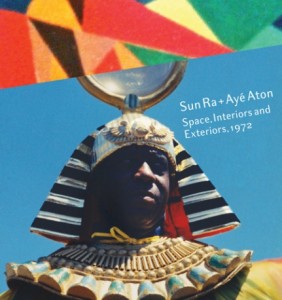
Space, Interiors and Exteriors, 1972

458 Sun Ra + Ayé Aton: Space, Interiors and Exteriors, 1972
By John Corbett
PictureBox Inc, April 2013
112 Pages, $27.50 | Buy from PictureBox

Opening with several candid shots of Sun Ra donning full afro-futurist regalia in Oakland, filming the quintessential Space is the Place, Space, Interiors and Exteriors, 1972 finds Sun Ra himself in the foreground. An interesting choice, really, due to the fact that a large majority of the book focuses on Ayé Aton’s murals, painted primarily on the walls of Chicago’s south-side in the early 70s. But this choice makes sense, as the brief essay included in the book lets us know, as it was the overpowering figure of Sun Ra that brought a focus to Aton’s work.

Aton, who became a correspondent of Sun Ra in the early 60s (shortly after Ra moved to New York City), eventually joined the Arkestra, touring and recording with Ra during the Ra’s most significant span of recording, the years 1972-1974, when his most well-known album records was recorded, Space is the Place. Aton & Ra’s correspondence, in the beginning, was a mentorship. Aton’s curiosity towards many afrocentric esotericisms finding, if not answers, at least a response in Sun Ra (to see the breadth of the information that Ra poured into his philosophy, take note of this syllabus from a class Ra taught at UC Berkeley in the early 70s [as an aside: the environment of Berkeley where Sun Ra could teach a class like this is so far distanced from the current reality of UC Berkeley that it’s astounding], as recounted “by Arkestra drummer, Samurai Celestial, and others.”

Two brief essays in the book present this biographical (this mythical) information before treating the reader to a gallery of Aton’s murals, photographed, often obliquely, on Polaroid film in Instant film has never been the most archival film available; in these Polaroids it’s clear that colors have faded, that the precision of the film’s chemical reactions, etc, is far from precise. The material degradation adds a level of entropy to the aura the images create. While the introduction asks us to imagine rooms where entire walls are painted with fluorescent paint, the Polaroids reveal rough gestures in muted colors. With time everything fades.

But the suggestion, the consideration, is a fascinating one. As another essay points out, none of the photographs of Aton’s murals depict people in front of them, they are isolated in space, often even destabilized away from their position on walls, embedded in the flatness of the picture plane. In the late 1950s Sun Ra started calling his music “space music” because ” the music allowed him to translate his experience of the void of space into a language people could enjoy and understand” (Wikipedia). With these photos, the viewer is floating in a void of colors long faded. The dream is dead, and I wouldn’t be surprised to find most of these murals either painted over or felled with buildings during destruction.

My favorite mural, documented by a square Polaroid stamped with the month of “January” but bearing no year, finds a ram’s head above four staggering lines of grey, set within a large silver/white star-burst, across a field of pinks and oranges with black accents carrying through the field. The nothingness of the image plane is violated by a minor intrusion: that of a golden chandelier, hanging from a white ceiling. The reality of the murals becomes uncanny. This is a step towards a necessary mysticism, used by Ra and others to strive towards freedom, borrowing Egyptian symbols and steeping them in Biblical revisionism, a reality that allows the oppressed a sense of revolution. Space is the place, space is the place. The field turns into colors and every man and woman is wearing a costume that disorients. It’s after the end of the world–don’t you know that yet?

In 1968, Kenneth Anger visited the great pyramids of Egypt with a cavalcade of junkies, musicians, artists, and magicians. Costumes were brought. Anger’s greatest film, Lucifer Rising was filmed. Problems followed. The film eventually was released and has been recognized for its brilliance. Sun Ra, on the other hand, refuses to just make his film. The costumes were part of life. Life was revolutionary and within this revolt there was a refined aesthetic insistence. Aton’s murals carry this aesthetic insistence further, into the banalized reality of those who don’t have the freedom to live in Sun Ra’s world permanently. The murals serve as a reminded.

Comments Off on Space, Interiors and Exteriors, 1972
June 11th, 2013 / 11:27 am