I started going to the library when I was a kid. My mom took me often, let me check out as many books as I wanted. During the summer, I participated in reading programs. Back then, it was popular to have contests to see how many books you could read in a summer. There were prizes and I enjoy prizes so I would read even more voraciously than I was ordinarily wont to do. It was always such a marvel to me that you could go and borrow books and when you returned them you could get even more books, all for free. I don’t go to libraries as much as I did when I was a kid but there are few institutions that impress me more than the modern library.
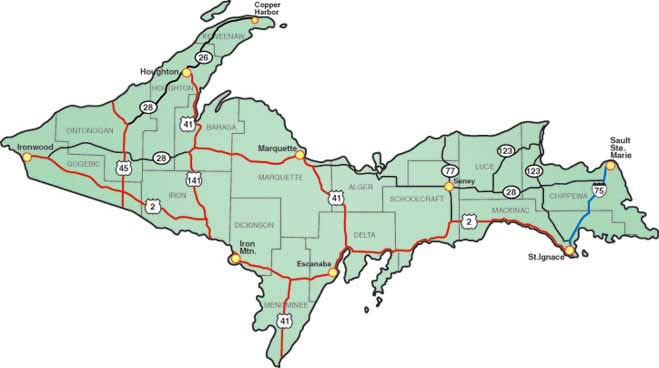
On Thursday I participated in the kickoff event of the U.P. Book Tour, which will feature more than 20 events and 65 writers all over Michigan’s Upper Peninsula for the next month. The tour was organized by U.P. writer and resident Ron Riekki who has been coordinating this project for months. Before moving last summer, I lived in the U.P. for five years so it was great to come back to the area and do a bunch of literary things and participate in the first leg of the tour. The tour event I participated in was a panel discussing Michigan books at the Peter White Public Library in Marquette, MI. At a time when libraries are under attack and facing severe budget cuts across the country, it was fantastic to participate in this event at a really amazing, community-supported library. The staff was gracious and professional and the whole set up was really welcoming. If you’re ever in the U.P., the Peter White Public Library is well worth a visit. The facility is really extensive and it’s not just a library, it’s also a community center. There’s a café, a community room with its own stage, public computers and wireless Internet, a really serious children’s library with a play area that comes in really handy during the impossibly long U.P. winters, and most importantly there is, as with every library I’ve ever known, a truly passionate and dedicated staff of librarians who love nothing more than books and putting books into the hands of readers. The library is also open late. It seems so rare these days to see a library open after 5 p.m. that I had to look at the door twice. During the week, they close at 9 p.m.
 Here’s a chance to win a copy of Maureen Thorson’s Applies to Oranges, which is one of the top five most beautiful books of 2011. No doy, it comes from
 from Julio Cortázar, The Art of Fiction #83 in The Paris Review (via Matt Bell)

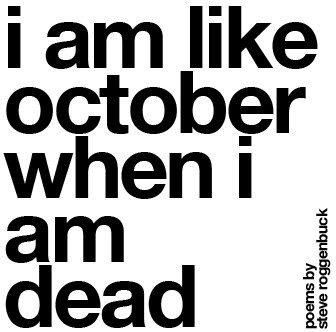 Steve Roggenbuck is not Robert Frost. His poems avoid forests of metaphors. Although they might give you a woody. Roggenbuck’s poems are not pedestrian, but peripatetic. They get you to think, just a little bit, about murder and loss. They also make you look into a night sky and wonder what you had for lunch or what’s on TV. Roggenbuck’s poems hold up dead flowers, then make you leave the room after declaring that that’s all there is. They are rakish, shake a giant rake to scare you, gather dead leaves outside the church of poetry, walk an elephant into that strange part of you called consciousness. Steve Roggenbuck’s poems will choke your dad for your birthday. They don’t care. They will not answer your calls. They are alive with the memories of killers, wonder what they will harvest, then stuff dogs into garbage trucks. These poems are the eraser of two hundred years of American poetry, the shout at the end of a sentence that seeks always a little bit of anarchy, a car on fire. Roggenbuck’s poems are the beginning of a great career.
 Richard Loranger is gay. He remembers the colors, temperatures of his mornings. Some of these simple memories become poems. Like the twenty-eight poems contained in this book. However, Loranger’s poems are not really contained. Or, if they are, they are contained the same way a sky is contained: warm and blue. But, peculiar. Very, very peculiar. Each poem is a tiny ass-fuck on the same day you kill your boss. Each one is there, with you, because there is nothing else to do. This makes them wonderful. Loranger’s poems are pretty butterflies. They flutter through a room and are closely listened to, but only after they have been eaten. They gather dead leaves outside the church of poetry, put them on a shelf, forget them, maybe. If Loranger had the time he would write these poems upon a wall using his own urine. They are that simple and that marvelous. And who knows? Perhaps he already has. Each of these poems are a little song that drifts by. They are the shadow of an acrobat tumbling in air, a cat in each eye. They are a drink of water after an argument, the mystery of television. Doused in gasoline, simple, lyrical, they want to know who’s in charge, will only listen to the secrets of plants, then wait quietly, to get the names they need to celebrate their small fire. Time has nothing to do with them. I mean, who needs time? These poems keep going on and on, each in their little, magnificent way, all warm and blue.
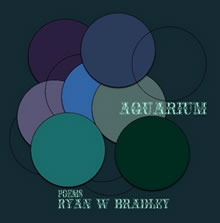 Ryan Bradley is straight. He eats lots of spaghetti. He sees pornography everywhere. His poems are a testament to that vision: defiant, sexy, sometimes late for class. It is a teenager’s world. Bombs go off like songs on the radio. And Bradley listens, makes them pretty, finds the wonder in flashing red lights, women falling from the sky, a city on fire. Bradley’s poems attempt to feel things. That is, they are thinking: About the next cigarette, cheerleaders buried under ice, a sudden sensation that slants everything, makes you walk funny. It likes girls, smoke, the Beatles. But best of all, they get depressed in the summer, still believe in the alcoholism of the blues, disguise their social class because these were born poor. Sex and death. It’s all here in these poems. And if you aren’t drunk by page two, you will be by page twenty-six. Drunk and slightly bruised. And touched, lightly. Because Bradley’s hand is light, might even take you far away. Imagine particles, the flash of fireflies, the nakedness of desire—cells rapidly dividing—spread over noodles. These poems are peppered with neighbors singing opera, but Bradley also wants to hear your eyelids closing. He’s sweet. These poems are sweet. All of them, underwater.