
In case you missed any of them, below you’ll find links to each of the 10 writers who participated in the first edition of my series of interviews aimed at expanding our understanding of experimental literature. We generated a heap of conversation and interest, not only here but all over the web: from Ron Silliman to The New Yorker and elsewhere. Due to the overwhelmingly positive feedback from this series, I have decided to keep it going. I’m currently in the process of creating the questions for the second round of the series, which I’ve decided to formulate by using the answers given by the writers from the first series. This way, hopefully, it’ll feel like an ongoing conversation. You can expect the next edition to appear in the month of May, and to include ten new writers of experimental literature. My thanks to everybody for participating. This has been a really great experience. I’m looking forward to presenting the next edition!
Depression and the Kinesthetic Theory of Writing
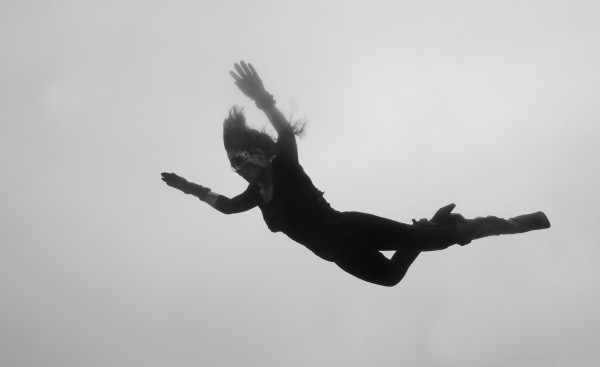
Photo by Viennese artist Eva Schlegel
Sometimes the holy writing spirit possesses you.
There’s no summoning it. I’m beginning to understand that now.
Not like that. Not like: SIT DOWN TO WRITE AND BE INSTANTLY INSPIRED.
There are conditions
There are kinesthetic conditions
There’s running downhill in the park as the rain approaches and the top of your head flies off like a hat getting blown away by a gust of wind.
There is inside the sensation of bodies touching bodies that move toward each other bodies that approach trembling but without fear.
There’s the orange light in the rain-paved streets and the stranger under the bridge.
Hello stranger I am lost.
These are things I cannot generate my own, alone in a room.
There are kinesthetic conditions
Sore muscle conditions
And the understanding that the more I move,
The more I will be able to access the world.
Werner Herzog & Moondog in that thing that made Jeff Goldblum ‘The Fly’
Maybe you see all these videos and think “I don’t have time for this shit” and while I totally sympathize with that, I strongly suggest you make the time for this video if you have so much as a passive interest in the art of music, which you should because literature is music; cavemen played music; music is probably older than language, probably they are more or less the same thing, which is interesting because it seems to me the only thing separating music from noise is some form of repetition.
Skip to like 4:30 to avoid the usual b.s.
Thanks to my friend Eric Schaefer, who puts out Answering Machine Recordings, for sharing.
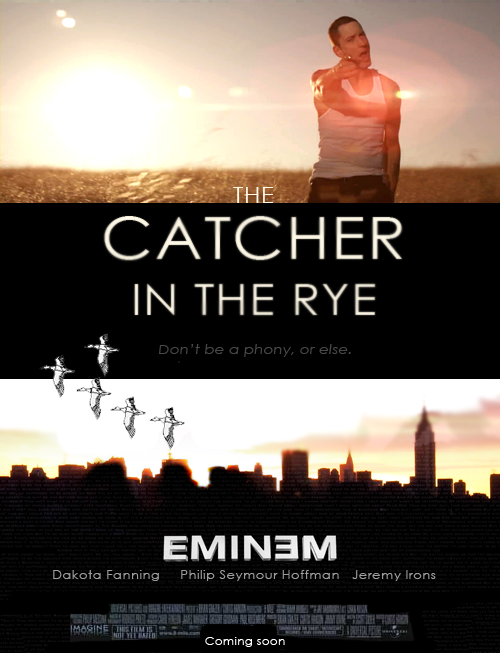
“Burk’s Nub” from LOOK! LOOK! FEATHERS by Mike Young
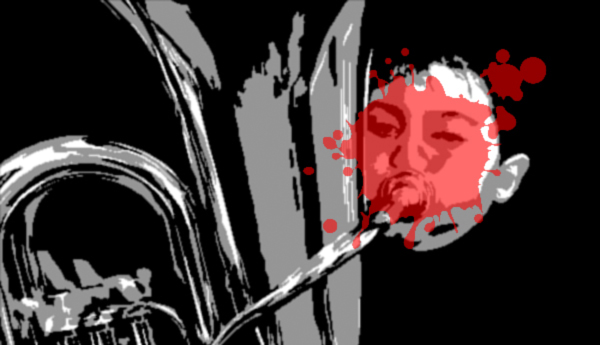
So. Cyber-punk.
“Johnny Mnemonic” can’t get past just being Johnny Mnemonic. “Burk’s Nub,” though, gets to be Tetsuo The Iron Man, and “Burk’s Nub,” gets to be George Washington.
Because “Burk’s Nub” isn’t concerned with the gadgetry of cyber-punk. It’s just concerned with youth, with bodies, with tubas, and with language. And because it is full of concern and not full of fetish, it gets to be fuller and more satisfying and more interesting. READ MORE >
“Subject matter is important”
“The heart that thinks, the blood around the heart called thought. How does the mind think? It heaves.” Dan Beachy-Quick is a beautiful thought skater at Joshua Marie Wilkinson’s new poetics journal Evening Will Come. April isn’t just gags and snow; it’s also Quick and Cedar Sigo and Julie Carr. Do it the reading time, sexy loners, do it and hear your tick.
What is Experimental Literature? {Five Questions: Lidia Yuknavitch}

Lidia Yuknavitch, author of the memoir The Chronology of Water, officially released TODAY! from Hawthorne Books. Order from Amazon.com, Powell’s City of Books, or join the Rumpus book club.