Reviews

Things I’ve Read Lately

I’ve read some  interesting books and magazines over the past couple weeks so I’m going to talk about them in one big post. Also, I’m giving several books away.

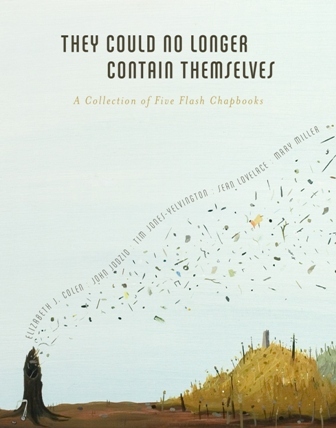
They Could No Longer Contain Themselves

I don’t care for the term flash fiction. I understand the etymology but I often think, “Why not call it a story?” There are so many terms now for different kinds of fiction. There is an obsession with naming, creating taxonomies so we can better understand the nature of a thing. Flash fiction. Very short stories. Sudden fiction. Microfiction. Nanofiction.  All these terms strive to categorize the nature of stories that fous on brevity and compression. Ask five different writers how to define flash fiction and you will likely hear five different definitions. I read an article in the most recent issue of The New Yorker about tiny houses, and the writer talks about the article’s main subject, this guy named Shafer who designs tiny houses and the writer says, “What makes Shafer’s houses different from others is the classical elements of form and proportion and the graceful compression of his design.” I kept thinking about that line as I thought about the stories in They Could No Longer Contain Themselves. They each contain the classical elements of good fiction and the compression in each story is also graceful like a tiny house that holds everything you need to feel at home.

In They Could No Longer Contain Themselves, the latest book from the reliably excellent Rose Metal Press, five writers offer five unique interpretations of flash fiction in chapbooks by Mary Miller, Elizabeth J. Colen, John Jodzio, Tim Jones-Yelvington, and Sean Lovelace (I reviewed his chapbook in 2009, here).
READ MORE >

73 Comments
July 25th, 2011 / 5:36 pm

Poets are the most jealous type of artist. One of the most jealous moments I’ve experienced is when I heard Heather Christle’s second book The Trees the Trees was being published by Octopus Books and her third book What is Amazing was forthcoming from Wesleyan University Press. I’d love to hear your jealous moments (bonus points for commenting under your own name).

“My Life” by Joe Wenderoth

Updated. (Sorry.)

Random / 24 Comments
July 25th, 2011 / 9:00 am

“On Writing” Roundup

For easier access, by request, here’s a roundup of all our “On Writing” posts, with craft thoughts by:

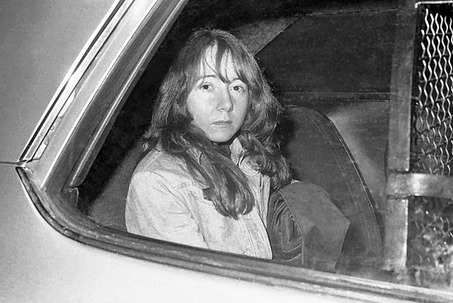
Lynette “Squeaky” Fromme
Coco
GZA
Delonte West
Mark Rylance
Kenneth Anger
Damien Hirst
Anton LaVey
Prince
Gerhard Richter
Judy Garland
Kimora Lee
Peyton Manning
Mark David Chapman
David Tudor
Nassim Nicholas Taleb
Bill Evans
Ted Bundy
Ray Lewis
Andre Agassi
Wu-Tang
Aleister Crowley
Grace Jones
Liz Fraser
John Holmes
Floyd Mayweather
Klaus Kinski
Pier Paolo Pasolini
Ron Artest
Louise Bourgeois
Gustav Mahler
Iggy Pop
R. Kelly
Captain Beefheart
Dee Dee Ramone
Kool Keith
Mike Tyson

Roundup / 8 Comments
July 24th, 2011 / 3:50 pm

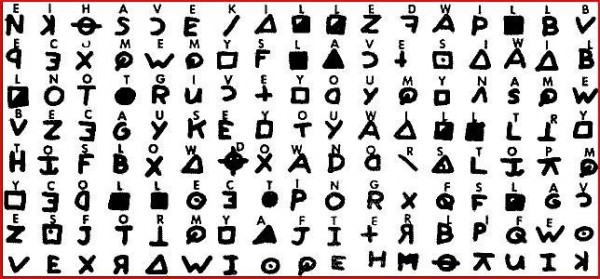
KILL/SLF/DR/HELP/ME/KILL/MYSELF/GAS/CHAMBER/AEIOUR/DAYS/QUESTIONSABLE/EVERYY/

WAKING/MOMENT/IM/ALIVE/MY/PRIDE/LOST/I/CANT/GO/ON/LIVING/IN/THIS/WAY/KILLING/

PEOPLE/I/HAV/KILLD/SO/MANY/PEOPLE/CANT/HELP/MYSELF/IM/SO/ANGRY/I/COULD/DO/

MY/THING/IM/ALONE/IN/THIS/WORLD/MY/WHOLE/LIFE/FUL/O/LIES/IM/UNABLE/TO/

STOP/BY/THE/TIME/YOU/SOLVE/THIS/I/WILL/HAV/KILLD/ELEVEN/PEOPLE/PLEASE/HELP/

ME/STOP/KILLING/PEOPLE/PLEASE/MY/NAME/IS/LEIGH/ALLEN/

Random / 11 Comments
July 22nd, 2011 / 7:52 pm

Art, Crime, Beauty, Murder

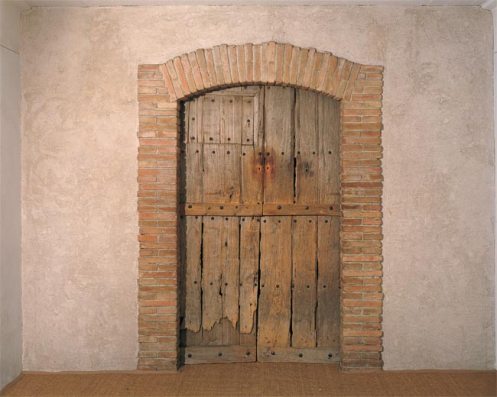
To approach. To peek through. To see Marcel Duchamp’s final contribution, “Etant donnés,” is to confront the intersection of art and crime and beauty and murder.

Remember what Poe said in “The Philosophy of Composition“:

I asked myself—“Of all melancholy topics, what, according to the universal understanding of mankind, is the most melancholy?” Death—was the obvious reply. “And when,” I said, “is this most melancholy of topics most poetical?” From what I have already explained at some length, the answer, here also, is obvious—“When it most closely allies itself to Beauty: the death, then, of a beautiful woman is, unquestionably, the most poetical topic in the world.

Here is the threshold:

Here is the observer:

And here is the observed….

BEWARE…NSFW…GRAPHIC VIOLENCE…enter this post at your own risk:

READ MORE >

Random / 87 Comments
July 22nd, 2011 / 1:25 pm

Lynette “Squeaky” Fromme on Writing

“Anybody can kill anybody.”

“I do not have the answers and as a woman I do not intend to play my own thoughts over the truth. I can clearly state the problems and tell you that I suffer from them.”

“We all came from houses with doors, doors that were supposed to be closed when there were things going on that we weren’t supposed to see, and when our pants were down.”

[re: approaching Gerald Ford with an unloaded weapon] “He looked like cardboard to me… but at the same time, I had ejected the bullet in my apartment, and I used the gun as it was.”

[re: Charles Manson] “I know I laid a lot of my thinking in his mind.”

“I am co-counsel and as co-counsel I have the right to represent myself, speak for myself and conduct myself and my trial by myself in my best interests in order of due process.”

“Keep talking about moving toxic wastes, but never let it cross your mind to quit producing them.”

“People have already shown you can lay blood in front of them and they’re not, you know, they don’t think anything of it.”

“When the circumstances are right, everything becomes a dance.”

“Usually a person who does what I did doesn’t repeat it.”

“It’s in everybody.”

Craft Notes / 7 Comments
July 22nd, 2011 / 12:24 pm

The novel isn’t dead, bro…

Behind the Scenes / 10 Comments
July 21st, 2011 / 2:58 pm

Two Things

I’m working on some longer things to post here over the next couple weeks but in the meantime:

At Slate, Robert Pinsky offers three rules for writing a book review.

Anil Dash writes about how to foster productive online communities on your website by managing comment threads.

Roundup / 14 Comments
July 21st, 2011 / 2:08 pm

Subcrime

Art is crime because it departs from municipal, state, national, and moral codes, introduces puncture, rupture, lawlessness, collapse. Sometimes Art-as-crime reveals the criminality in the current hygenic system or makes visible a kind of filth that is under threat of extermination. But is the reverse true– is crime Art? If I’m being honest, I ‘d have to admit that some crimes are also Art. I think Fascism had/has a big art component– the brutal State was made like a brutal artwork. This is a sad and flummoxing fact and this is why people so often come back to Fascism when they’re trying to grapple (or not grapple) with Art as maximalism.

Maybe it’s just more accurate to say that Art and Crime are both limit experiences– sometimes they double with each other, sometimes they split from each other, sometimes they feed off of each other, sometimes they destroy each other, sometimes each causes the collapse of the other.

Joyelle McSweeney at Montevidayo

Power Quote / 28 Comments
July 20th, 2011 / 1:33 pm