
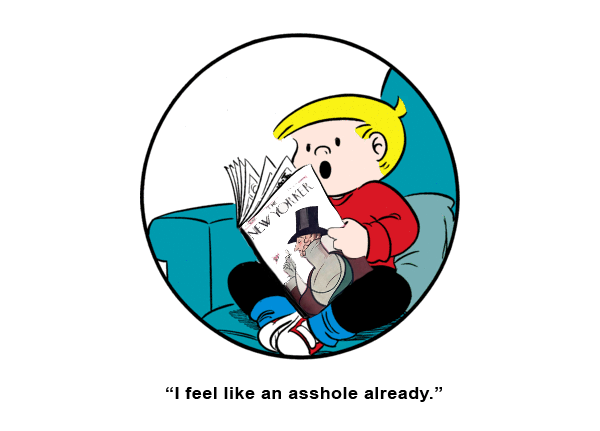
2 Teach or not 2 Teach
What authors are the most accessible to being taught, especially to young writing students (as in taking their first classes, not age)? What authors are not?
Example. T.C. Boyle. Very teachable. Consistently uses structures easy to graph/visualize, massive layers of basic CW language techniques, always some intent at theme. Now you can argue the merits of his fiction, but that isn’t my point. My point is the merits of the fiction as pedagogically useful.
(You could take this one story and teach a semester of Intro CW: Freytag’s, quest narrative, suspense, immediacy, imaginative prose, precise verbs, unreliable narrator, suspense, POV, etc.)

Diane Williams. Not so great to teach. The voice, the thought, the paroxysms of perfect, and perfectly odd, sentences—you could smother a young writer, you could lead them to a cliff’s edge and accidentally push them off. (Yes, I know Miss Flannery O’Connor, this would do the world a favor, etc.)
Now I generalize, I generalize, so don’t go all sack of hammers. And I’m not saying don’t read any and every writer (OK, not Jewel). And, with upper level classes, I think the ratio switches—Personally, I start bringing in writers I wouldn’t teach earlier (like Diane Williams, Barry Hannah, Gertrude Stein, etc.) and I start removing T.C. Boyle. And I’m not saying you need to take any writing classes, ever—this question is couched in context. OK, enough with the disclaimers. WTF?
I just wonder if you have your own choices: A writer perfect for the teaching of creative writing to young writers, a writer you might want to avoid? I’m sure many of you have had experiences, as student or instructor. What authors glowed, what thunked?
“Use Your Icicles”: A Review of This Time We Are Both by Clark Coolidge
 I. On January 13, 2011 a 6-year old boy was killed in downtown St. Petersburg by a giant icicle. This happened a block away from the apartment building where my grandmother used to live, two blocks away from the identical apartment building where my parents still live. The boy was an orphan, living with his grandparents. His grandmother was taking him to an outpatient clinic for a check-up after a recent cold. When he stepped outside his apartment building, the icicle became dislodged from the roof of the building and cracked the boy’s head. His grandmother, emerging from the building directly behind him, collapsed with a heart attack.
The next day, the press was astir trying to establish the party responsible for this incident. Who was to blame: the building, the block, the district, or the city administration? For a city located at the latitude of 60°N, St. Petersburg has been criminally poorly prepared for snow. Snow somehow always comes as a surprise in St. Petersburg. A few days after the death of the boy, as a bomb exploded in Moscow’s airport, St. Petersburg had another snow-related disaster: the roof of a mega-market “O’Key” caved in under a giant pile of snow. One person died and seventeen were injured.
Counter to its reputation, St. Petersburg doesn’t enjoy long, cold “Russian” winters. Instead, the flashes of cold weather alternate with periods of thaw, when snow melts forming ice on the ground and ice on the roofs of the buildings, from which snow has not been cleaned off. The last two years saw unusually high levels of snowfall—and the icicles have also grown to massive proportions. Theoretically, cleaning the roofs of the apartment buildings is a daily job. Practically, who is going to pay for it? And where to find workers willing to do the job? Money in the city’s budget allocated toward infrastructure needs has a tendency to mysteriously dematerialize. In the aftermath of the recent deaths, St. Petersburg’s governor Valentina Matvienko has proposed using the homeless as the workforce to clean the snow, and also developing laser technology to get rid of the snow “scientifically.”
II. The news of St. Petersburg’s latest battles with snow gather in my inbox as I’m in the middle of reading and rereading Clark Coolidge’s book-length poem This Time We Are Both, published in 2010 by Ugly Duckling Presse. The title is the first thing that grabs my attention. READ MORE >
6 Comments
February 18th, 2011 / 1:25 pm
February 18th, 2011 / 1:25 pm
The words “Sam Pink” scroll through my headhole in big neon letters
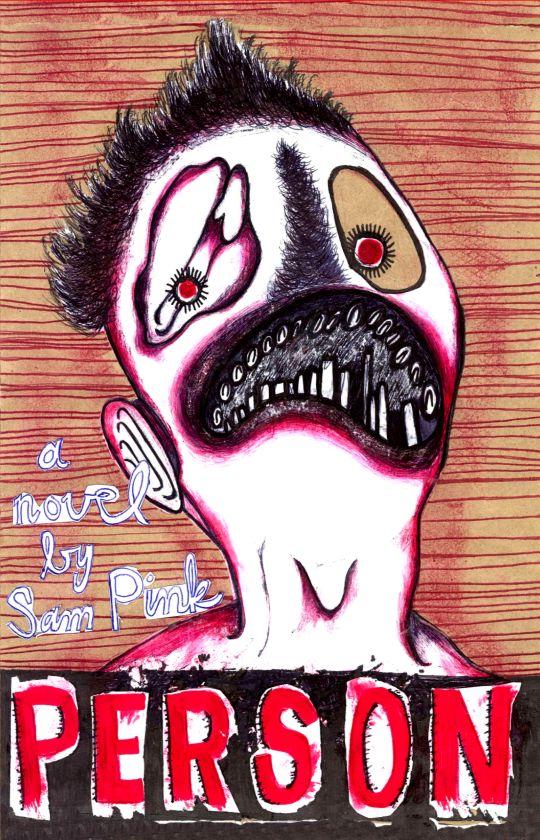
I feel like Person by Sam Pink, published by Lazy Fascist Press, is, as Ann Beattie said of Wittgenstein’s Mistress, “a novel that can be parsed like a sentence.”
What I mean is the sentences, one per paragraph one by one, slowly present an image of existence—particular, funny, sad, moving, and sometimes surprising.
The book is thematic at the language level, and phrases recur mantra-like.
“It feels like practice,” Sam writes, again and again.
20 Comments
February 18th, 2011 / 12:32 pm
February 18th, 2011 / 12:32 pm
When I was a painter
“When I was a painter” is a Breeders song, and it is also the title of this, though this is less about when I was a painter than “how I became a writer,” quoted because just saying it aloud inside my muggy mouth makes me somewhat nauseous and sorry for this readership, whose patience towards personal essays is confounding. See? I just used a big word.
When I was a painter I painted scenes across the street, a kind of pedestrian voyeurism without any boners; just simple things like a street lamp’s effect on a wall; the inadvertent faint line of a curb; or how shadows are never dark, just comprised of shapes of darker light. I had paint splotches all over my jeans like Basquiat, though only he got laid.
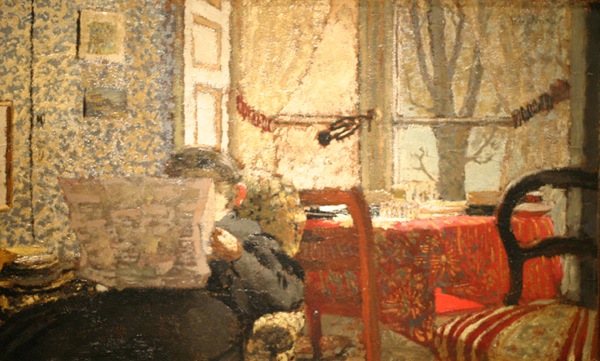
When I was a painter I looked at Pierre Bonnard, Edouord Vuillard, and Giorgio Morandi. They were all sensitive men, perhaps “fags” in today’s world — fags with wives, OCD tendencies, and a slow silent life somewhere in Europe. I went to Europe once. The food was okay, the weather was bad. Painting is beautiful because there is no talking, only looking, and looking again.
Temporary Coagulations: a quick look at A Thousand Years of Nonlinear History
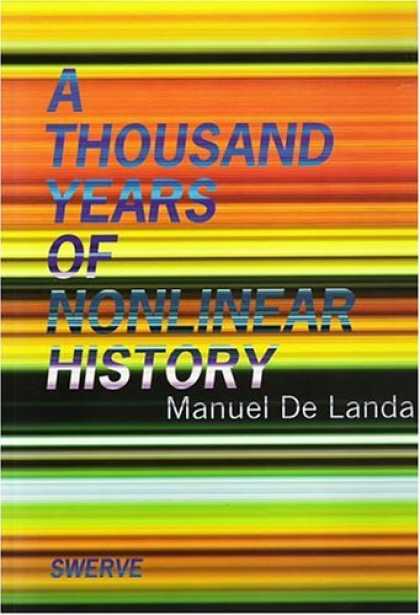
Finished this today. I started it a few years back and put it down; the introduction seemed a bit impenetrable. Then, last year, as I was driving through Yosemite park, I thought of the trees as temporary spikes in the surface of the earth. I felt my environment as process. I blamed this book. I started it up again about two weeks ago. It’s a beautiful synthesis of thought; philosophical in the sense that this book is a unique engagement with the world that is often contagious, often revealing. Manuel De Landa presents the last thousand years through three lenses: biological history, geological history, and linguistic history. I found the first two the most interesting. The interplay of gene flows, biomass, disease, and the changing infrastructural landscape of civilization is fun to watch. These are complex processes, and this book makes you feel as if you can suss out the true influences in major movement. To me, this is the most honest, wide-eyed & ecologically sensitive concept of history that I’ve read. Humans aren’t the heroes: self-organizing flows of energy are. We are just mineralizations, temporary coagulations. From one clot to another: read this.
18 Comments
February 18th, 2011 / 12:09 am
February 18th, 2011 / 12:09 am
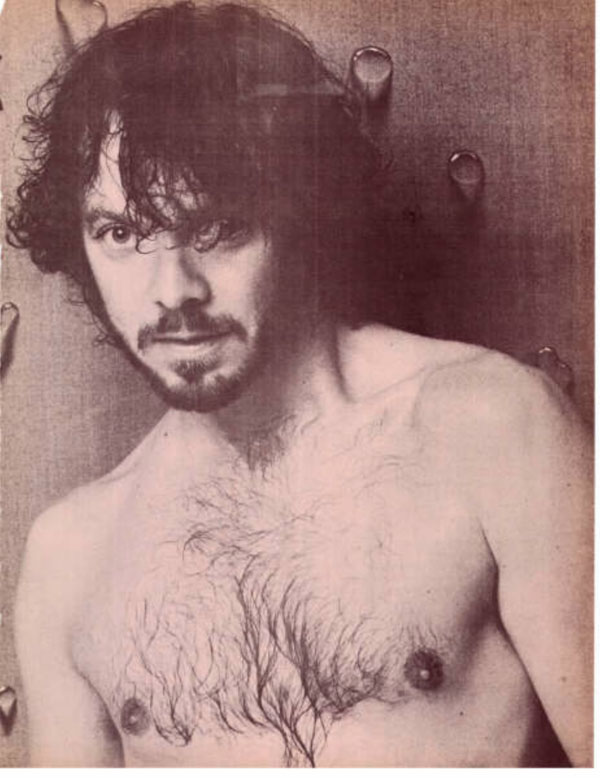
Raul Zurita at Notre Dame 2/2011
At Montevidayo, a fantastic series of videos of Raul Zurita reading from Song for His Disappeared Love at Notre Dame, with translation by Daniel Borzutzky. Part one of the series is below, part 2 & 3 at the link.
3rd Annual Chapbook Festival (NYC)

I went to the Chapbook Festival last year and it was really cool. Justin Taylor wrote about it in 2009. Lots of goodness. This year it looks to be great too. I know there are some “off-site” events going on. People ought to list them in the comments.
From their announcement:
Wed Mar 2–Sat Mar 5
Third Annual Chapbook Festival
The Festival celebrates the chapbook as a work of art and as a medium for alternative and emerging writers and publishers. Now in its third year, the festival features a two-day bookfair with chapbook publishers from around the country, panels, workshops, a reading of prize-winning Chapbook Fellows, and a roundtable and launch of Series II in Lost & Found: The CUNY Poetics Documents Initiative.
The Festival is free and open to the public, though some events require advance registration, as indicated below. READ MORE >